Home / Pest Library / Armyworms
Armyworms in North Texas
Your lawn looked fine yesterday. Today it looks scalped.
Fall armyworms are caterpillars that feed in a moving front and can strip a North Texas lawn overnight. They arrive in late summer and fall, usually after a wet stretch, and the damage is so fast that most people assume the lawn suddenly died rather than that something ate it.
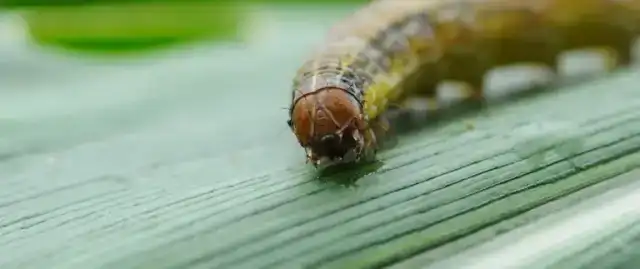
Stripes down the body and a dark head capsule · armyworms feed on the blade, not the roots
What Do Armyworms Look Like?
Green to brown caterpillars up to about 1.5 inches, with stripes down the body and an inverted pale Y marking on the head capsule. They feed mostly at dusk and dawn and hide down in the turf during the heat of the day.
HOW TO SPOT IT
SAFETY
Are Armyworms Dangerous?
Harmless to people and pets. The threat is entirely to the lawn, and it is fast: a heavy infestation can take a healthy Bermuda lawn down to stems in one or two nights.
Why Is My Yard Full of Armyworms?
They migrate north each year and arrive on weather fronts, so pressure varies year to year. Wet late summers produce the worst outbreaks. Well-fertilized, lush Bermuda is the preferred target, which means the best-kept lawns on the street often get hit first.
How Do You Get Rid of Armyworms?
Speed matters more than with any other lawn insect. If you see them, treat the same day rather than waiting for a scheduled visit. Because they feed on the blade surface rather than the roots, treatment is applied to the foliage and works quickly.
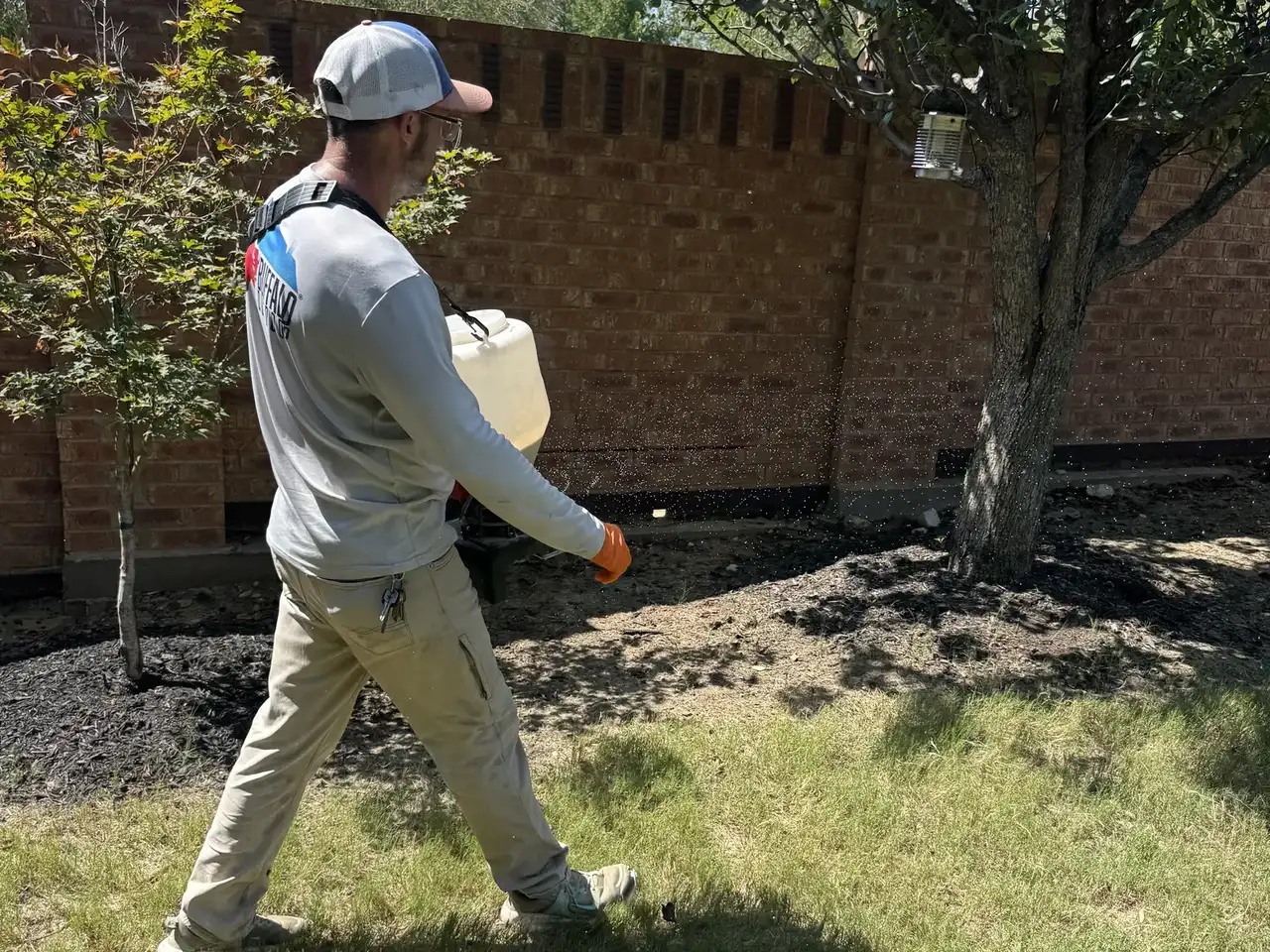
Lawn insect work on a North Texas yard.
THE SERVICE THAT TREATS THIS
Lawn Insect Control
Same-day armyworm response plus chinch bug and grub treatment, covered by our year-round plans.