We treat chinch bugs, grubs and armyworms as part of the yard coverage on our year-round plans. The hard part is not the product, it is the diagnosis: chinch damage looks exactly like drought, and treating the wrong insect at the wrong soil depth wastes the whole application.
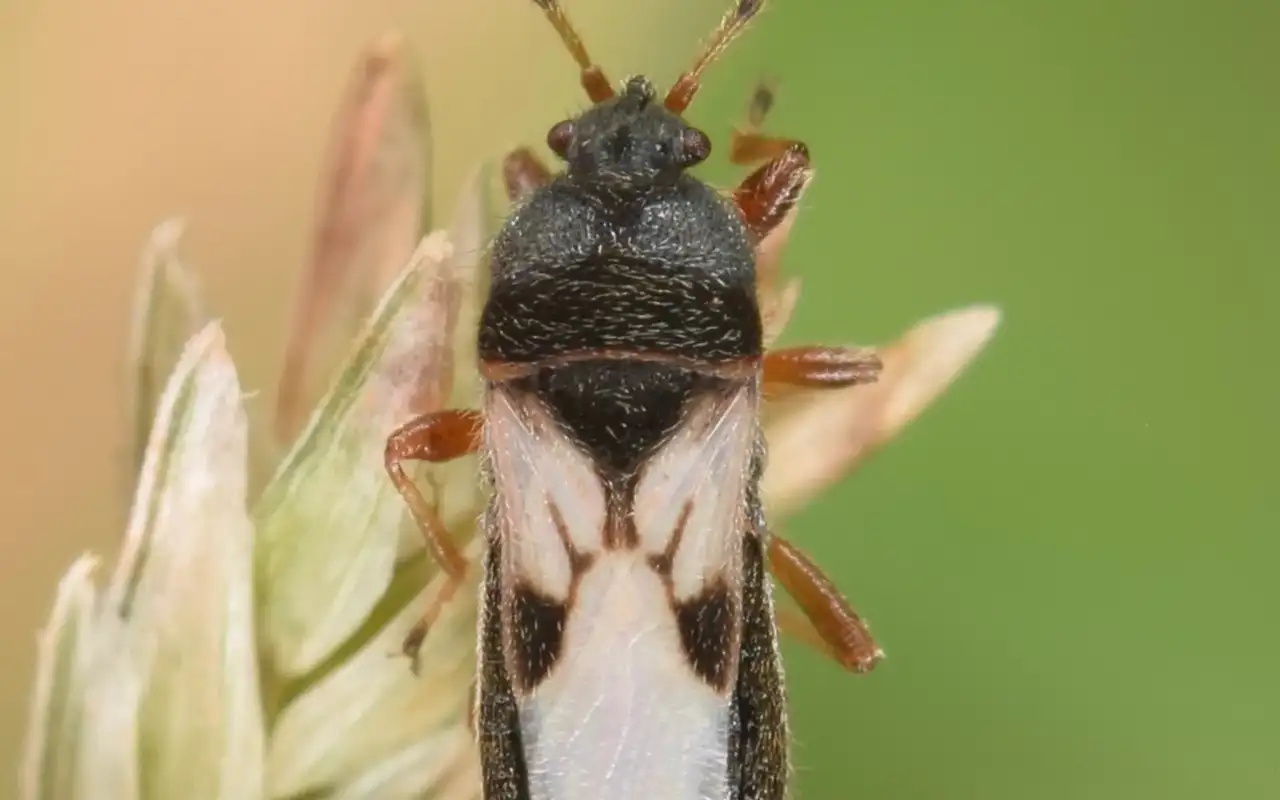
Why the Diagnosis Matters More Than the Product
We have been reading North Texas turf since 2016, and that matters here more than on any other service, because the number one cause of a failed lawn insect treatment is misdiagnosis. Brown patches in July could be heat, drought, dollar spot, brown patch, chinch bugs, grubs or armyworms, and four of those seven are not insect problems at all.
A pest company that cannot read turf will sell you an insecticide for a disease. We would rather tell you it is a watering problem and not sell you anything.
The Three Insects That Actually Kill North Texas Lawns
- Chinch bugs feed on the blade and inject a toxin that blocks water movement, so damage looks like drought. It starts in the hottest, driest strips along driveways and sidewalks and does not recover with more water. Worst in St. Augustine.
- Grubs are beetle larvae eating roots from below. Turf goes spongy and lifts like loose carpet. Birds and armadillos digging up the lawn is a second sign, because they are after the grubs.
- Fall armyworms arrive in a moving front and can strip a lawn overnight. If it looked fine yesterday and looks scalped today, go out at dusk and look.
CJ walking a chinch bug kill zone: why the damage always starts on the hot edges.
The Two Field Tests You Can Run Yourself
For grubs, the tug test: grab the grass at the edge of a brown patch and pull. Healthy turf resists. Grub-damaged turf lifts with no root resistance. Peel back a square foot and count, and more than five white C-shaped larvae is treatable.
For chinch bugs, the float test: cut the ends out of a coffee can, push it two inches into the soil at a green-to-brown edge, fill it with water and keep it topped up for ten minutes. Chinch bugs float up. Both pests get the full treatment in our pest library: chinch bugs and grubs.
What Does It Cost?
Lawn insects are not sold as a one-off treatment. Whole-yard insect coverage is part of Complete Home & Lawn Defense at $40 to $73.50 a month, and Home Defender includes the applicable lawn treatment out to about 25 feet at $30 to $54 a month. Both are year-round, both are priced on the square footage of the house, and neither is a contract.
Depth Is the Whole Game
Chinch bugs live in the thatch at the soil surface, so their treatment targets that layer and works best on turf that is not soaked. Grubs live two to four inches down at the root zone, so their product has to be watered in to reach them, and young grubs in late summer die far more easily than large ones in fall. Apply the right product at the wrong depth or the wrong month and you have paid for nothing.
Eric explaining the spreader that puts granular product across the full lawn.
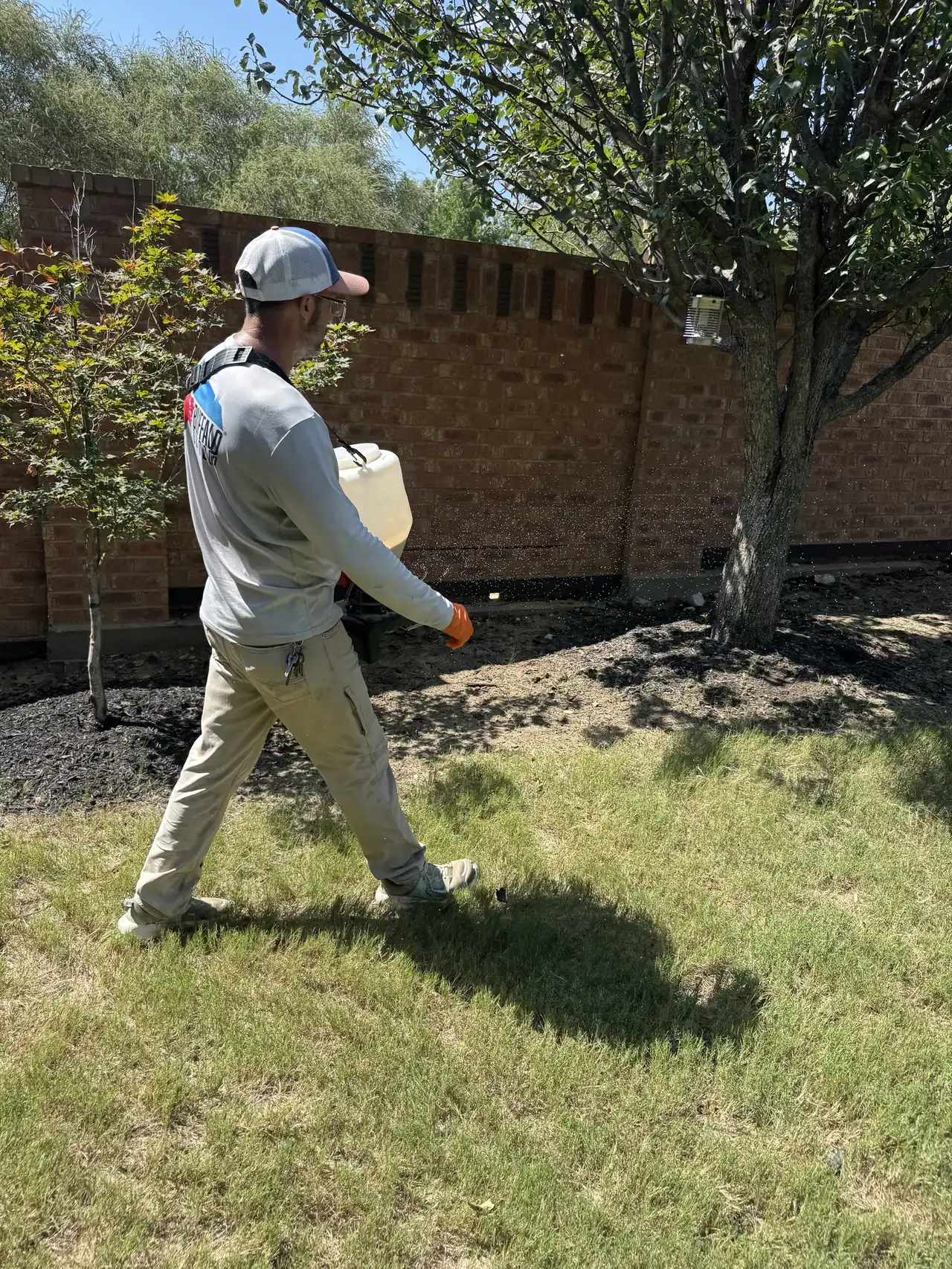
Granular product broadcast across the full lawn, then watered in to reach the thatch layer where the insects actually live.
Lawn Insect Control Questions
Towns We Treat
Aledo · Annetta · Argyle · Avondale · Azle · Bedford · Benbrook · Blue Mound · Colleyville · Fort Worth · Haltom City · Haslet · Hudson Oaks · Justin · Keller · Lake Worth · Lakeside · North Richland Hills · Northlake · Pelican Bay · Richland Hills · River Oaks · Roanoke · Saginaw · Southlake · Trophy Club · Watauga · Westover Hills · Westworth Village · White Settlement · Willow Park · All 31 towns →
Get a Quick Quote
Most quotes back the same day
Or call or text (817) 984-8611
Warrantied Between Treatments
Your service is 100% warrantied between treatments. Pest issues that come up between scheduled visits are covered, and we come back and re-treat at no charge.
No contract, month to month.
Licensed and Insured
Texas Department of Agriculture structural pest control license TPCL #0822926. Our name is on the license.
Common Pests We Treat in North Texas
Learn how to identify each pest and what Buffalo Outdoor Pest Control does about it.