Home / Pest Library / Ticks
Ticks in North Texas
They wait at ankle height on grass edges for something to walk past.
North Texas has lone star ticks, American dog ticks and brown dog ticks. They do not jump or drop from trees. They climb grass and brush to about ankle or knee height, hold their front legs out and wait for a host to brush past, which is called questing.
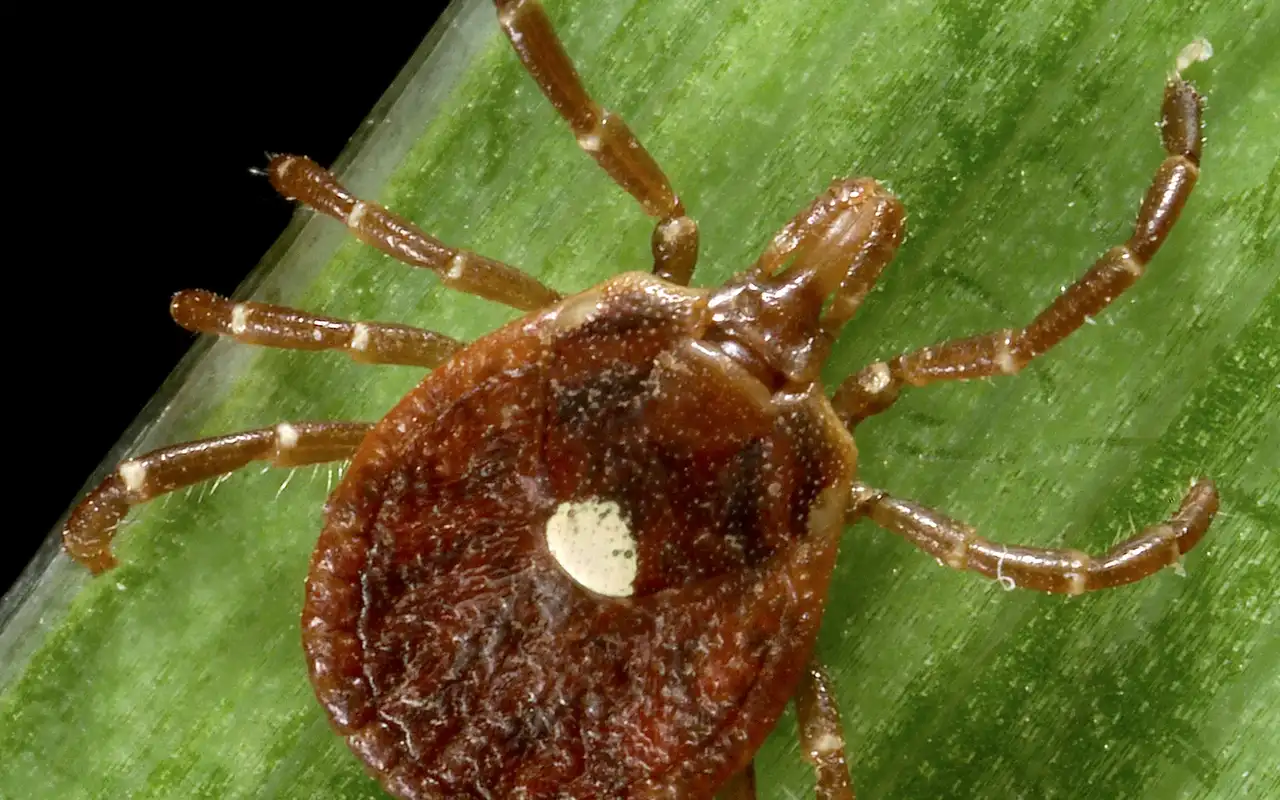
Amblyomma americanum · the single white dot marks the female lone star tick
What Do Ticks Look Like?
Eight-legged arachnids, flat and oval before feeding and swollen afterward. The lone star tick, the most common here, has a single white dot on the female back. Nymphs are the size of a poppy seed and are responsible for most bites people never notice.
HOW TO SPOT IT
SAFETY
Are Ticks Dangerous?
The most serious tick-borne risk in Texas is not Lyme, which is rare here. It is spotted fever group rickettsiosis, ehrlichiosis and, from the lone star tick, alpha-gal syndrome, a delayed allergy to red meat. Prompt correct removal matters: grasp close to the skin with fine tweezers and pull straight out.
Why Is My Yard Full of Ticks?
Tall grass, brush lines and wildlife traffic. Deer, possums and stray dogs carry ticks into a property and drop engorged females that lay thousands of eggs. Yards backing onto natural areas, like the Bob Jones corridor in Southlake or the wooded draws in Benbrook, get the most pressure.
Eric on why a mosquito-only service leaves ticks untouched.
How Do You Get Rid of Ticks?
Keep the mown edge short and the leaf litter cleared, because ticks need humidity and cover. Treat the boundary strip between mown lawn and anything wild, which is where nearly all of them are. Check people and dogs after time in tall grass.
THE SERVICE THAT TREATS THIS
Mosquito, Flea & Tick
Whole-lawn and boundary treatment on the Mosquito, Flea & Tick program, from $49.95 a visit, priced on lot size.