Home / Pest Library / Fire Ants
Fire Ants in North Texas
Red imported fire ants, the ones that boil out of the mound and sting in unison.
Red imported fire ants build loose soil mounds with no visible entry hole, and they swarm up and sting together when the mound is disturbed. They are worst in disturbed soil, which is why new construction in Haslet, north Keller and Aledo sees the heaviest pressure in our service area.
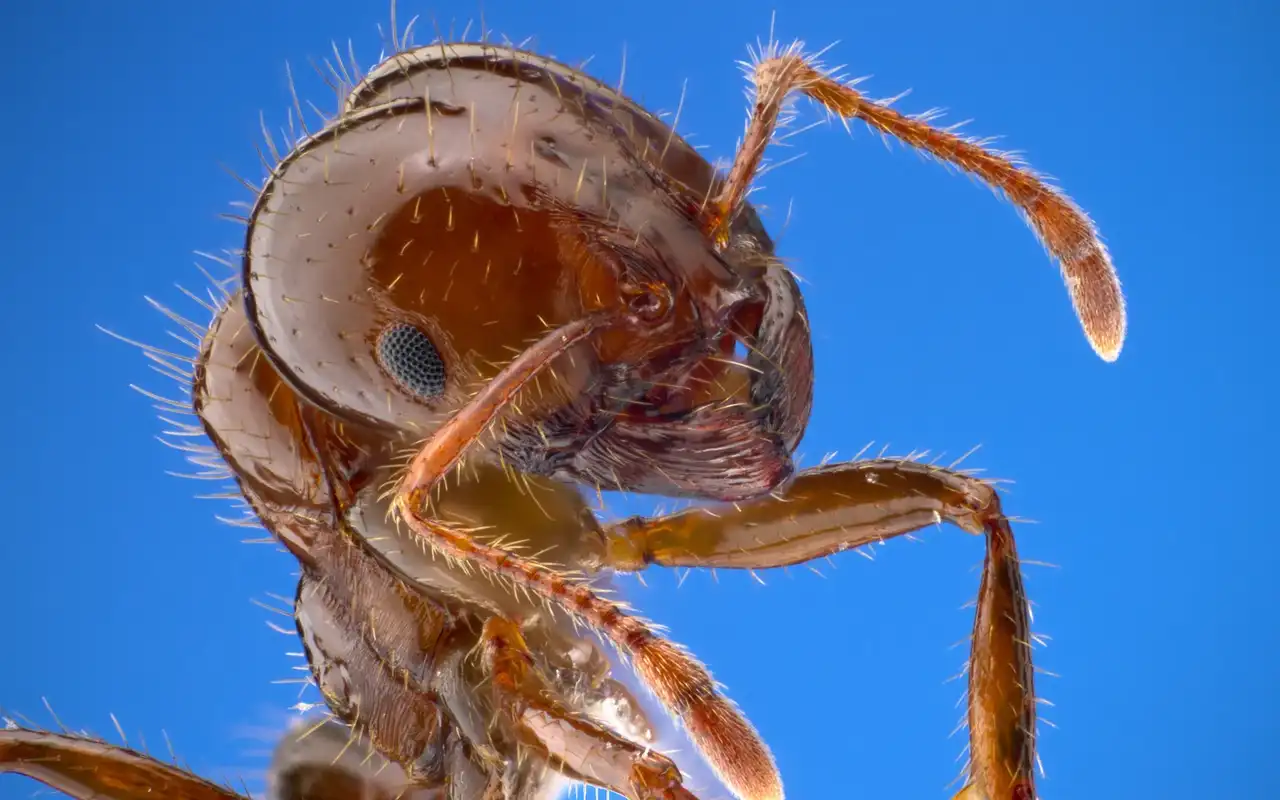
Solenopsis invicta · red imported fire ant, a uniform copper-red
What Do Fire Ants Look Like?
Reddish-brown ants ranging from about 1/8 to 1/4 inch, with workers of noticeably different sizes in the same colony. The mound is the real identifier: a dome of fluffy, worked soil with no single opening, most visible within days of rain.
HOW TO SPOT IT
SAFETY
Are Fire Ants Dangerous?
The sting hurts and typically leaves a pustule that lasts several days. For most people that is the whole story. For a small child, an elderly person or anyone with a sting allergy, a mass stinging event is a genuine medical risk, and that is the most common reason people call us urgently.
Why Is My Yard Full of Fire Ants?
Disturbed soil and open sun. Construction grading removes competing native ant species and fire ants colonize the vacuum faster than anything else, which is why a three-year-old subdivision can have more mounds than a fifty-year-old neighborhood. Rain does not create them, it just pushes existing colonies up where you can see them.
How Do You Get Rid of Fire Ants?
Broadcast bait across the entire yard, not mound-by-mound drenching. Foragers carry bait to the queen and the colony dies from the inside, which takes two to three weeks but actually finishes the job. Drenching a mound usually kills workers and prompts the queen to relocate a few feet away.
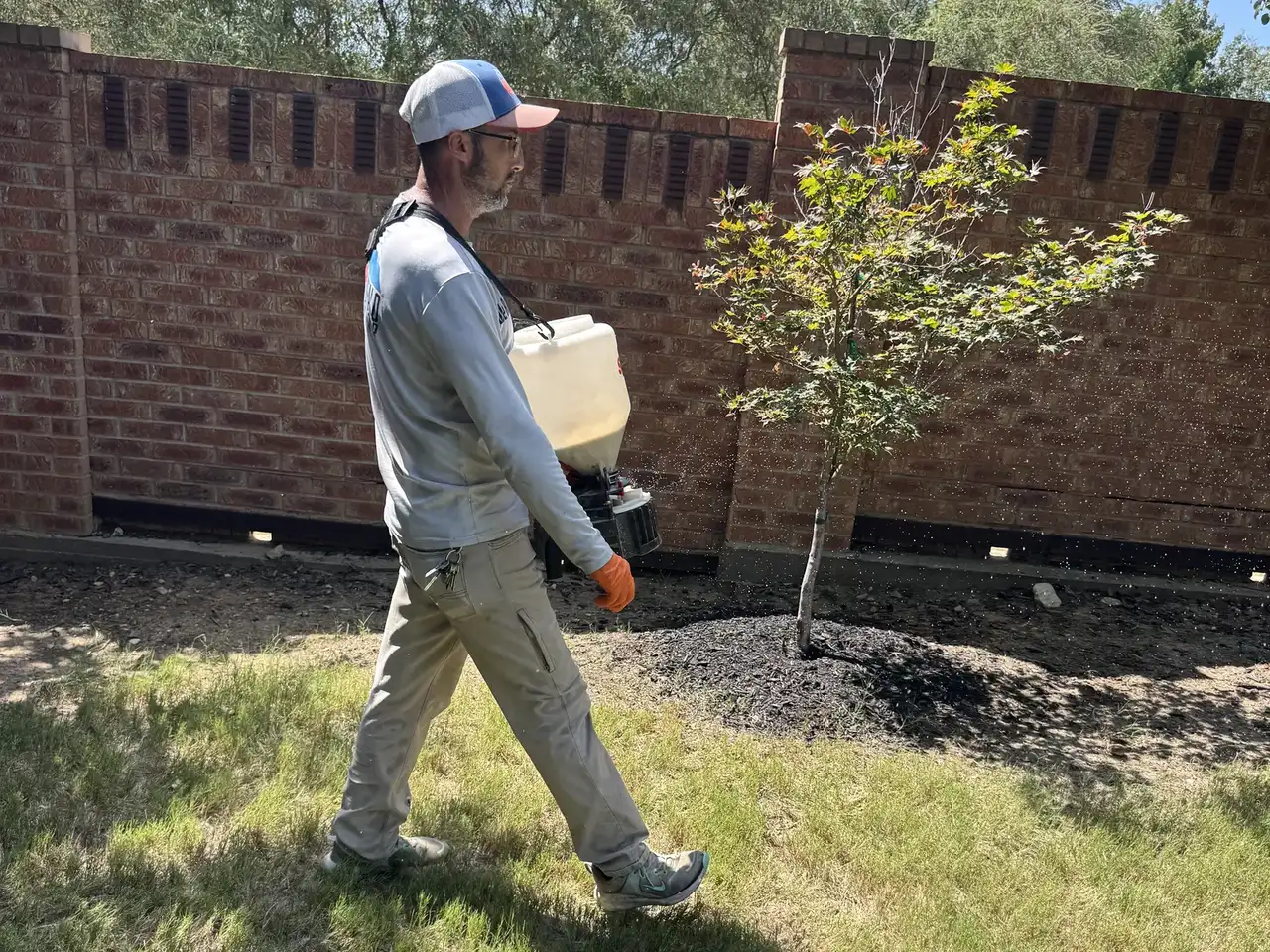
Broadcast bait going out across the whole yard, not mound by mound.
THE SERVICE THAT TREATS THIS
Fire Ant Control
Whole-yard broadcast bait, included at no extra charge on both the Home Defender and Complete Home & Lawn Defense plans.