Home / Pest Library / Mosquitoes
Mosquitoes in North Texas
Only the females bite, they rest in your shrubs all day, and they can breed in a bottle cap of water.
Mosquitoes in North Texas are active from late March through October. Only females bite, because they need a blood meal to produce eggs. They spend the heat of the day resting in shaded ornamentals and fence lines, not in the open lawn, which is why treating the shade is what actually works.
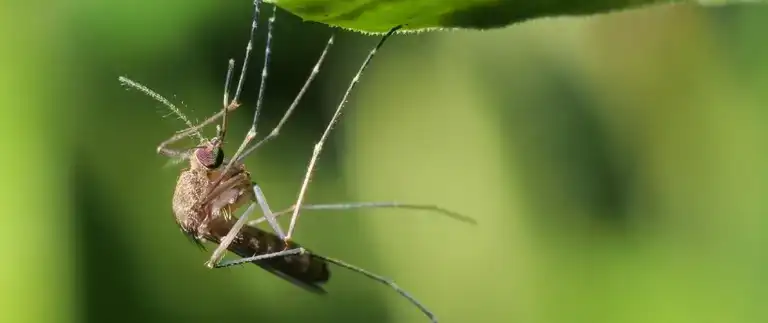
A mosquito at rest on shaded foliage · only the females bite
What Do Mosquitoes Look Like?
Small, long-legged flies with a needle-like proboscis. The two species that matter most here are the southern house mosquito, which is brown and bites at dusk and dawn, and the Asian tiger mosquito, which is black with white striping on its legs and will bite all day in shade.
HOW TO SPOT IT
SAFETY
Are Mosquitoes Dangerous?
In Tarrant County the practical risk is West Nile virus, which peaks in August and September. Most people who get it have no symptoms, a smaller share get a fever, and a very small share get seriously ill. It is a real risk worth reducing, not a reason to panic. Mosquitoes here do not carry malaria.
Why Is My Yard Full of Mosquitoes?
Standing water and shade. A mosquito can complete its life cycle in a bottle cap of water in about a week, so plant saucers, clogged gutters, tarps, toys, bird baths and French drains matter more than the nearby creek does. The adults then rest in dense, shaded, humid planting during the day.
Where the fog goes: the shaded resting spots, not the open lawn.
How Do You Get Rid of Mosquitoes?
Empty everything that holds water every week, which is free and the single highest-return step. Then treat the resting habitat: a barrier fog through ornamentals, shrub beds and fence lines every 21 days through the season, plus larvicide in any water that cannot be drained.
THE SERVICE THAT TREATS THIS
Mosquito, Flea & Tick
A treatment every 21 days, April through September, $49.95 to $129.95 a visit depending on lot size. No contract.