Home / Pest Library / Fleas
Fleas in North Texas
Ninety-five percent of the population is in your yard and carpet, not on your pet.
Fleas are wingless jumping insects that feed on blood. The adults you find on a pet are roughly five percent of the population. The rest are eggs, larvae and pupae sitting in shaded soil, carpet and pet bedding, which is why treating only the animal never finishes it.
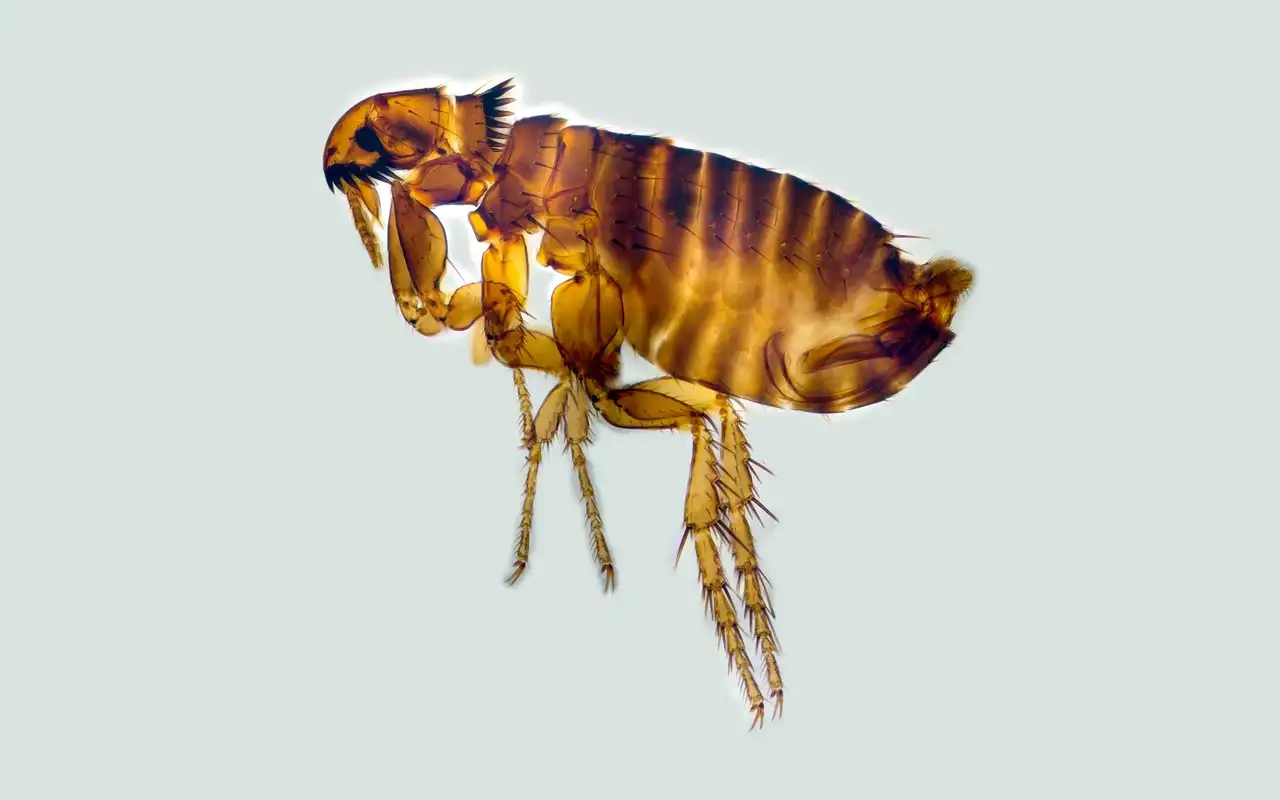
Ctenocephalides felis · the cat flea, flattened side to side to slip through fur
What Do Fleas Look Like?
About 1/8 inch, dark reddish-brown, flattened side to side so they slip through fur, and built to jump. On a pet, look for flea dirt: black specks in the coat that turn rust red on a damp paper towel, because it is digested blood.
HOW TO SPOT IT
SAFETY
Are Fleas Dangerous?
Mostly a misery and vet-bill problem rather than a health emergency. Fleas can transmit tapeworm to pets and cause flea allergy dermatitis, which is a real veterinary issue. Heavy infestations on very young or very old animals can cause anemia.
Why Is My Yard Full of Fleas?
Shade and humidity in the yard, plus a host that keeps reseeding it. Larvae cannot survive in hot dry sun, so they concentrate in shaded strips along fences, under decks and in bed mulch. Wildlife passing through, including possums and stray cats, tops the population up even in homes with no pets.
How Do You Get Rid of Fleas?
Treat the pet through your vet and the yard on a monthly cycle from May through October, because the flea life cycle runs three to four weeks in summer heat and a quarterly schedule leaves whole generations untouched. Wash bedding hot, vacuum thoroughly and empty the vacuum outside.
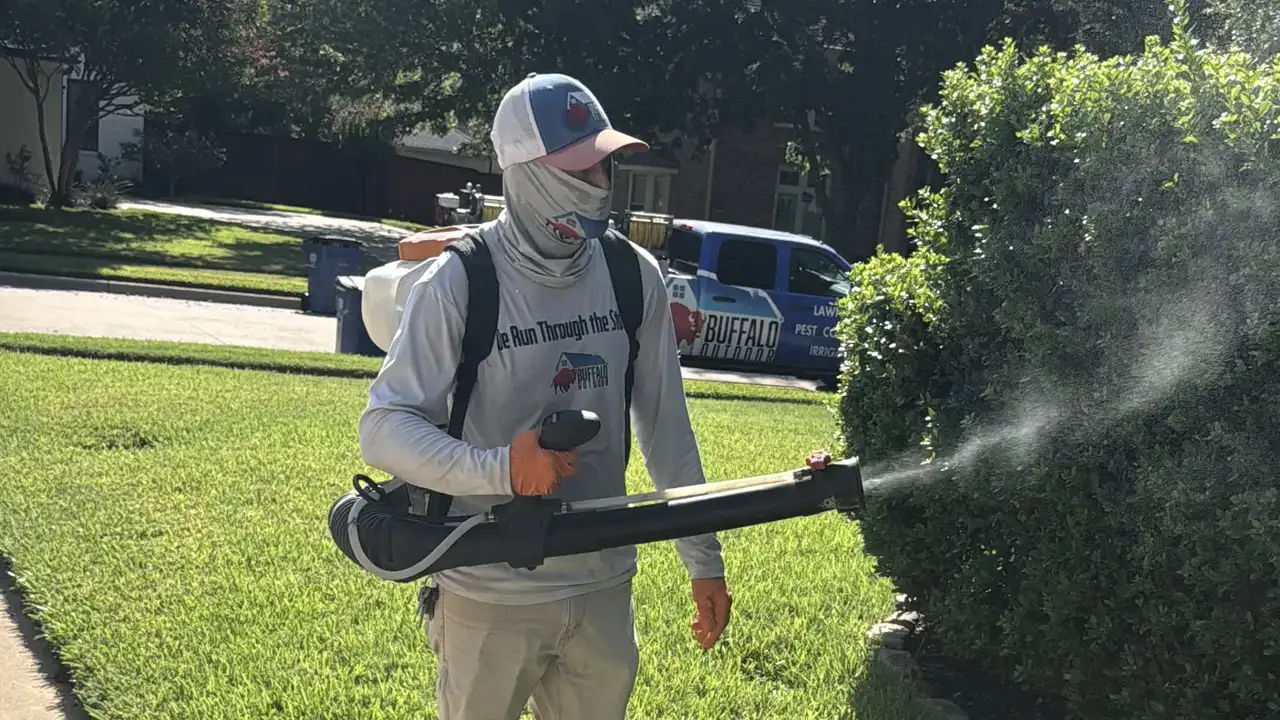
Yard treatment on the Mosquito, Flea & Tick program — the shaded strips where larvae sit.
THE SERVICE THAT TREATS THIS
Mosquito, Flea & Tick
Whole-lawn and perimeter treatment on the Mosquito, Flea & Tick program, from $49.95 a visit, priced on lot size.