Home / Pest Library / Chiggers
Chiggers in North Texas
Mite larvae too small to see, and the reason your bites ring your sock line.
Chiggers are the larval stage of a mite. They are nearly invisible, they climb until clothing stops them, and they feed on skin cells through a feeding tube rather than burrowing or sucking blood. The bite pattern is the giveaway: clusters exactly where clothing is tight.
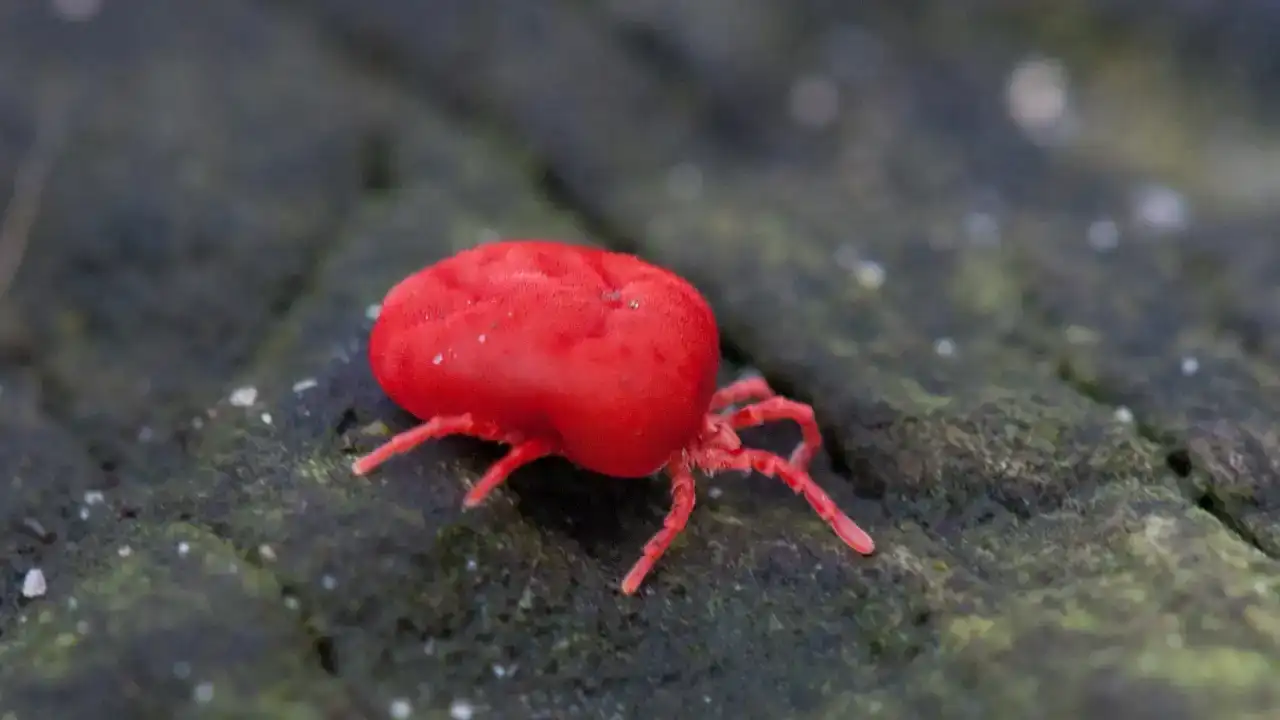
The red mite you can actually see is an adult, and adults do not bite. The larvae that do are effectively invisible.
What Do Chiggers Look Like?
Under about 1/150 of an inch as larvae, so effectively invisible without magnification. If you can see a red mite walking on a rock or a fence rail, that is usually the adult clover mite or an adult chigger mite, and neither of those bites people.
HOW TO SPOT IT
SAFETY
Are Chiggers Dangerous?
Not dangerous, just genuinely miserable. Chiggers in Texas do not transmit disease to humans. The risk is secondary infection from scratching, especially in children who cannot leave the welts alone.
Why Is My Yard Full of Chiggers?
Shade, humidity and leaf litter. They overwinter in that litter, so the same yards flare up in the same spots year after year. Creek corridors, pasture edges and any boundary where the mower stops are the classic North Texas chigger line, which is why Aledo and Benbrook are our heaviest chigger towns.
How Do You Get Rid of Chiggers?
Mow shorter and rake out leaf litter along fence lines and bed edges, which genuinely helps and costs nothing. Then treat the lawn plus a three-foot band at every entry point, and on properties backing onto pasture or woods, treat the mown boundary strip specifically.
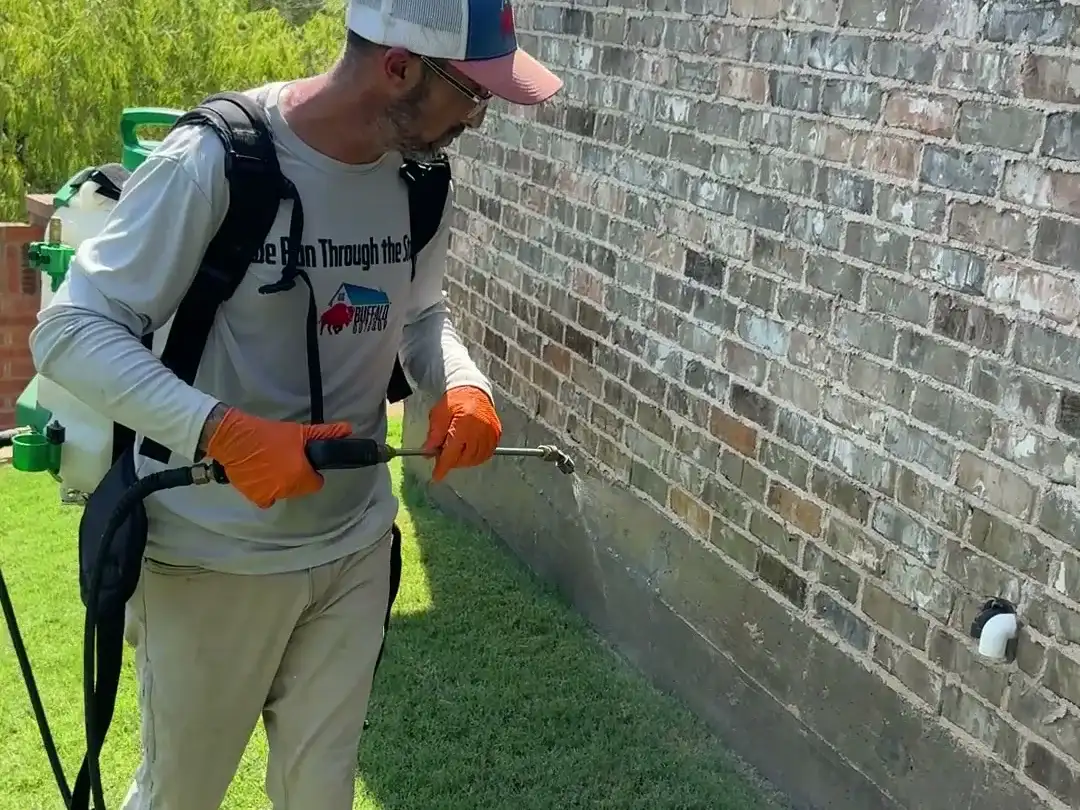
Treating the mown boundary strip, where the chigger line sits.
THE SERVICE THAT TREATS THIS
Chigger Control
Whole-lawn treatment plus entry bands, covered by the yard treatment on our year-round plans.