Home / Pest Library / Chinch Bugs
Chinch Bugs in North Texas
The insect that convinces homeowners they have a watering problem.
Chinch bugs feed on grass blades and inject a toxin that blocks water movement inside the plant. The result looks exactly like drought stress, which is why homeowners water harder for weeks while the population grows. They are worst in St. Augustine and worst in the hottest, driest strips of a lawn.
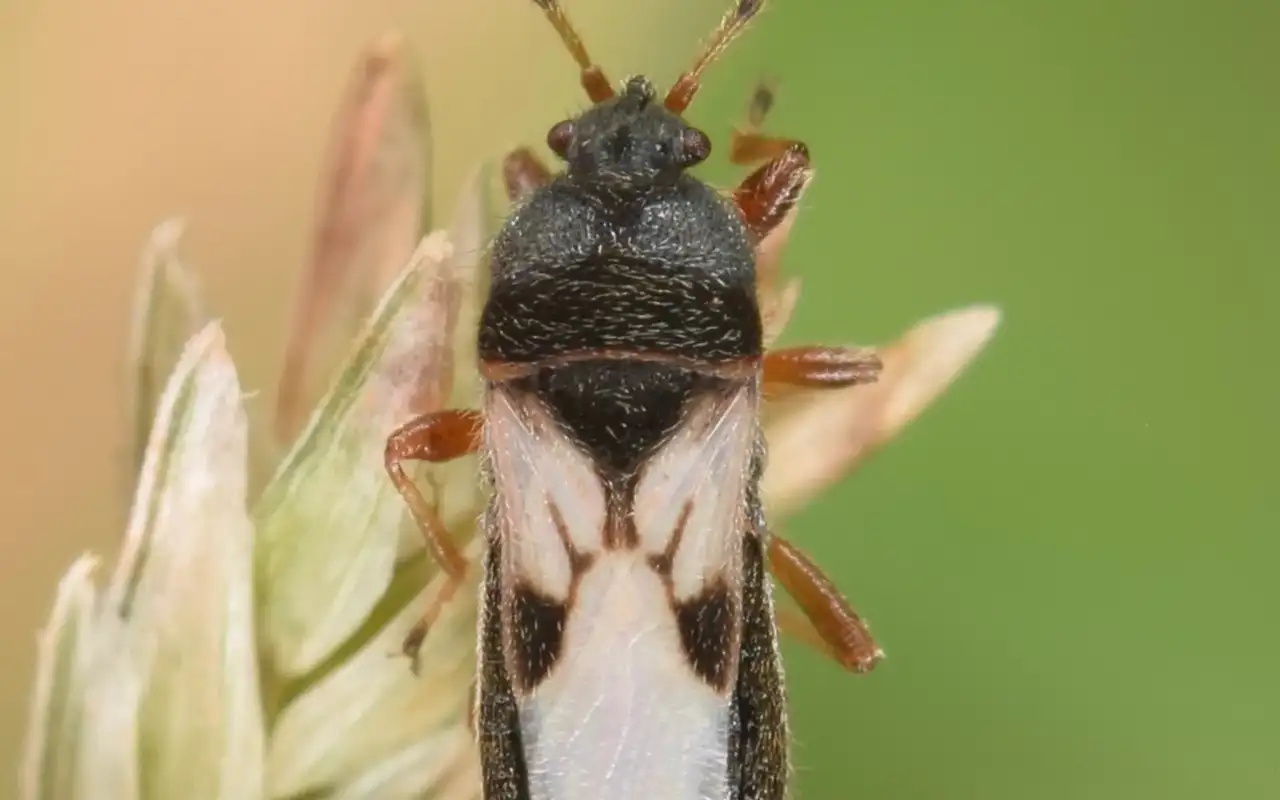
Blissus leucopterus · the white wings fold in an X across the back
What Do Chinch Bugs Look Like?
Adults are about 1/5 inch, black with white wings folded in an X across the back. Nymphs are smaller and bright red-orange with a pale band. You will usually find them at the green-to-brown transition, not in the fully dead patch.
HOW TO SPOT IT
SAFETY
Are Chinch Bugs Dangerous?
No risk to people or pets at all. The damage is entirely financial: a bad infestation can kill large sections of lawn in a matter of weeks in July and August heat.
Why Is My Yard Full of Chinch Bugs?
Heat, drought stress and thatch. They thrive where turf is already stressed, which is why the driveway strip goes first. Young St. Augustine in newer subdivisions is especially vulnerable because it is shallow-rooted and thin.
CJ shows real chinch bug damage in a North Texas lawn before treatment.
How Do You Get Rid of Chinch Bugs?
Confirm with the float test before spending anything. Treatment targets the thatch layer at the soil surface where they live, which means it works best applied to turf that is not saturated. Then fix the underlying stress: correct watering depth and mowing height make a lawn far less attractive to them.
THE SERVICE THAT TREATS THIS
Lawn Insect Control
Chinch bug, grub and armyworm treatment, covered by the yard treatment on our year-round plans.