Home / Pest Library / Grubs
Grubs in North Texas
Beetle larvae eating your roots from underneath. The lawn lifts like loose carpet.
Grubs are the larvae of beetles, most often June beetles here. They live two to four inches down and eat grass roots, so the turf loses its anchor. The signature test is the tug: grub-damaged grass lifts away in a sheet with no root resistance at all.
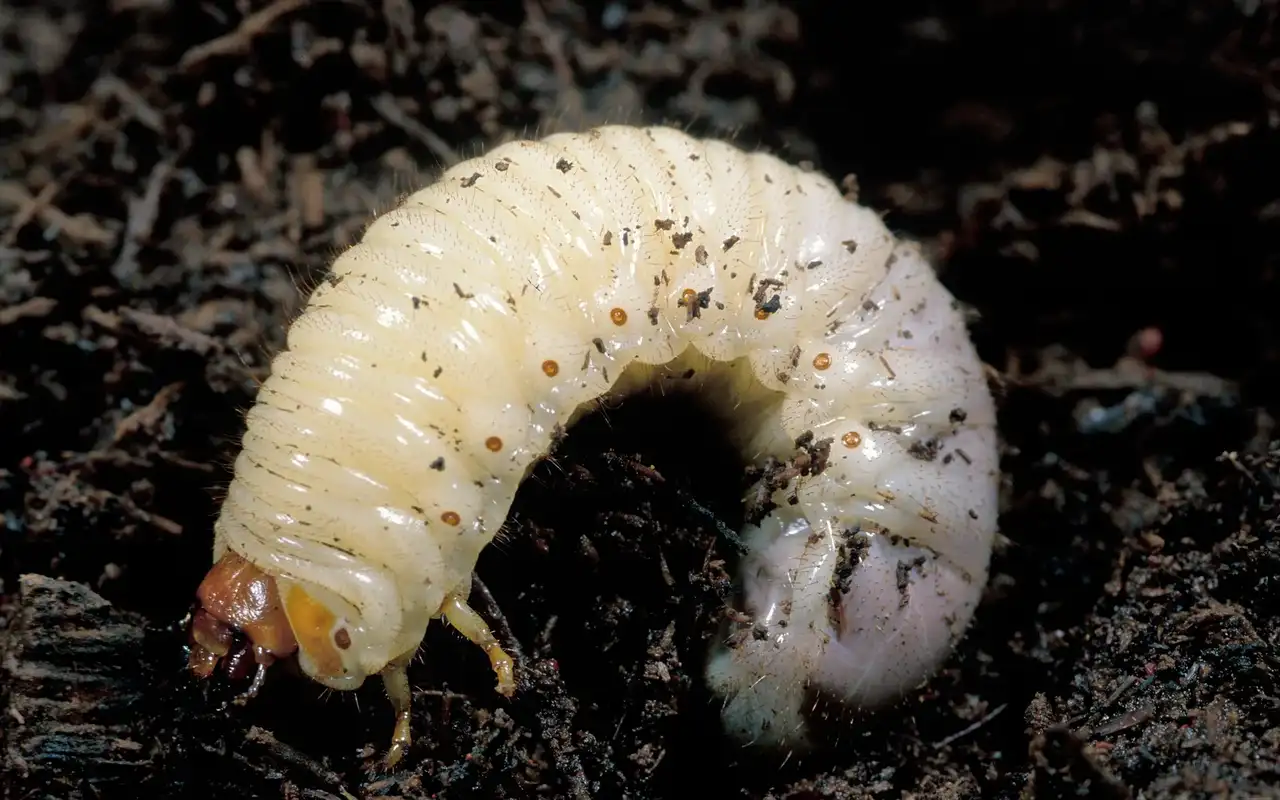
A white grub in the soil · the C-shape, brown head capsule and legs near the head
What Do Grubs Look Like?
White to cream C-shaped larvae with brown head capsules and visible legs near the head, usually 1/2 to 1 inch long. You find them by peeling back turf at the edge of a damaged patch, not by looking at the surface.
HOW TO SPOT IT
SAFETY
Are Grubs Dangerous?
No risk to people or pets. The secondary problem is often worse than the grubs: armadillos and skunks tearing up a lawn to get at them can do more visible damage in a week than the grubs did all season.
Why Is My Yard Full of Grubs?
Adult beetles lay eggs in moist, well-watered turf in early summer. Irrigated lawns are more attractive than dry ones, so a well-maintained lawn can carry a higher population than a neglected one next door.
How Do You Get Rid of Grubs?
Timing is the whole game. Young grubs in late summer are far easier to kill than large ones in fall, so scouting in August beats reacting in October. Because they live at the root zone, the product has to be watered in to reach them, and a treatment left on the surface does nothing.
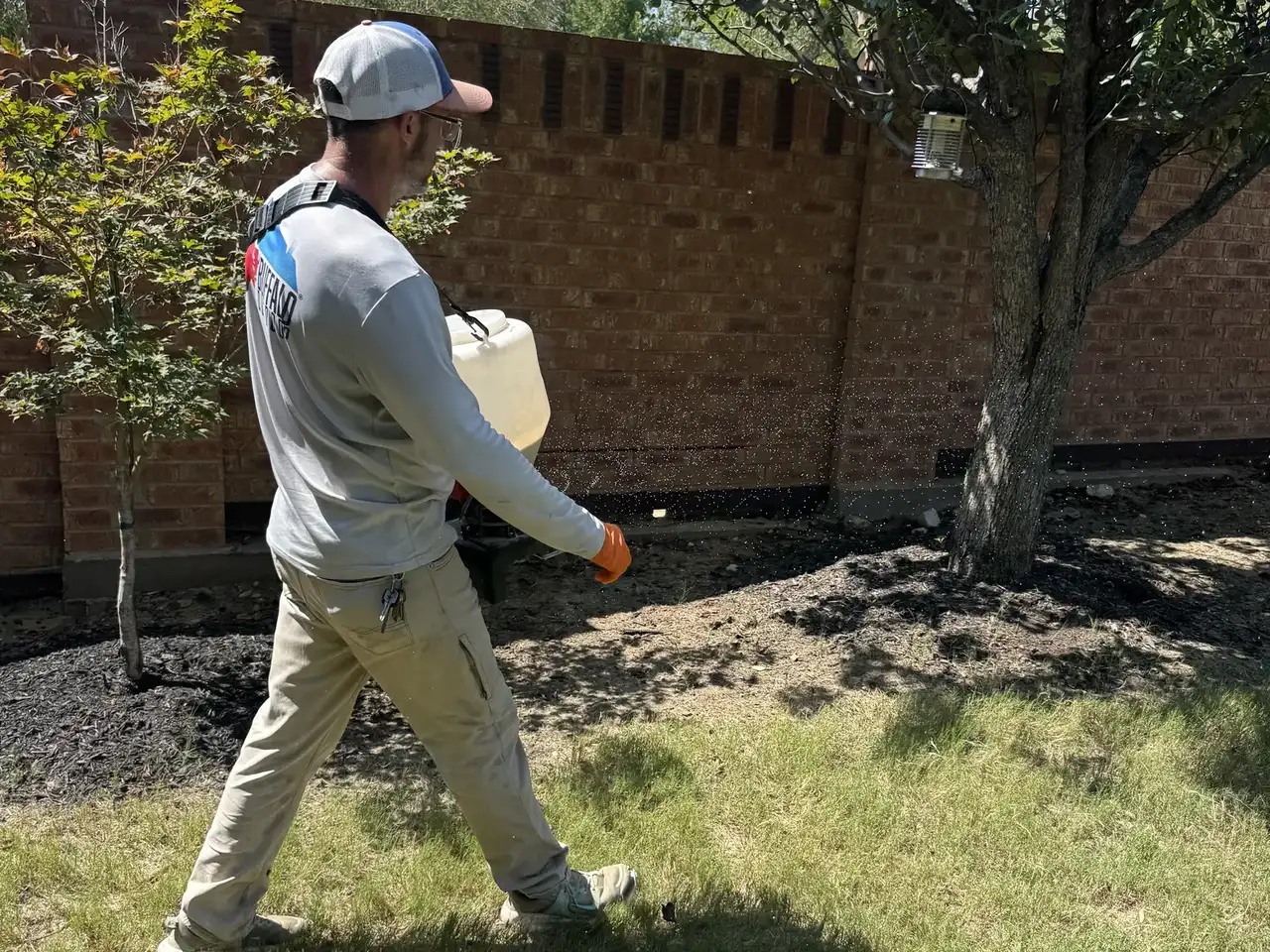
Granular going down — it has to be watered in to reach the root zone.
THE SERVICE THAT TREATS THIS
Lawn Insect Control
Grub, chinch bug and armyworm treatment applied at the right depth and the right month, covered by our year-round plans.