Home / Pest Library / Scorpions
Scorpions in North Texas
Striped bark scorpions come in through weep holes, hunting the insects already inside.
The striped bark scorpion is the only scorpion commonly found in North Texas homes. It is nocturnal, it comes in through weep holes, door sweeps and plumbing gaps, and it is hunting insects rather than looking for you. Sealing the exterior is what stops them.
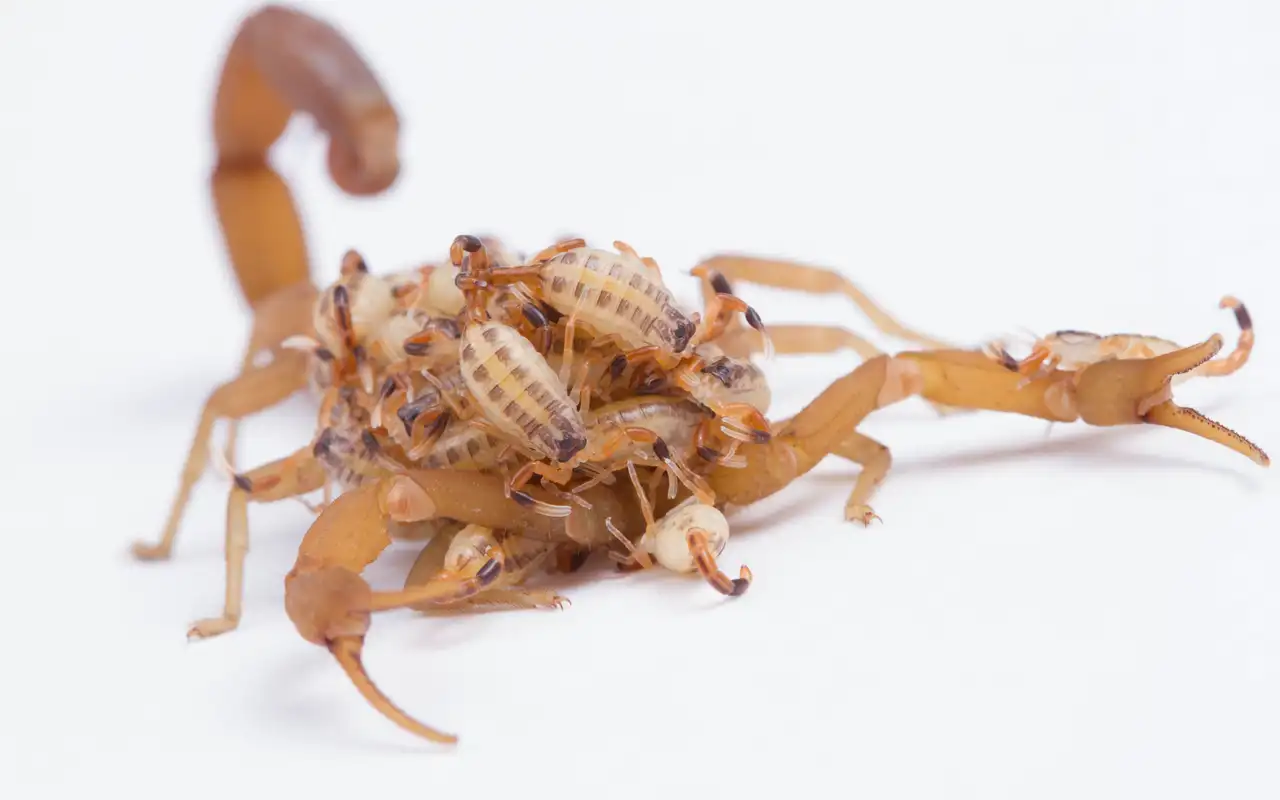
Centruroides vittatus · striped bark scorpion · the only species that turns up indoors here
What Do Scorpions Look Like?
Tan to yellowish, roughly 2 to 3 inches including the tail, with two darker stripes running the length of the back. Fluoresces bright blue-green under a UV blacklight, which is by far the easiest way to find them at night.
FIELD MARKS
LENGTH
2–3 in. with tail
COLOUR
Tan to yellowish
MARKING
Two dark dorsal stripes
ACTIVE
After dark
UV TEST
Glows blue-green
SAFETY
Are Scorpions Dangerous?
The sting is painful, comparable to a bad wasp sting, with local swelling. It is not medically dangerous to a healthy adult in Texas. Small children, the elderly and anyone with a known allergy should be seen by a doctor.

The weep-hole line on a brick home — the route in, and where the dust goes.
Why Is My Yard Full of Scorpions?
They follow the insects. A home with crickets, roaches and spiders around the foundation is feeding scorpions, and older brick homes with unsealed weep holes give them an easy route in. Fort Worth and Saginaw housing stock from the 60s and 70s produces most of our scorpion calls.
How Do You Get Rid of Scorpions?
STEP 01
Seal the way in
Copper mesh in every weep hole, door sweeps that actually seal, and the gaps around plumbing penetrations closed.
STEP 02
Cut the food supply
The perimeter barrier goes down next. Take away the crickets, roaches and spiders and the scorpions have no reason to hunt your foundation.
STEP 03
Why spray alone fails
Chasing scorpions with interior spray rarely fixes it on its own, because the entry points stay open behind it.
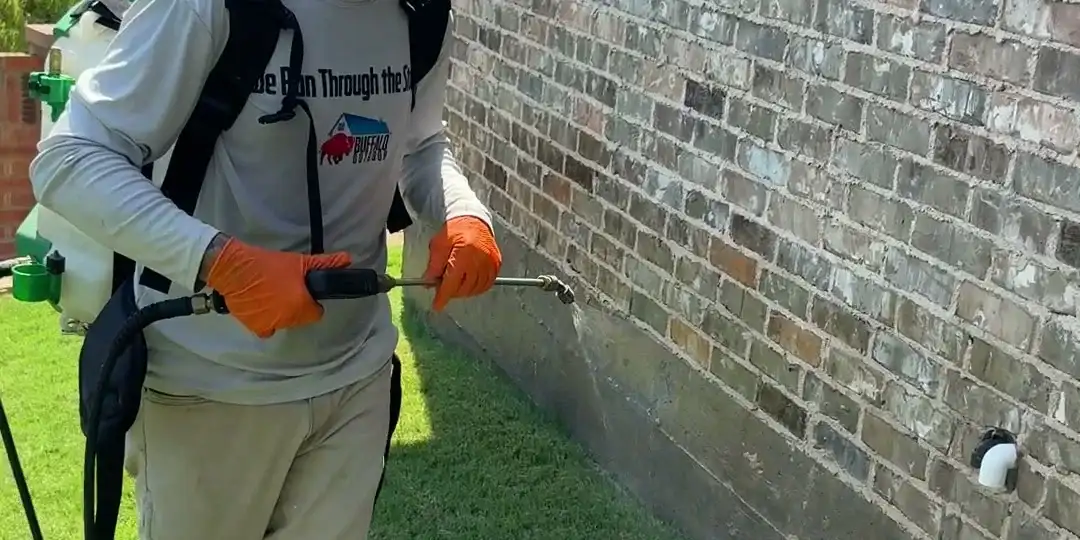
The perimeter barrier going down along the foundation line.
FROM THE CREW
Copper Mesh, Not Steel Wool
Step one above is the part homeowners ask about most, so here it is on camera: copper mesh versus steel wool going into a weep hole.
THE SERVICE THAT TREATS THIS
Home Defender Plan
The foundation barrier from $30 a month, with copper mesh weep-hole sealing included rather than sold as an extra.