Home / Pest Library / Spiders
Spiders in North Texas
A spider problem is almost always an insect problem first.
Spiders set up where the food is, so webs in your door frames and eave corners mean there is a steady insect supply there. The two species worth identifying in North Texas are the brown recluse and the black widow. Everything else you find is harmless and is eating other pests.
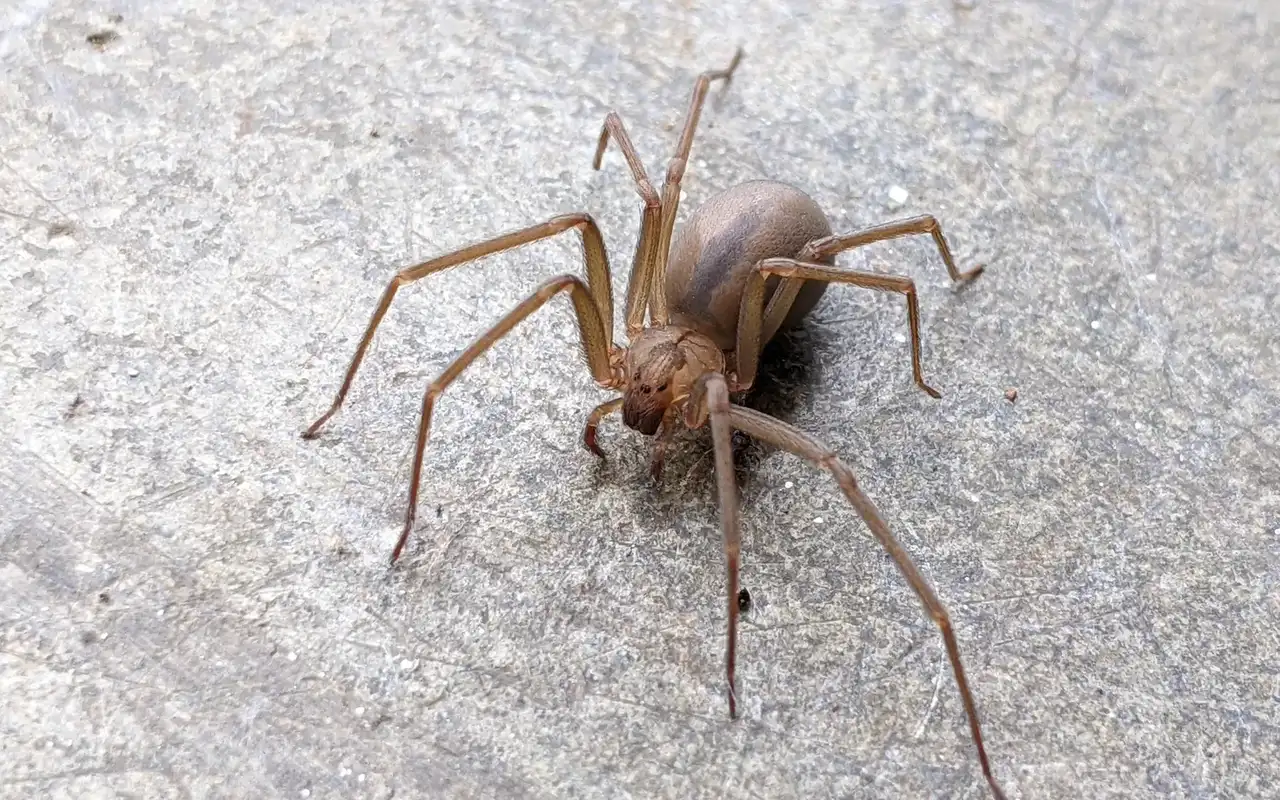
Loxosceles reclusa · brown recluse, one of two species here worth identifying
What Do Spiders Look Like?
Brown recluse: uniform tan body with a darker violin shape behind the eyes, long thin legs, no pattern on the abdomen. Black widow: glossy black with a red hourglass on the underside, found in undisturbed dark places. Both avoid people.
HOW TO SPOT IT
SAFETY
Are Spiders Dangerous?
The vast majority are harmless. Brown recluse and black widow bites are medically significant and warrant a doctor, though both spiders are reclusive and bites are uncommon and usually happen when the spider is pressed against skin, in clothing or bedding.
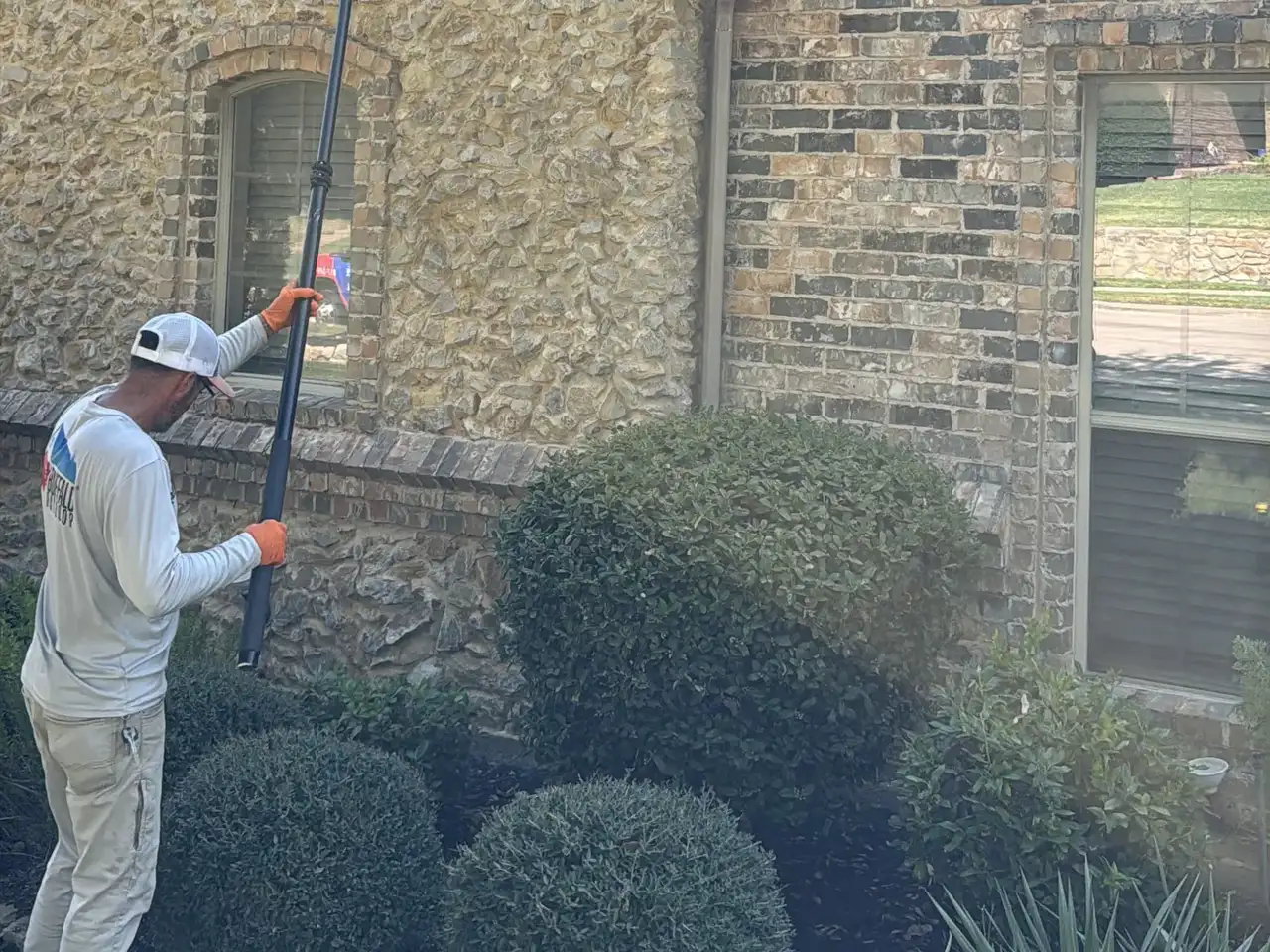
Eave corners and porch ceilings are the anchor points they want.
Why Is My Yard Full of Spiders?
Food and shelter. Exterior lights draw insects, insects draw spiders, and eave corners and door frames give anchor points out of the weather. Cluttered garages and storage give recluses exactly the undisturbed harborage they want.
Web-Out on a web pole: treating the webs so they do not come straight back.
How Do You Get Rid of Spiders?
Treat the insects and the webs together: a perimeter barrier reduces the food supply, and the web pole sweep across eaves, soffits and door frames removes the anchor points. Switching exterior bulbs to warm or yellow tones draws noticeably fewer insects and therefore fewer spiders.
THE SERVICE THAT TREATS THIS
Home Defender Plan
Barrier treatment plus eave and door-frame web sweep on every visit, from $30 a month.