
FLEAS AND TICKS IN KELLER
Why the older Keller streets get fleas the new ones mostly skip
Fleas need shade and damp soil to finish growing up, and the neighborhoods around Bear Creek have both in abundance. Forty-year-old oaks and pecans keep the ground under them humid, leaf litter collects along the fences, and that is exactly the strip where flea eggs, larvae and pupae sit waiting for a dog to walk past.
The newer construction off Keller Haslet Road is a different story. Thin canopy and open Bermuda bake in July, so flea pressure there is usually confined to the shaded side of the house, under the deck and along the fence line where the sprinklers keep things wet. Ticks follow the creek corridor and any tall grass the mower does not reach.
Our program treats the entire lawn plus the building perimeter on a 21-day cycle from April into September. The pet side belongs to your veterinarian, and without it the yard treatment only wins half the fight.
WHAT KELLER PAYS
Priced per visit on your lot, not on the size of the problem
A Keller lot between 7,001 and 12,000 square feet runs $59.95 a visit, and the next band up, 12,001 to 17,000, is $69.95. Many of the established lots near the creek fall into one of those two. Larger Keller properties in 76262 climb through the bands in $10 steps, and anything past 47,000 square feet gets an individual quote.
There is no contract, no startup fee and no cancellation fee, and you see the number before you agree to anything. If fleas or ticks show back up between scheduled visits, the retreatment is included because the service is warrantied between treatments.
7,001 to 12,000 sq ft
$59.95 a visit
Typical of the older Bear Creek streets
12,001 to 17,000 sq ft
$69.95 a visit
Common on the newer lots to the north
17,001 to 22,000 sq ft
$79.95 a visit
Larger corner and cul-de-sac lots
Over 47,000 sq ft
Quoted
Roughly an acre or more in 76262
Every number on this page comes from our published price list. Keller homes get the same table as everyone else; the instant quote reads your square footage and lot size and hands you your own line.
WHERE IT FALLS SHORT
Three things this program will not do for a Keller home
It will not clear fleas that are already breeding inside your house. Once eggs have dropped into the carpet and the dog bed, the indoor population reloads itself no matter how clean the yard is. That job is vacuuming, hot-washing bedding and a vet-prescribed product on the animal, and we will tell you so before you pay us for a visit that cannot fix it.
It will not stop ticks from riding in on a dog that spends its afternoons in the Bear Creek corridor. We treat your side of the fence, not the greenbelt, so a Keller dog that hunts squirrels along the creek still needs checking when it comes home.
And it is not a single-visit product. The flea cycle runs three to four weeks in a Texas summer, so a single application clears one generation and leaves the next one hatching. We do not sell one-off visits for that reason, and anyone who does is selling you a two-week break.
VET ONLY VERSUS VET PLUS YARD
Is the vet's prevention enough on its own in Keller?
For a dog that rarely leaves a sunny, open yard, a good monthly preventive from the vet often is enough, and we would rather say that than sell you a program. The product kills adults that reach the animal, and if the yard is not producing many adults, the math works.
Under the canopy near Bear Creek the math changes. The yard can hold thousands of immature fleas per shaded strip, and every one that matures gets a free ride onto the dog before the product kills it. That is the itching, scratching pattern Keller owners describe when they say the vet stuff has stopped working. It has not; the yard is outproducing it. Treating both is what breaks the loop.
THE FIRST KELLER VISIT
What happens the first time we come out
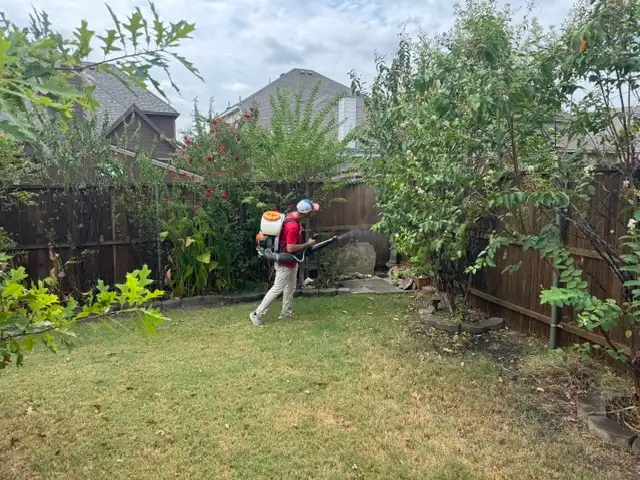
Walking the shade
We look for the strips that stay damp past noon: the north side of the house, under decks, the fence line beneath the pecans. Those get the heaviest attention because that is where the flea population actually lives.
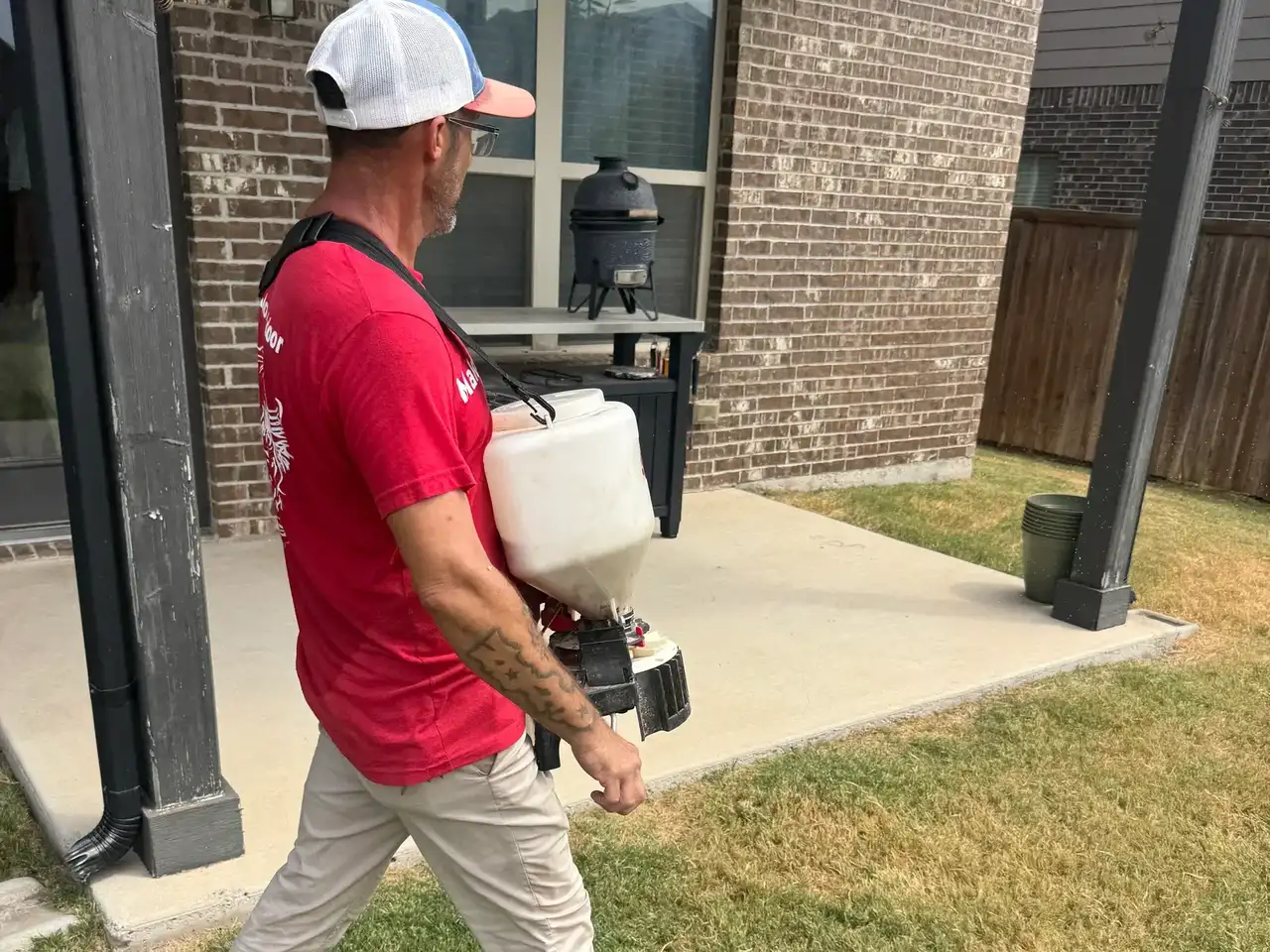
Lawn, then perimeter
The whole lawn gets treated first, then a band around the foundation so fleas and ticks do not use the slab edge as a highway to the door. Pets can come back out once the application dries, which in summer heat is around two hours.
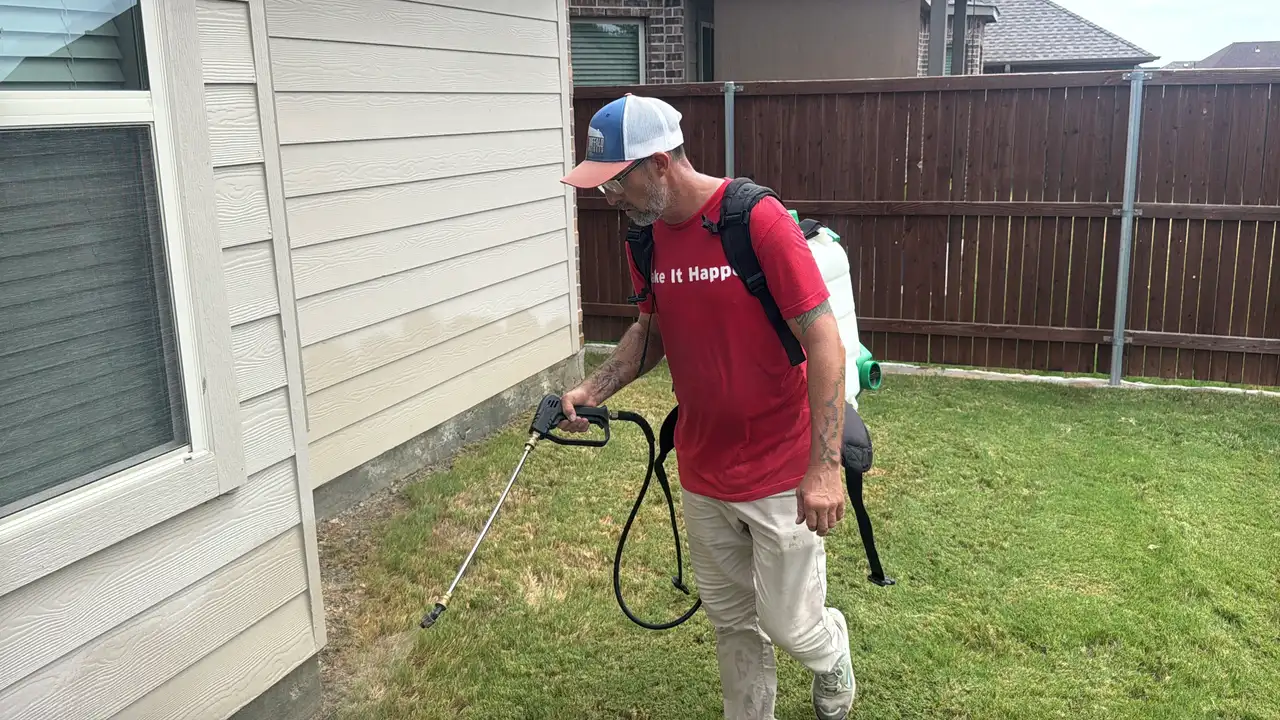
The pet conversation
Before we leave we ask what the dog or cat is on and when it was last given. If the answer is nothing, the visit will not hold, and we say so plainly rather than book the next one and hope.