SETTLED SOIL, OLD TURF
What actually eats a Watauga lawn
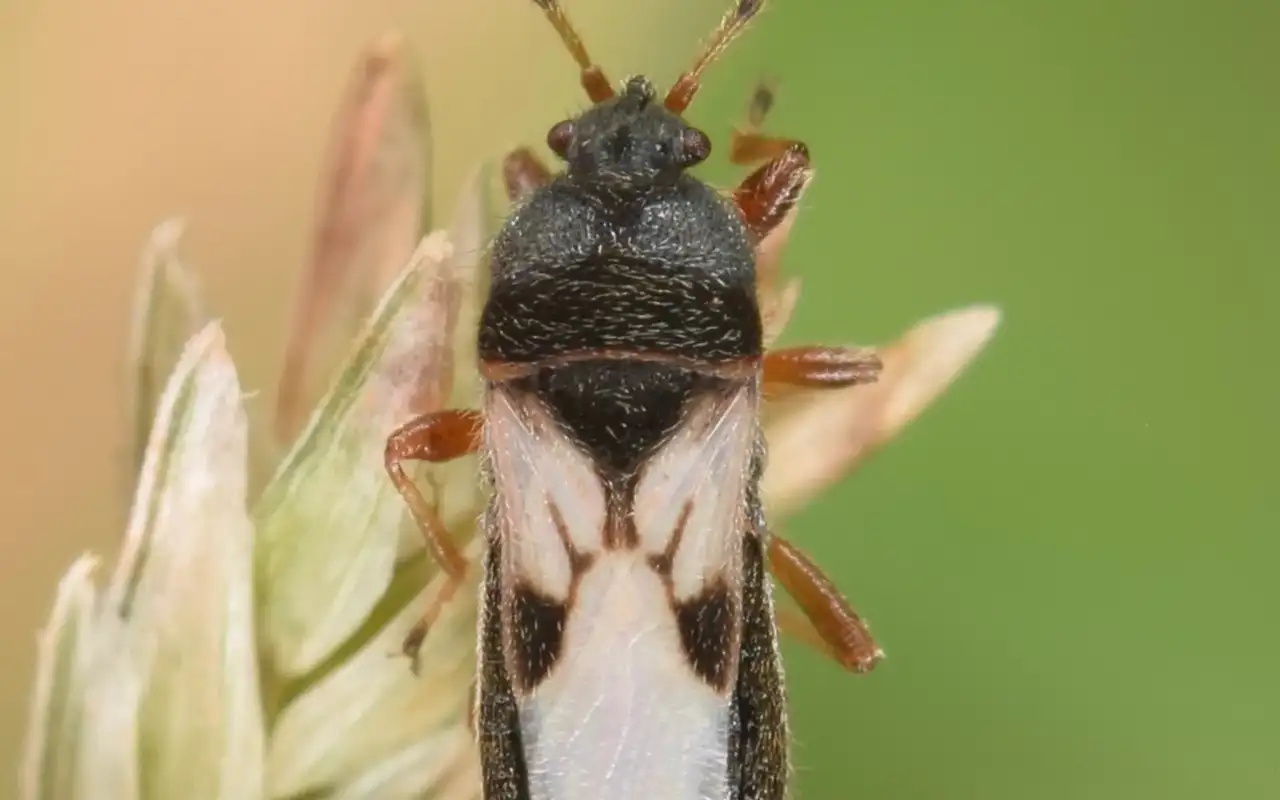
Grubs, mostly, with fall armyworms a close second. Watauga was built out in the 1970s and 80s, so the Bermuda and St. Augustine here is decades old, deep-rooted and shaded by trees the same age as the houses, and that is not the kind of turf chinch bugs hunt for. It is exactly the kind beetles lay eggs in.
The grubs hatch and spend late summer chewing roots two to four inches down, and the first sign most Watauga homeowners notice is not colour but texture: the lawn goes spongy underfoot and a corner lifts up like a loose rug. Armyworms are the other story. They arrive as a front after a wet spell in late summer, and a Bermuda lawn that looked fine at supper can be scalped by breakfast.
WATAUGA PRICING
The monthly number for a Watauga house
Between $40 and $51.50 a month for most homes, because whole-yard insect coverage lives inside Complete Home & Lawn Defense and that plan is priced on the square footage of the house, with the bulk of Watauga's brick falling in the 1,500-to-3,000 band. Home Defender, at $33 to $38 for the same size house, treats the lawn out about 25 feet from the foundation instead of the whole thing.
The price is the same whether your address mails as Watauga 76148 or as Fort Worth 76137 on the west side; we go by the house, not the postmark. You get the figure before you commit, and there is no contract to sign, no startup fee and no cancellation fee if you leave.
1,500 to 3,000 sq ft
$40–$51.50/mo
Whole yard on Complete Home & Lawn Defense
1,500 to 3,000 sq ft, Home Defender
$33–$38/mo
Lawn treated to about 25 feet
3,000 to 4,500 sq ft
$51.50–$62/mo
The larger Watauga two-storeys, whole yard
Every number on this page comes from our published price list. Watauga homes get the same table as everyone else; the instant quote reads your square footage and lot size and hands you your own line.
SAY IT BEFORE THEY BUY
When a Watauga homeowner should keep their money
Keep it if the brown patches green up after a week of deep, infrequent watering. Drought stress does that; insect damage does not. Around half the things that brown a North Texas lawn in July are heat, water or fungus, and there is no insecticide for any of them.
Keep it if the count comes back low. Every established Watauga lawn has a few grubs in it and they cause no visible harm. The threshold is more than five larvae under a square foot of peeled-back turf, and below that we would be treating for the sake of treating.
And understand what the treatment buys even when it is warranted. It kills what is feeding. It does not knit the roots back together, and a section that has already gone brown and loose may need resodding regardless of how fast we get there. That recovery is watering and fertility work, not pest control, and we will say which patches need it.
SPADE VS SPREADER
Do you even need to call, or just dig?
Dig first. A spade and five minutes at the edge of the bad patch tells you more than any phone call, and it costs nothing. If the turf lifts away rootless and you can count white C-shaped larvae underneath, you have grubs and a decision to make. If it holds firm and the roots are intact, you have something else, and a treatment would be wasted.
Where the store-bought bag falls down in Watauga is not the chemistry, it is the depth and the timing. Grub product has to be watered down into the root zone or it sits uselessly in the thatch, and it works far better on small late-summer grubs than on the big ones people find in October. If you will follow the label and water it in properly, doing it yourself is fair enough. If you would rather somebody read the lawn first, that is what the first visit is for.
THE OPENING VISIT
What we do on a Watauga lawn the first time
Feel the turf
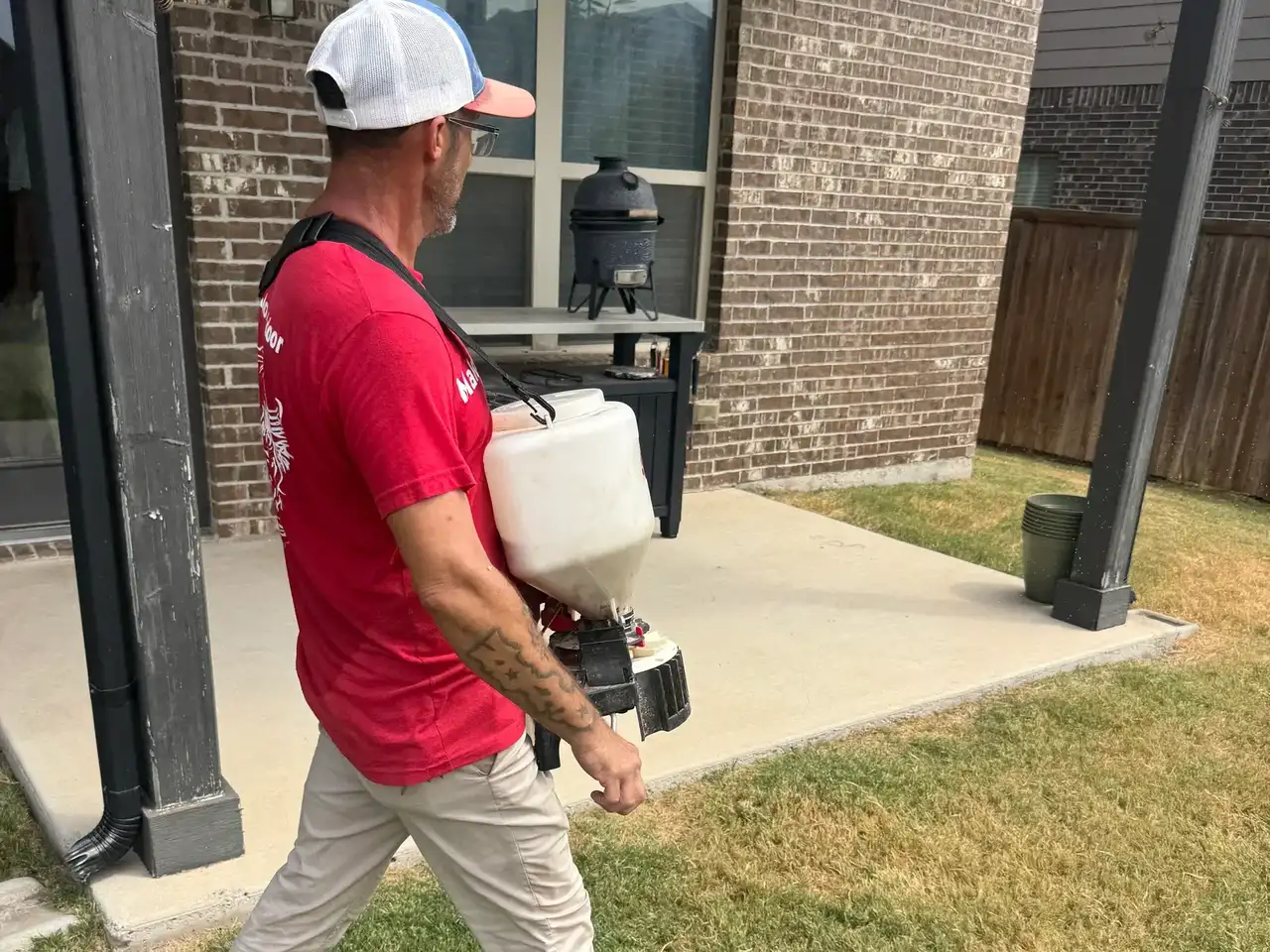
We walk the lawn and press on it, because grub-damaged Bermuda is spongy long before it is brown. Where it gives, we lift the edge and count larvae rather than assume.
Look for the front
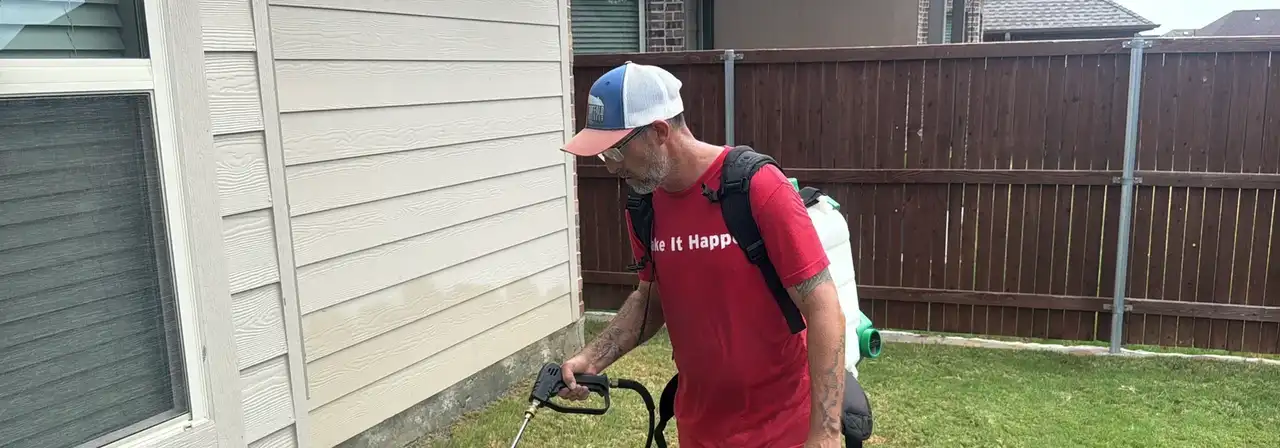
In late summer we check the blades themselves for armyworms, especially near any open ground or unmowed edge. They move as a group, so finding them on one side of the yard tells us which direction the damage is heading and how fast to act.
Water it in before we leave
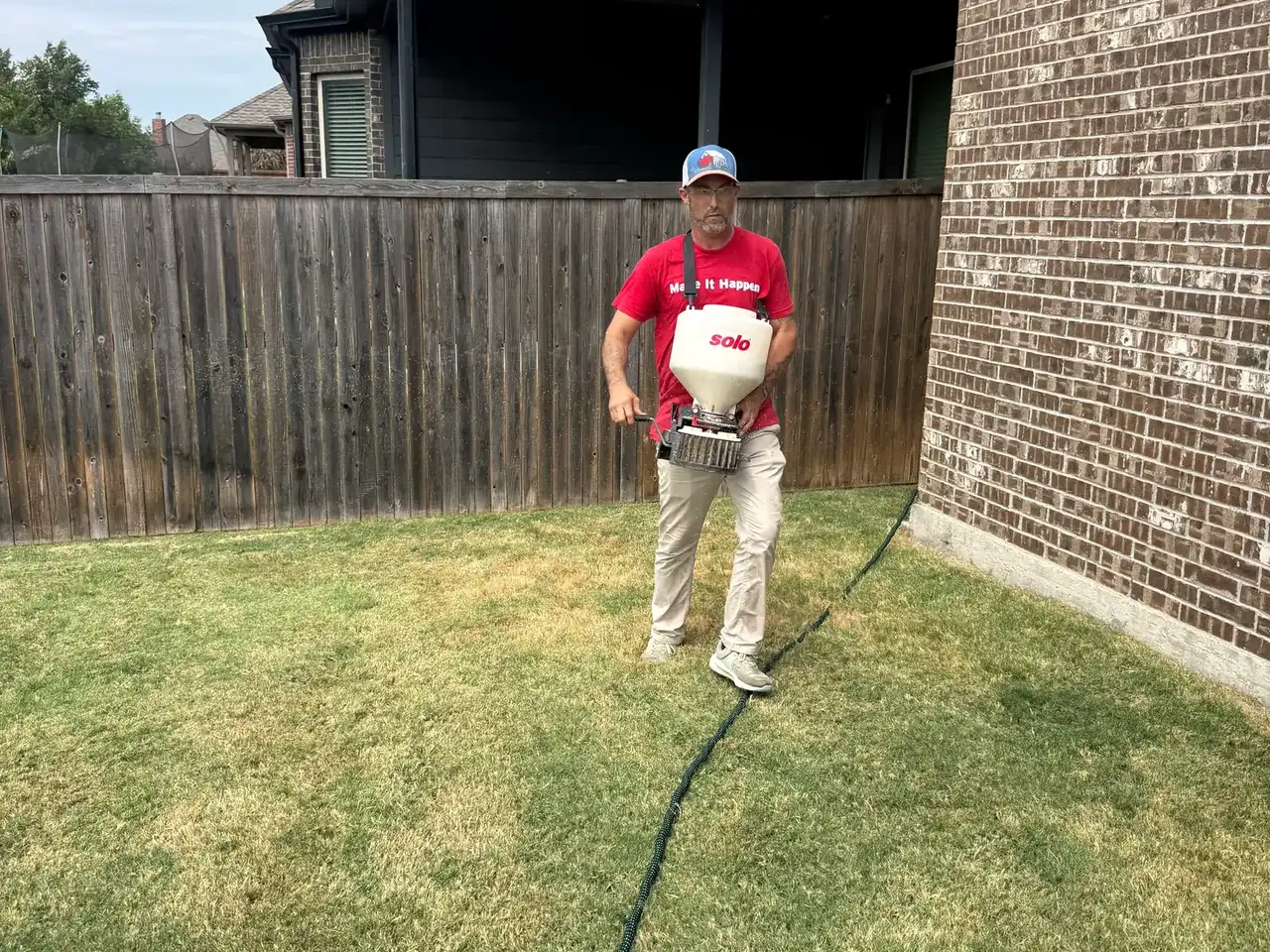
Granular product goes across the yard with a spreader, and for grubs it is useless until irrigation carries it down to where they feed. We tell you exactly how long to run the sprinklers, and we time the visit around your mowing day if you tell us which one it is.