
TWO KINDS OF ALEDO LOT
Which Aledo yards get chiggers and which never do
It comes down to what is on the other side of your fence. Aledo is filling in fast around Old Annetta Road, FM 1187 and Bailey Ranch, and a lot ringed by other new lots gives chigger larvae almost nowhere to sit out the winter. The older properties at the edges of town, where mown grass runs into open ground, are the 76008 addresses that end up calling us in June.
The bites tell you before anything else does. A chigger larva is small enough to miss entirely, and it climbs until clothing stops it, so the welts form a band at the sock cuff, the waistband and behind the knees. Itching that began several hours after you walked the back of the property, rather than while you were out there, fits the same pattern.
WHAT SQUARE FOOTAGE SETS
What chigger coverage runs on an Aledo home
Chiggers ride along with the yard treatment on a year-round plan, so the number follows the size of your house rather than the bug. Complete Home & Lawn Defense treats the entire lawn and lands at $51.50 to $62 a month for a 3,000 to 4,500 square foot house, which is where plenty of the newer Aledo builds sit, and $62 to $73.50 once the house passes 4,500. Above 6,000 square feet somebody walks it and quotes.
Home Defender covers a 25-foot ring around the foundation for $30 to $54 a month and carries fire ant treatment exactly as the whole-yard plan does. On a standard subdivision lot that ring may reach the back fence; on an Aledo place with real ground behind it, it stops well short of where the larvae live. Neither plan asks for a contract or a startup fee, and you hear the figure before you agree to anything.
3,000 to 4,500 sq ft
$51.50 to $62 a month
Common size in the newer sections
4,500 to 6,000 sq ft
$62 to $73.50 a month
Whole lawn treated, fire ants included
Over 6,000 sq ft
Quoted
Walked first, priced after
Home Defender, any size
$30 to $54 a month
Reaches 25 feet out, no further
Every number on this page comes from our published price list. Aledo homes get the same table as everyone else; the instant quote reads your square footage and lot size and hands you your own line.
WHEN TO SKIP IT
Reasons an Aledo homeowner should not buy this
A lot sitting in the middle of a new section with houses on all four sides rarely has a chigger problem worth paying for. Graded soil and young turf bring fire ants and chinch bugs first around here; chiggers want leaf litter, shade and grass nobody cuts, and a fresh subdivision interior offers none of the three.
Where the habitat does exist, know what the treatment cannot reach. We work your ground, not the field or undeveloped acreage past the fence, and that ground keeps producing larvae from May into August. A treated buffer at the mown boundary takes out the population that has already crossed, and that population is most of what is biting you.
Leaf litter beats product every time. Sprayed over a mat of old leaves along a fence row, the application sits on top while the larvae underneath carry on as before. Rake it out first or the same shaded corner of the Aledo yard will be biting again next summer.
MOWING OR TREATING
The mower against the plan on an Aledo property
Cut the edge short before spending a dollar with anyone, because height and shade are what chiggers need and a low, dry, sunny boundary is poor habitat. Sulfur dust is the old Parker County answer and it does repel for a few days, but the first storm washes it off and spreading it over any real distance is a nuisance.
A plan adds treated ground where mowing cannot fix things: the whole lawn, weighted along the boundary strip, plus a three-foot band at every door so nothing is carried in on ankles. A flare between scheduled visits gets retreated at no charge instead of billed as a call-out. For most Aledo customers the split is simple, in that mowing handles a tidy interior lot and treating handles anything touching open ground.
DAY ONE IN 76008
How the first chigger visit runs on an Aledo lot
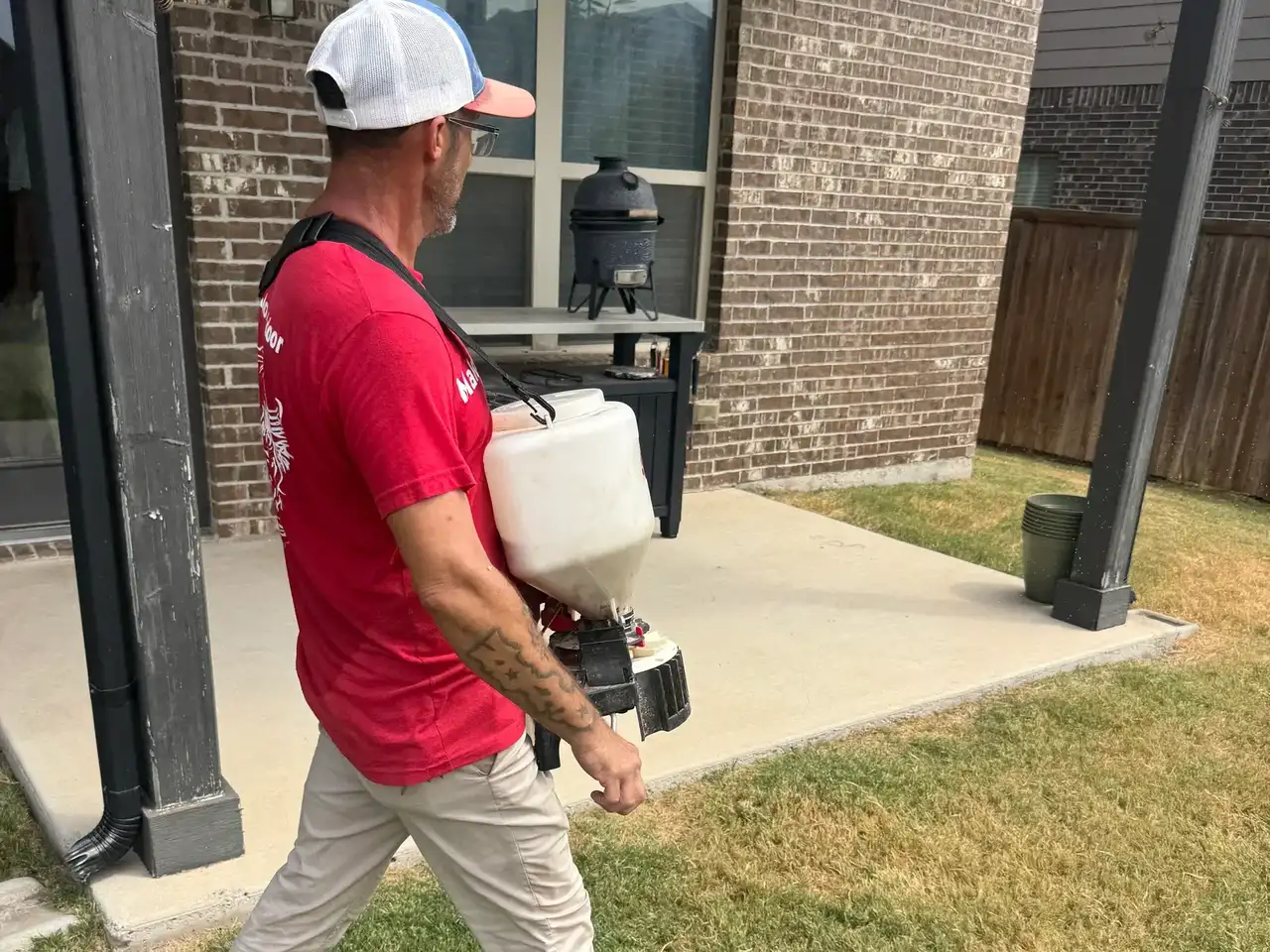
Finding the boundary
The technician walks out to where your mowing stops and works back from there, because that line is the whole problem on an edge lot. The heaviest application goes along the strip and the open lawn gets a lighter pass.
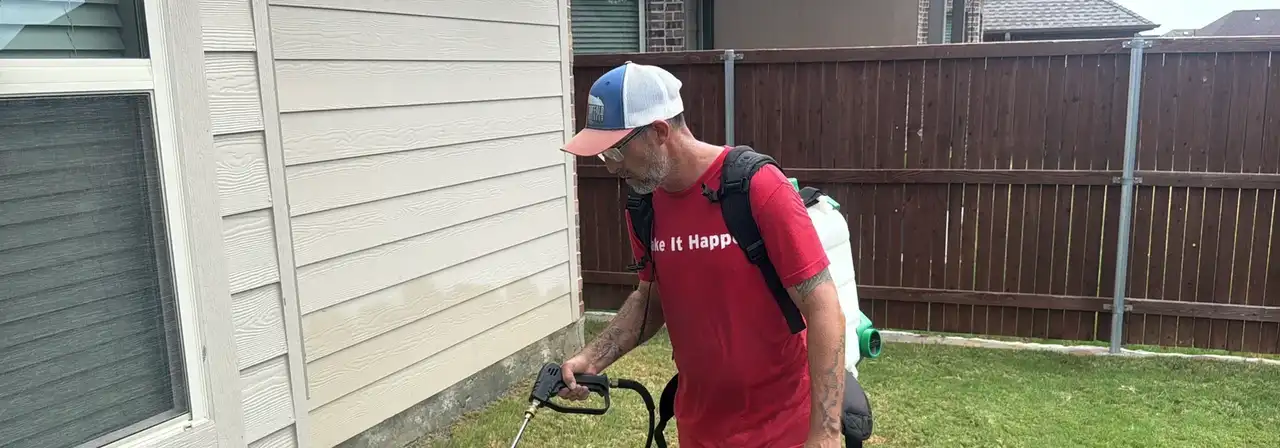
Saying what to clear
Leaf litter along fence rows, brush piles and any patch of grass gone tall get pointed out before treatment starts. Telling you to clear them beats spraying over the top of them and taking your money twice.
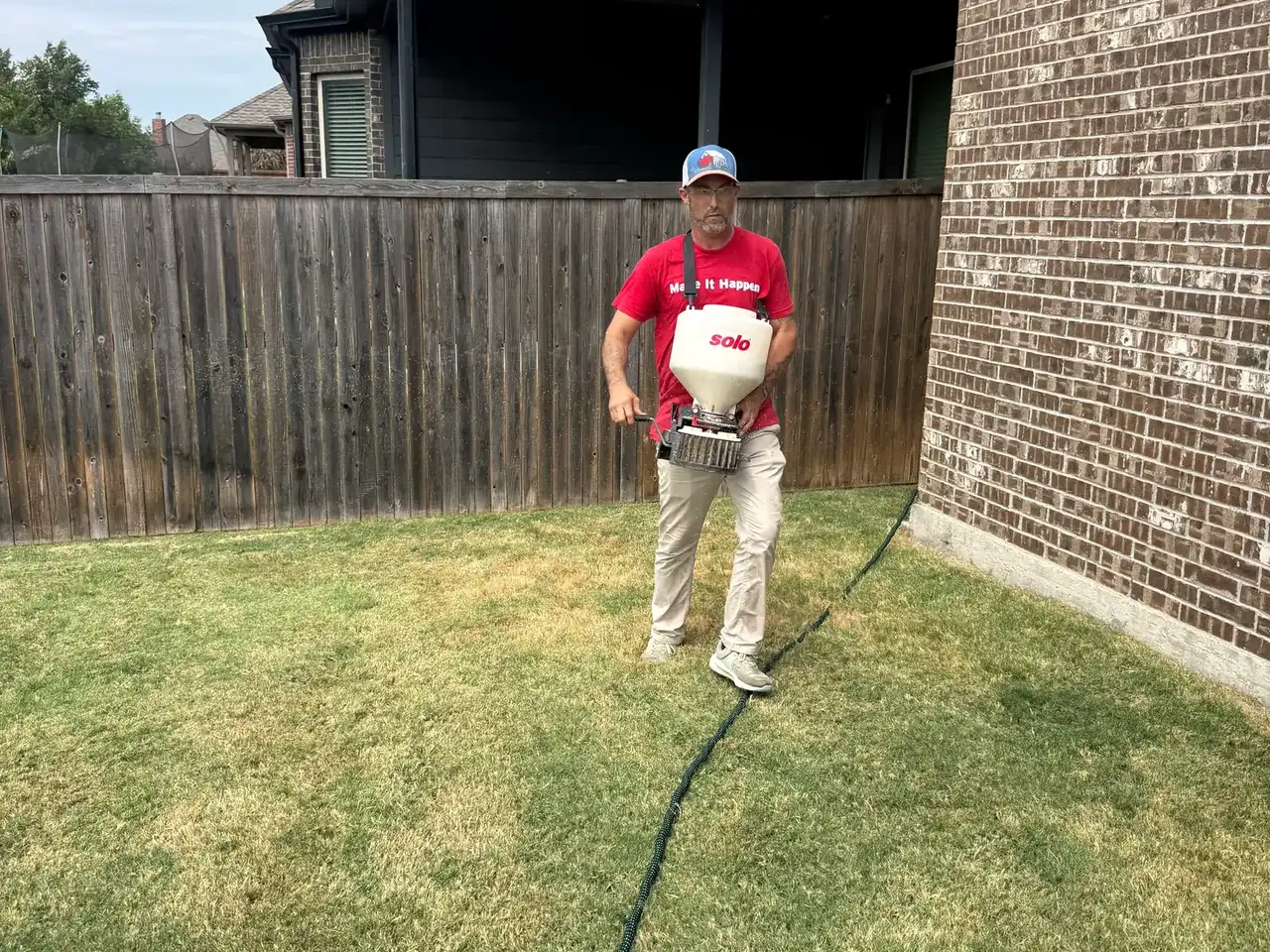
Doors, and the weep holes
Every entry point gets a three-foot treated band so larvae are not walked onto the floor. While the technician is down at the foundation the weep holes get Delta Dust and copper mesh, both standard on either plan rather than an extra line on the bill.