NEW DIRT, PARKER COUNTY
Why fire ants arrive in Aledo before the sod has rooted
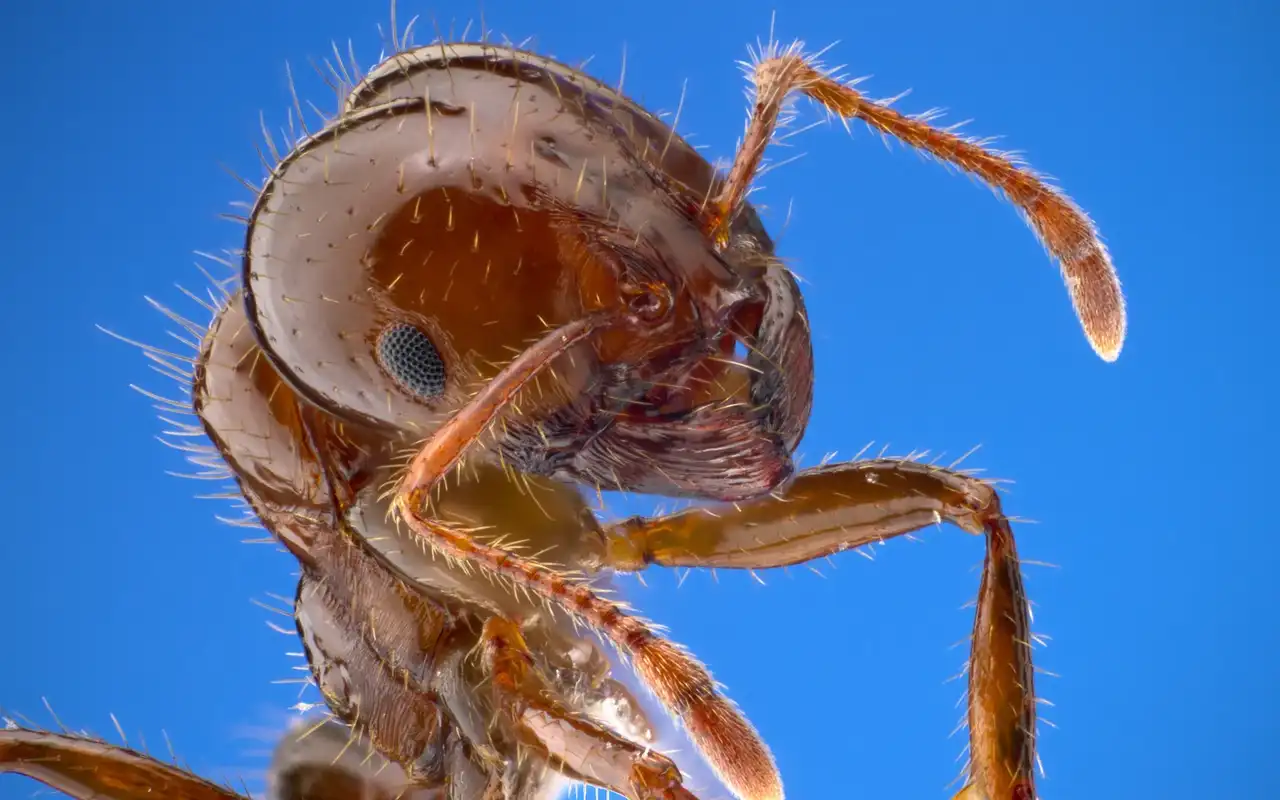
Grading hands them the ground. Every new section going in around Old Annetta Road, FM 1187 and Bailey Ranch starts with the topsoil stripped and the clay compacted, which kills off whatever ant species were living there. Fire ants are the first to recolonise bare, sunny, disturbed soil, and with no competitors in place they can fill a new Aledo street in a single season.
The builder turf on top does not help. Young St. Augustine and Bermuda are thin and open for their first couple of years, so the soil under them stays warm and easy to tunnel. Out toward the county line, on the older and larger Aledo places, the pattern flips: settled soil holds fewer colonies, but a lawn running into pasture has a steady supply of new queens flying in from the grass.
THE ALEDO NUMBER
Is fire ant control priced differently in Aledo?
No, and it is not priced at all on its own. Whole-yard bait is inside both year-round plans, and the plans go by the square footage of the house, so a home in Aledo costs exactly what the same size home costs in Keller or Saginaw. Most of the new builds here are 3,000 to 4,500 square feet, which is $38 to $46 a month on Home Defender and $51.50 to $62 on Complete Home & Lawn Defense.
Smaller new homes at 1,500 to 3,000 square feet pay $33 to $38 on Home Defender; the big ones at 4,500 to 6,000 pay $46 to $54, and anything larger is quoted. The lot size does not move these numbers. A larger acreage place toward the edge of town costs more only if you add programs that are priced on treatable area, like the mosquito, flea and tick visits.
1,500 to 3,000 sq ft
$33–$38/mo
Smaller new builds and older Aledo homes
3,000 to 4,500 sq ft
$38–$46/mo
Most of the Bailey Ranch and FM 1187 sections
4,500 to 6,000 sq ft
$46–$54/mo
On the whole-yard plan, $62–$73.50
Over 6,000 sq ft
Quoted
Same rule in every town we serve
Every number on this page comes from our published price list. Aledo homes get the same table as everyone else; the instant quote reads your square footage and lot size and hands you your own line.
WHAT GOES WRONG
The three ways fire ant treatment frustrates a new Aledo homeowner
The wait is real. Bait has to be gathered, carried underground and eaten by the queen before the colony dies, and in a new Aledo yard that means two to three weeks of visible mounds after we spread it. Homeowners who expected the mounds to vanish overnight sometimes go buy a drench in week one, which kills the workers on top and pushes the queen a few feet sideways.
The construction next door does not stop. As long as new phases are being graded around Old Annetta Road and FM 1187, a treated yard keeps receiving new queens from the bare lots around it. The bait kills each new colony as it lands, and we come back between scheduled visits at no charge, but nobody can promise a permanently empty yard while the neighbourhood is still being built.
Then there are the chinch bugs. Brown patches spreading along the driveway and sidewalk in a two-year-old Aledo lawn are usually chinch bugs in the young St. Augustine, not drought and not fire ants. Home Defender treats out to 25 feet from the house; if the whole lawn needs it, that is what Complete Home & Lawn Defense is for.
SPRING VS JULY
Bait a new Aledo lawn in March, or wait until the mounds show?
March, without question. Colonies in a freshly graded yard are small in early spring and foraging hard, so a light broadcast then kills most of them before they ever build a mound you would notice. The same yard left alone until July has a dozen established colonies, each with a much deeper nest, and the bait has to work a lot harder for the same result.
Most people wait, because a new lawn with no mounds looks like a lawn with no problem. By the time the first big storm pushes everything to the surface, the colonies have been underground for months. If you are closing on a house in one of the new Aledo sections, starting the plan at move-in means the bait is down before the queens arrive rather than after.
FIRST VISIT ON GRADED CLAY
How we handle the first fire ant visit in Aledo
Walk the sod seams
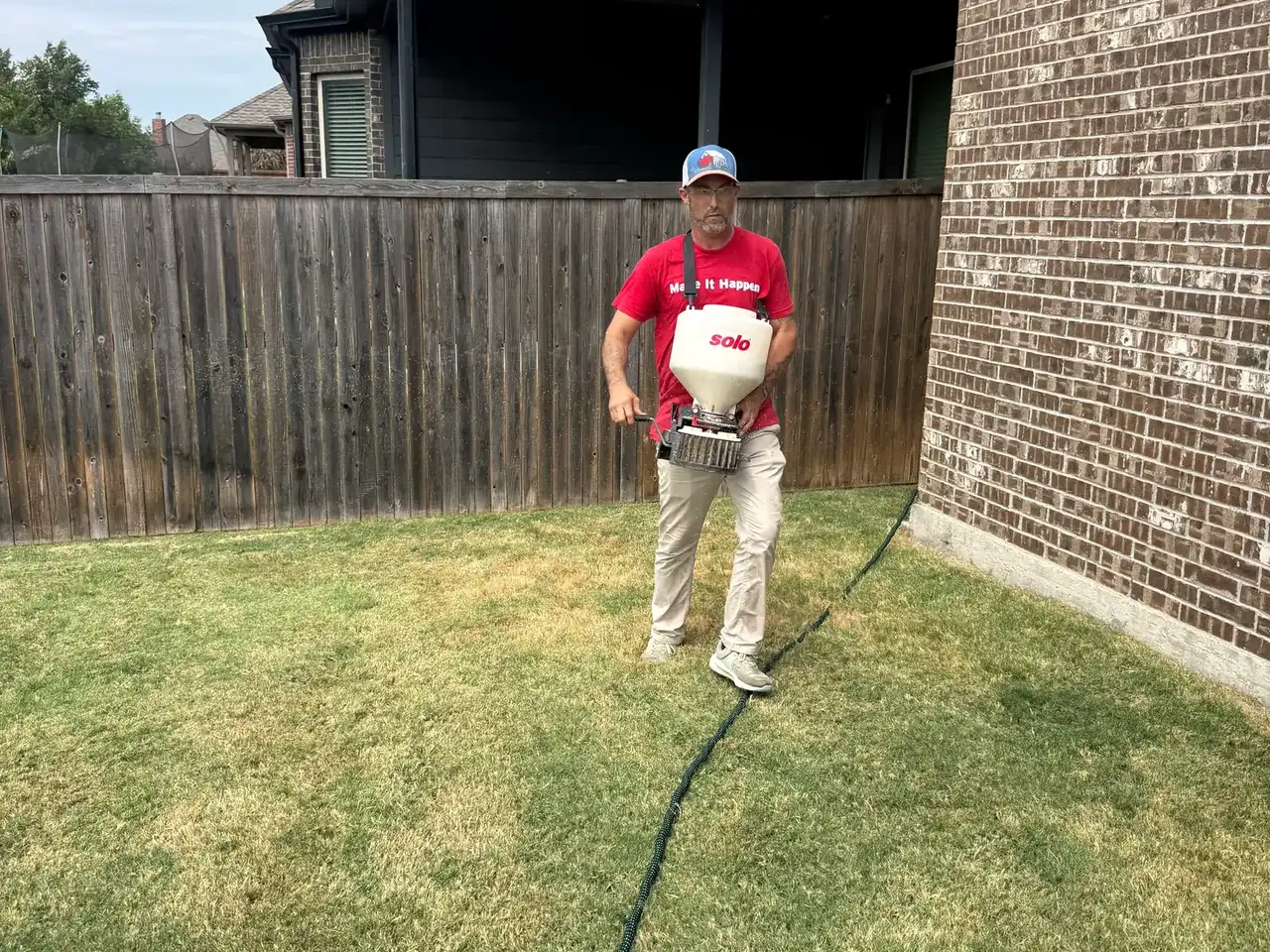
On a new build we check the sod joints, the strips along the sidewalk and the fill around the foundation, because that is the most recently disturbed soil on the lot. On an older Aledo place with acreage we walk the mowed boundary instead, since that is where colonies come in from the pasture.
Broadcast the yard you use
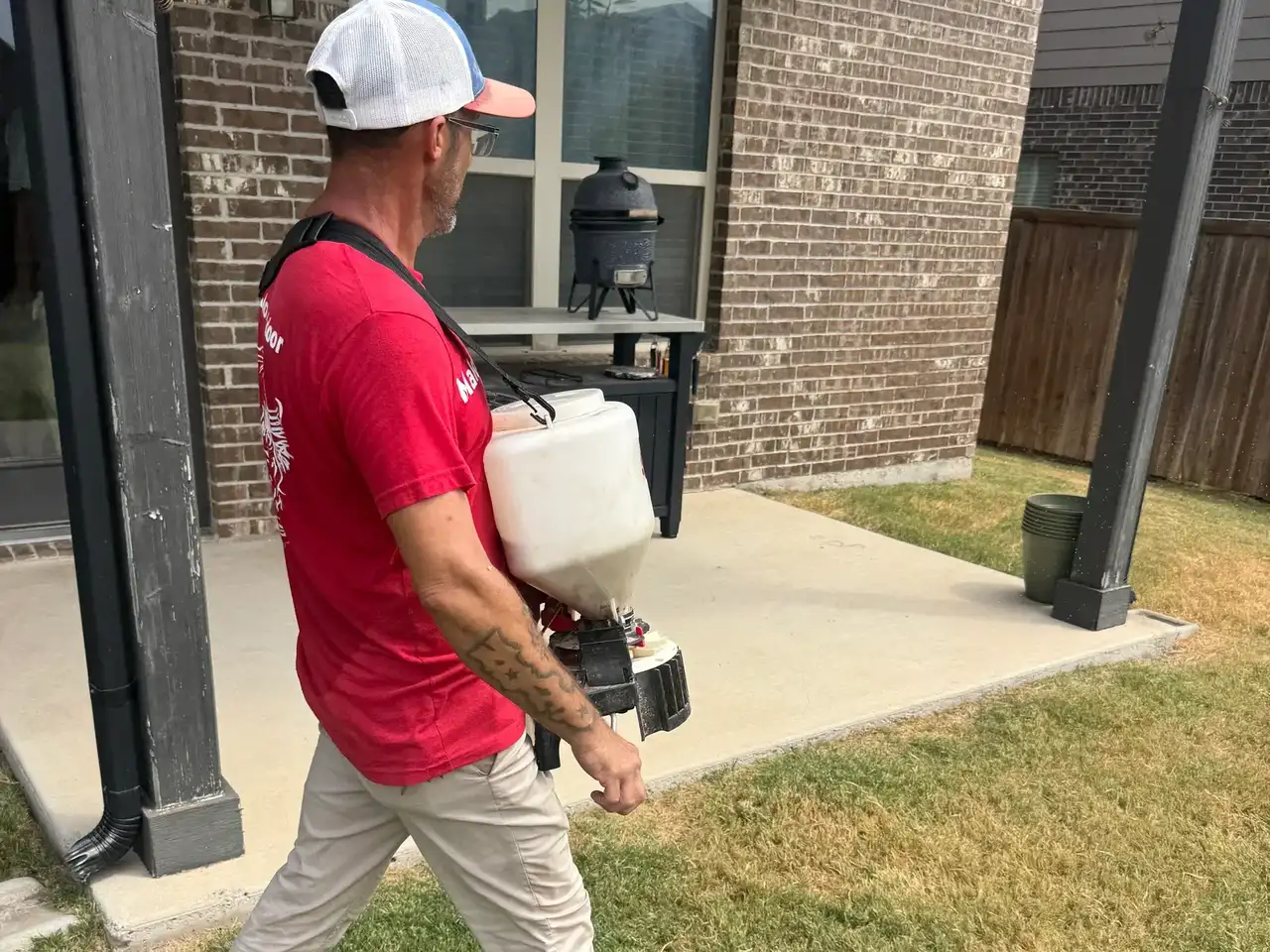
Bait goes over the whole residential lawn at a light rate with a spreader, timed for a dry day. We do not spread across several acres of pasture; that is a different scale of work and we will say so rather than underquote it.
Mark anything that needs a no-spray zone
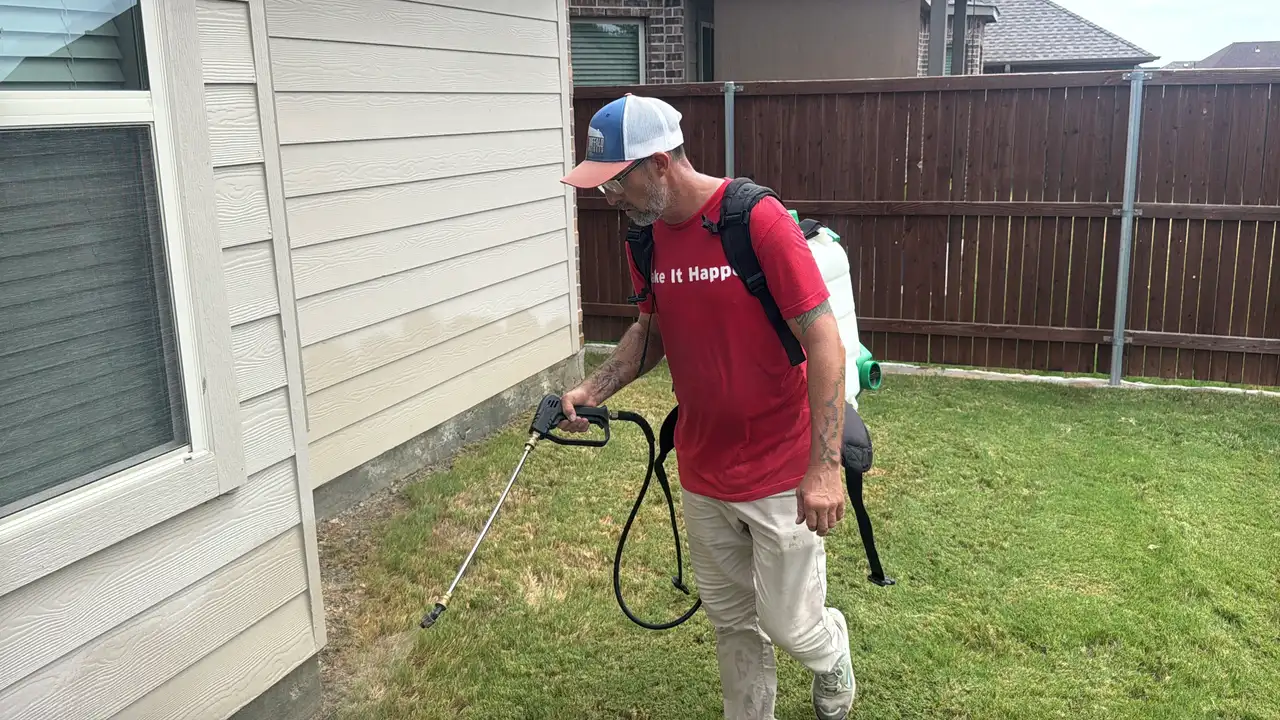
Aledo still has horses and livestock on the edge of town. Tell us where the pens, troughs and feed are before the visit and we map those areas out; we treat residential yards, not livestock ground.