NEW SOD, HOT SUN
Why brand-new Aledo lawns brown in their second summer
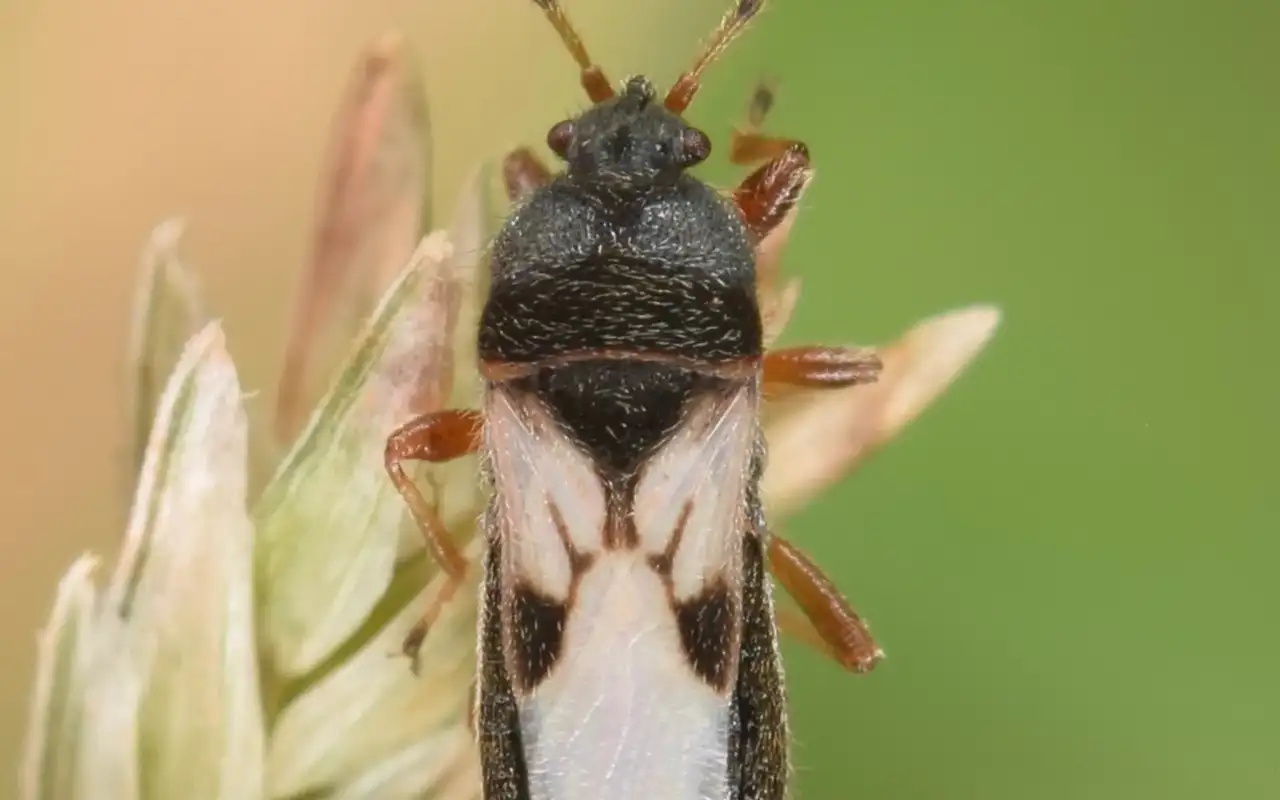
The subdivisions filling in around Old Annetta Road, FM 1187 and Bailey Ranch are sitting on freshly graded clay with builder-laid St. Augustine on top, and for its first couple of seasons that turf is thin, shallow-rooted and fully exposed. Chinch bugs pick the hottest, driest turf they can find, and the strip along a new Aledo driveway or sidewalk in July is about as hot and dry as North Texas grass gets.
The frustrating part is what the damage looks like. The insect's saliva blocks the plant from moving water, so the blades brown as if the irrigation had failed, and most new homeowners do exactly what the builder told them and water harder. The patch keeps growing. That pattern, brown along the concrete edges and no response to water, is the chinch bug signature in a new Aledo yard.
WHAT ALEDO PAYS
Lawn insect coverage priced for a new Aledo build
Aledo's new houses run large, so most land in the middle bands: a 3,000-to-4,500-square-foot home is $51.50 to $62 a month on Complete Home & Lawn Defense, which treats the whole lawn, or $38 to $46 on Home Defender, which carries the applicable lawn treatment out to about 25 feet from the foundation. Over 6,000 square feet is quoted, and the older acreage places toward the county line sometimes fall there.
Parker County does not add anything to the price. The plan is priced on the square footage of the house, so a standard subdivision lot in Aledo costs what the same house would cost in Tarrant County, and the number is yours before you commit to anything. No contract, no startup fee, and the return visits between scheduled treatments are covered.
1,500 to 3,000 sq ft
$40–$51.50/mo
Whole yard, the smaller new builds
3,000 to 4,500 sq ft
$51.50–$62/mo
Where most new Aledo houses sit
4,500 to 6,000 sq ft
$62–$73.50/mo
Larger builds and edge-of-town properties
Over 6,000 sq ft
Quoted
Acreage homes toward the county line
Every number on this page comes from our published price list. Aledo homes get the same table as everyone else; the instant quote reads your square footage and lot size and hands you your own line.
WHAT WE WILL NOT PROMISE
The things a chinch bug treatment does not do for an Aledo lawn
It does not bring dead sod back. By the time a strip of new St. Augustine along the driveway has gone brown and crisp, the treatment stops the spread but that strip is a resodding job, and thin builder turf dies fast. Catching it while the edge is still yellowing is what saves the lawn.
It does not solve a watering schedule that was set for the sod's first two weeks and never changed. Half the brown new lawns in a fast-building town like Aledo are irrigation problems, and a fair number are fungus, and an insecticide does nothing for either. When the float test turns up empty we say water or disease, and we do not write the ticket.
It also does not help if it goes on soaked grass. Chinch bugs live in the thatch at the soil surface, and the product has to reach that layer. Treating right after a heavy irrigation cycle, or watering it in the way you would for grubs, defeats the whole application, which is why we ask about your sprinkler schedule before we start.
WATER FIRST OR TEST FIRST
Should an Aledo homeowner water more or call?
Do both, in order. Give the brown patches one proper week of deep, infrequent watering, because a young lawn on graded clay genuinely can be drought-stressed, and if the colour comes back you have your answer for free. Chinch bug damage will not move, however much water goes on it, because the plant cannot use it.
If a week changes nothing, stop watering and float a can. Cut both ends out of a coffee can, push it two inches into the soil right where green turns brown, fill it and keep it full for ten minutes. If small black-and-white insects rise, you have your diagnosis and a treatment is worth buying. If nothing rises, the problem is something a spreader cannot fix.
THE FIRST CALL-OUT
Our first visit to an Aledo lawn
Hottest edge first
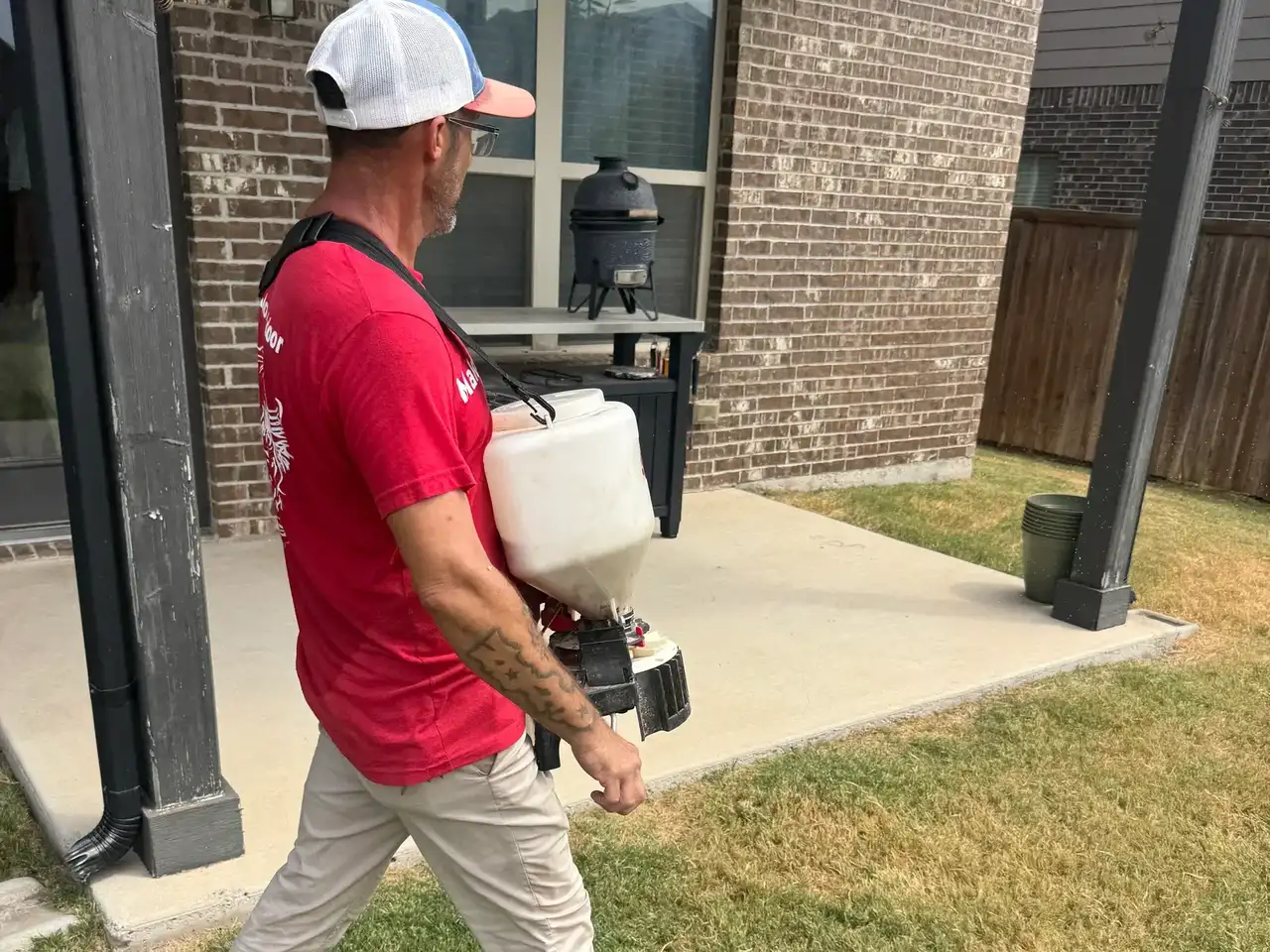
We go straight to the concrete: the driveway strip, the sidewalk margin and any south-facing wall, because that is where chinch bugs start in new St. Augustine. The float test happens at the first green-to-brown line we find there.
Check the Bermuda too
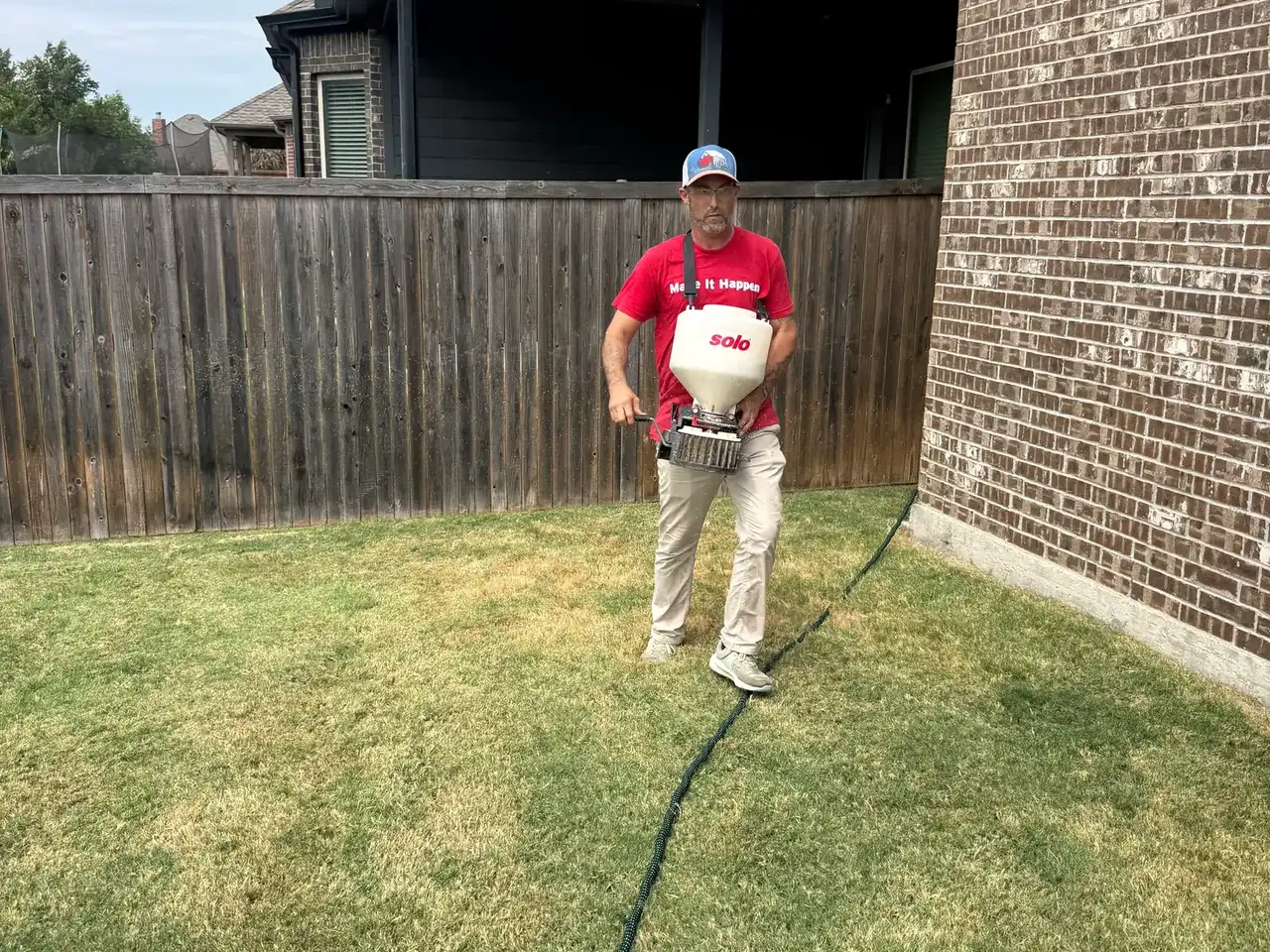
Where the builder laid Bermuda instead, the risk shifts to grubs in the young root zone and to armyworms in a wet fall, especially on the larger Aledo lots that run into open ground. We press for soft turf and look at the blades rather than assume the lawn is fine.
Bait across the whole yard
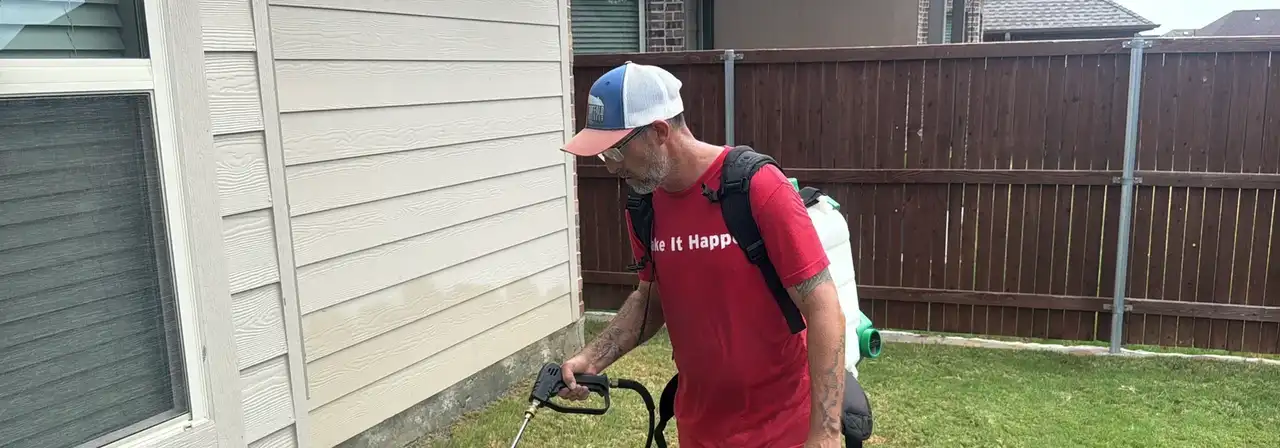
Because this rides on a year-round plan, the same visit broadcasts fire ant bait across the lawn, treats the foundation band and eaves and dusts the new brick's weep holes with Delta Dust. On freshly graded Aledo soil the fire ant part earns its keep quickly.