
NEW LOTS, OLD ACREAGE
Do new Aledo subdivisions even have a flea problem?
Less than the older towns, but not none. The new streets around Old Annetta Road, FM 1187 and Bailey Ranch are builder turf with young trees, and full-sun Bermuda in July is too hot for flea larvae. What those lots do have is a shaded north wall, a gap under the patio and the low, damp drainage behind the back fence, and a dog that naps in any of them is picking fleas up.
The older properties toward the county line are where the ticks are. A mowed lawn that runs straight into tall grass has ticks waiting at the transition, and on an acre or two of Aledo ground that transition can be hundreds of feet long.
The program is the same for both: all the turf plus a band around the structure, treated every 21 days from April through September, with the boundary strip getting extra attention on the larger lots. The vet's prevention on the animal is what finishes the job, and without it a yard treatment is only slowing the problem down.
ALEDO PRICING BY THE LOT
A quarter acre and two acres are very different bills
Aledo is where the price table gets used end to end. A standard new-subdivision lot around a quarter acre falls at $59.95 or $69.95 a visit, an established place on the edge of town might sit at $89.95, and anything past 47,000 square feet is quoted after we see how much of it is actually lawn.
That last part matters on acreage: we price the residential envelope you use, not the pasture. Nothing about the county changes the math, so an Aledo quarter acre costs what the same lot would in Tarrant County, and there is no contract binding you past the visit you just paid for. The exact band is at /instant-quote.
7,001 to 12,000 sq ft
$59.95 a visit
Most lots in the newer sections off FM 1187
12,001 to 17,000 sq ft
$69.95 a visit
Larger subdivision lots and corners
22,001 to 27,000 sq ft
$89.95 a visit
Established half-acre-plus properties
Over 47,000 sq ft
Quoted
Acreage toward the county line, priced on the treated area
Every number on this page comes from our published price list. Aledo homes get the same table as everyone else; the instant quote reads your square footage and lot size and hands you your own line.
HONEST LIMITS IN ALEDO
What this program cannot promise on new or old Aledo ground
It will not clear an infestation that has taken hold in the house. Once fleas are breeding in the rugs and the dog bed, the lawn outside is no longer what keeps them going, and our outdoor visit cannot reach them. That indoor cycle ends with daily vacuuming, a hot wash on anything the pet sleeps on and a product from your veterinarian; one interior treatment from us is included if needed, but it is a supplement to those, not a substitute.
It will not make an acreage lot tick-free. The tall grass and brush past the mow line keep producing them, and treating whole pastures is expensive and does not hold, so an Aledo homeowner on larger ground should expect a treated buffer at the boundary and far fewer ticks, not zero.
And on a brand-new lot with a young lawn, no shade and no pet, it is usually not worth buying yet. Fire ants and chinch bugs are the real first-year problems there, and the year-round plans cover the fire ants already.
SEASONAL VS YEAR-ROUND
Which plan does a new Aledo homeowner actually need?
If the complaint is fleas on the dog and mosquitoes on the patio, this seasonal program is the right purchase and the year-round plans are not, because Home Defender treats the perimeter for ants, spiders and fire ants and does not run the whole-lawn flea and mosquito visits.
If the complaint is fire ant mounds in new turf and the occasional scorpion at the door, buy the year-round plan first; fire ant treatment is already included in it, and adding a flea and tick program on top would be paying to solve a problem you do not have. Plenty of Aledo households end up on both, but start with the one that matches what is biting.
FIRST VISIT, ALEDO
The first treatment on a new build versus an edge lot
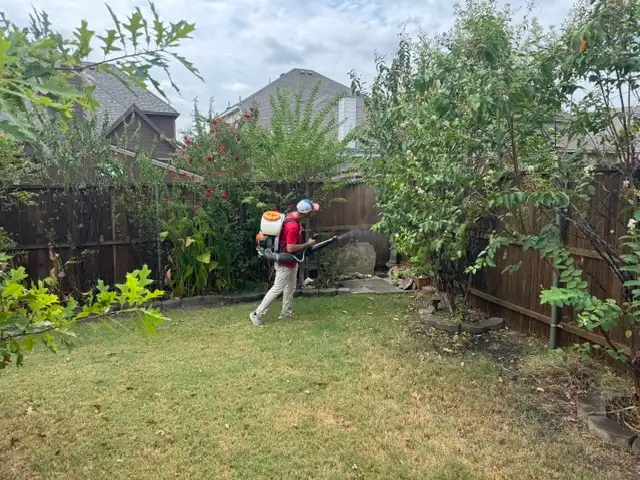
Sorting out which kind of lot it is
A subdivision lot gets a search for the handful of damp, shaded spots; an edge property gets a walk of the boundary to see where mowed grass meets pasture or drainage. The two visits look different on purpose.
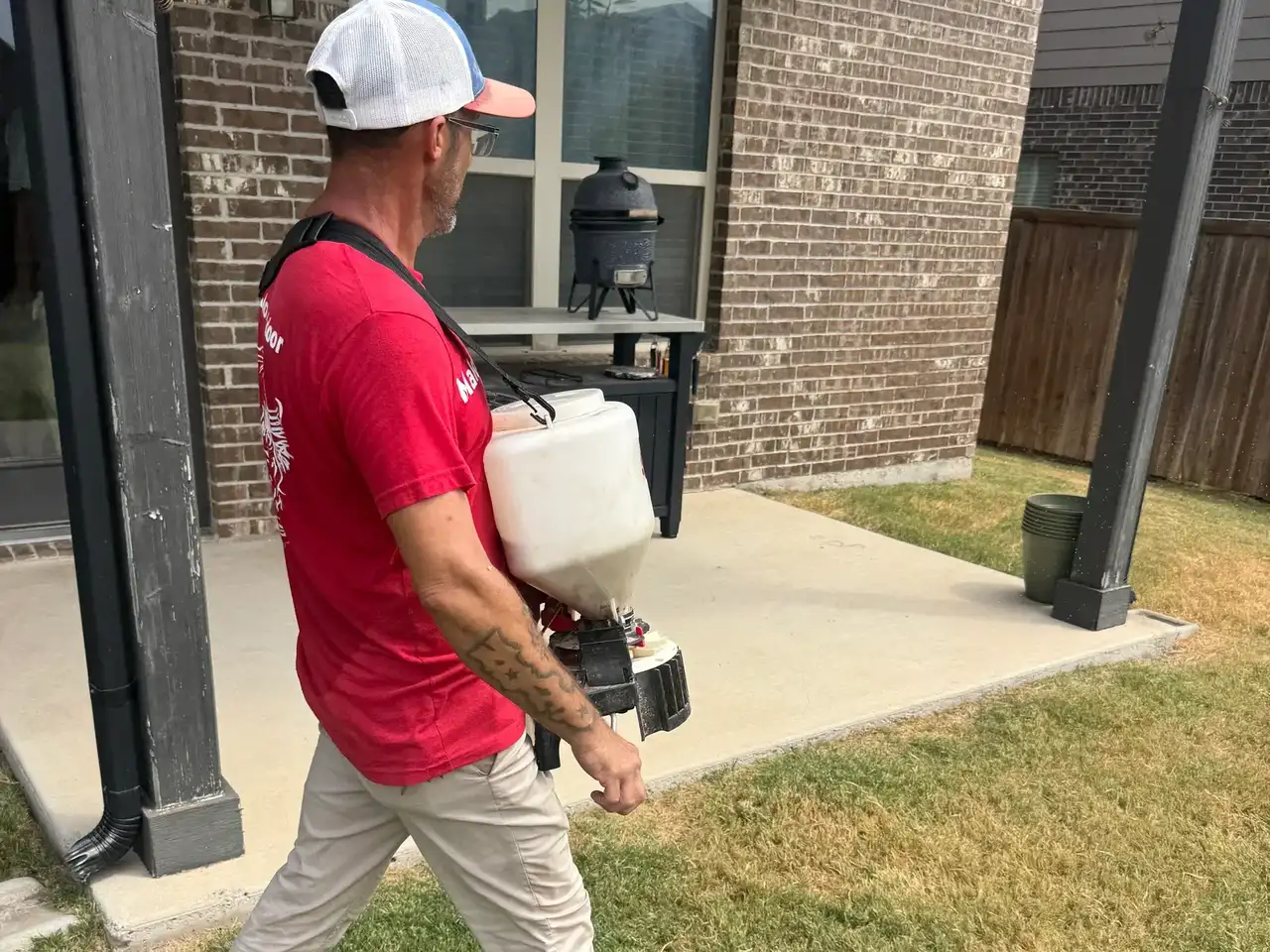
Full lawn, perimeter band, boundary strip
Every part of the turf is treated, then a band around the foundation, then a buffer along any edge that backs open ground or the wet drainage behind the newer sections. On acreage we treat the lawn you live on, not the field.
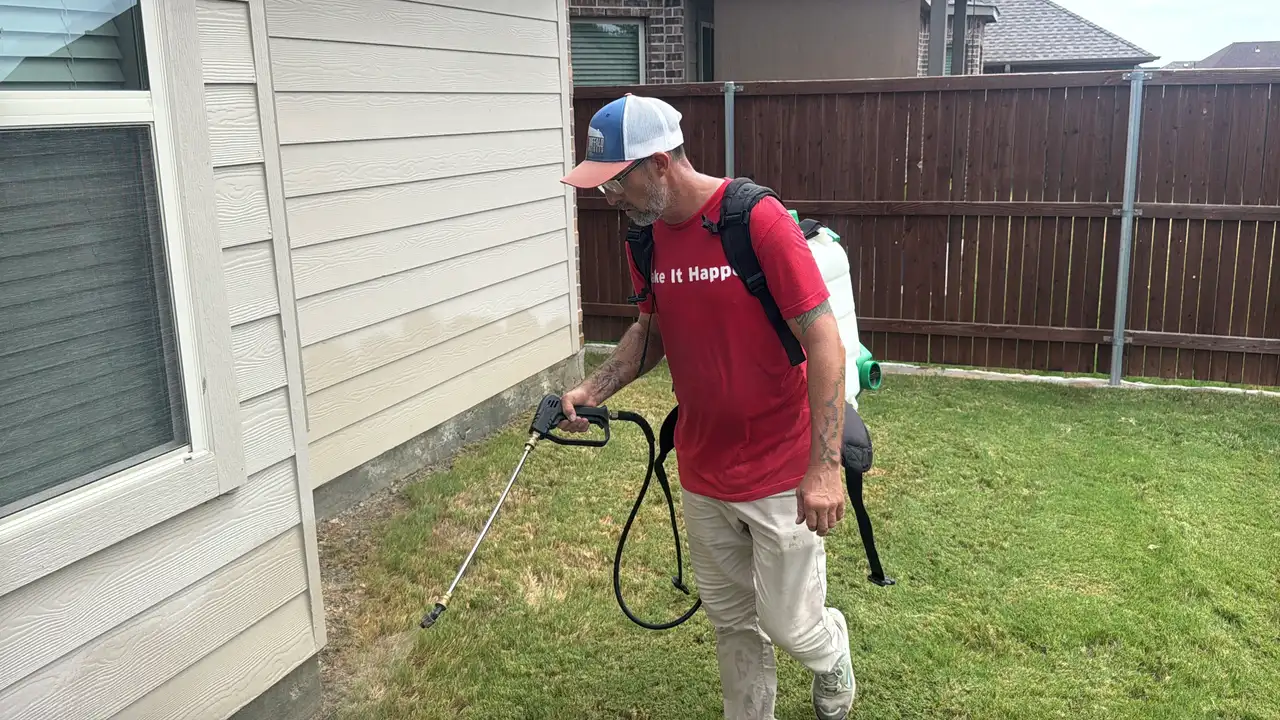
No-spray zones and the animals
If there are horses or livestock, tell us before we arrive and we map pens, troughs and feed out of the treatment. We also ask what the dogs are on, because a lapsed prevention is the most common reason a treated yard still has a flea problem.