
NEW STREETS, OLD FIELDS
Does a new Northlake house even get chiggers?
Usually not, and that is worth saying before anybody sells you anything. Northlake is the fastest-building town on our map, and a freshly graded lot with young turf and no litter offers chigger larvae nothing to climb, no shade and nowhere to overwinter. Pecan Square, the Harvest side and the streets filling in along TX-114 mostly report fire ants and chinch bugs instead.
The exception is a lot still backing onto a field. Where the subdivision stops and undeveloped ground begins, the tall grass on the far side of that fence is precisely what the larvae need, and they move in wherever the mowing ends. Welts ringing your sock line and waistband hours after you were out by the back fence say you are in that situation.
WHAT A NEW BUILD PAYS
The monthly figure on a Northlake home
Complete Home & Lawn Defense covers the whole yard and is priced off the house, so a 1,500 to 3,000 square foot Northlake home sits at $40 to $51.50 a month and a 3,000 to 4,500 square foot one at $51.50 to $62. That is the plan that reaches a back fence. Chiggers are not sold apart from it, which also means fire ant treatment and the rest of the year-round work arrive inside the same number.
Home Defender runs $33 to $46 a month across those two sizes and treats a 25-foot ring around the house. On a standard subdivision lot that ring takes in a fair share of the yard, so bites happening near the patio rather than out at the field edge point to the cheaper and perfectly adequate choice. Neither plan involves a contract, a startup fee or a cancellation fee.
1,500 to 3,000 sq ft
$40 to $51.50 a month
Whole yard, most builder floor plans
3,000 to 4,500 sq ft
$51.50 to $62 a month
The larger new plans
Home Defender, 1,500 to 3,000
$33 to $38 a month
25-foot ring, often enough here
Return before the next visit
Included
Warrantied between scheduled treatments
Every number on this page comes from our published price list. Northlake homes get the same table as everyone else; the instant quote reads your square footage and lot size and hands you your own line.
NOT EVERY LOT NEEDS THIS
When a Northlake homeowner should keep the money
If your lot backs another finished street, skip it. A mown suburban lot offers chigger larvae no habitat to hold onto, and bites blamed on chiggers in the newer sections are more often fire ant stings or mosquitoes working the shade near a detention basin. Check the pattern of the welts before you check prices.
If you do back a field, take the boundary as permanent until that field is built on. It keeps producing larvae from May into August and nothing done on your side changes what happens on the other, so a treated buffer alongside a short-mown strip is an arrangement rather than a cure. Once the next section gets graded the pressure usually falls away on its own.
A visit made over tall grass is a wasted one, too. Where the strip along the back fence has run up while nobody was cutting it, product coats the stem tops and the larvae sitting lower down are untouched, which puts the mowing before the appointment rather than after.
WAIT AND SEE, OR TREAT
Treating now against waiting until something bites
Waiting is defensible for chiggers, which is not something we say about fire ants. Nothing is being damaged in the meantime, the bites are miserable without being dangerous, and a Northlake lot with no rough ground beside it may never produce one. Watch a single May and see whether anybody comes indoors with a banded rash.
Treating ahead earns its keep only where the habitat already exists: a fence line against a field, a stand of trees dropping litter, or a low damp corner near a basin. In those spots a whole-yard plan running through the season beats reacting in July, since larvae hatch in waves and a yard refills between visits. Month to month either way, so the decision is never locked down.
FIRST STOP ON A NEW LOT
What the first visit looks like on a Northlake property

How old the build is
The age of the house tells the technician most of what to expect before anything comes off the truck, because a lot under about five years old behaves differently from a settled one. Newer generally means the yard work aims at fire ants and the chigger pass stays light.
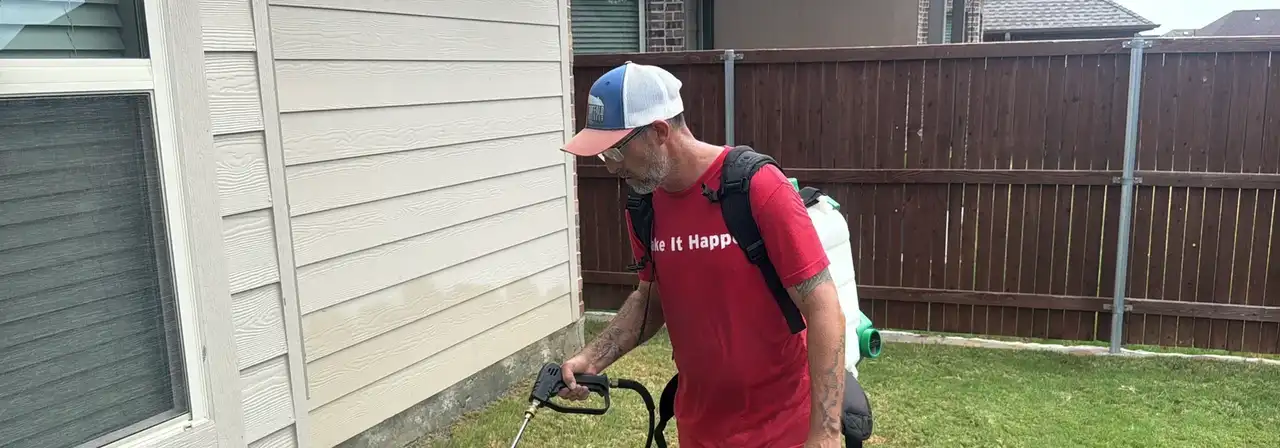
What sits behind the fence
A field, an active build site and another finished street each change the plan, which is why the back boundary is checked first. Undeveloped ground behind you shifts the heavy application out to the fence line instead of the foundation.
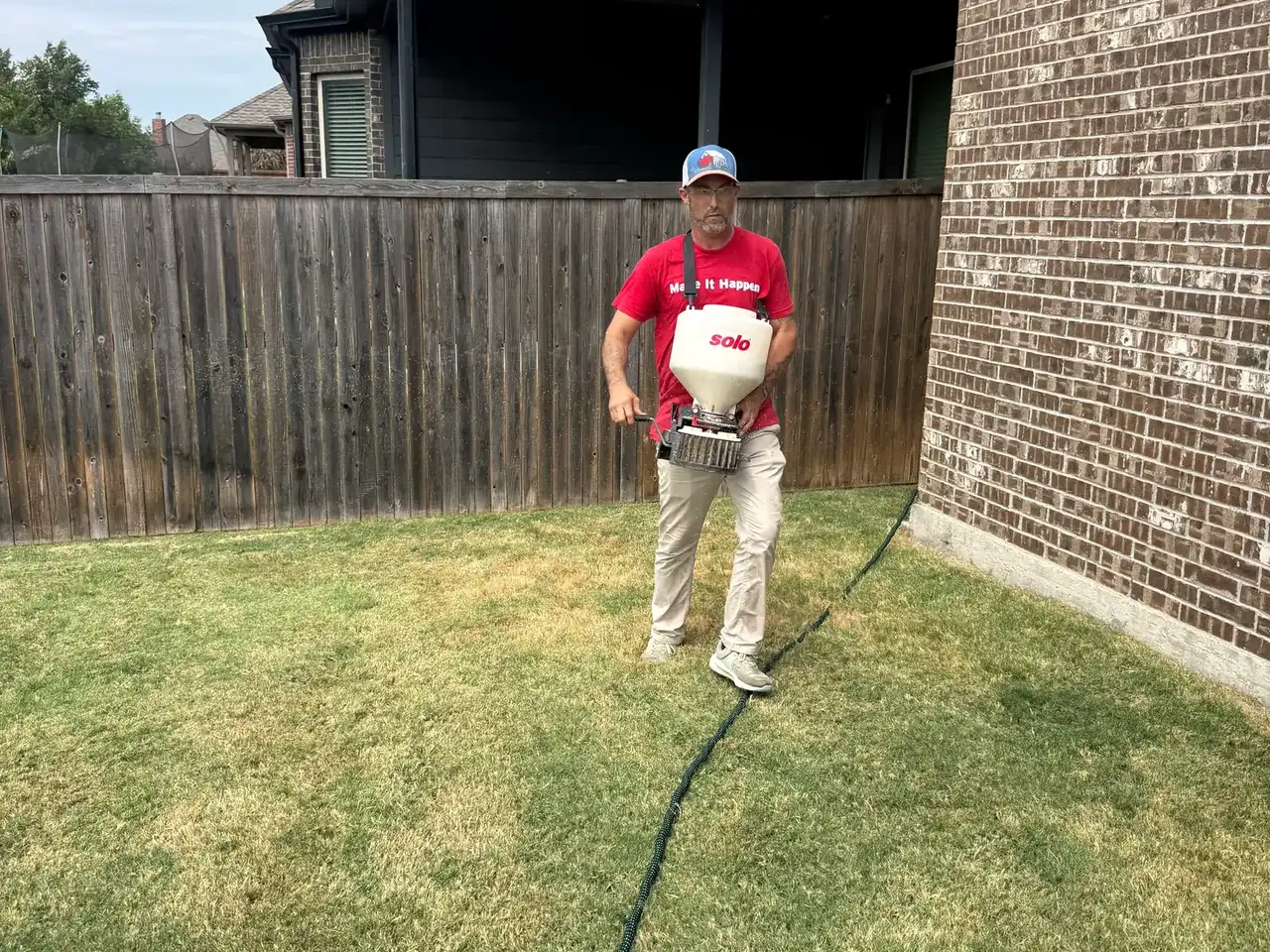
The brick and the weep holes
New brick arrives with open weep holes along the bottom course, and on a street still under construction there is plenty looking for a way in. Delta Dust goes in and copper mesh seals them as part of both plans, with nothing added to the bill for the sealing.