
NEW GROUND, OPEN SUN
New builds get a tick problem before they get a flea problem
Flea larvae need shade and moisture, and a new Northlake street offers very little of either. Young trees throw no canopy, builder-laid turf is thin and sits in full sun, and the top of that soil gets hot enough to kill larvae outright. For most homes here that is the honest starting point.
Ticks are the reverse. They come off the open land, the unfinished lots and the pasture that has not been developed yet, so a house backing that ground has a supply arriving at the fence no matter how new the lawn is.
Detention basins and neighbourhood ponds provide the third piece. Vegetation around standing water stays damp and unmown, and that tends to be both tick habitat and the first genuinely flea-friendly ground on a new street.
NEW-BUILD LOT BANDS
What a Pecan Square or Harvest-side lot costs
Master-planned lots are consistent, which makes the number predictable: most Northlake homes fall at $49.95 or $59.95 a visit, and the larger estate-style lots in these neighbourhoods reach $69.95 or $79.95. It is billed per visit across the April to September schedule and priced on the lot alone.
Nothing is signed and no startup fee applies, which matters more here than in the older towns because plenty of new-build households genuinely do not need a full season. Start, see what the first couple of visits turn up, and stop without a penalty if the pressure is not there.
7,000 sq ft or less
$49.95 a visit
The tighter master-planned lots
7,001 to 12,000 sq ft
$59.95 a visit
The most common size on the new streets
17,001 to 22,000 sq ft
$79.95 a visit
Estate-style lots in the newer sections
Stopping mid-season
No fee
Month to month, nothing signed
Every number on this page comes from our published price list. Northlake homes get the same table as everyone else; the instant quote reads your square footage and lot size and hands you your own line.
WHO SHOULD SKIP THIS
Plenty of homes here do not need a flea program at all
If your house is three years old, the lot is open to the sun, the dog is on veterinary prevention and nobody is finding ticks, six visits will probably not give you much. We would rather say so now than take the money and have you conclude that pest control is a racket.
The exception is a fence that backs open ground. Ticks arriving from an undeveloped field are a real, current problem on a brand-new Northlake street, and that is a boundary job rather than a whole-yard one. If that is your situation, say so when you call and we will scope it that way.
The program also does nothing about fleas that are already indoors. Once they are in carpet or bedding the cure is hot laundry, hard vacuuming emptied outside and a product from your veterinarian, with one interior treatment from us included if it is needed.
FLEA WORRY OR ANT WORRY
Is this the program a new yard here actually needs?
Often the honest answer is that fire ants are the bigger issue on new ground. Grading wipes out the ant species that were holding the soil and fire ants recolonise it first, so a young lawn in Northlake usually has mounds long before it ever has fleas. Fire ant treatment comes with both year-round plans rather than being sold on its own.
Where this program earns its place is the tick and mosquito side, particularly near the ponds, the basins and the edges still backing undeveloped land. If your complaint is bites on the patio and ticks after the dog has run the fence, this is the right purchase; if it is mounds in the turf, the year-round plan is.
THE FIRST NORTHLAKE VISIT
What we look at on a newer property
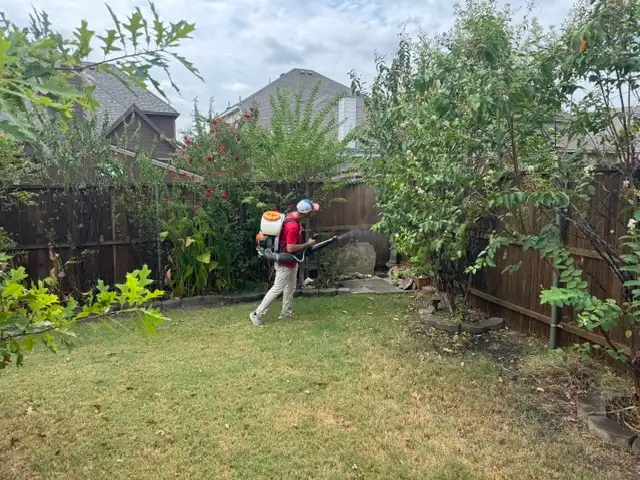
What the lot backs onto
The first question is what sits behind the fence, because a lot backing a finished street is a different job from one backing a field or an active build site. Open ground means a treated boundary; a finished neighbour means the work stays close to the house.
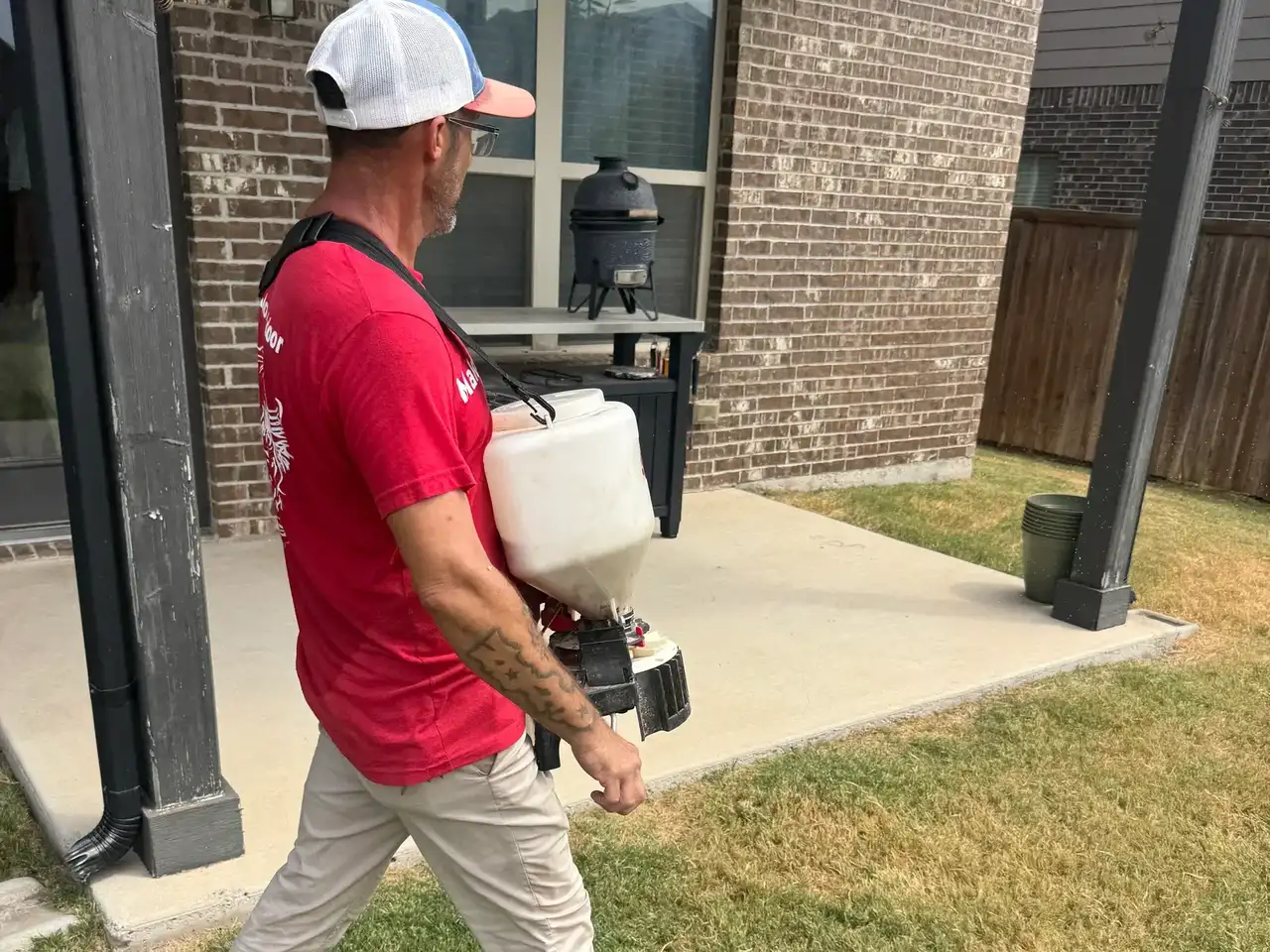
The damp exceptions on a sunny lot
Even new turf has shaded, wet spots: the north side of the house, under a patio cover, along a fence the builder planted tight to, near a basin or pond edge. Those get checked first, because they are where larvae survive.
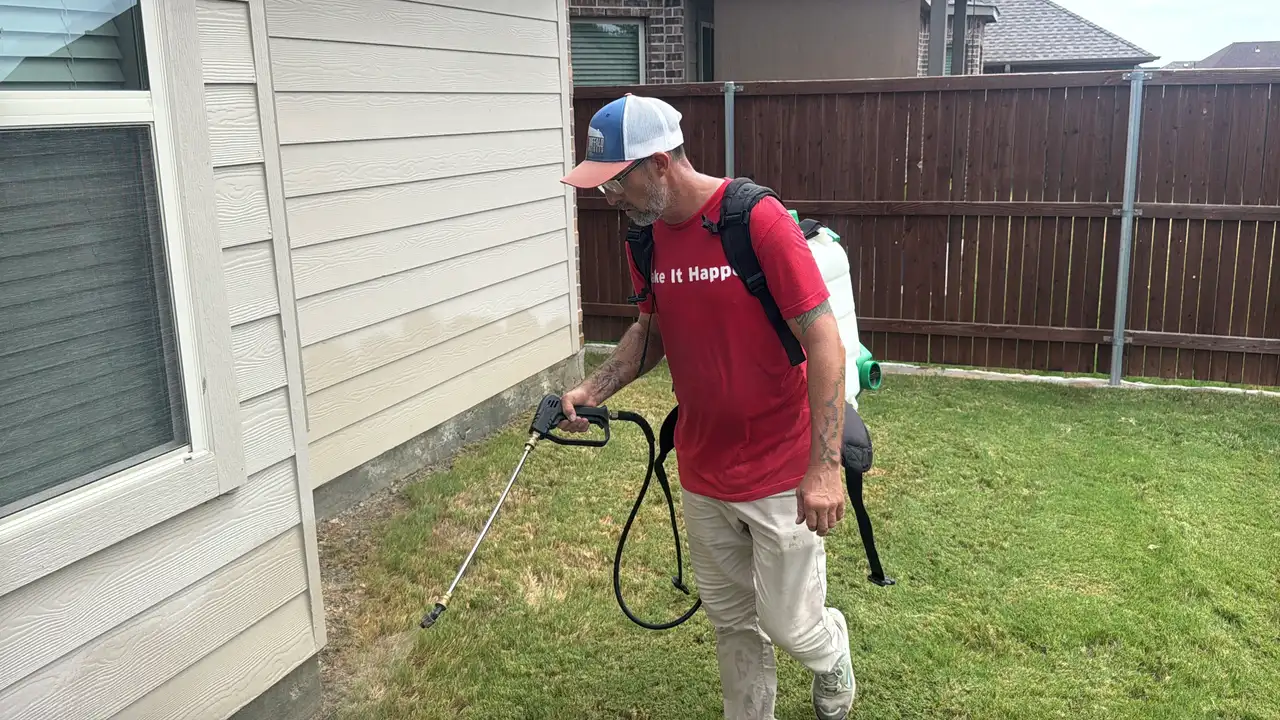
Full turf and a foundation band
Then the lawn is treated and a band is run around the structure. Give it about two hours in the heat to dry and the yard is back in normal use, with nothing applied to the pet itself.