NEW TOWN, THIN SHADE
Is mosquito control worth buying in a Northlake subdivision?
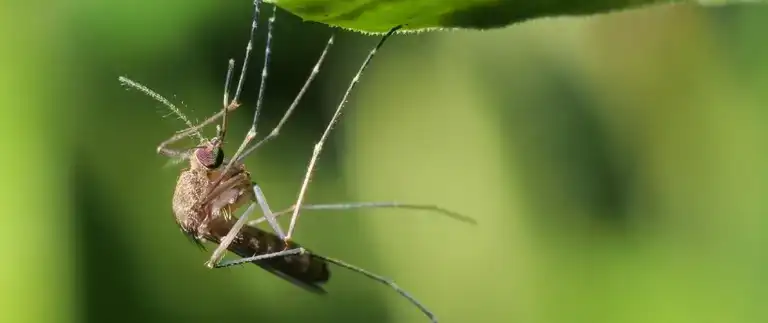
For a lot of Northlake, not in the first year or two. Pecan Square, the Harvest side and the streets filling in along TX-114 and I-35W were pasture until recently, and the trees the builder planted do not yet throw enough shade for adults to rest under. Mosquitoes spend the day in cool, humid cover, and a graded lot with builder sod and a few young live oaks offers almost none.
The exception is water. Detention basins, subdivision ponds and the low ground between finished streets and open land breed mosquitoes steadily, and Northlake homes backing them see pressure the middle of the block does not. If that is your lot, or the landscaping has had a few seasons to fill in, the 21-day program from April through September treats the cover that exists and the turf edges for fleas and ticks.
NORTHLAKE BY THE LOT
What the program costs per visit in Northlake
Northlake lots are mostly subdivision sized, which puts the price at the lower end of the table: $49.95 a visit on a lot of 7,000 square feet or less, $59.95 up to 12,000 and $69.95 up to 17,000. The larger lots along Cleveland Gibbs Road and the older acreage between the new neighbourhoods climb the bands, and anything over about an acre is quoted. Whether the address mails as Justin, Roanoke or Argyle changes nothing.
Each visit is billed when it happens, with no startup charge and no fee for leaving. Between-visit re-treats are covered by the warranty rather than added to the bill. Drop the address into /instant-quote and the lot size comes back with the band attached, so you know the figure before deciding anything.
Lots of 7,000 sq ft or less
$49.95 a visit
Most of Pecan Square and Harvest
Lots from 7,001 to 12,000 sq ft
$59.95 a visit
The larger new-build lots
Lots from 12,001 to 17,000 sq ft
$69.95 a visit
Corner and pond-backing lots
Over 47,000 sq ft
Quoted for the property
Acreage along Cleveland Gibbs Road
Every number on this page comes from our published price list. Northlake homes get the same table as everyone else; the instant quote reads your square footage and lot size and hands you your own line.
THE DOWNSIDES FIRST
Three reasons a Northlake homeowner might not want this
There may be nothing to treat. On a two-year-old Northlake lot with builder sod and saplings, a fog has almost no foliage to land on and the adults are not resting on your property anyway. Paying $49.95 a visit to treat a hedge that does not exist yet is a poor buy, and the money does more in fire ant bait on that graded soil.
Open land and detention ponds are a source we cannot switch off. The HOA's basin or the field behind the fence will keep producing adults all summer, and a barrier on your side only removes the ones resting and breeding there. Homes on those edges get a real reduction, not silence.
Product life is about 21 days in summer heat, which is why the schedule is what it is, and a storm right after a visit can cut that shorter. The warranty covers the re-treat, but no one should expect a single application to carry a Northlake yard through a whole season.
MOSQUITOES OR FIRE ANTS
Where the first pest dollar should go on a new Northlake lot
On a fresh build the honest answer is usually fire ants. Grading wipes out the ant species that were holding the ground, and fire ants recolonise the disturbed soil first, which is why a new Northlake yard can carry more mounds than a fifty-year-old one in Fort Worth. Broadcast bait in spring is part of both year-round plans, and it is the problem most new-build families are actually fighting.
Mosquitoes move up the list as the landscaping fills in or if the lot backs a pond. The season program is priced on the lot and runs only April through September, so it can be added the year the trees start to cast shade and dropped again if the yard stays quiet. Doing both from the start makes sense on a pond-backing lot with a dog; on a sunny interior lot it does not, and we will say which one you have.
FIRST STOP, NORTHLAKE
What happens the first time on a new-construction lot
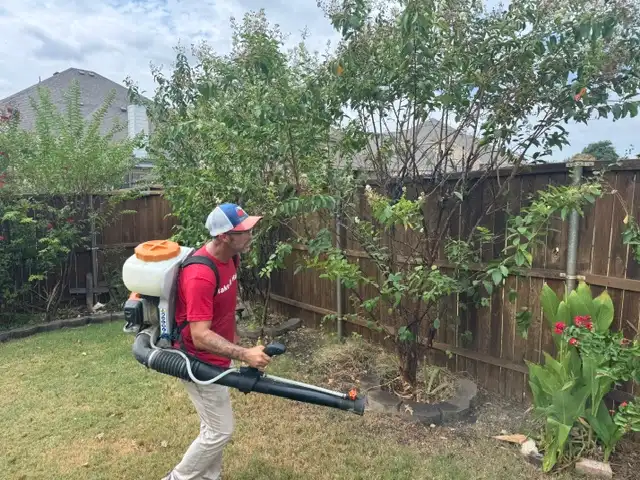
Checking what is there to fog
The technician looks at how much cover the lot has: the size of the trees, the density of the beds, the shaded north side of the house and whatever fence line shade exists. If there is genuinely too little to make the visit worthwhile, you hear that before anything is applied.
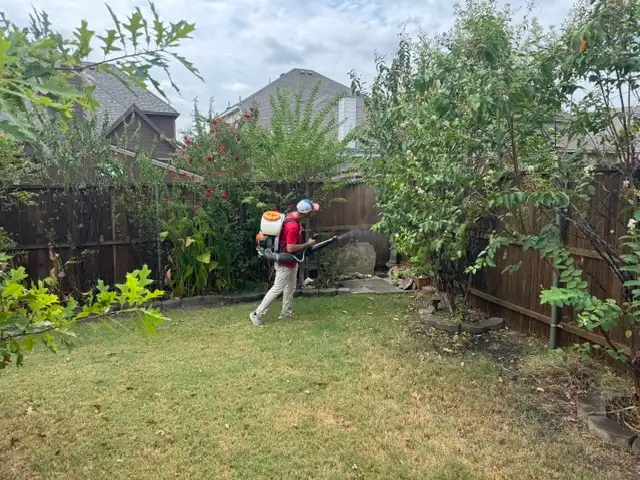
Treating the cover that exists
Young trees, foundation shrubs, the fence shade and the under-deck get the fogger, and turf and bed edges are treated for fleas and ticks. Blooming flowers are skipped, and a vegetable bed or pollinator garden is marked off if you tell us about it.

Pointing at the water
Gutters that hold, a kid's pool, plant saucers and the drainage swale along a new-build lot are the breeding spots, and each one gets named. Low spots that cannot drain get larvicide. New customers are usually seen within a week because the team is large and holds openings for them.