GRADED GROUND
Why the newest streets in Avondale have the worst fire ants
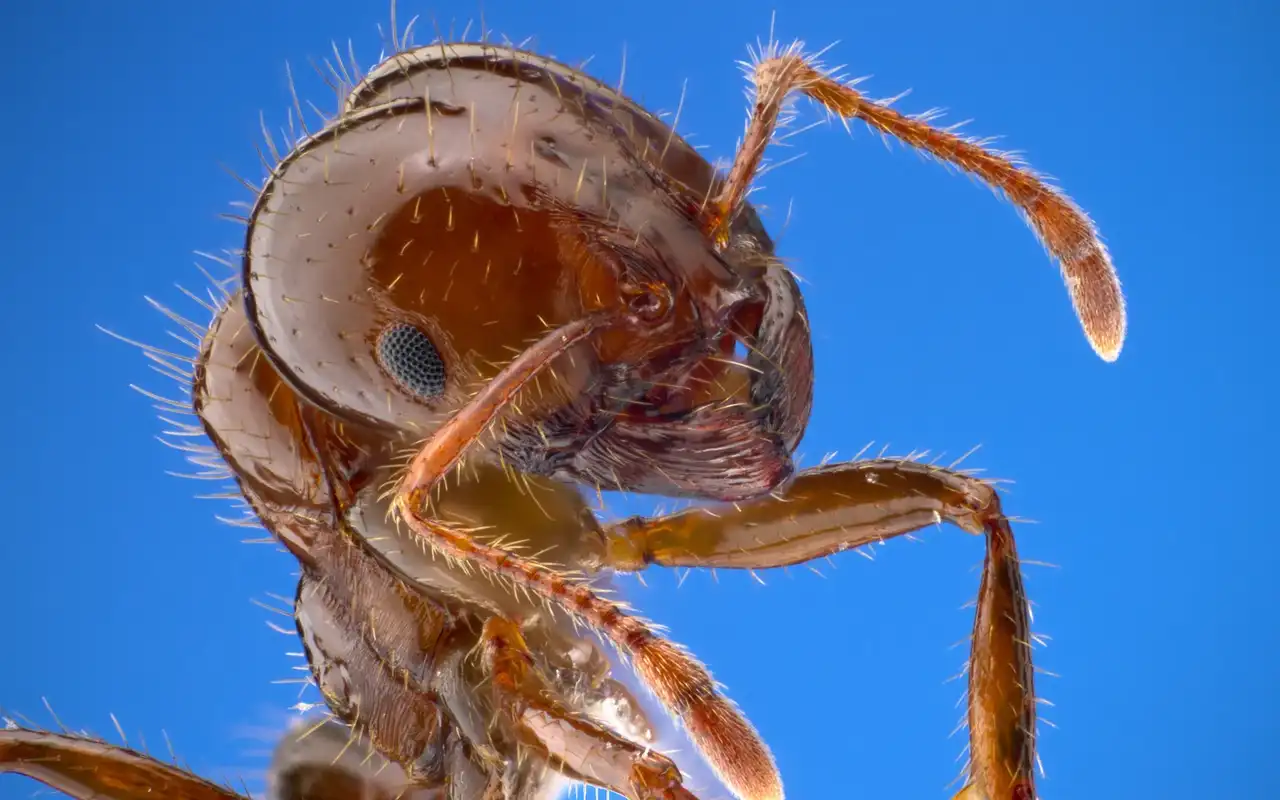
A builder's grader is the best thing that ever happened to a fire ant queen. When a new Avondale subdivision goes in between Haslet and Saginaw, the topsoil is stripped, the clay is compacted, and every ant species that had been living in that pasture is gone. Fire ants recolonise empty ground faster than any native ant, so by the time the sod has rooted, they own it.
The older acreage lots on the same roads tell a different story. Ground that has been pasture or lawn for decades still carries its native ants, so mounds there cluster at the disturbed edges: the fence line where the tractor turns, the new driveway, the pad around a recently built shop. Both kinds of Avondale yard get the same treatment, but a new build needs it sooner.
INSIDE THE MONTHLY PLAN
What fire ant treatment costs on an Avondale property
The bait itself is free; it is part of both year-round plans rather than a separate service. The plan price follows the size of the house, and Avondale's new builds tend to be big, so many land at $38 to $46 a month on Home Defender for 3,000 to 4,500 square feet or $46 to $54 for 4,500 to 6,000. A smaller farmhouse on acreage can be as low as $33 to $38.
Complete Home & Lawn Defense adds treatment of the entire yard for chinch bugs and grubs in the builder turf and chiggers at the pasture edge, at $51.50 to $73.50 for those same larger homes. Neither plan asks for a signature or a startup fee, and you see your own figure before you commit.
1,500 to 3,000 sq ft
$33–$38/mo
Older acreage homes
3,000 to 4,500 sq ft
$38–$46/mo
Most new Avondale builds
4,500 to 6,000 sq ft
$46–$54/mo
$62–$73.50 on Complete Home & Lawn Defense
Over 6,000 sq ft
Quoted
Large houses and outbuildings, priced after a look
Every number on this page comes from our published price list. Avondale homes get the same table as everyone else; the instant quote reads your square footage and lot size and hands you your own line.
STRAIGHT TALK
Where fire ant control falls short in Avondale
Pasture is not a yard. The plans cover the residential lot around the house, and if you have several acres of grazing land behind it, broadcast bait across all of it is a different job at a different scale. We will tell you where the treated area ends rather than pretend the whole property is covered.
A subdivision under construction reseeds itself. While the next phase is being graded across the street, queens are landing in your lawn after every mating flight, and no bait stops that. What the plan does is collapse each new colony before it matures, which is why the visits repeat instead of happening once.
Speed is the other honest limit. Bait must be foraged, carried down and fed to the queen, so an Avondale mound can look alive for two or three weeks after we treat it, and a rain in between will push it taller. Anything that shows up between scheduled visits is covered and we come back for it.
EARLY OR LATE
Treating a new Avondale lawn in March versus waiting for July mounds
Early wins by a wide margin. In spring the colonies in a two-year-old lawn are small, foraging hard and easy to collapse, and a broadcast application then keeps the summer from ever getting bad. Wait until July and each of those colonies is a mature mound with a deep nest, and the same bait works but takes longer and there is more of it to do.
The same logic decides DIY. A bag of broadcast bait from the farm store is a legitimate option for a homeowner who will spread it across the entire lot in early spring or fall, on a dry day, and repeat it. Most people instead drench the mounds they can see after a storm, which relocates the queen and multiplies the mounds. If the year-round plan is already on your list for the scorpions in the barn and the spiders in the eaves, the bait is simply included and the timing is handled.
THE FIRST STOP
What the first fire ant visit covers on an Avondale lot
Where the disturbed ground is
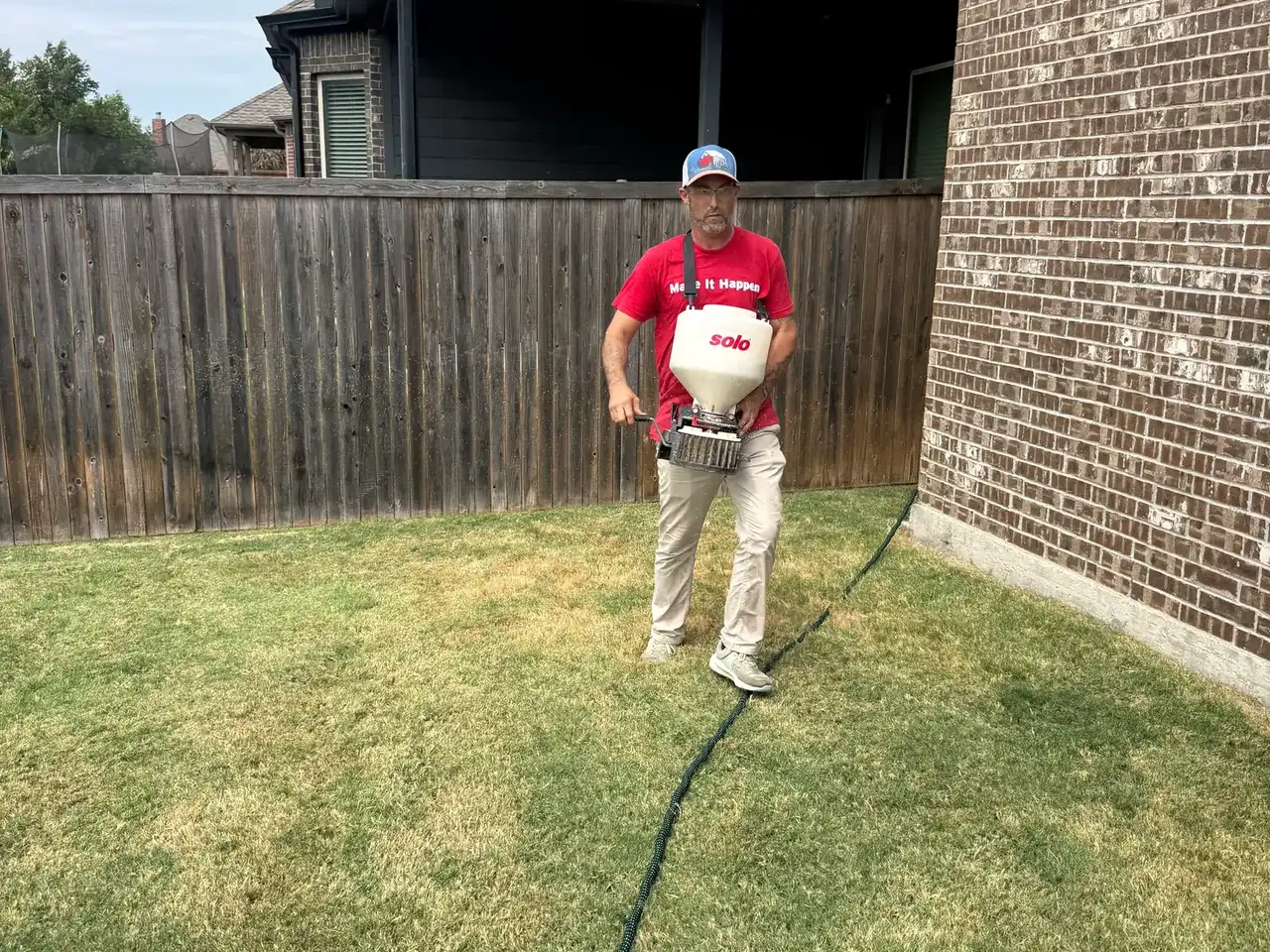
We look for the freshly graded areas, the new sod seams, the fill around the pad and any recent trenching, since that is where the colonies concentrate on a new build. On acreage, the fence line and the shop pad get the same attention.
Bait across the lawn, then a dry day
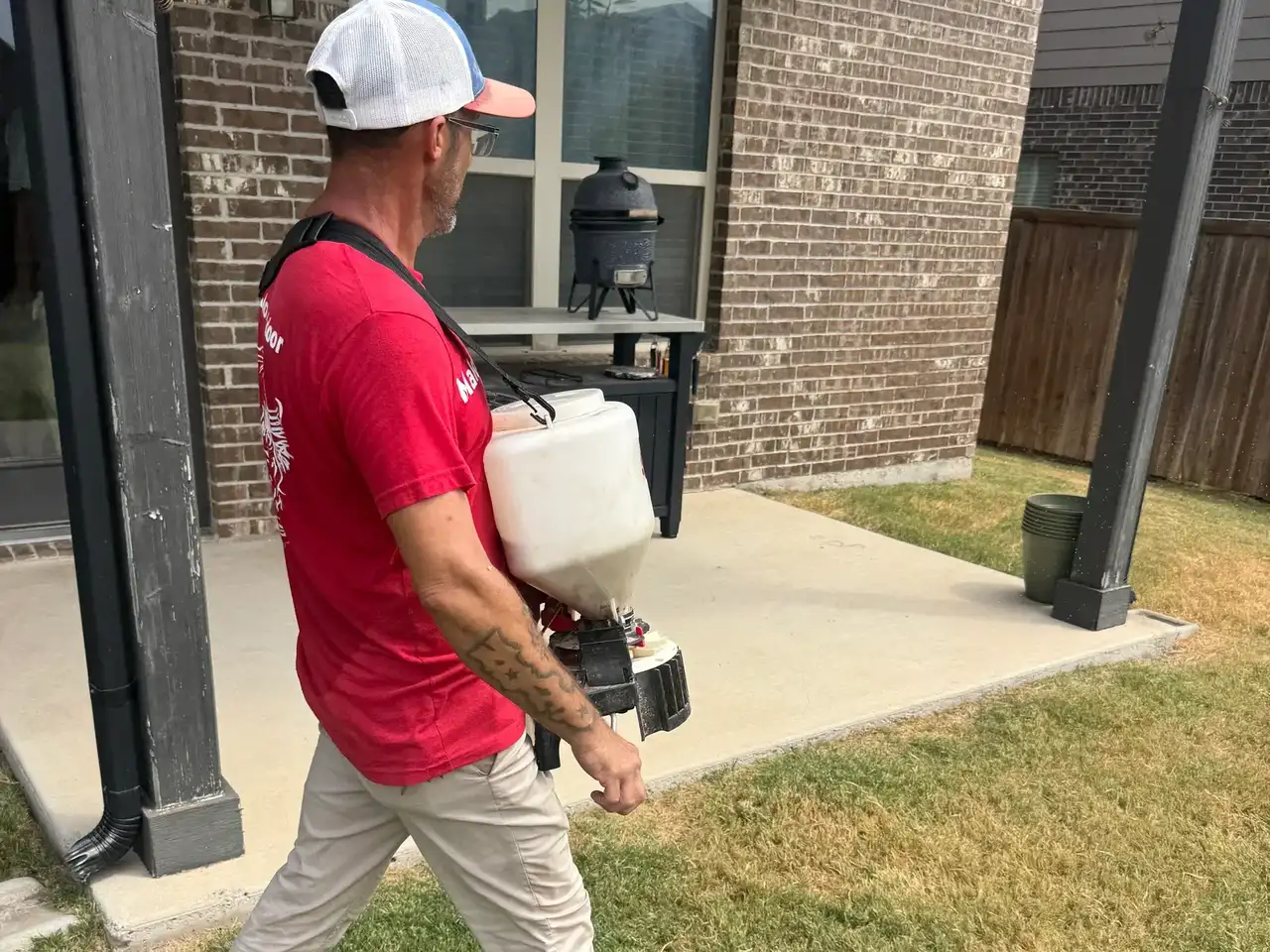
The granules go over the whole yard with a broadcast spreader at a light rate, and we ask you to keep the irrigation off for about 24 hours. New sod does not react to it at all.
The house perimeter on the same visit
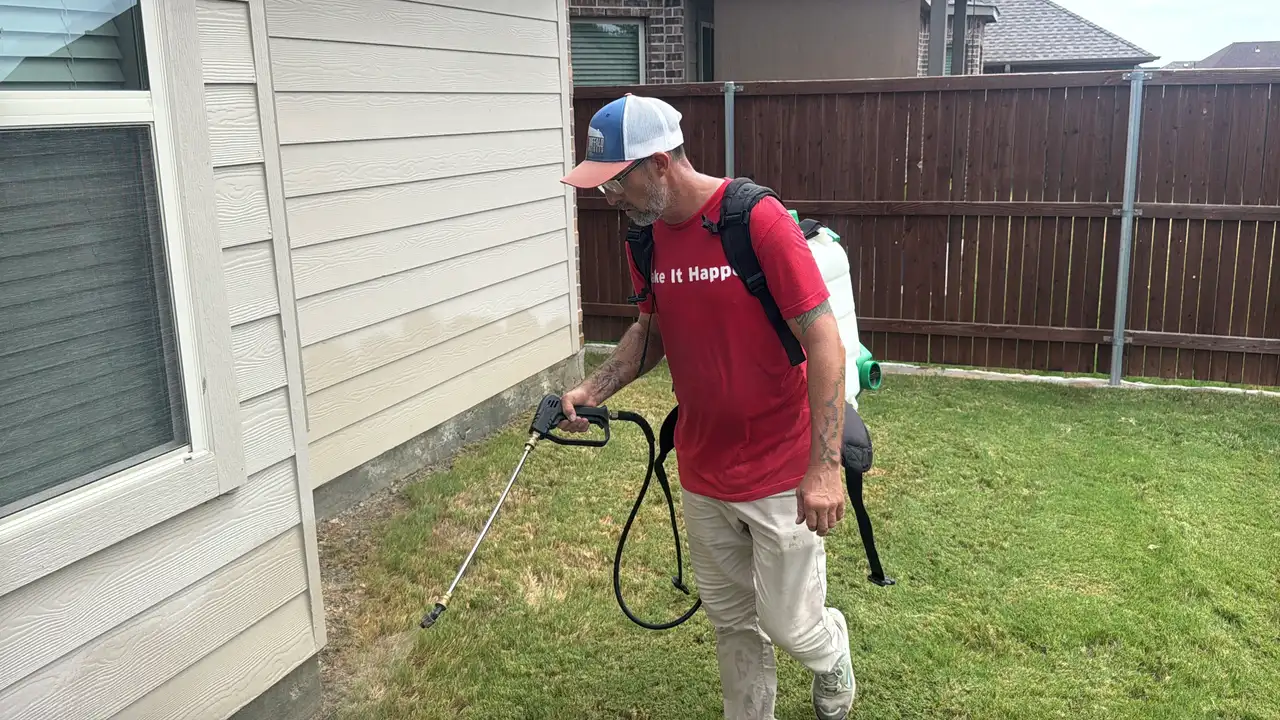
Because fire ants ride along with Home Defender, the foundation band, the eaves out to 25 feet and Delta Dust in the weep holes happen on the same trip. On a new brick house those weep holes are wide open and worth dusting from the start.