RODENTS ON ACREAGE
Where Avondale rats and mice come from before they find the house
From the outbuildings and the pasture edge, almost always. An acreage lot off US-287 usually has a barn, a shop or at least a stacked woodpile, and every one of those is a dry, dark, undisturbed place with feed, seed or cardboard in it. Rodents breed there through the summer, and when the nights cool they follow the fence line to the nearest heated wall.
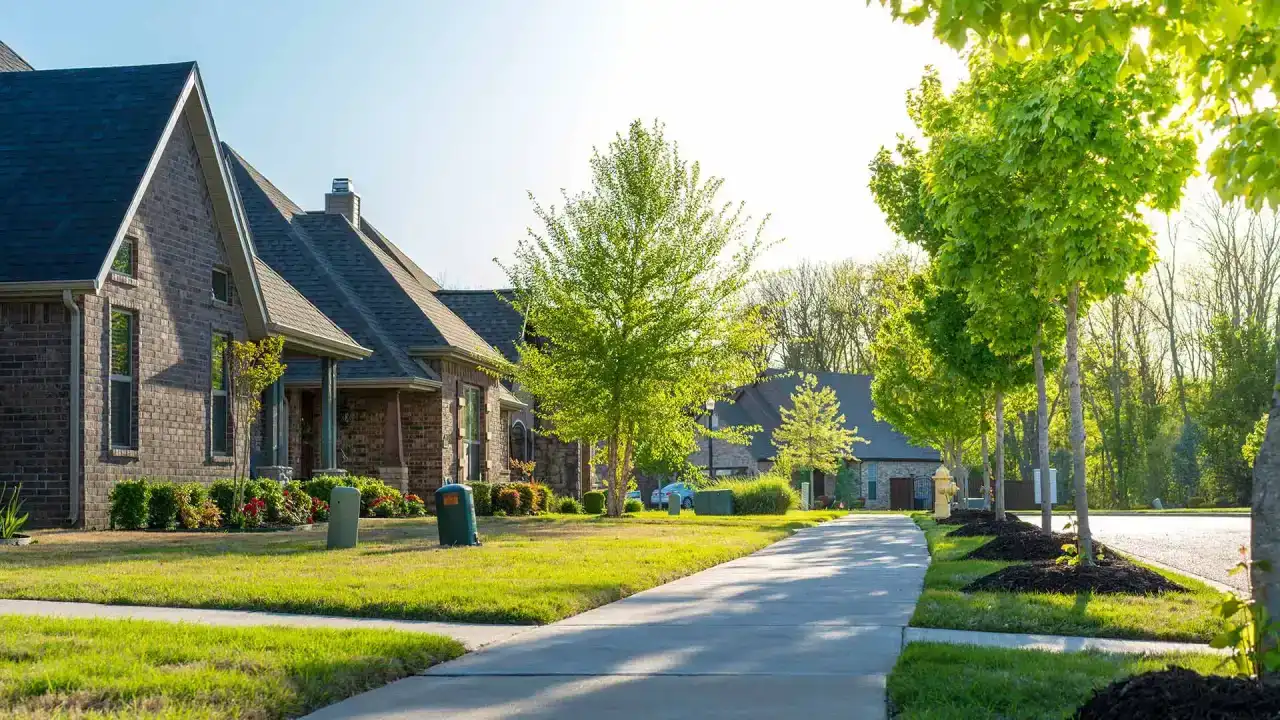
The new subdivisions filling in between Haslet and Saginaw have the opposite situation and the same result. Grading a field for a hundred houses evicts every rat and field mouse living in it, and the tightest new brick still has open garage-door corners, an unsealed AC line penetration and a dryer vent without a working flap. Two-year-old houses in Avondale get mice for exactly that reason.
Either way the sequence is fixed: inspect the house and the outbuildings, seal the openings rodents are using on the house, trap what has already moved in, then come back to confirm. A yard treatment has no part in it.
AVONDALE, PRICED
The rodent add-on on an Avondale plan
It is $25 a month, added to Home Defender or Complete Home & Lawn Defense, and there is no version of it that stands alone. On the new-build side of Avondale most houses are 1,500 to 3,000 square feet, which is $33 to $38 for Home Defender and $58 to $63 in total. The larger houses on acreage tend to fall in the 3,000 to 4,500 band at $38 to $46, so $63 to $71 with rodents.
The plan is priced on the house, not the acreage, so a modest house on five acres does not pay more for exclusion than the same house on a town lot. What acreage does change is how much of the first visit goes to the barn and the shop, because that is where we find out how many animals we are dealing with. Every figure is settled before we schedule, and there is nothing to sign and nothing to pay to stop.
Rodent add-on
$25 a month
Never priced on its own; always on a year-round plan
Home Defender, 1,500–3,000 sq ft
$33–$38 a month
Most of the new subdivisions off US-287
Home Defender, 3,000–4,500 sq ft
$38–$46 a month
Larger homes on the acreage lots
Complete Home & Lawn Defense, 3,000–4,500 sq ft
$51.50–$62 a month
Whole yard treated as well, fire ants included
Every number on this page comes from our published price list. Avondale homes get the same table as everyone else; the instant quote reads your square footage and lot size and hands you your own line.
WHAT WE CANNOT PROMISE
The limits of rodent control on Avondale acreage
We cannot make a barn rodent-free. A working barn with feed, hay and a dozen openings big enough to drive through is not something exclusion can close, and anyone who says they can seal it is guessing. We can put stations in it and reduce the numbers, but the barn will always have some rodents; the goal is a house that has none.
We cannot keep the pasture from restocking. New grading next door, a hay cutting or a wet spring all move rodents around, and a sealed Avondale house will still see the occasional animal on the fence or in the shop. That is not a failed job; that is living on acreage.
And the homeowner side is bigger out here. Feed stored in open sacks, a dog-food bin without a lid, a woodpile against the garage wall and a shop door that has never closed square are all things we point out and cannot fix for you. Sealing the house while the feed room stays open is the most common reason rodent work disappoints on a country lot.
BARN FIRST OR HOUSE FIRST
Working the outbuildings versus sealing the house
Some Avondale homeowners want the barn or the shop dealt with first, because that is where they see the droppings. It is a fair instinct, and stations in an outbuilding do knock the population down. But an outbuilding cannot be sealed, so trapping there is permanent maintenance, and it does nothing to stop the animals already using the weep holes forty yards away.
We start at the house because the house can actually be closed. Once the entry points are packed and sealed and the attic is trapped out, the barn becomes a separate, manageable problem: stations checked on the plan visits, feed put in bins, numbers kept low. Doing it the other way round means the house keeps refilling from a source you can never fully cut off.
THE FIRST HOUR
How a first rodent visit runs on an Avondale property
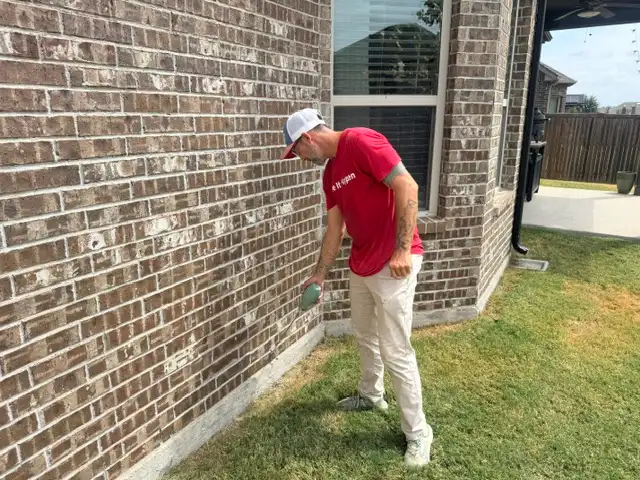
House perimeter and weep holes
Whether the brick is two years old or thirty, we walk the whole foundation for rub marks, droppings and chewed mortar, and pack the weep holes in use with copper mesh. New brick has clean, open holes, which makes the ones being used easy to spot.

Garage, penetrations and the shop
Garage-door corners and the AC line set are the usual builder gaps on the new houses; on acreage we add the shop and barn, looking at feed storage, door fits and where the runways go. You get a plain list of what is yours to fix.
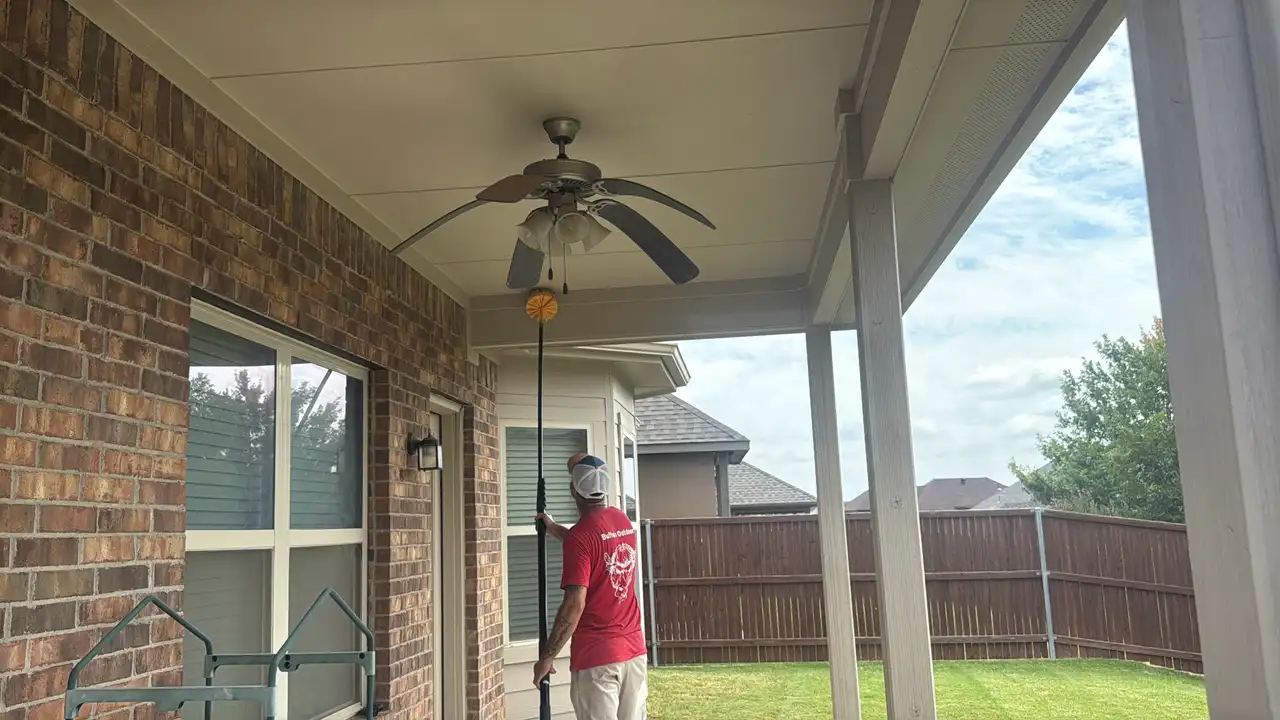
Attic, traps and follow-up
The attic tells us where the animals travel, and that is where the traps and locked stations go. Before we drive off, the follow-up is on the calendar and you know which openings we closed.