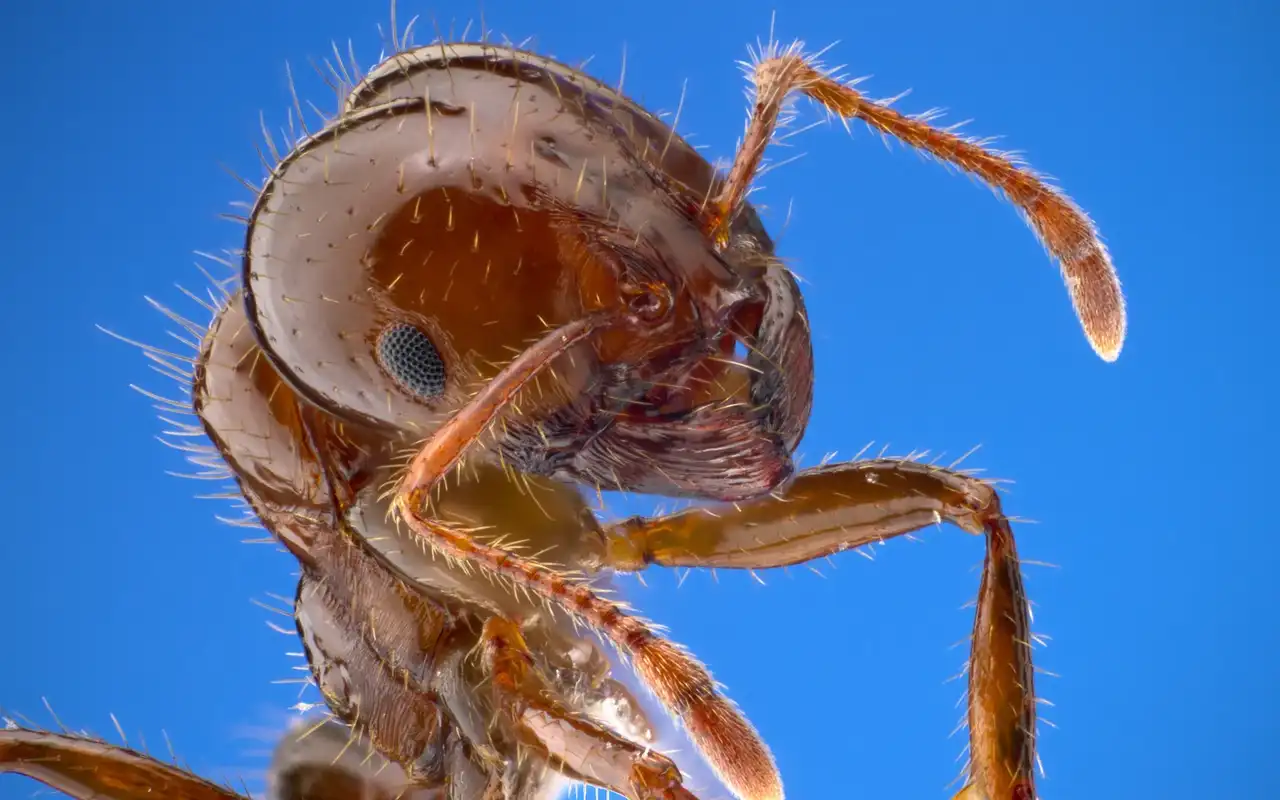
THREE KINDS OF AZLE YARD
Where fire ants show up around Eagle Mountain Lake
Azle spreads across three kinds of ground, and fire ants behave differently on each. The established neighborhoods in the middle of town sit on settled soil with mature trees, so colonies there are scattered and few. The lakeside lots have open, sunny turf running toward the water, and low ground that floods, which means a rash of mounds after every heavy rain. The acreage on the edges, and any new build where a lot was graded, is where the colonies are thickest.
It does not matter to us which county line the house falls on. Azle straddles Tarrant and Parker, and the bait, the plan and the price are identical either side, priced on the house rather than the address.
COMES WITH THE PLAN
The price of fire ant control in Azle is the price of the plan
There is no fire ant line item. Both year-round plans include whole-yard bait, and Home Defender runs from $30 a month for a house of 1,500 square feet or less to $54 for one between 4,500 and 6,000, with most Azle homes in the middle bands. A lakeside cottage and a large new build on acreage pay very different numbers, and the difference is entirely the house.
Complete Home & Lawn Defense, which most Azle homeowners with brush or pasture at the property line end up preferring for the chigger and tick work, runs $40 to $73.50 across the same sizes. Nothing is signed and there is no fee to start or to stop; the instant quote at /instant-quote spits out your number in a minute.
House up to 1,500 sq ft
$30/mo
Smaller lakeside places
1,500 to 3,000 sq ft
$33–$38/mo
Most established Azle homes
3,000 to 4,500 sq ft
$38–$46/mo
Newer builds on the edges of town
Same sizes, whole-yard plan
$40–$62/mo
Adds chigger, tick and lawn insect treatment
Every number on this page comes from our published price list. Azle homes get the same table as everyone else; the instant quote reads your square footage and lot size and hands you your own line.
KNOW THIS GOING IN
The three complaints we hear about fire ant bait in Azle, and the truth behind each
The first is that mounds appeared after we treated. On low lakeside ground this happens after almost every storm, because the water table rises, the nest floods and the colony builds upward to stay dry. The bait was already working on that colony; the rain just made it visible. Mounds between scheduled visits are covered, so call and we come back.
The second is that the ants are back from next door. On an acreage lot with brush or pasture on two sides, queens fly in from untreated ground all summer, and no product prevents that. What keeps an Azle yard clear is the repeat visits collapsing each new colony while it is still small.
The third is speed, and there is no fix for it. Bait has to travel from the surface to the queen through the workers, which takes days at best and often two to three weeks. If the mound is in the middle of the kids' play area, tell us and we will give it particular attention, but the clock is the same.
THE HONEST DIY ANSWER
Buying a bag of bait in Azle versus having it on the plan
You can do this yourself, and on a small in-town lot it is a fair choice. Retail broadcast bait is the same class of product we use. The rules are the ones most people skip: spread it across the whole yard rather than onto the mound, do it in spring or fall when the ants are foraging, and pick a day with 24 dry hours ahead. On a lakeside lot the dry window is the hard part.
Where the plan earns its keep is everything around the bait. The perimeter treatment for the spiders and scorpions that come with docks, sheds and woodpiles happens on the same visit, the weep holes get dusted, and somebody is watching the forecast for you. If you have an acre or more of open ground, the spreading itself is also an hour you probably do not want to spend.
WHEN WE ARRIVE
The first fire ant visit on an Azle property
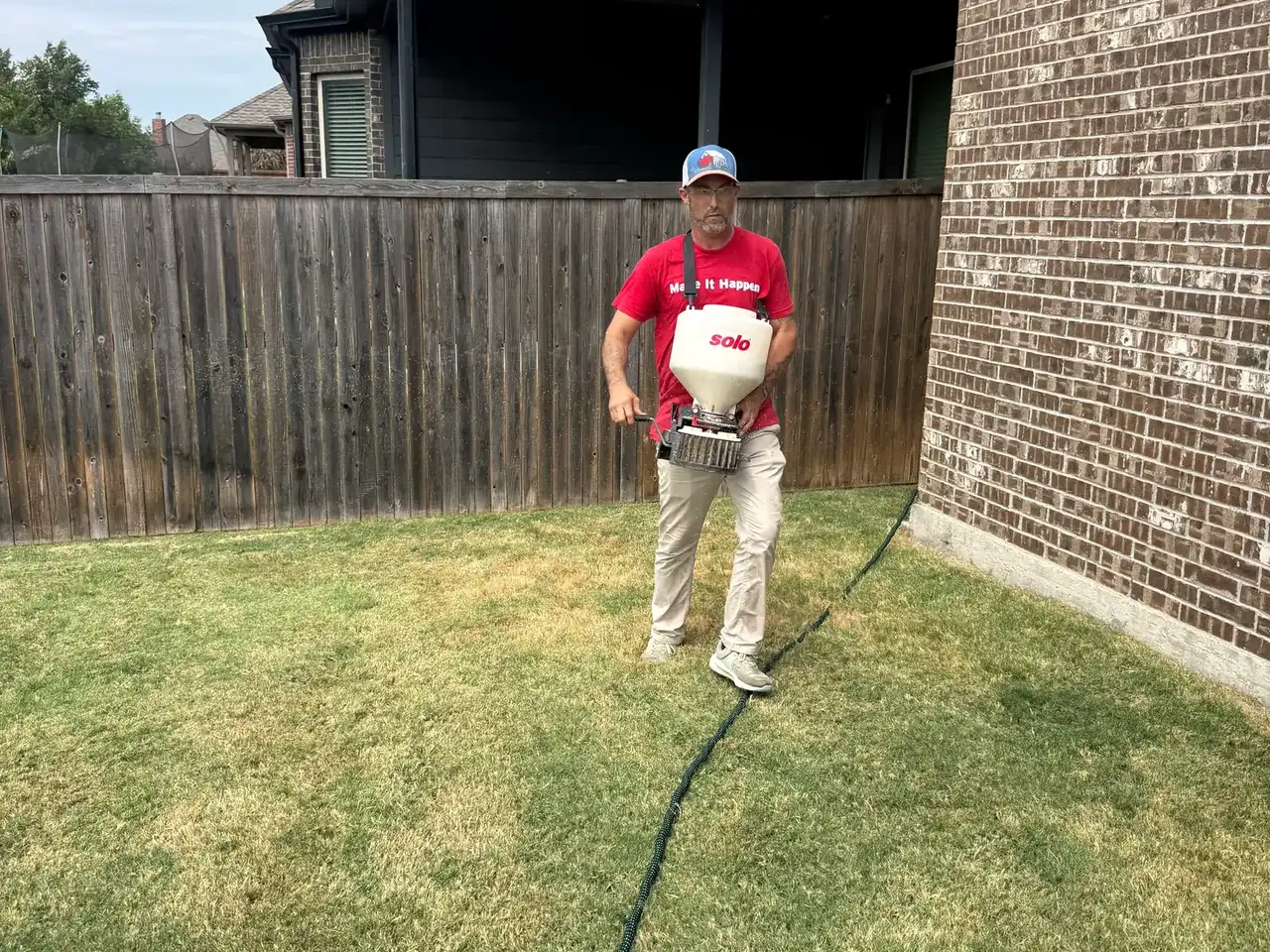
Read the ground
We walk the lot and note the sunny turf, the low spots that flood, and any recently disturbed soil, because those are the three places Azle colonies concentrate. Where the yard meets brush or the shoreline we look at how the pressure crosses.
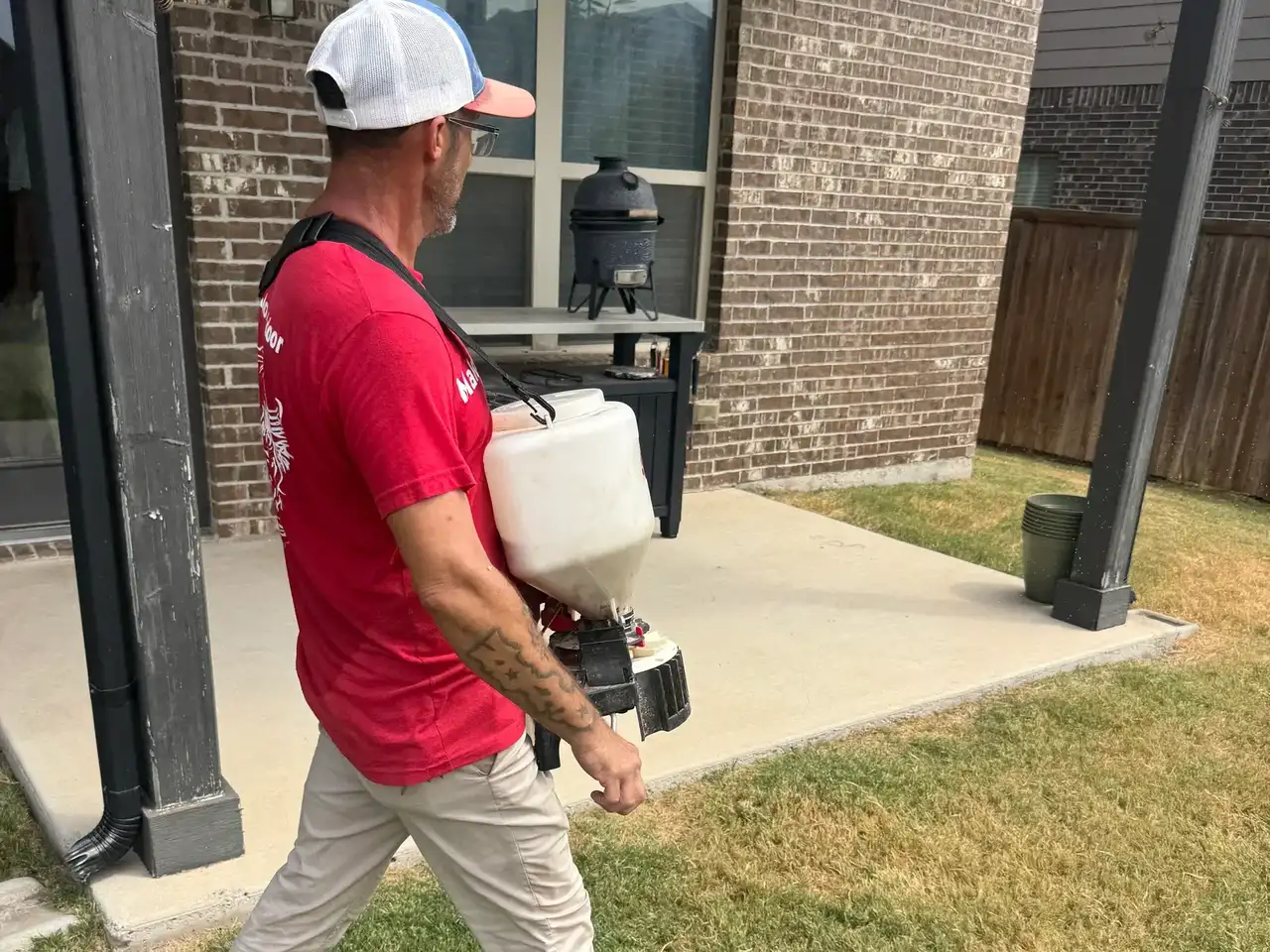
Broadcast the full lawn
The granules go across every part of the turf with a spreader, at a rate light enough that the grass is unaffected, and we ask for a dry day afterward. Mounds you point out are covered along with the ground you have not checked.
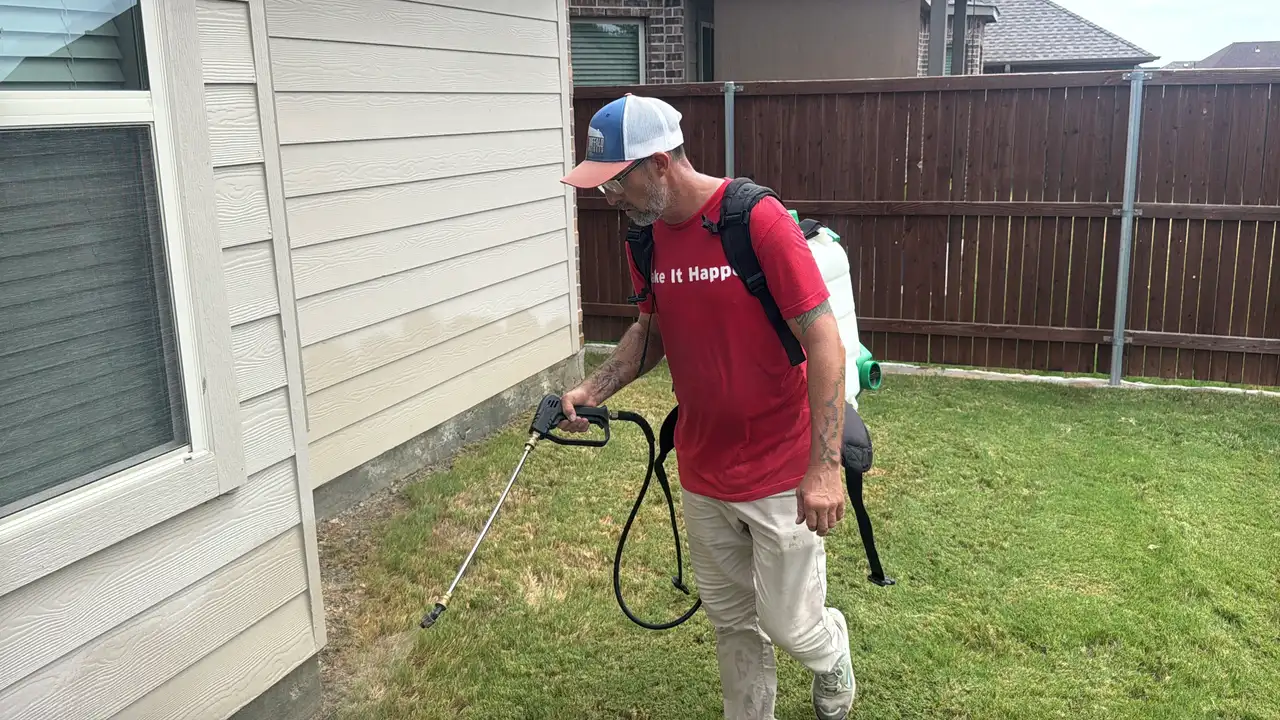
Outbuildings and the house on the same stop
Because the bait is part of Home Defender, the foundation band, the eaves and the weep holes are treated while we are there, and we look over sheds and docks for the pests that shelter in them.