BERMUDA COUNTRY
Which lawn insects actually show up in Azle
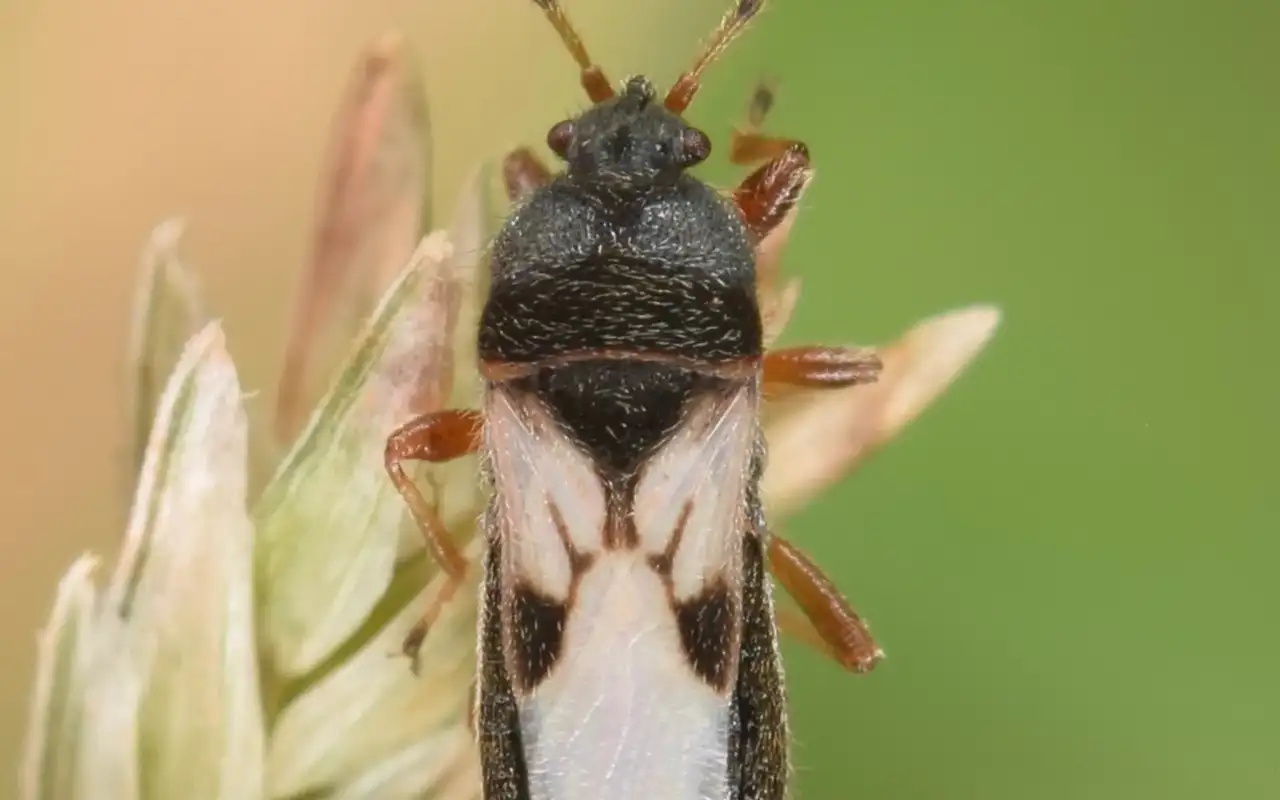
Grubs and fall armyworms, mostly. Azle wraps around the west shore of Eagle Mountain Lake with a mix of established neighbourhoods, shoreline lots and acreage on the edges, and the turf across all of it is predominantly Bermuda. That shifts the problem away from chinch bugs, which are a St. Augustine pest, and toward the two insects that hit Bermuda from late summer onward.
Armyworms are the dramatic one. After a wet stretch in August or September, moths lay eggs in tall grass and brush, and the caterpillars move as a front onto mowed lawns and eat the blades overnight. Around the lake there is a lot of that brush, and yards where mowing stops at a pasture or the shoreline scrub are first in line.
Chinch bugs are the exception, not the rule, but where a homeowner in Azle has laid St. Augustine, usually in a sunny front yard, the hot strip beside the driveway can carry them, and the browning gets blamed on the heat every summer until someone floats one in a coffee can.
EITHER SIDE OF THE COUNTY LINE
Lawn insect coverage cost for Azle homes
The same price applies whether your lot is on the Tarrant or the Parker County side of Azle, because the plan is priced on the square footage of the house rather than the address. Complete Home & Lawn Defense treats the whole yard for $40 to $73.50 a month; a house of 1,500 square feet or less pays a flat $40, and the common 1,500 to 3,000 bracket runs $40 to $51.50.
Home Defender is $30 to $54 and includes the lawn out to roughly 25 feet from the foundation. On a compact Azle lot in an established neighbourhood that can be most of the turf; on a shoreline or acreage lot it is a ring around the house and nothing more. Both plans are month to month, carry no startup fee, and cover return visits between scheduled ones when the insects come back early.
1,500 sq ft or less
$40/mo
Complete plan, smaller established homes
1,500 to 3,000 sq ft
$40–$51.50/mo
Most Azle housing, either county side
3,000 to 4,500 sq ft
$51.50–$62/mo
Larger lake-side and acreage homes
Home Defender, 1,500 sq ft or less
$30/mo
Lawn band to about 25 feet
Every number on this page comes from our published price list. Azle homes get the same table as everyone else; the instant quote reads your square footage and lot size and hands you your own line.
WHAT TO EXPECT, AND NOT
The limits of lawn insect control on an Azle lot
We cannot stop armyworms arriving. The moths come from the brush and shoreline scrub around the lake, and a treated lawn can still be reached by a new wave later in the same season. What the plan does is kill the caterpillars fast when they appear and come back at no charge if a second front follows. Keeping the grass at the lot line mowed short cuts down on where they stage.
Grubs found late are only partly fixable. By October the larvae in an Azle Bermuda lawn are large and deep, and one treatment will not clear them the way it would have in August. The turf that has already lost its roots will need to be replaced whichever month you treat.
And a lot of brown near the lake is not insects at all. Low ground that stays wet grows fungal patch, sandy shoreline soil dries out faster than the clay uptown, and both look like insect damage from the kerb. We run the tests before treating so you are not paying to kill something that is not there.
DIY GRANULES OR A PLAN
A bag from the farm store versus scheduled coverage
The bag can work, and plenty of people in Azle have used one. Against armyworms in particular, a fast-acting product spread the evening you see them does the job, and we would never tell you otherwise. Where it goes wrong is grubs: a surface granule that is not watered in never reaches larvae two to four inches down, and a treatment made in the wrong month kills very few of them regardless of product.
The plan is priced monthly, so it costs more than one bag and less than a bag every time a brown patch appears plus the sod you replace when the guess was wrong. The other thing it buys is someone checking the lawn in late summer before anything is visible, when grubs are small and easy to kill. That check is the part a bag cannot do.
FIRST TIME OUT
Reading an Azle lawn before treating it
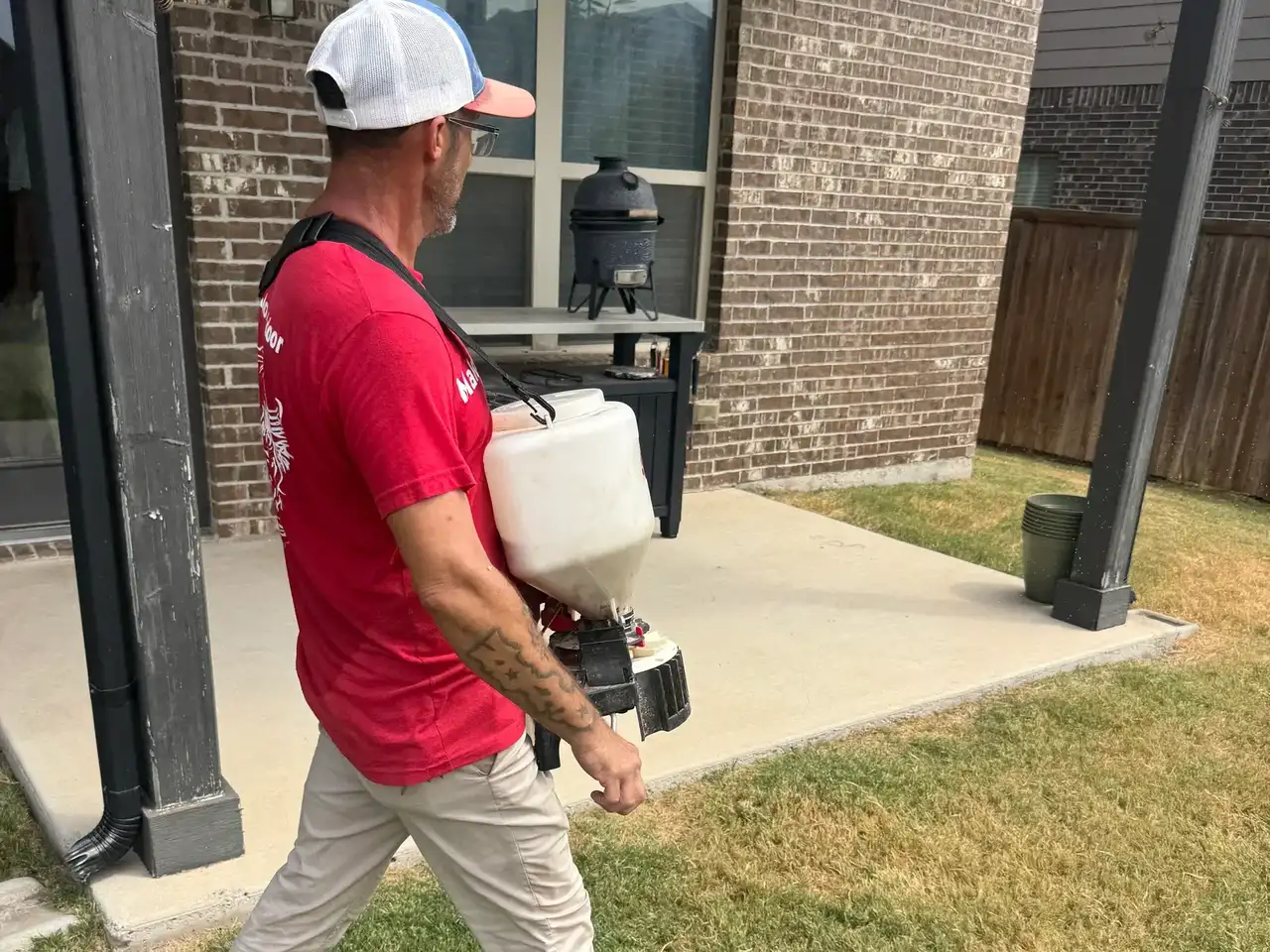
Turf type and lot edge
We confirm what grass you have, since Bermuda and St. Augustine get different insects, and walk the line where mowing meets brush or shoreline. That edge is where armyworm fronts come from.
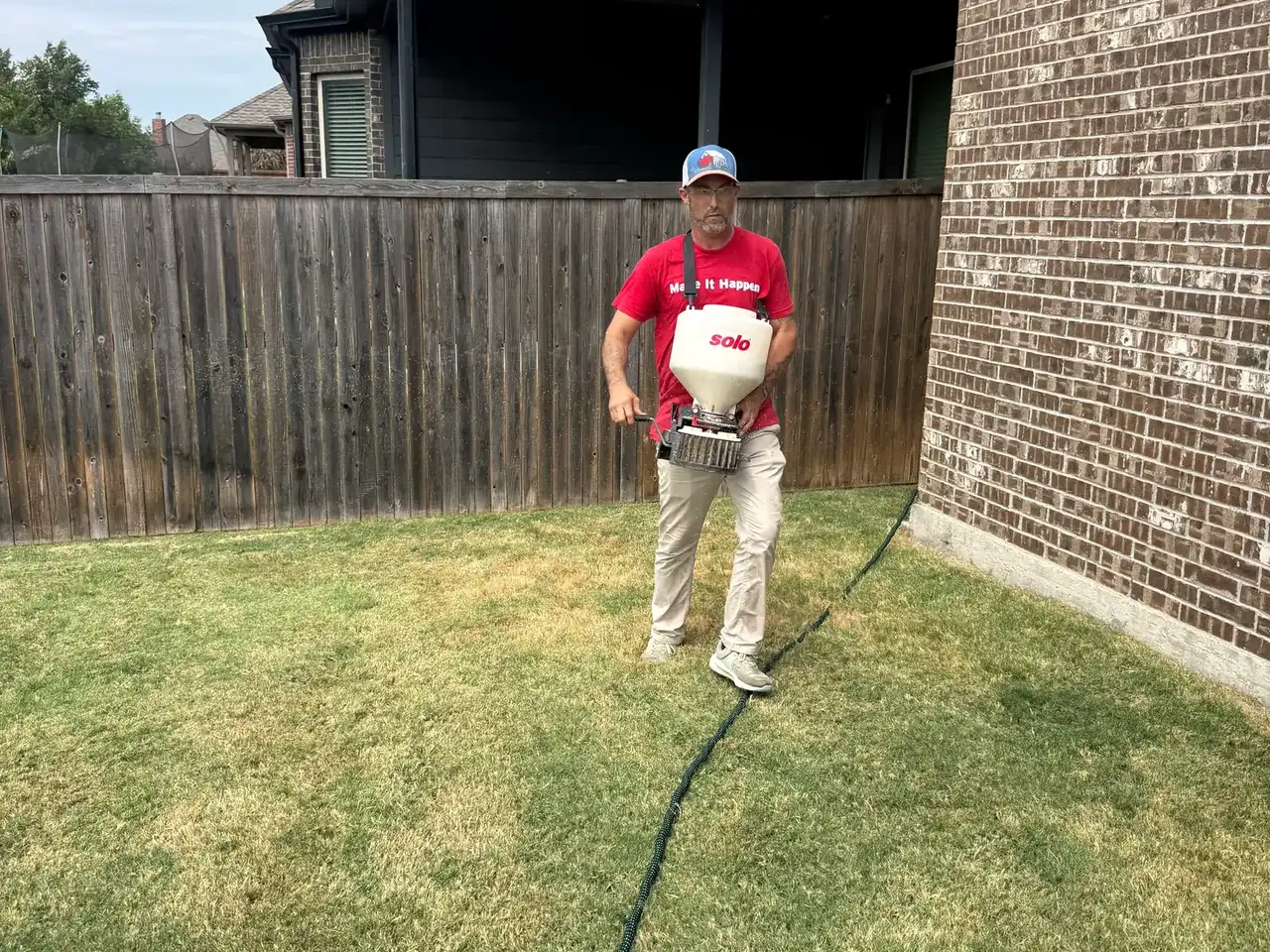
Roots and larvae
Any brown or spongy patch gets pulled on. If it lifts free, we peel back a square foot and count grubs; five or more means the root zone gets treated and watered in.
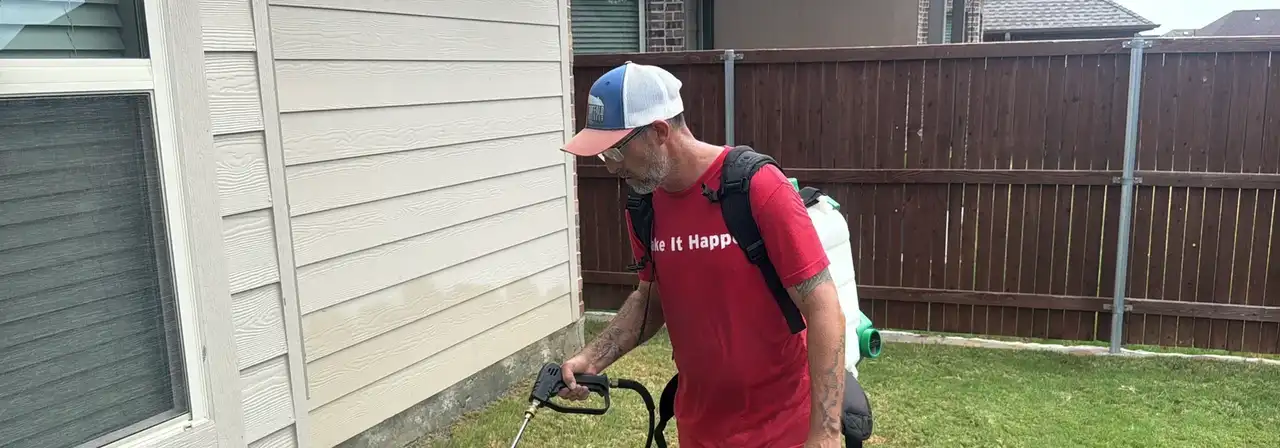
Sunny St. Augustine, if any
Where a front yard has St. Augustine along the drive, we run the float test on the hot edge. If nothing surfaces, the browning is heat or water and we tell you that instead of treating.