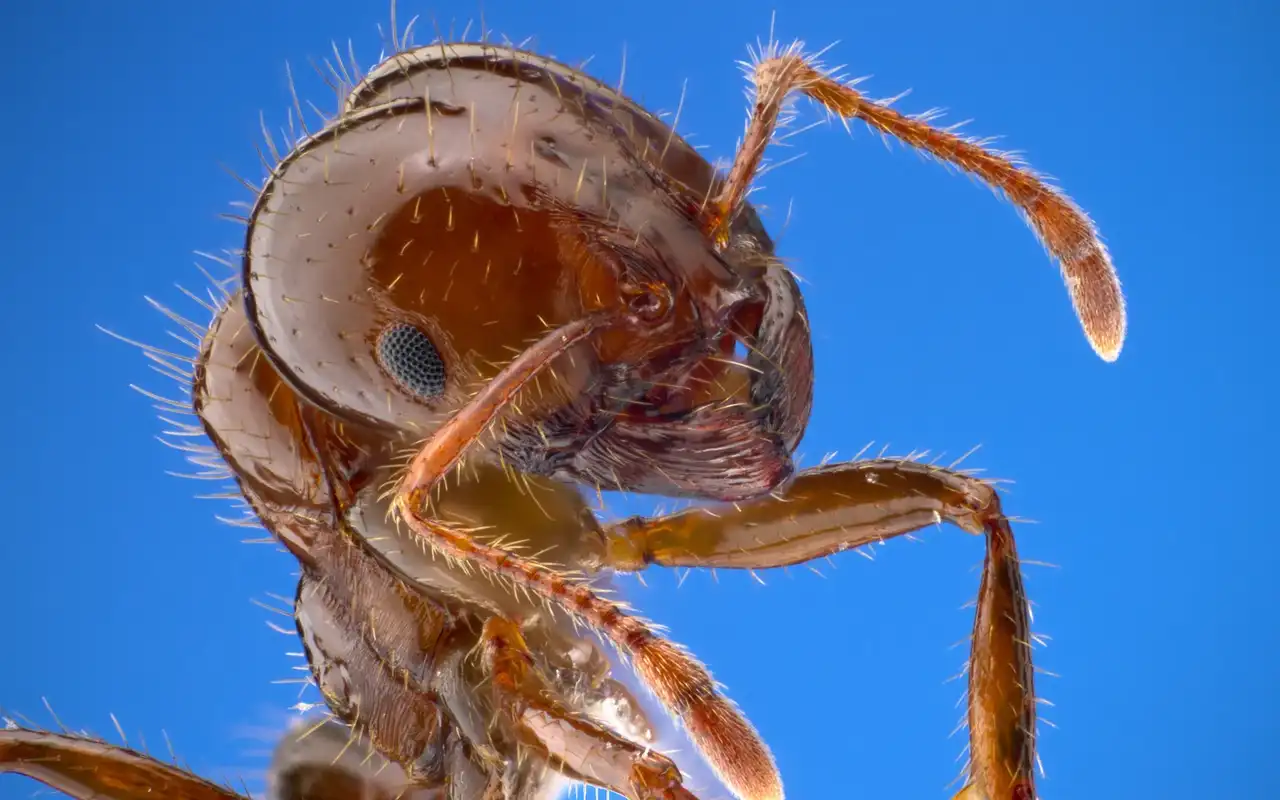
SETTLED SUBURB
Fire ants in Bedford are a creek-lot and sunny-lawn problem
Bedford was mostly built between the 1960s and the 90s, and that age works in your favour. Decades of settled soil and mature trees mean the native ants still hold most of the ground, so a typical Bedford yard sees an occasional colony in the sunniest patch of lawn rather than a field of mounds. Fire ants are not the reason most Bedford homeowners call us; spiders, scorpions and weep-hole ants are.
The Bear Creek corridor is the exception. Lots that back onto the creek and its greenbelts sit on low ground that floods, and floodwater does two things: it pushes existing colonies up into tall mounds within days, and it carries queens downstream to start new ones. If your back fence is on the creek, north or south of Airport Freeway, expect to see mounds after every wet spell.
ZERO ON TOP
How much fire ant control adds to a Bedford plan
Nothing. Whole-yard bait is built into both year-round plans, so the only number that matters is the plan itself, priced on the house. Bedford's housing runs mostly from 1,500 to 4,500 square feet, which puts Home Defender at $33 to $38 or $38 to $46 a month, and the smaller 1960s homes in 76022 can be as little as $30.
Complete Home & Lawn Defense costs $40 to $62 for the same sizes and adds the entire yard for chinch bugs in St. Augustine, grubs and armyworms in Bermuda, and chiggers on the greenbelt lots. Either plan is month to month with no cancellation fee, and the retreatment if mounds return between visits is part of the price, not an extra.
House up to 1,500 sq ft
$30/mo
Smaller 1960s homes south of Airport Freeway
1,500 to 3,000 sq ft
$33–$38/mo
Most of Bedford
3,000 to 4,500 sq ft
$38–$46/mo
Larger 1980s and 90s houses in 76021
Same sizes, whole-yard plan
$40–$62/mo
Complete Home & Lawn Defense, bait included
Every number on this page comes from our published price list. Bedford homes get the same table as everyone else; the instant quote reads your square footage and lot size and hands you your own line.
THE CATCHES
What Bedford homeowners find out the hard way about fire ant bait
It is not a spray you can watch work. Broadcast bait is a food the workers carry down to the queen, and until she dies the mound stays busy, which can take two or three weeks. People who expect a dead mound by the weekend are disappointed, and we would rather you know that before we start.
Layered landscaping hides colonies. A Bedford yard with deep mulch beds and shrubs against the brick can carry a fire ant colony under the mulch at the foundation, right where the moisture is, and you will never see a mound. Bait across the turf reaches the foragers from that colony too, but the beds themselves are where we look on the first visit.
And the creek keeps sending more. If your lot is on Bear Creek, the bait clears what is on your side and the greenbelt sends replacements after every flood. That is why the treatment lives inside a repeating plan, and why we will not sell it as a single application to a creek lot.
TWO WAYS TO KILL A MOUND
Why we broadcast bait instead of drenching Bedford mounds
A drench treats the symptom. Pour a liquid on the mound and the workers near the top die, the queen and her brood get moved sideways by the survivors, and within a fortnight there is a new mound three feet away. It feels effective because something dies while you watch, and it is the method that has convinced half of Bedford that fire ants cannot be beaten.
Bait treats the colony. Because it goes across the entire yard at a light rate, it is picked up by every colony's foragers, including the ones under the mulch and the ones too small to have raised a mound yet. If you want to handle it yourself, buy a broadcast bait rather than a mound killer and put it down in spring or fall on a dry day; we simply do it as part of the visit you are already paying for.
FIRST VISIT, STEP BY STEP
What we do on the first fire ant call to a Bedford home
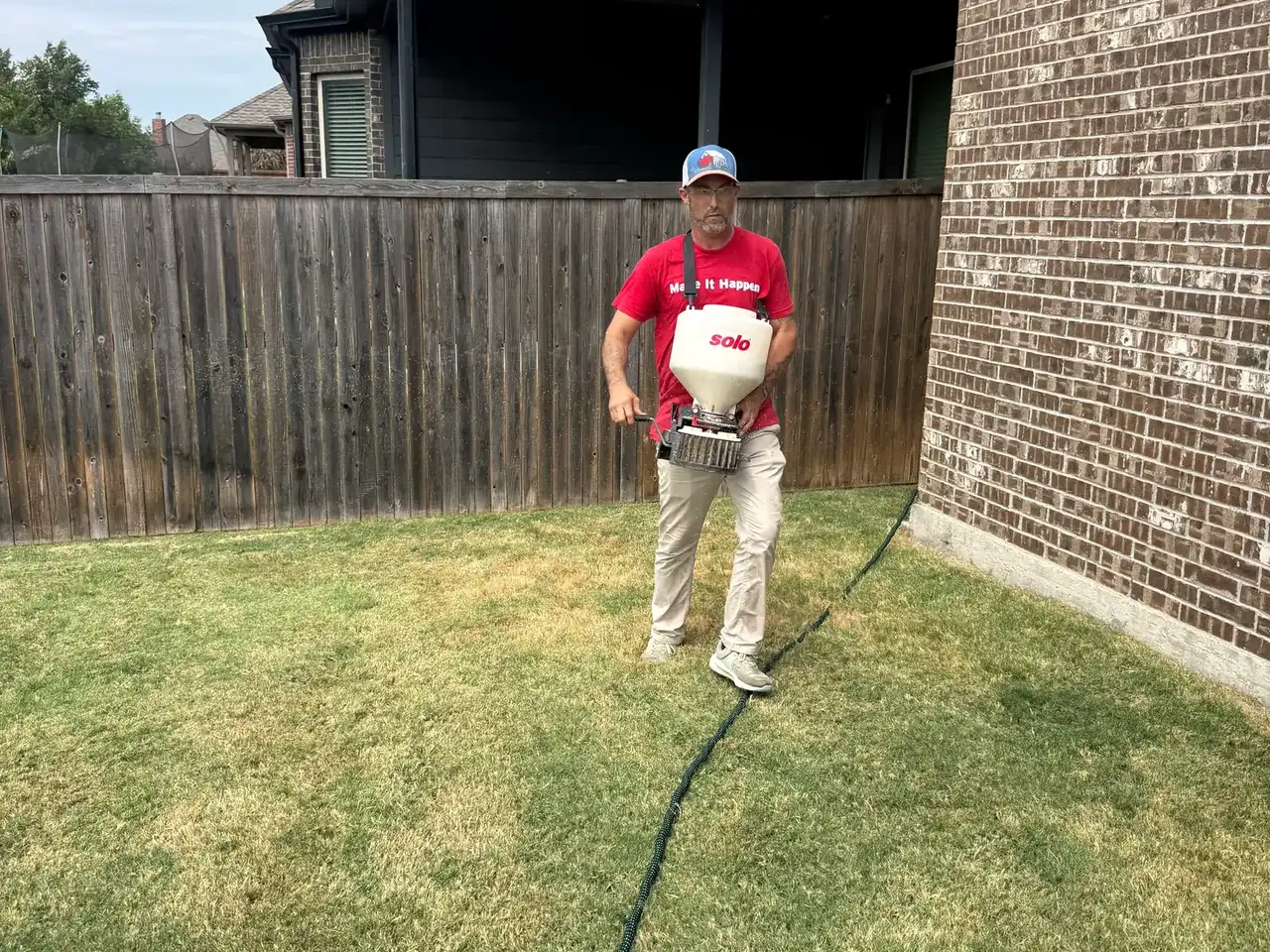
Check the beds and the creek side
Before spreading anything we look under the mulch along the foundation and along the back fence if it faces Bear Creek or a greenbelt, since those are where a Bedford colony hides. Sunny open lawn gets a look too, but it is rarely the whole story here.
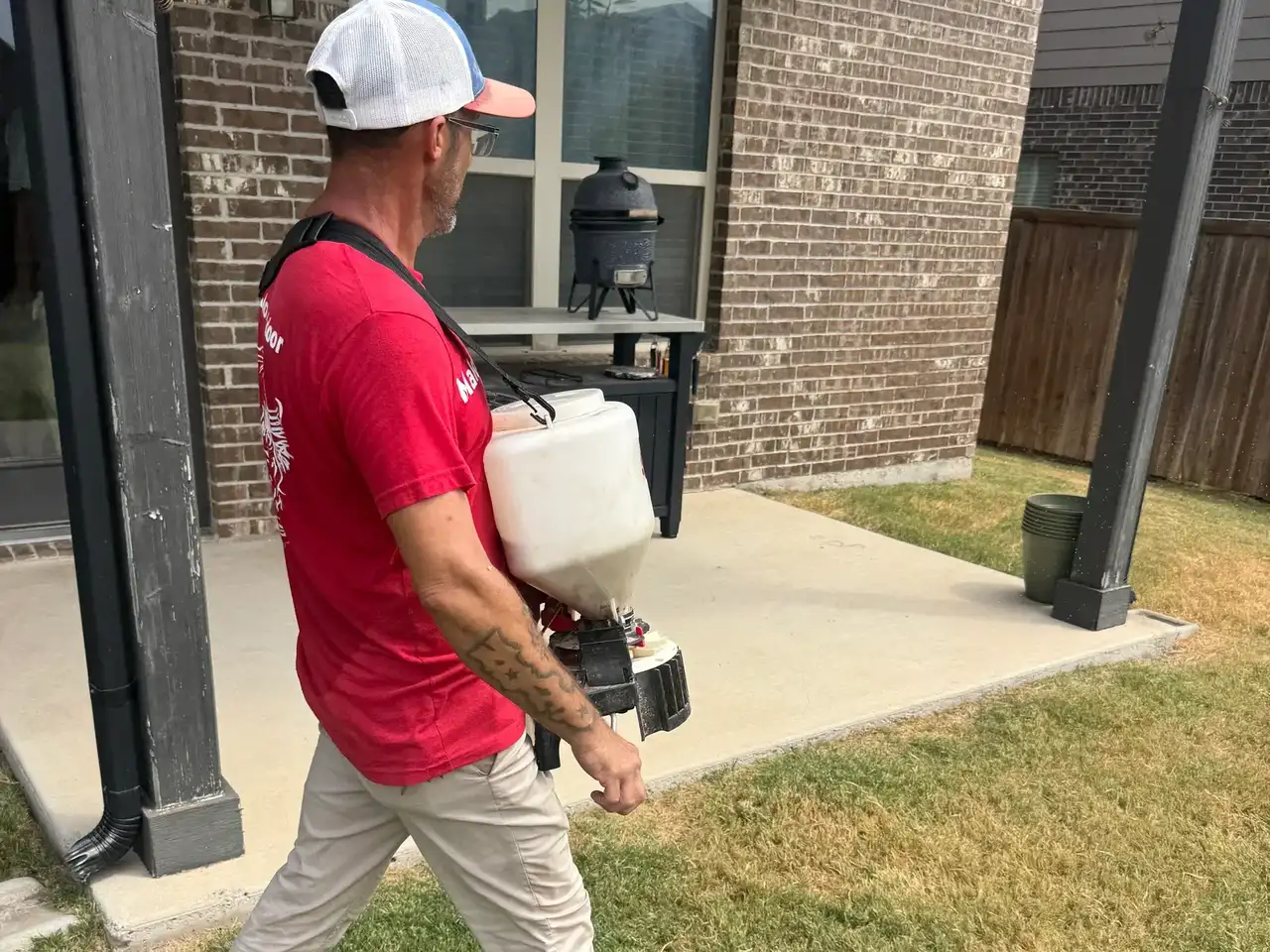
Bait the turf, hold the sprinklers
The broadcast spreader covers the full lawn at a rate that leaves no trace on the grass, and we ask you to skip irrigation for about a day so the granules stay dry and attractive. Foragers do the rest.
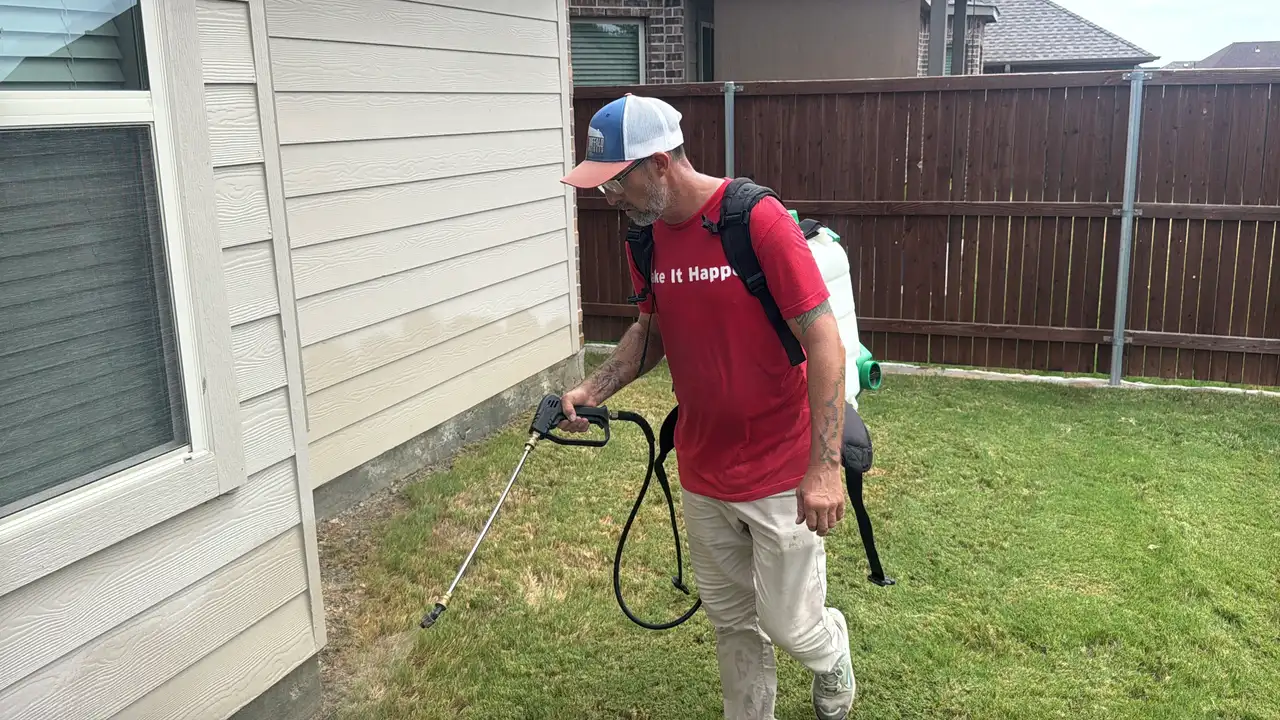
Perimeter, eaves and weep holes
The same stop includes the foundation band, the eaves out to 25 feet and Delta Dust in the weep holes. On 1970s Bedford brick with original weep holes, that part usually matters more than the fire ants.