CREEK AND CANOPY
Why one Bedford street bites and the next one barely does
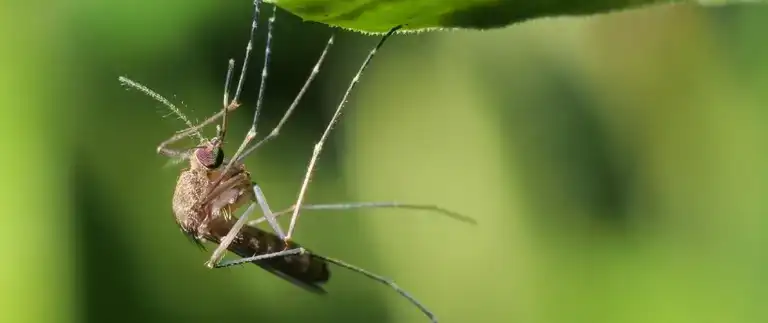
Ask two neighbors here and you can easily get two different answers, and the split usually comes down to where the water and the shade sit. The Bear Creek corridor cuts through town holding moisture the year round, and lots that back onto it or onto a greenbelt see adults weeks earlier than the interior blocks do.
Age is the other half. Most of Bedford went up between the 1960s and the 1990s, so the trees are tall and the beds have been irrigated for decades, and a mature landscape holds a layer of cool damp air underneath it all summer. That is where mosquitoes spend daylight, north of Airport Freeway in 76021 and south of it in 76022 alike, and it is what a treatment every 21 days is aimed at.
BEDFORD LOT PRICING
What a Bedford yard costs per treatment
Most homes in town land at $59.95 or $69.95 a visit, because the typical mid-cities lot is comfortably bigger than a post-war Fort Worth lot and well short of an acre. The measurement that matters is the lot, not the house, so a modest 1,600-square-foot home on a wide greenbelt lot costs more to treat than a larger house on a tight one.
You are charged for each visit rather than for a summer, so there is no lump sum in April and no cancellation fee if you stop in August. Anything that comes back between scheduled treatments is handled at no additional cost. Punch a Bedford address into /instant-quote and the band comes back without a phone call.
Lots of 7,000 sq ft or less
$49.95 a visit
The smaller older lots in town
Lots from 7,001 to 12,000 sq ft
$59.95 a visit
Where most Bedford homes land
Lots from 12,001 to 17,000 sq ft
$69.95 a visit
Wider lots and greenbelt backs
Every number on this page comes from our published price list. Bedford homes get the same table as everyone else; the instant quote reads your square footage and lot size and hands you your own line.
LIMITS WORTH KNOWING
Where a Bedford mosquito program stops working
A creek corridor cannot be switched off. Bear Creek and the greenbelts feeding it breed continuously, and mosquitoes move, so a treated yard along that boundary still sees some at dusk. What changes is that the shrub beds, fence shade and canopy on your own lot stop being a nursery, and that is where the bulk of your biting was coming from.
The second limit is water nobody sees. Decades-old irrigation in Bedford beds keeps ground wet, gutters on mature trees fill with leaves, and a single forgotten saucer under a patio pot produces more adults than a fence line does. We will point those out; whether they get emptied is up to the household.
The third is time. Peak-summer product holds roughly three weeks and rain shortens that, which is the entire reason for a 21-day interval instead of a tidy monthly one. If what you want is a single fog before one evening in the back yard, this program is not it, and we would rather say so than take the money.
THINNING VS TREATING
Could pruning fix this instead of spraying?
Partly, and it is worth knowing where the line falls. Mature Bedford landscaping produces mosquitoes because it produces permanent shade and damp ground, so thinning crowded shrub beds, lifting the skirts on overgrown hedges and pulling deep mulch back off wet soil genuinely lowers how many adults can rest on your lot. It also makes everything we apply work harder.
What pruning cannot touch is the creek corridor or the untreated beds next door, and most people are not willing to tear out landscaping they spent years growing. That is the gap the fog fills: it treats the cover you want to keep. If a back-yard renovation is already planned, do that first and judge the mosquito load afterwards, because you may need less help than you think.
VISIT ONE IN BEDFORD
What the technician does before the fogger starts
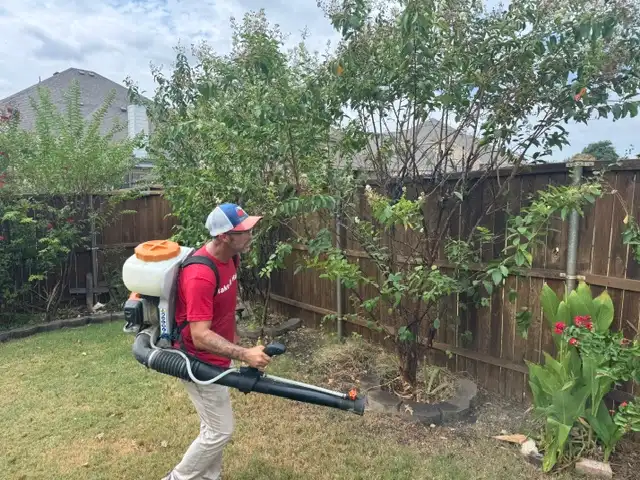
Finding the daytime shade
The first pass is a walk, not a spray. Adults sit out the day in the coolest, dampest two percent of a property, so the technician looks at the north wall, the deep beds, deck skirting and the fence line, and on a greenbelt lot the back boundary gets the most attention.
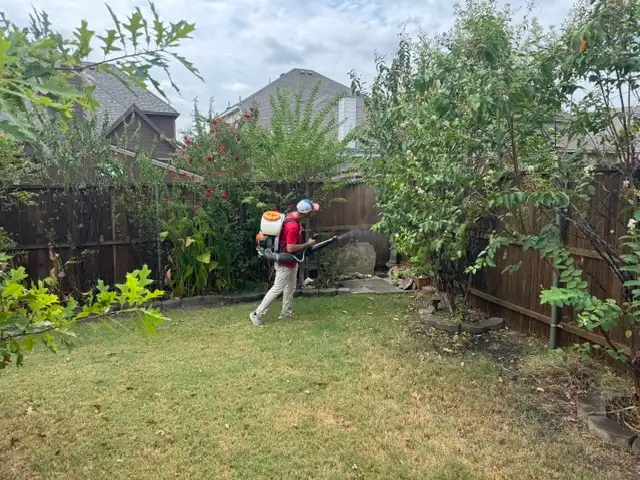
Treating cover and edges
The fogger then goes through ornamental trees, hedge lines, shrub beds and anything shaded against the house, while turf and bed edges get a separate pass aimed at fleas and ticks. Open lawn is largely skipped because it is not where anything is hiding.

The water walk
Gutters, bird baths, toys, tarps and the low corner that never dries after a storm all get flagged before we leave. Anything that holds water and cannot be drained is larvicided on the spot. Nobody needs to be home for this; gate access and a text on approach are enough.