THREE INSECTS, ONE TOWN
Sorting out what is browning a Bedford lawn
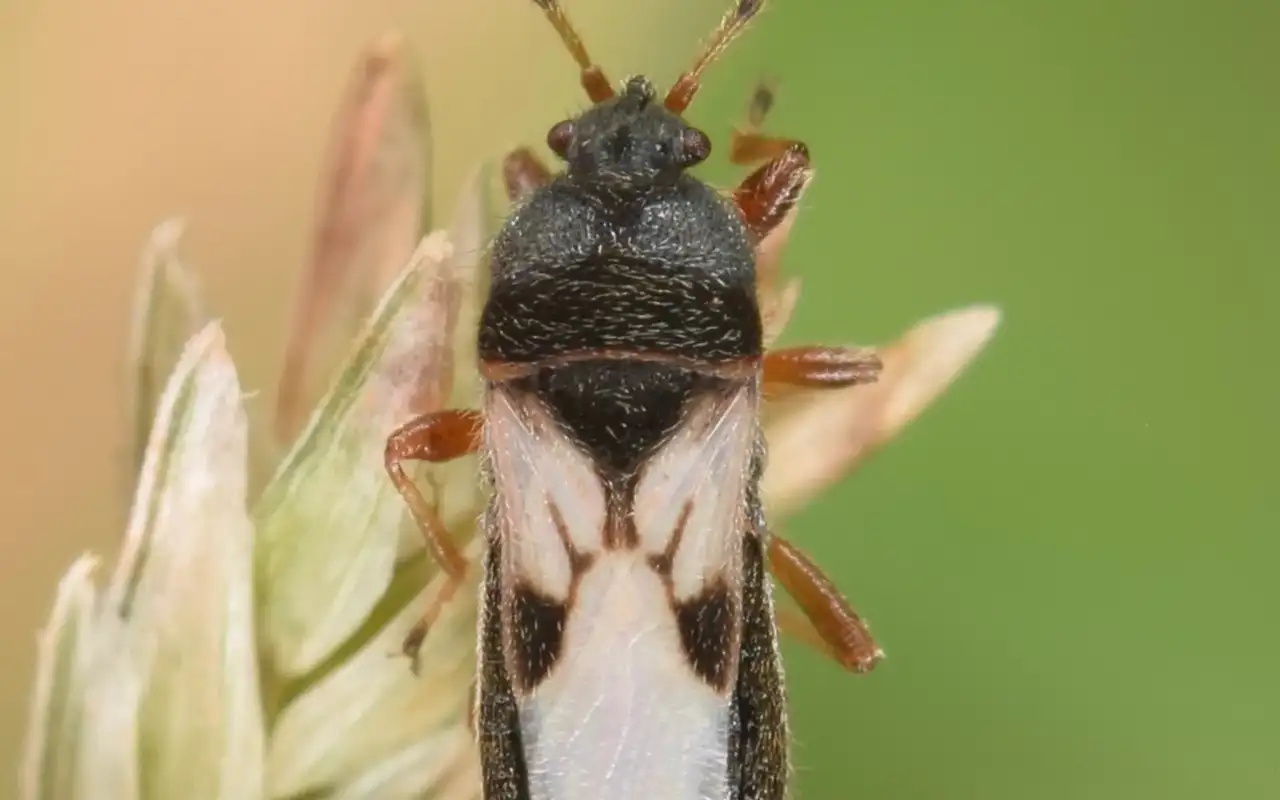
Bedford does not have a single lawn insect; it has all three. Houses here went up from the 1960s through the 90s on both sides of Airport Freeway, and over that stretch the turf of choice changed, so a block in 76021 can hold St. Augustine front yards next to Bermuda ones. Chinch bugs go for the St. Augustine, grubs feed under either, and fall armyworms strip the Bermuda.
The mature landscaping complicates the picture. Decades of irrigated beds and big trees keep much of a Bedford back yard shaded and damp, which suppresses chinch bugs and encourages fungal patch, while the sunny front strips along the drive bake in July and give chinch bugs exactly what they want. One lot can be showing two unrelated kinds of brown at the same time.
Along the Bear Creek corridor and its greenbelts there is a further wrinkle: unmowed ground where armyworm moths lay eggs, and where the caterpillars stage before moving onto a lawn in late summer.
NORTH OR SOUTH OF THE FREEWAY
What Bedford homeowners pay for lawn insect coverage
The same table applies on both sides of Airport Freeway, and it keys off the square footage of the house. Complete Home & Lawn Defense treats the entire yard for $40 to $73.50 a month; a typical Bedford single-storey of 1,500 to 3,000 square feet pays $40 to $51.50, and the larger two-storeys from the 80s and 90s fall in the $51.50 to $62 band.
Home Defender costs $30 to $54 a month and includes the lawn treatment out to about 25 feet, which on a standard Bedford lot covers the sunny front where chinch bugs live and the near part of the back. Grubs or armyworms across a full back lawn need the whole-yard plan. The price is quoted before you commit, there is nothing to sign, and a return visit for a flare-up between scheduled visits is included.
1,500 to 3,000 sq ft
$40–$51.50/mo
Most 60s and 70s Bedford single-storeys
3,000 to 4,500 sq ft
$51.50–$62/mo
Larger 80s and 90s two-storeys
4,500 to 6,000 sq ft
$62–$73.50/mo
The biggest homes near the creek corridor
Home Defender, 1,500 to 3,000 sq ft
$33–$38/mo
Front and side lawn covered, deep back yard not
Every number on this page comes from our published price list. Bedford homes get the same table as everyone else; the instant quote reads your square footage and lot size and hands you your own line.
THE CATCHES
Where lawn insect control lets a Bedford homeowner down
The first catch is misdiagnosis, and it is the most expensive one. Of the seven common reasons a North Texas lawn browns in summer, only three are insects. A shaded, over-irrigated Bedford back yard is prime ground for brown patch fungus, which no insecticide touches. We float and tug before treating so that does not happen on your lawn.
The second is that killing the insect does not rebuild the grass. Chinch-killed St. Augustine along a Bedford driveway stays dead until runners fill in or you re-sod. Grub-eaten roots are gone. Bermuda stripped by armyworms usually does regrow from the crown, but it needs water and a few weeks to do it.
The third is the greenbelt. Lots backing onto Bear Creek get armyworm pressure from ground we do not treat, so a second wave in a season is possible. The warranty between visits covers the return trip; it cannot stop the moths.
BAND OR WHOLE LAWN
Home Defender against Complete Home & Lawn Defense on a Bedford lot
Pick by where the damage is, not by which plan sounds more thorough. A Bedford homeowner whose only trouble is a chinch bug strip beside the front walk gets the fix from Home Defender: the 25-foot band reaches it, the product targets the thatch where the bugs sit, and the structure is protected for the same money.
When the problem is a Bermuda back yard that lost half its blades to armyworms, or a lawn that lifts like carpet twenty yards from the slab, the band does not go far enough and Complete Home & Lawn Defense is the right buy. The extra cost is the difference between the two columns in the table, and we will tell you if the smaller plan is enough rather than upselling you to the bigger one.
FIRST APPOINTMENT
What we do on a Bedford lawn before treating anything
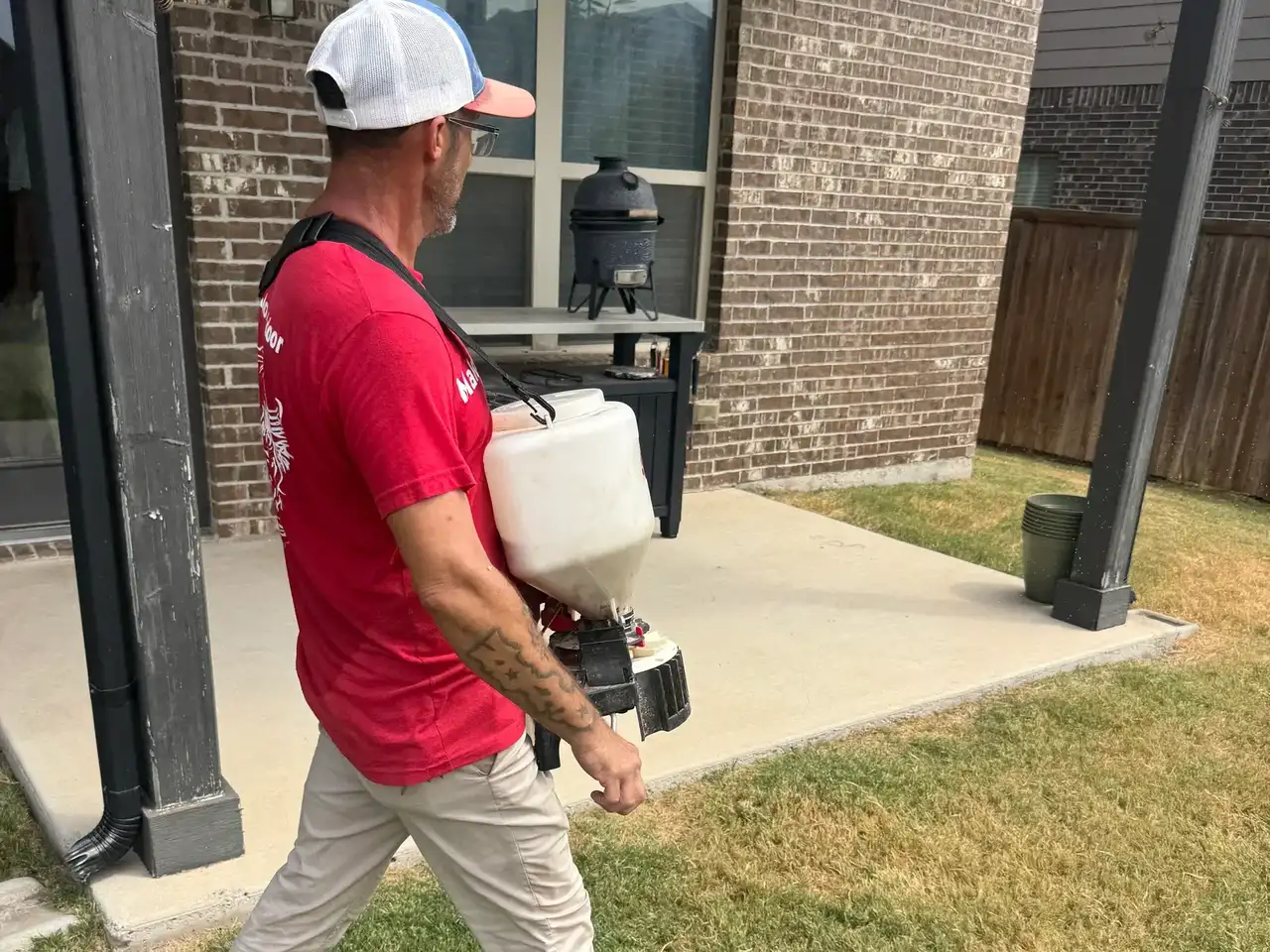
Identify the turf, front and back
We check whether each area is St. Augustine or Bermuda, because that narrows the suspects immediately. Chinch bugs are a St. Augustine problem; armyworms mostly hit Bermuda; grubs can be under either.
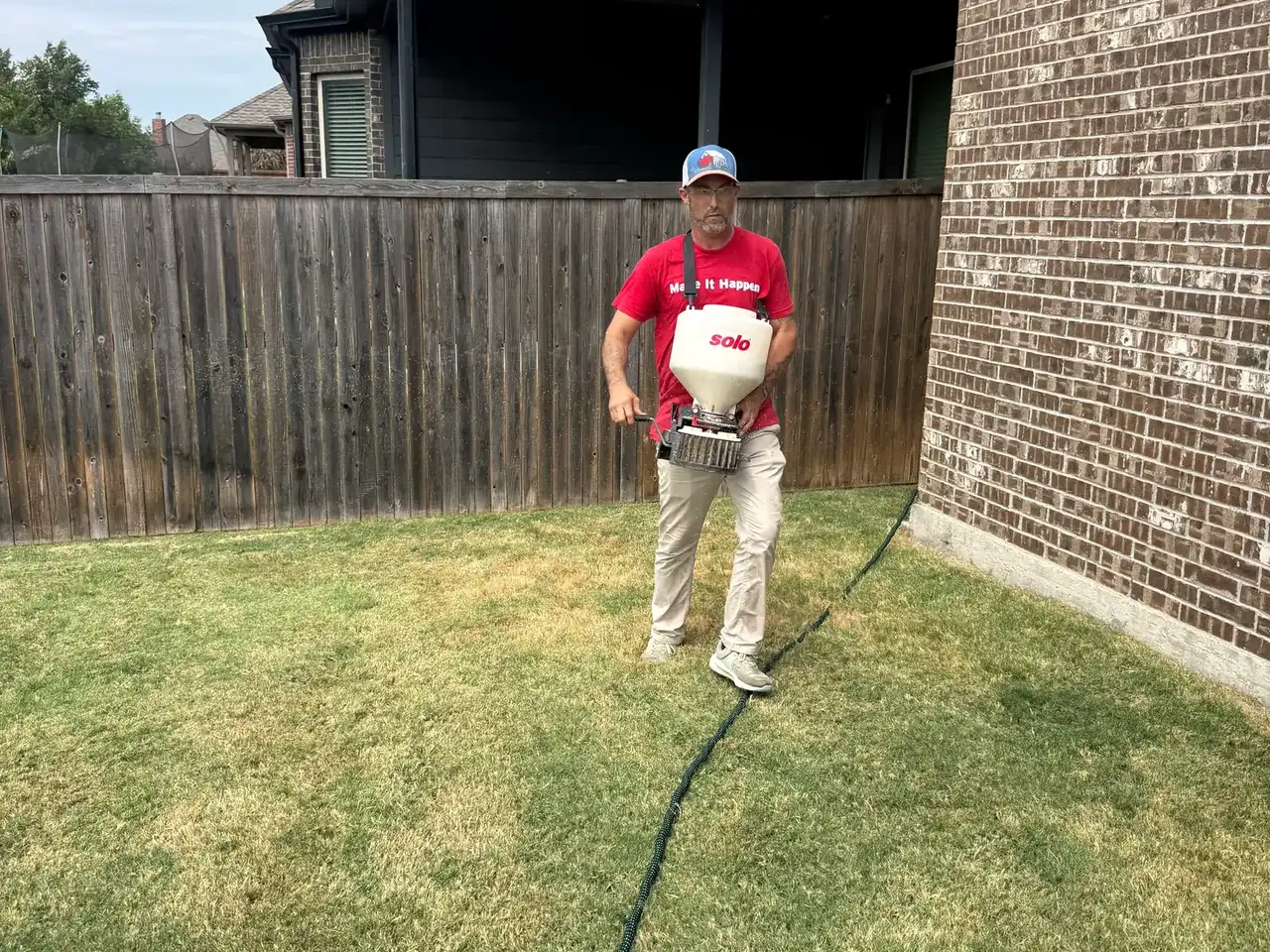
Test the brown, do not guess at it
Sunny strips beside concrete get a can of water sunk into the edge to float chinch bugs. Spongy or lifting turf gets peeled back and the grubs counted. Fungal patch and shade thinning get named as such and left untreated.
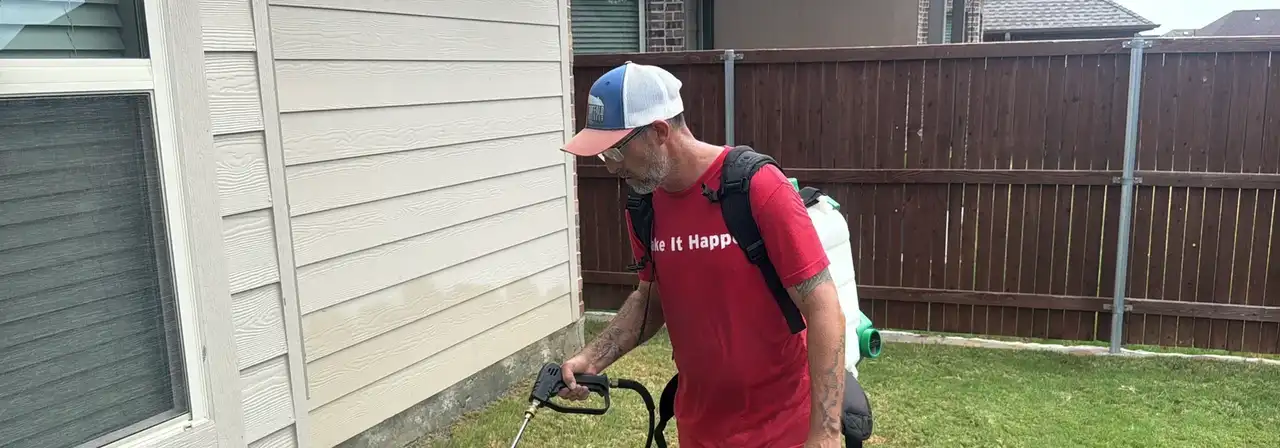
Check the greenbelt edge
On lots backing Bear Creek or a drainage strip we look at where mowing stops, since that is where armyworms stage. We tell you what to keep cut short and what to watch for at dusk in late summer.