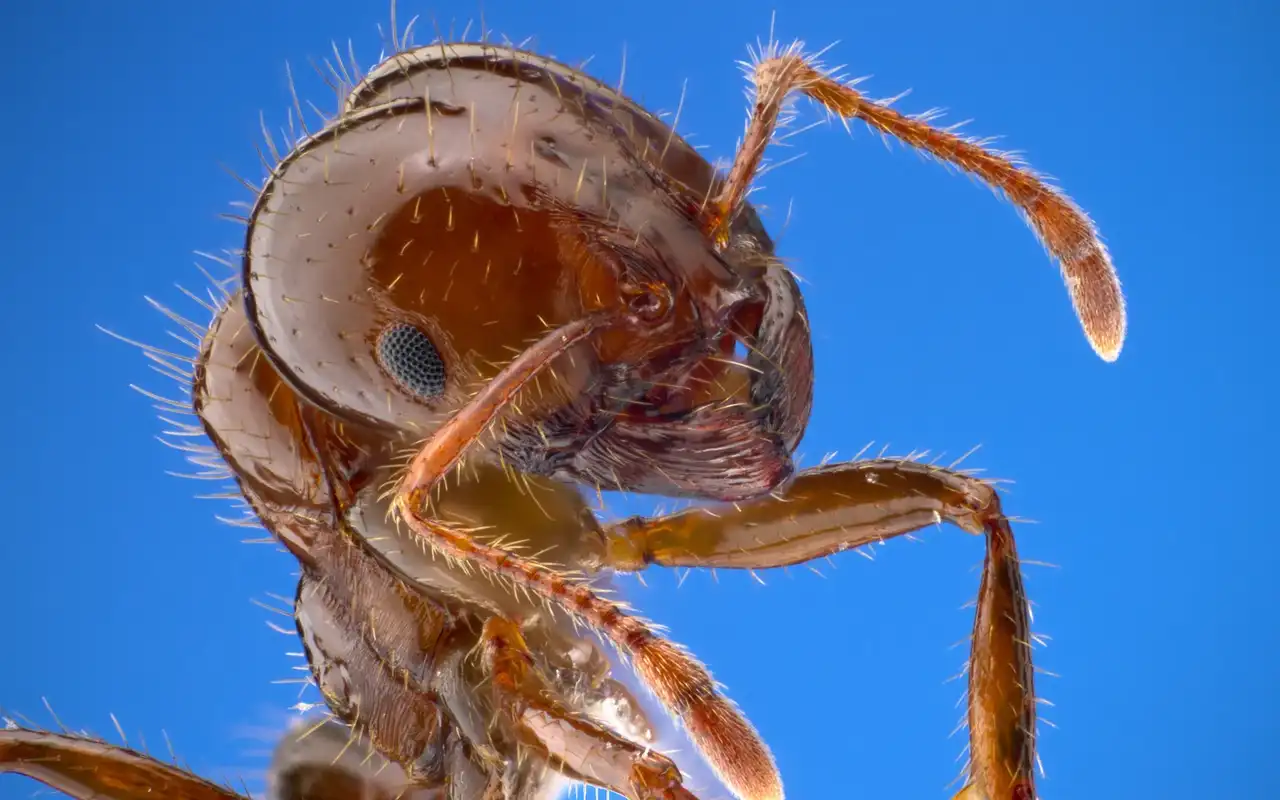
AN ACRE OF OPPORTUNITY
Why does a Colleyville lawn hide more mounds than you can count?
Because nobody crosses all of it often enough to notice. Colleyville was laid out with large lots, and a property that size has back corners, fence lines and open irrigated turf that go weeks without a footprint on them. The mounds by the patio are the ones you find; the colonies out toward the Big Bear Creek side are the ones quietly refilling the yard after you deal with the visible ones.
Irrigation is the other half of the story. Fire ants want warmth and moisture together, and a watered lawn under mature canopy stays damp through a July that would bake unwatered ground dry. That keeps colonies foraging later into the summer here than they would elsewhere, which is useful in one respect: foraging ants are the ones that pick up bait.
COLLEYVILLE PRICE BANDS
The house sets the price, not the acre
This catches people out here, because the lot is what they have in mind. Both year-round plans are priced on the square footage of the house, so a large home lands in the upper rows regardless of how much land sits around it: $38 to $46 a month on Home Defender between 3,000 and 4,500 square feet, and $46 to $54 between 4,500 and 6,000. Anything above 6,000 square feet we quote individually after looking at it.
Complete Home & Lawn Defense runs $51.50 to $62 and then $62 to $73.50 across those same two sizes, adding treatment of the whole yard on top of the perimeter work. The fire ant bait already covers every square foot of lawn on either plan, so the upgrade is a decision about grubs, armyworms and chiggers rather than about mounds.
3,000 to 4,500 sq ft home
$38–$46/mo
A common Colleyville size
4,500 to 6,000 sq ft home
$46–$54/mo
The larger builds in town
Over 6,000 sq ft
Quoted
We price it after we have seen it
Whole-yard version
$51.50–$73.50/mo
Complete Home & Lawn Defense, same bands
Every number on this page comes from our published price list. Colleyville homes get the same table as everyone else; the instant quote reads your square footage and lot size and hands you your own line.
THE HONEST LIMITS
What a Colleyville acre will still do after we bait it
It will keep growing new mounds at the creek end. Big Bear Creek and Little Bear Creek run through town, and the rough ground along them never stops producing colonies, so lots on that corridor face reinvasion pressure an interior street simply does not. We plan the follow-up visits around that instead of pretending it is not happening.
It will also still look infested for a couple of weeks after the first spreading. Bait has to be eaten and handed down to a queen sitting well below the surface, and two to three weeks is the real timescale. Anyone offering an empty lawn by tomorrow is selling you a drench, and a drench mostly moves the problem sideways.
And it does not fix ants indoors. Ants crossing a Colleyville kitchen are usually a different species travelling along irrigated shrub lines and into the weep holes, which is perimeter and exclusion work rather than bait. It lives in the same plan, which is the only reason that distinction does not cost you anything extra.
YARD OR PROPERTY LINE
Treat the whole acre, or only the part the family uses?
There is a real argument for both on a lot this size. Baiting only the used portion costs less product and protects where stings actually happen: the play set, the pool deck, the dog run. The catch is that the colonies left alone at the boundary keep producing new queens, and you end up flagging fresh mounds inside the treated zone every few weeks.
Our plans cover the residential yard, and we are straightforward about where that ends. If a property runs to several acres of genuine unmowed ground, that is a different scale of job and we would sooner tell you so than quote a lawn price for pasture work.
WALKING A BIG LOT
The first visit on a Colleyville property
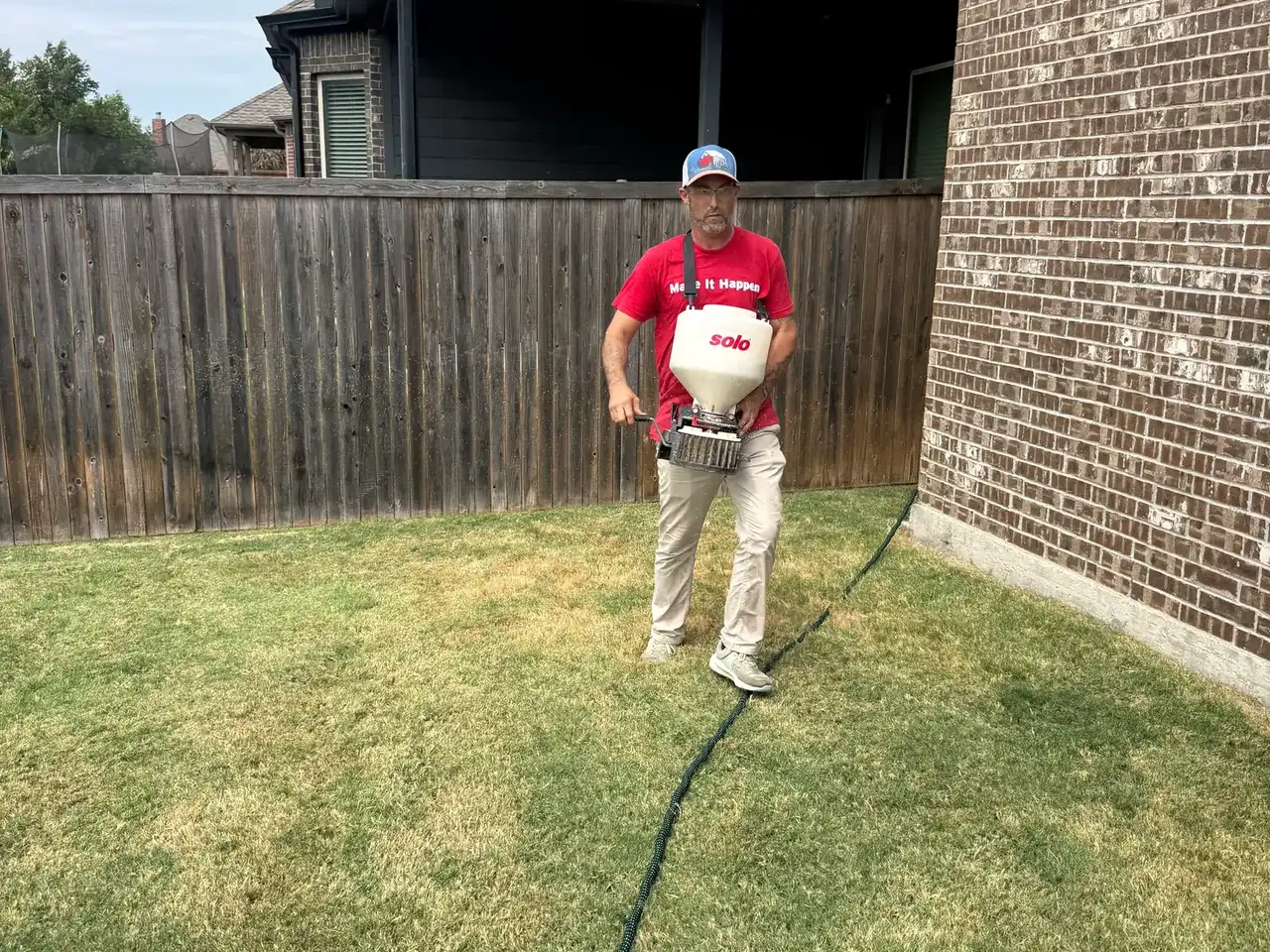
The boundary before the house
We walk the fence line first, because on acreage the edge is where colonies establish and the middle is only where you notice them. Creek-side and greenbelt boundaries get particular attention, since that ground reseeds a yard faster than any other part of it.
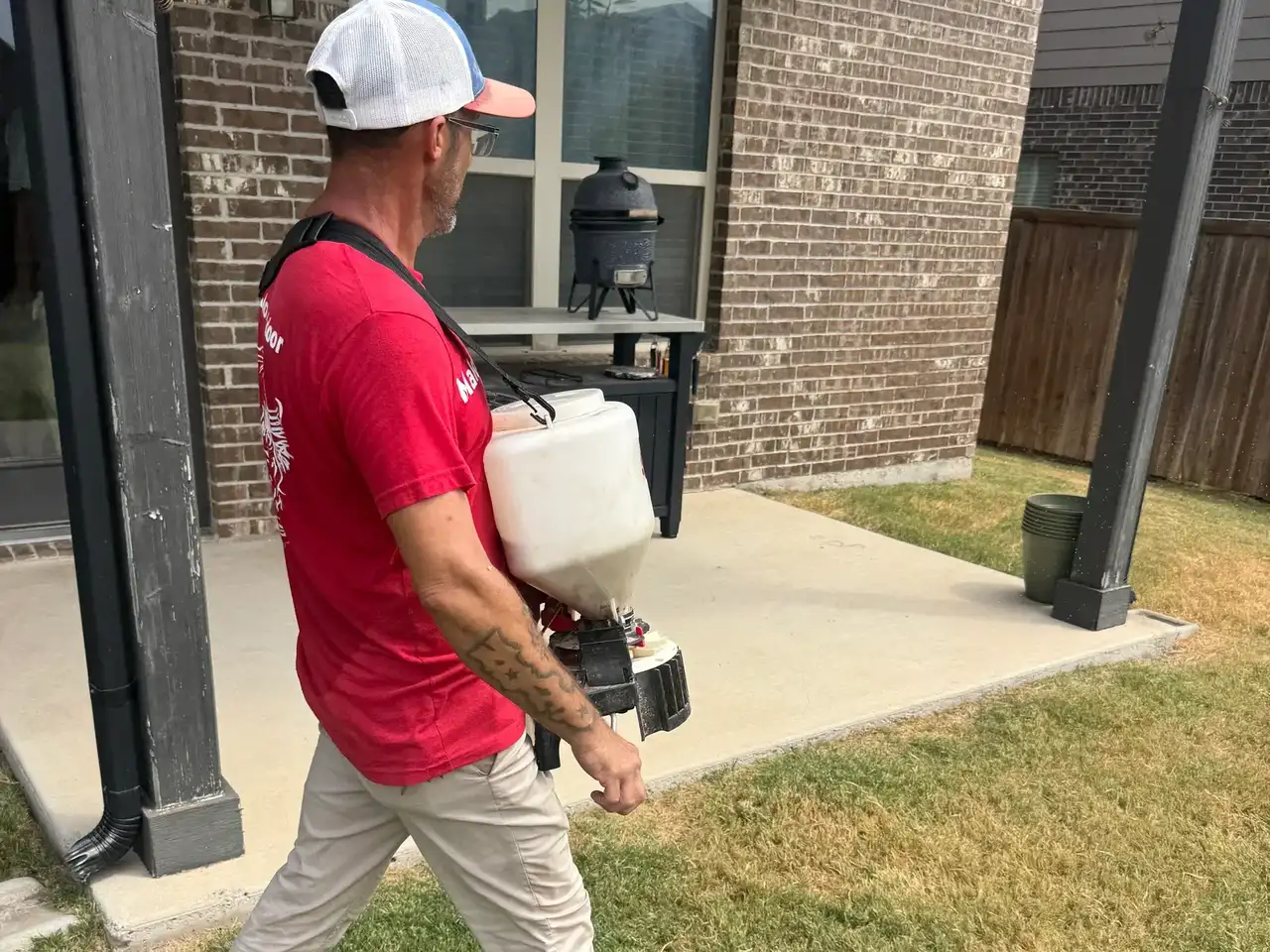
Bait over everything, not the domes
The spreader crosses the entire lawn, including the stretches you would never have thought to treat, at a rate so light the granules disappear into the turf. We want roughly a dry day behind the application, so the date moves when the forecast does.
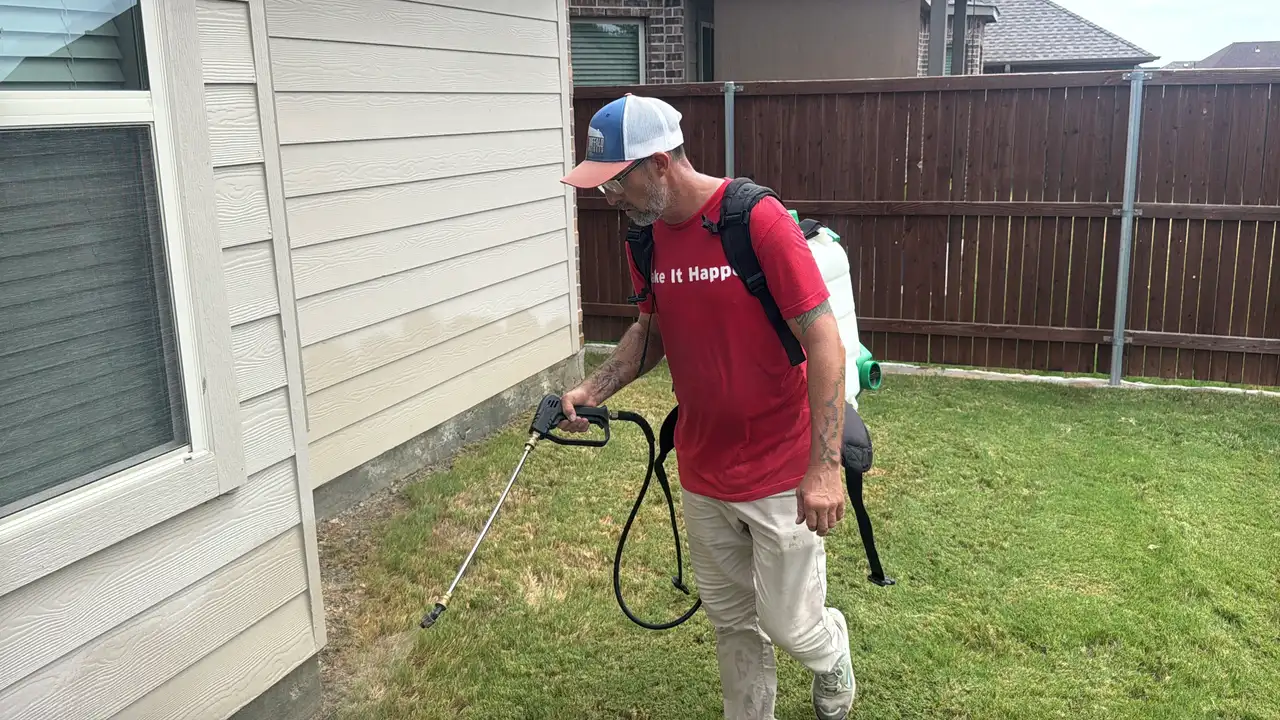
Then the brick and the beds
The same visit bands the foundation, treats the eaves and dusts the weep holes, and we look hard at irrigated beds planted tight against the wall. Shrubs touching brick on a well-kept house are a covered path straight to those holes.