ACRE LOTS, HEAVY COVER
Why a well-kept Colleyville house still gets rats
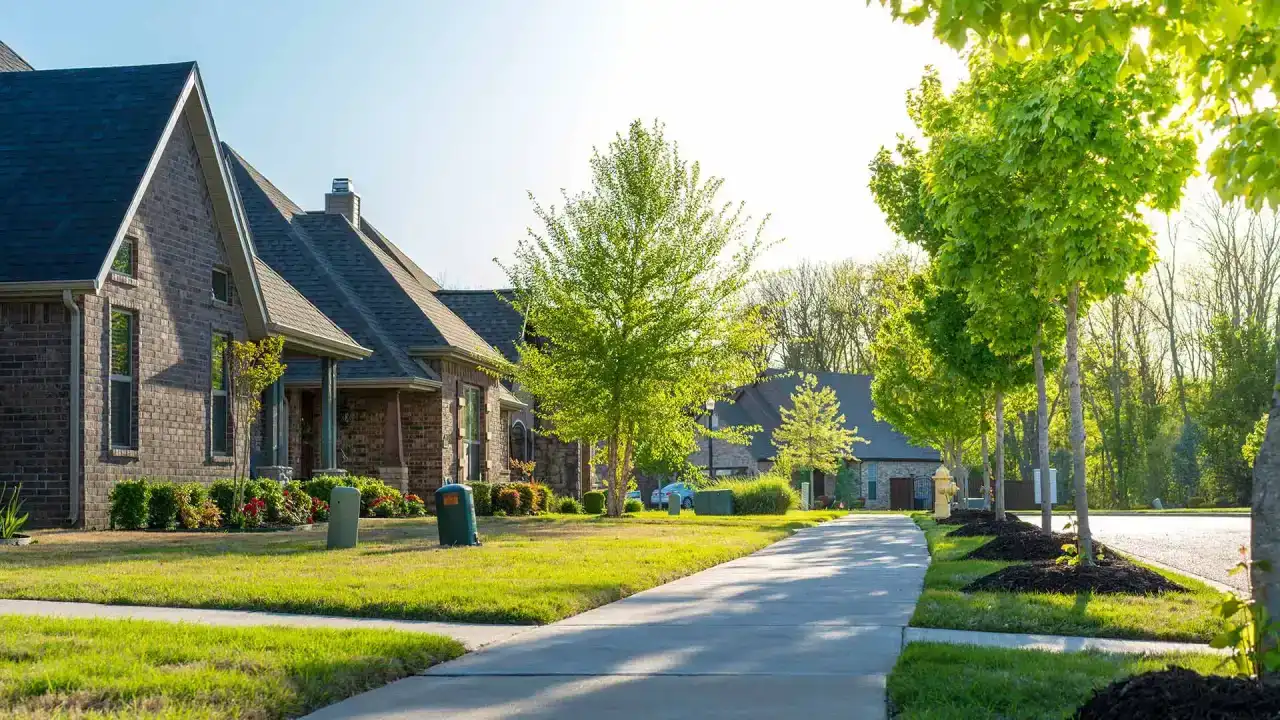
Because tidy and sealed are different things. Colleyville lots are large, irrigated and planted, and roof rats do not care how good the yard looks — they care about continuous cover, water and a wall they can reach without stepping into the open. Dense shrubs against the brick, ivy on a fence and a canopy touching the roof supply all three.
Big Bear Creek and Little Bear Creek run through town, and the corridors along them are a permanent rodent habitat that nobody is going to clear. Houses backing onto that ground get steady traffic at the fence line, so the question is never whether rats are on the property; it is whether the building is closed to them.
An acre also means a long perimeter. There is more wall, more roof edge and more penetration on a Colleyville house than on a quarter-acre lot, which is the real reason an inspection here takes a while.
WHAT IT COSTS HERE
What $25 a month adds to a Colleyville plan
The rodent figure is flat: $25 a month, added to Home Defender or Complete Home & Lawn Defense, and never sold on its own. A 5,000 square foot house pays the same $25 as a small one, because what varies is the base plan, not the rodent work.
The base follows square footage. Colleyville houses commonly sit in the 3,000 to 4,500 band, where Home Defender is $38 to $46 and the whole-yard plan is $51.50 to $62; larger ones fall in the 4,500 to 6,000 band at $46 to $54 and $62 to $73.50. Above 6,000 square feet we walk it and quote. Whichever way it lands, you hear the number before you commit, and there is no cancellation fee attached to it.
Rodent work, any size of house
$25 a month
Requires one of the two year-round plans
Home Defender, 3,000 to 4,500 sq ft
$38–$46 a month
Common on the interior streets
Home Defender, 4,500 to 6,000 sq ft
$46–$54 a month
The larger creek-side houses
Complete Home & Lawn Defense, 3,000 to 4,500 sq ft
$51.50–$62 a month
Adds the whole acre
Every number on this page comes from our published price list. Colleyville homes get the same table as everyone else; the instant quote reads your square footage and lot size and hands you your own line.
HONEST LIMITS
Where the rodent add-on runs out on a Colleyville lot
We are not clearing the creek. The habitat along Big Bear Creek supports rats whether or not anyone treats a thing, and no service closes that off. What exclusion does is take your house out of the list of places they can get into, which is a smaller claim and an honest one.
We also do not garden. Shrubs grown tight against the veneer, ivy running up a wall and mulch piled against the slab are covered highways, and cutting them back is landscaping work. We will show you exactly which plantings are the problem, then treat and seal around what stays.
Pool equipment, outdoor kitchens and detached structures are their own conversation. A rodent nesting in a cabinet full of warm equipment is not sealed out by anything we do to the main house, so if that is where the activity is, say so and we will look at it on the first visit.
BEDS OR THE VENEER
Cutting the landscaping back against closing the wall
Both work, and they work on different halves of the problem. Thinning the beds, lifting limbs off the roof and pulling mulch away from the foundation cuts how many rats reach the wall in the first place, and it costs you a weekend rather than a fee. On a Colleyville property with mature planting that alone can drop the pressure noticeably.
What it cannot do is close a quarter-inch gap. Reduce the traffic all you like; if a utility penetration is open, the animals that do reach the house still get in. Sealing is the half that ends the problem, and landscaping is the half that makes sealing easier to hold, which is why we would rather you do both than pick one.
WALKING THE PROPERTY
The route we take on a Colleyville place
The back boundary first
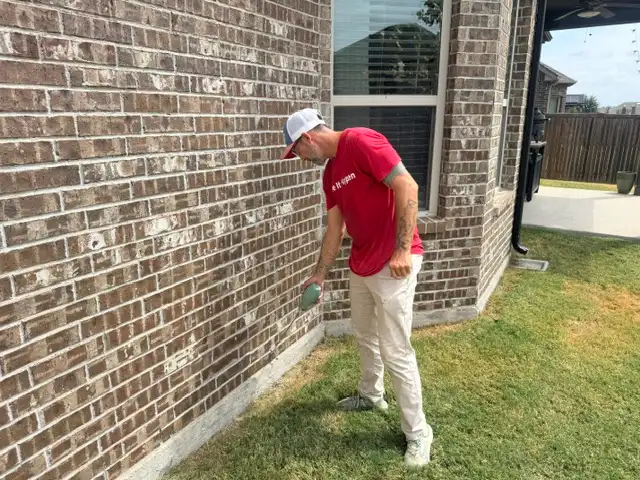
On a creek-side or greenbelt lot we start at the fence line, because that is where the traffic originates and it tells us which face of the house is under pressure. Rub marks on a fence rail, worn runs through ground cover and droppings along a wall give us a direction before we ever touch the brick.

Beds, irrigation and the brick behind them
We pull back the planting where we can and look at the veneer it was hiding. Sprinkler heads that keep one stretch of slab permanently damp, mulch heaped to the bottom course and shrubs touching the wall all get noted, along with any opening behind them.
Roof line, garage and interior sign
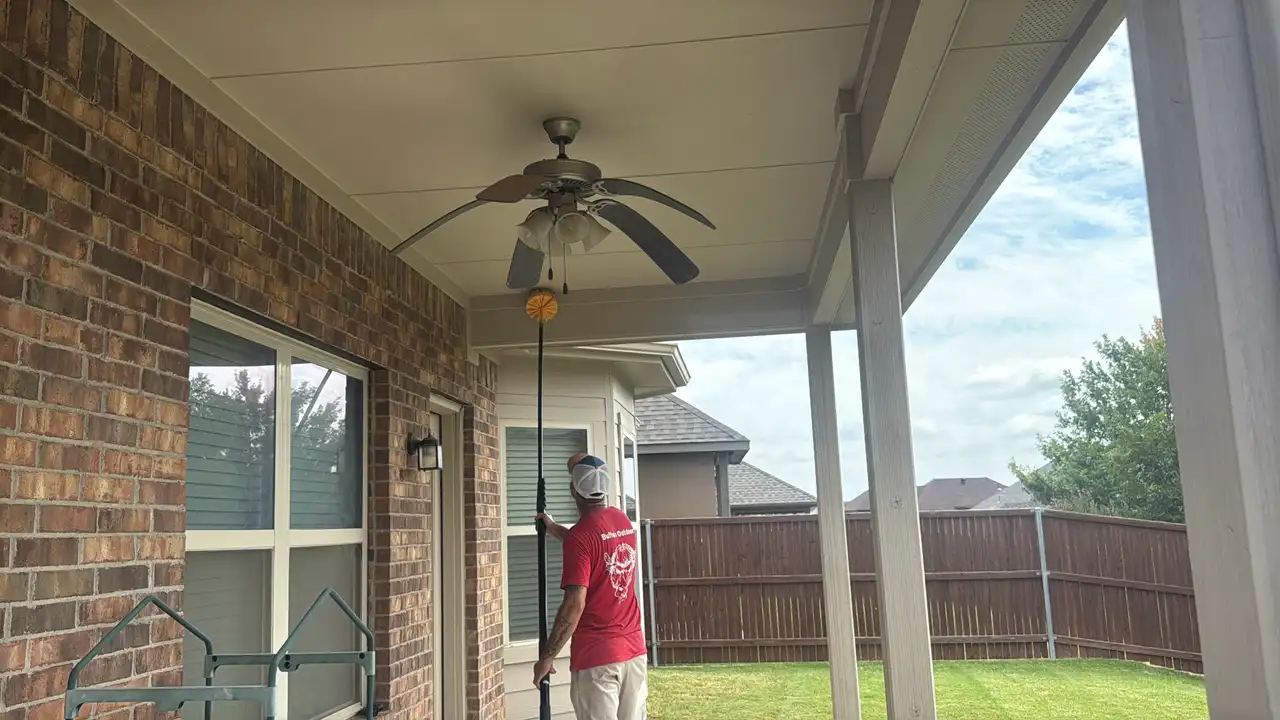
Roof rats come in high, so limbs touching the roof, soffit screens, roof returns and the gap where a vent boot has lifted all get checked. Then the garage, the attic and any accessible interior for runways, and stations and traps go where that sign says rather than where it is convenient.