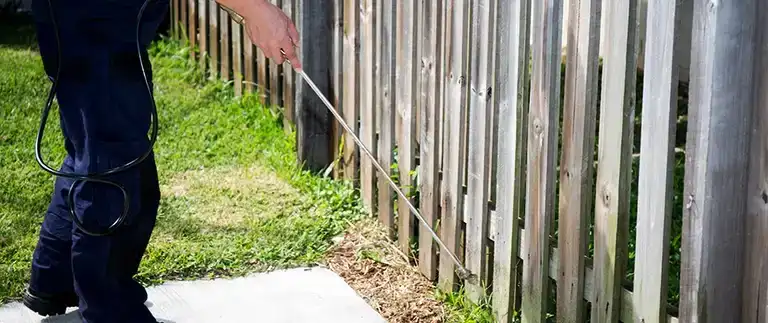
76034, BIG LOTS
Why a Colleyville house needs more perimeter than most
There is simply more building to treat. Home Defender is scoped and priced on the square footage of the house, because the size of the structure decides how much foundation line, wall and eave a technician has to cover, and a long Colleyville elevation with three wings carries a great deal more bottom course of brick than a compact house does.
Then there is what sits against it. Irrigated beds, shrubs grown tight to the wall and deep mulch form a damp, sheltered lane straight to the foundation, and ants, roaches, pillbugs and spiders travel it. Homes backing Big Bear Creek or Little Bear Creek get a second supply line on top of that.
COLLEYVILLE PRICE BANDS
What the square-footage table works out to in 76034
Most homes in town land in the two upper bands: $38 to $46 a month from 3,000 to 4,500 square feet, and $46 to $54 from 4,500 to 6,000. Above 6,000 square feet the table stops and we quote the house itself.
Acreage never enters the calculation. A Colleyville owner with a big lot still pays on the building, so the number does not climb because the yard did, though a big yard is the usual reason people move up to Complete Home & Lawn Defense at $40 to $73.50 a month on those same bands.
3,000–4,500 sq ft
$38–$46 a month
Where a lot of homes here land
4,500–6,000 sq ft
$46–$54 a month
The larger elevations
Over 6,000 sq ft
Quoted
Measured and priced individually
Rodent control add-on
$25 a month
Only alongside a year-round plan
Every number on this page comes from our published price list. Colleyville homes get the same table as everyone else; the instant quote reads your square footage and lot size and hands you your own line.
READ THE LIMITS FIRST
Where a foundation barrier disappoints a Colleyville owner
A ring is a ring, not a yard. On a one-acre property the granular band covers the ground nearest the house and stops well short of the back fence. If the real complaint is chiggers at the creek boundary, or fleas and ticks across the turf, the base plan is the wrong purchase and the whole-yard version is the right one.
The creek corridors keep sending reinforcements. Lots along Big Bear Creek and Little Bear Creek sit beside permanently damp, vegetated ground that nothing applied on your side of the fence can sterilise, so this plan holds a line rather than clearing a zone. Running it four times a year is what keeps that line intact.
It is neither a termite program nor a mosquito program. Termites need a licensed termite operator, and we will refer you to one rather than pretend otherwise. Mosquitoes are handled on a 21-day cycle from April through September, on a separate program with separate pricing.
MULCH OR PRODUCT
Could a Saturday in the beds replace part of this?
Some of it, genuinely. Raking mulch back off the slab, cutting shrubs away from the brick and replacing a tired door sweep removes harborage and closes routes, and none of it costs more than an afternoon. In a town where the landscaping is half the point of the house, that work does more than most owners expect.
What a homeowner cannot reproduce is longevity. A hardware-store concentrate breaks down in roughly a week of Texas heat, so matching one professional application means walking the entire foundation again and again through the summer. Put the eave sweep, the weep-hole dust, the granular ring and the fire ant bait next to that, and the plan usually costs less than the bottles.
THE FIRST COLLEYVILLE VISIT
What gets inspected before anything is sprayed
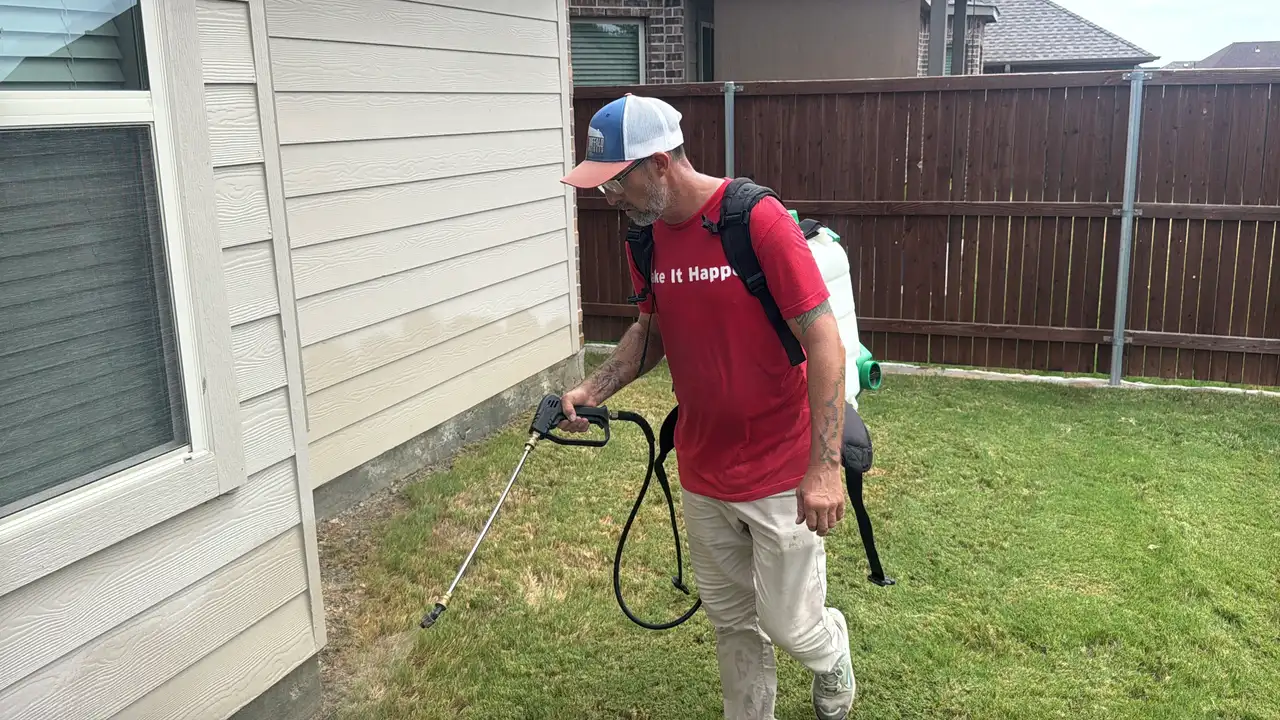
What is touching the brick
The technician starts where the landscaping meets the wall: mulch depth, shrubs pressed against the elevation, and the spots where sprinkler heads keep the slab wet. Those get treated carefully or trimmed back, because product does not beat permanent shelter.

The back boundary
On a lot running down toward Big Bear Creek or Little Bear Creek, the far fence line gets walked and treated wherever it falls inside the ring. Where it does not, you get told plainly, and we talk about the whole-yard plan instead of pretending the band reaches.
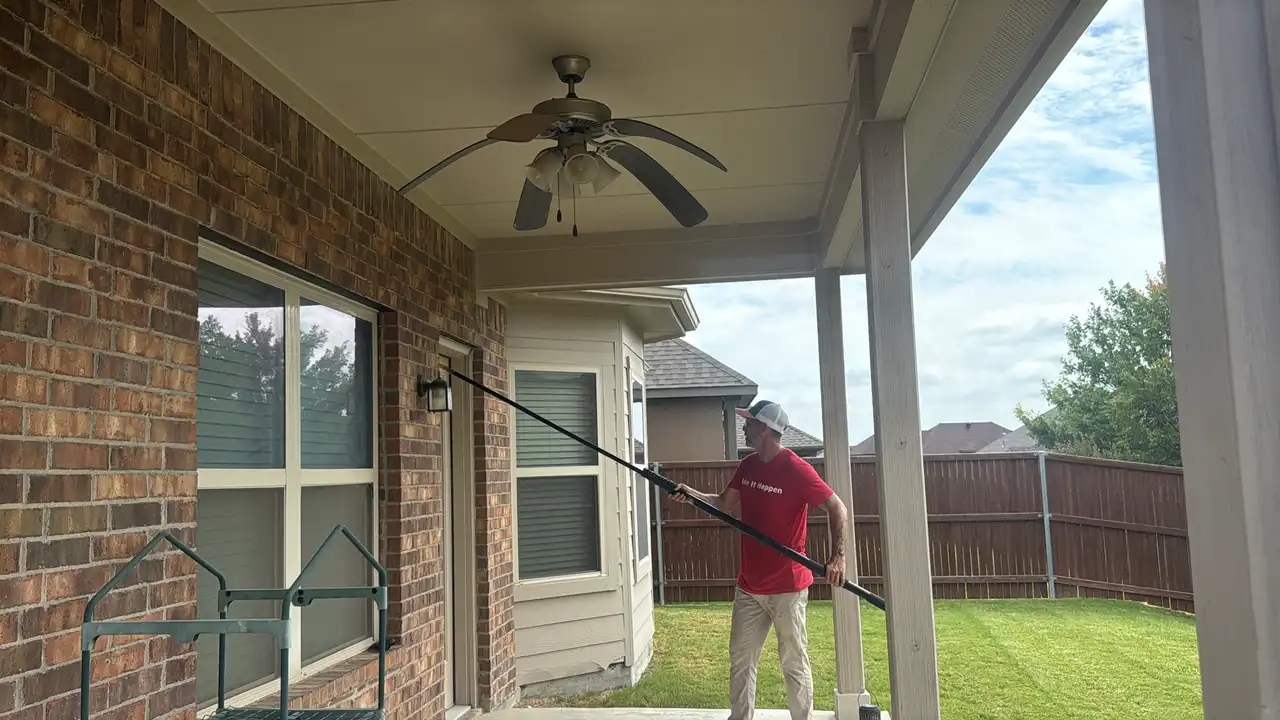
Structure, top and bottom
Then the standard sequence: liquid around the slab and three feet up the wall, a web-pole sweep of the eaves, soffits and door frames, Delta Dust into every weep hole, granular out to about 25 feet, and fire ant bait across the yard.