SAGINAW LAWNS IN JULY
Why the newer edges brown before the old core does
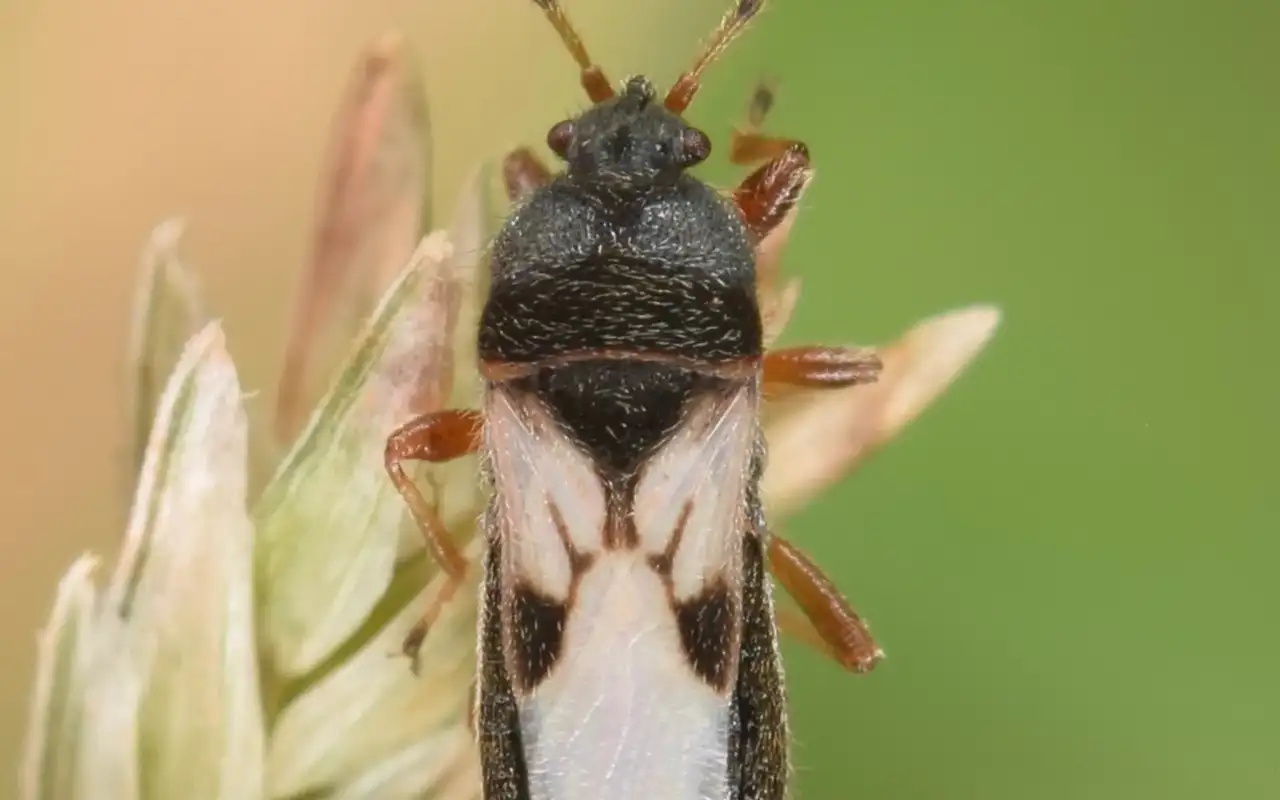
Shade is the reason. The middle of Saginaw around Knowles Drive sits under forty-plus-year-old trees, and chinch bugs want hot, dry, sunlit turf, so they largely skip it. The newer sections along the south and west edges have thin canopy and wide open lawn, and that is where the July phone calls about brown patches come from.
What makes those calls hard is that chinch damage is a dead ringer for drought. The insect injects a toxin as it feeds that stops the grass moving water, so blades brown as though the sprinklers had been off a month. Turning the irrigation up is the natural response and it changes nothing at all.
SMALL LOT, SMALL NUMBER
What a Saginaw homeowner actually pays
Less than in most towns we cover, because the plans are priced on the square footage of the house and Saginaw's housing stock is modest. A home under 1,500 square feet is $30 a month on Home Defender or $40 on Complete Home & Lawn Defense. Between 1,500 and 3,000 square feet it runs $33 to $38, or $40 to $51.50 for the whole yard.
Neither plan has a startup fee, neither is a contract, and there is nothing to cancel out of. If insects turn up between scheduled visits we come back and re-treat at no charge, because the work is warrantied between treatments. The instant quote will give you the exact figure without you having to talk to anybody.
1,500 sq ft or less
$30/mo
Home Defender, lawn treated 25 feet out
1,500 to 3,000 sq ft
$33–$38/mo
Most of the older Saginaw core
3,000 to 4,500 sq ft
$38–$46/mo
Larger homes on the newer edges
Whole-yard upgrade
$40–$51.50/mo
Complete plan, 1,500 to 3,000 sq ft house
Every number on this page comes from our published price list. Saginaw homes get the same table as everyone else; the instant quote reads your square footage and lot size and hands you your own line.
WHO SHOULD SKIP IT
The Saginaw yards that do not need whole-yard coverage
There are plenty of them. On a compact older lot the 25-foot band that already comes with Home Defender reaches a good share of the mowed grass, and paying the difference for the upgrade buys very little extra. We would rather point that out at the quote than let you work it out a year later.
There is also a fair chance the grass is not sick in the first place. Heat, drought, brown patch and dollar spot all brown a lawn in the same weeks the insects do, and more than half the usual causes have nothing to do with bugs. When our checks come up clean we tell you it is water or a fungus and we do not write an order.
Nothing we broadcast rebuilds turf that is already dead, either. Killing chinch bugs stops the damage spreading, but the brown strip along a sunny Saginaw driveway still has to be watered back, fed, or in bad cases cut out and replaced. That part is turf work and we will say so.
HOSE VS INSECTICIDE
More water or a treatment: which does your lawn need?
Try water first, properly, for about a week. Deep and infrequent soaking is what a drought-stressed lawn wants, and if the patches start to recover you have your answer and it cost nothing but the meter reading. Genuine chinch damage will not respond, because the plant cannot move water however much of it is there.
When that week is up and nothing has greened, stop adding water and run the float test. Cut both ends out of a coffee can, press it two inches into the soil where green meets brown, fill it and keep it topped up for ten minutes. Chinch bugs come up to the surface, and at that point you are buying a treatment rather than gambling on one.
ON THE FIRST VISIT
What we check on a Saginaw lawn
The sunny strips
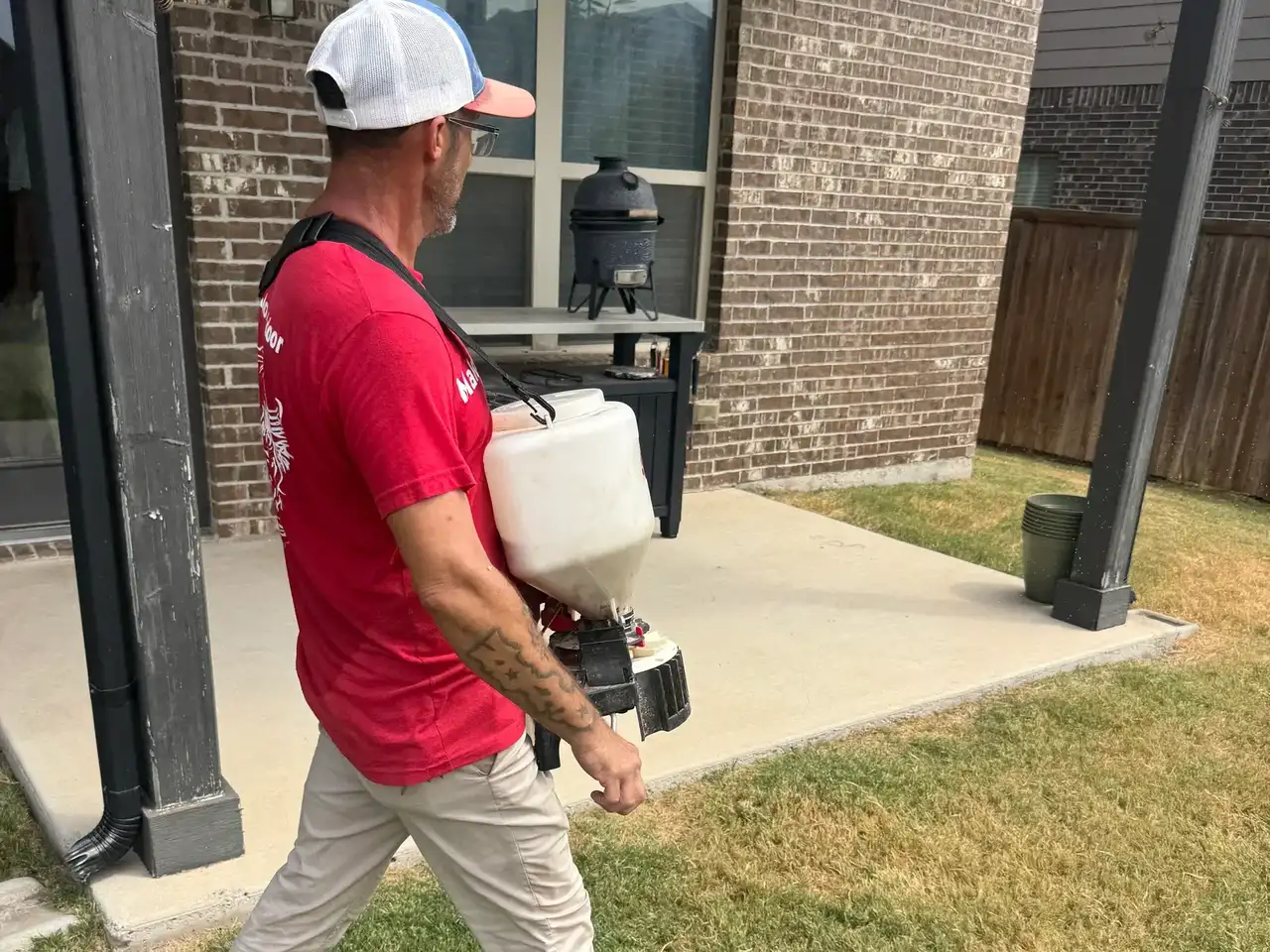
We begin where the turf bakes, which means the driveway edge, the sidewalk strip and any south-facing wall. On the newer Saginaw streets that is nearly always where the green-to-brown line falls, and it is the right spot to sink the can.
A tug at the root zone
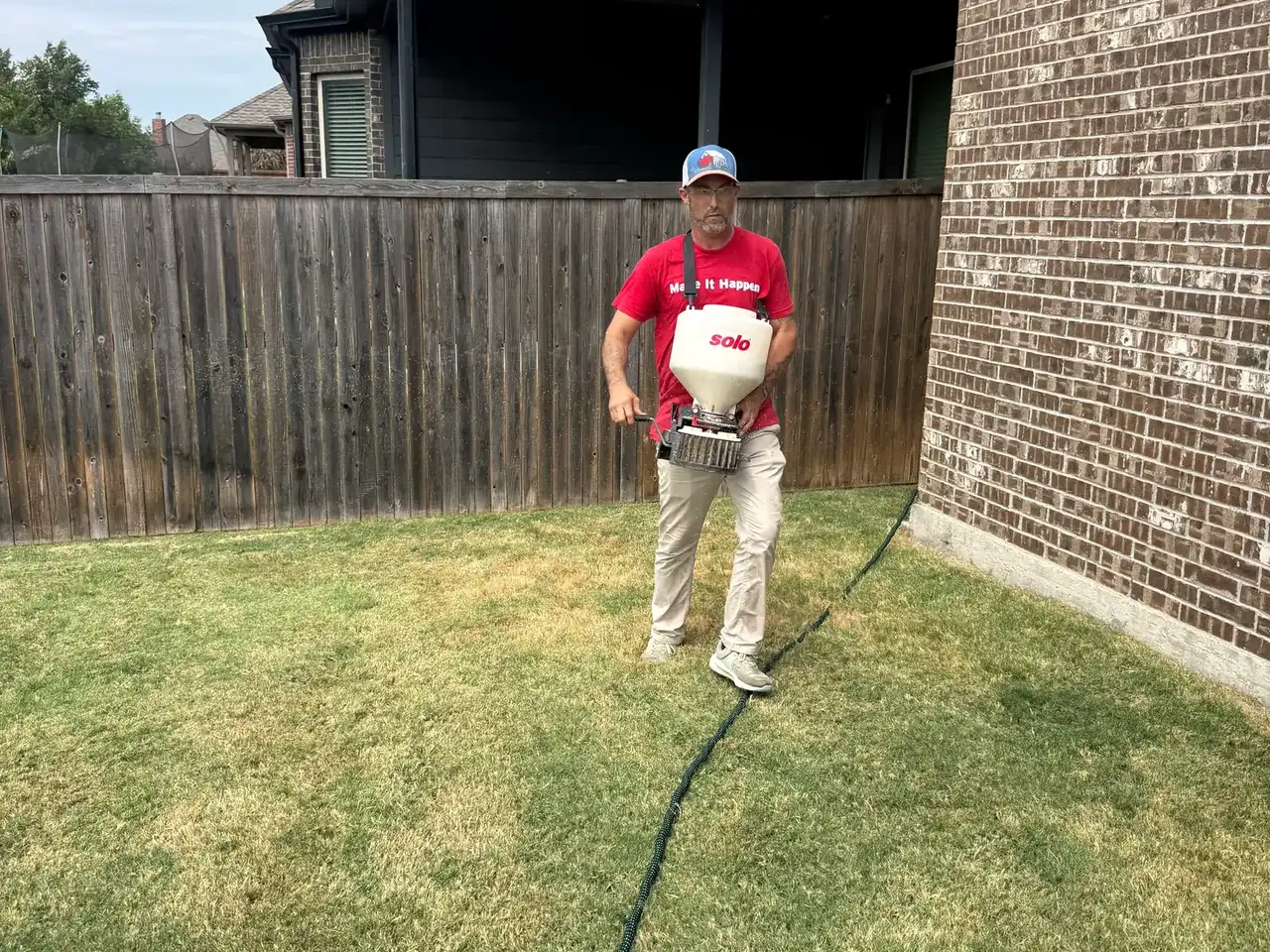
Where grubs look more likely, we take hold of the grass at the edge of the damage and pull. Turf with its roots eaten off lifts away like a rug, and we fold back a square foot and count larvae before deciding anything.
Everything else on the plan
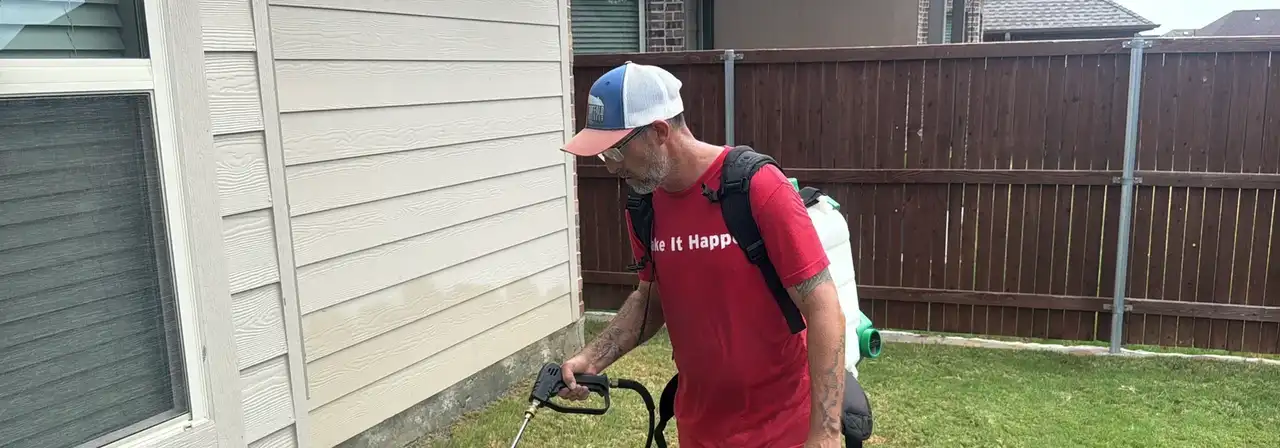
The same appointment covers the foundation band, the eave line and Delta Dust in the weep holes, which earns its keep in the older core where original brick has never been sealed. Fire ant bait goes down across the yard as well.