
A SMALL TOWN, A FEW LOTS
Which Blue Mound yards hold chiggers?
The ones with an untended edge. Blue Mound is compact and mostly built out, so most of it is mowed lawn hemmed in by more mowed lawn, which is poor ground for a mite larva. Where a lot runs up against a creek strip, a drainage easement or a patch of grass nobody has cut since spring, the larvae have somewhere to live and something to climb.
The second requirement is shade, and the post-war streets supply plenty of it. Trees planted when these houses were new now hold a damp layer of leaves on the ground through the winter, which is where a chigger waits out the cold. Come May it climbs the nearest grass stem and keeps going until a sock cuff or a belt stops it, which is why the welts arrive in a tight band instead of scattered wherever skin was bare.
SMALL HOUSES, LOW BANDS
What the chigger side of a Blue Mound plan costs
Most of Blue Mound pays $40 to $51.50 a month, because the year-round price follows the square footage of the house and these post-war homes sit between 1,500 and 3,000 square feet. That buys Complete Home & Lawn Defense, the plan whose yard treatment is where chigger coverage lives, and anything under 1,500 square feet is a flat $40. There is no separate chigger ticket to buy and nothing to pay up front for the summer.
Home Defender is the other door in, at $30 to $54 a month for a 25-foot ring around the foundation, and on lots this size that ring takes in a fair share of the grass. It is the cheaper answer when the biting happens near the patio rather than out at the fence. Both plans put fire ant bait across the yard and both seal the weep holes with copper mesh as standard, both run month to month, and you are told the figure before anything goes on the calendar.
Under 1,500 sq ft
$40 a month
Whole yard treated, Complete Home & Lawn Defense
1,500 to 3,000 sq ft
$40 to $51.50 a month
Where nearly every Blue Mound house lands
Home Defender, 1,500 to 3,000 sq ft
$33 to $38 a month
Ring only; weep holes sealed either way
Return trip between visits
No charge
The between-treatment warranty covers it
Every number on this page comes from our published price list. Blue Mound homes get the same table as everyone else; the instant quote reads your square footage and lot size and hands you your own line.
THE PARTS WE CANNOT FIX
Three honest limits on a Blue Mound chigger treatment
Leaves beat chemistry. If a winter's worth of litter is still lying under your trees, the larvae are down at the soil beneath it while the application lands on top, so the same shaded corner bites you again in June. Rake it out before the technician arrives and you will get far more from the visit than you would by buying a second one.
The easement is not ours. A drainage strip or an unmowed lot on the far side of a Blue Mound back fence keeps producing chiggers from May into August, and nothing applied on your side changes that. What treatment does is thin out the ones breeding in your own grass, which is the population doing nearly all of the biting.
And plenty of Blue Mound homeowners do not need this at all. On an interior lot with sun, short Bermuda and neighbors who mow, chiggers are rare, and bites there are more likely fleas off a pet or mosquitoes resting under the canopy. Describe the pattern of the welts first, and if it is not this pest we will say so.
RAKE FIRST, THEN DECIDE
A Saturday with the mower against a treated lawn
Do the free work first, because it genuinely works: cut the fence line as low as the mower will go, trim the strip the blade cannot reach and haul the leaf litter off the property. On a lot the size of most Blue Mound lots that is one afternoon, and for a sunny yard it may be the entire solution.
Sulfur dust from the feed store is the next thing people reach for. It pushes chiggers back for a few days, it smells the way it sounds, and the first storm takes it away. What a plan adds that neither of those can is product across the full lawn, weighted toward the shaded and unmowed edges, and a treated band three feet deep at every door so nothing rides indoors on a sock. If the bites return before the next scheduled visit, coming back out is covered rather than invoiced.
THE FIRST TIME OUT
How a first chigger visit runs on a Blue Mound lot
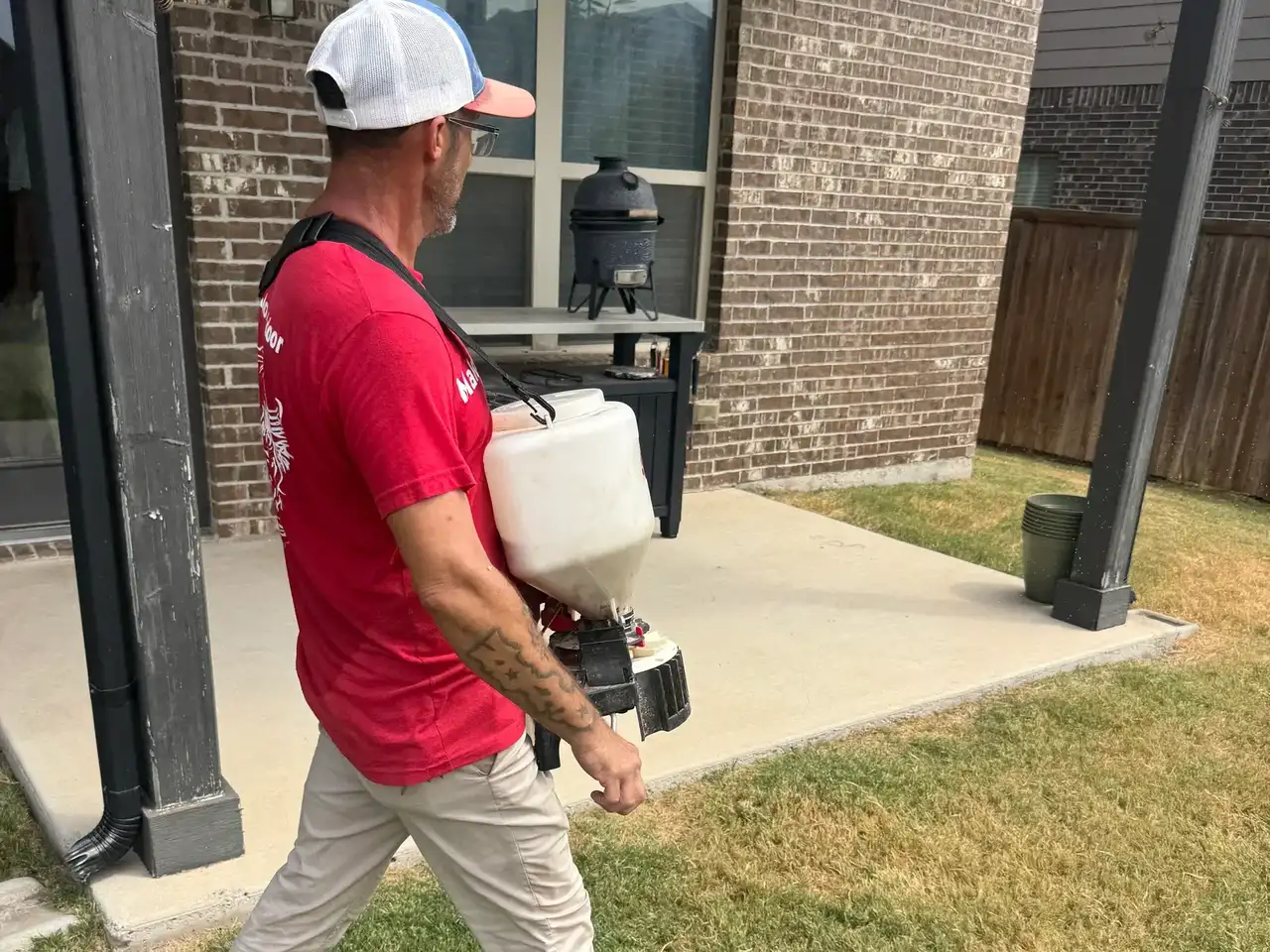
Finding the untended edge
The technician walks the boundary before touching the open lawn, looking for the creek strip, the easement or the corner the mower has been avoiding. On a compact lot that search is short work, and whatever it turns up takes the heaviest application.
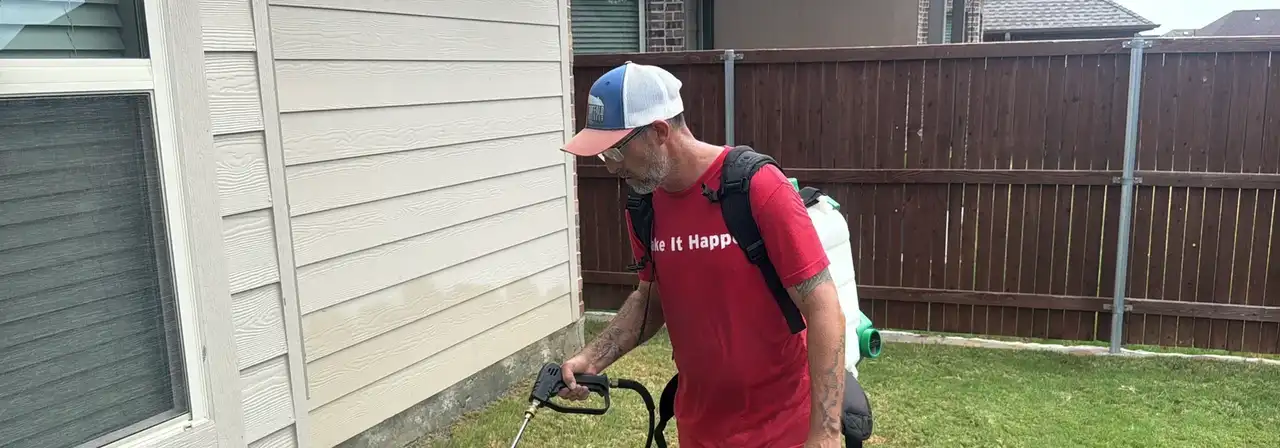
Talking about the leaves
Litter under the canopy gets pointed out rather than sprayed over, since product resting on a leaf mat never reaches the soil under it. You will hear it as a request: clear it, and the treatment holds through the season.
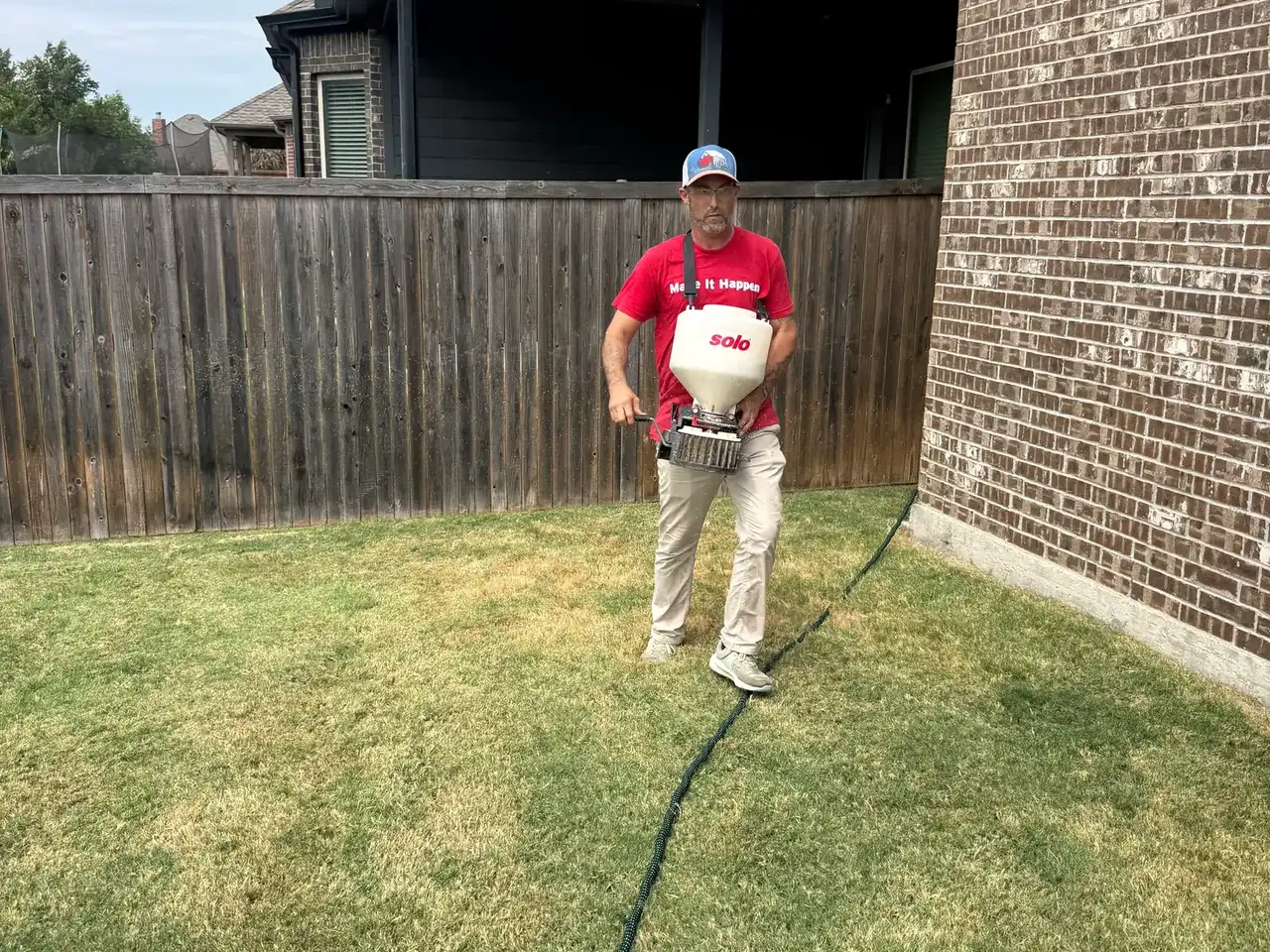
Doors, and a Fort Worth postmark
Every entry takes its three-foot band, garage and patio slider included, so larvae collected in the grass stop at the threshold. Blue Mound mail carries a Fort Worth address on 76131, the ZIP it shares with Saginaw, and none of that changes the visit or the price.