
BLUE MOUND, IN THE SHADE
Fleas on a post-war Blue Mound lot: small yard, deep shade
Blue Mound is compact and mostly built out, and the trees planted when the houses went up in the post-war decades now cover a good share of every lot. That is the whole story of fleas here. The immature stages, around 95 percent of the fleas in a yard at any moment, need shade and damp soil to survive, and settled ground under old canopy with older drainage gives them both from May until the first cool nights.
There is not much pasture or creek in Blue Mound, so ticks are a smaller share of the problem than on the lakes, but any lot backing a drainage easement or unmowed ground has a strip of them at the fence. The program treats the whole lawn and the perimeter of the house every 21 days, April through September. It works on the yard; your vet's prevention works on the pet; and doing one without the other is why so many households treat the dog every month and still have fleas.
WHAT BLUE MOUND PAYS
Why Blue Mound is one of the cheapest towns we treat
Lot size sets the price, and Blue Mound lots are small. The great majority of the town measures 7,000 square feet or under, which is $49.95 a visit, and most of the rest falls between 7,001 and 12,000 at $59.95. It is rare for a Blue Mound yard to reach the $69.95 band, and nothing about the house's age or square footage enters the calculation.
Your Fort Worth mailing address does not change anything either; the lot is in Blue Mound and that is what we price. There is no contract and no start-up or cancellation charge, and the quote is yours to look at before you say yes. Between scheduled visits the work is warrantied, so a flare-up in week two is treated again without a new invoice.
7,000 sq ft or less
$49.95 a visit
Most of Blue Mound's post-war streets
7,001 to 12,000 sq ft
$59.95 a visit
The larger lots in town
Retreatment between visits
Included
Warrantied between treatments
Every number on this page comes from our published price list. Blue Mound homes get the same table as everyone else; the instant quote reads your square footage and lot size and hands you your own line.
PLAIN LIMITS
Three things to know before you buy this in Blue Mound
An indoor flea problem stays an indoor problem. Older Blue Mound houses often have carpet that has been down for years and a dog bed in the same corner just as long, and once eggs are in both, the house breeds its own fleas whether the yard is treated or not. Vacuum daily for two weeks, hot-wash the bedding and keep the animal on the vet's product; that indoor half belongs to you.
A seasonal yard program is not a substitute for exclusion on old brick. If the complaint is roaches, scorpions or rodents coming through open weep holes and worn thresholds, that is Home Defender work and a different plan. We would rather send you to the right one.
It is not sold as a single visit either. In summer heat a flea generation turns over in about three weeks, so one application clears today's adults and leaves tomorrow's cocoons to open onto a clean lawn. The 21-day repeat is the mechanism, not an upsell.
DIY VS SCHEDULED
Could you just do a small Blue Mound yard yourself?
On a lot this size, the honest answer is that you could, if you do it in the right places on the right schedule. Hardware-store granules kill adult fleas in the turf they land on, and a 6,000-square-foot lot does not take long to cover.
Where homeowners come unstuck is aim and rhythm. The spreader goes over the open lawn, which is the one place the larvae are not, and misses the strip under the shrubs, along the north fence and beneath the porch where they actually live. Then the second application never happens. A program puts the product in the shade, adds the foundation band, and comes back every three weeks without you remembering to. If the dog is still scratching in July after two tries, the schedule is what is missing, not the product.
FIRST TIME IN BLUE MOUND
The first treatment on an older Blue Mound yard
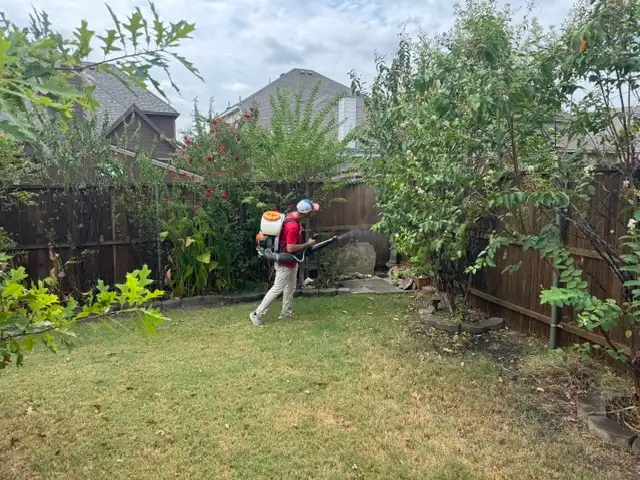
Under the canopy first
We go straight to the ground that never fully dries: beneath the big trees, along the fence where leaf litter has packed down since fall, under any porch or shed an animal can get beneath. On a small shaded lot that is where nearly everything is.
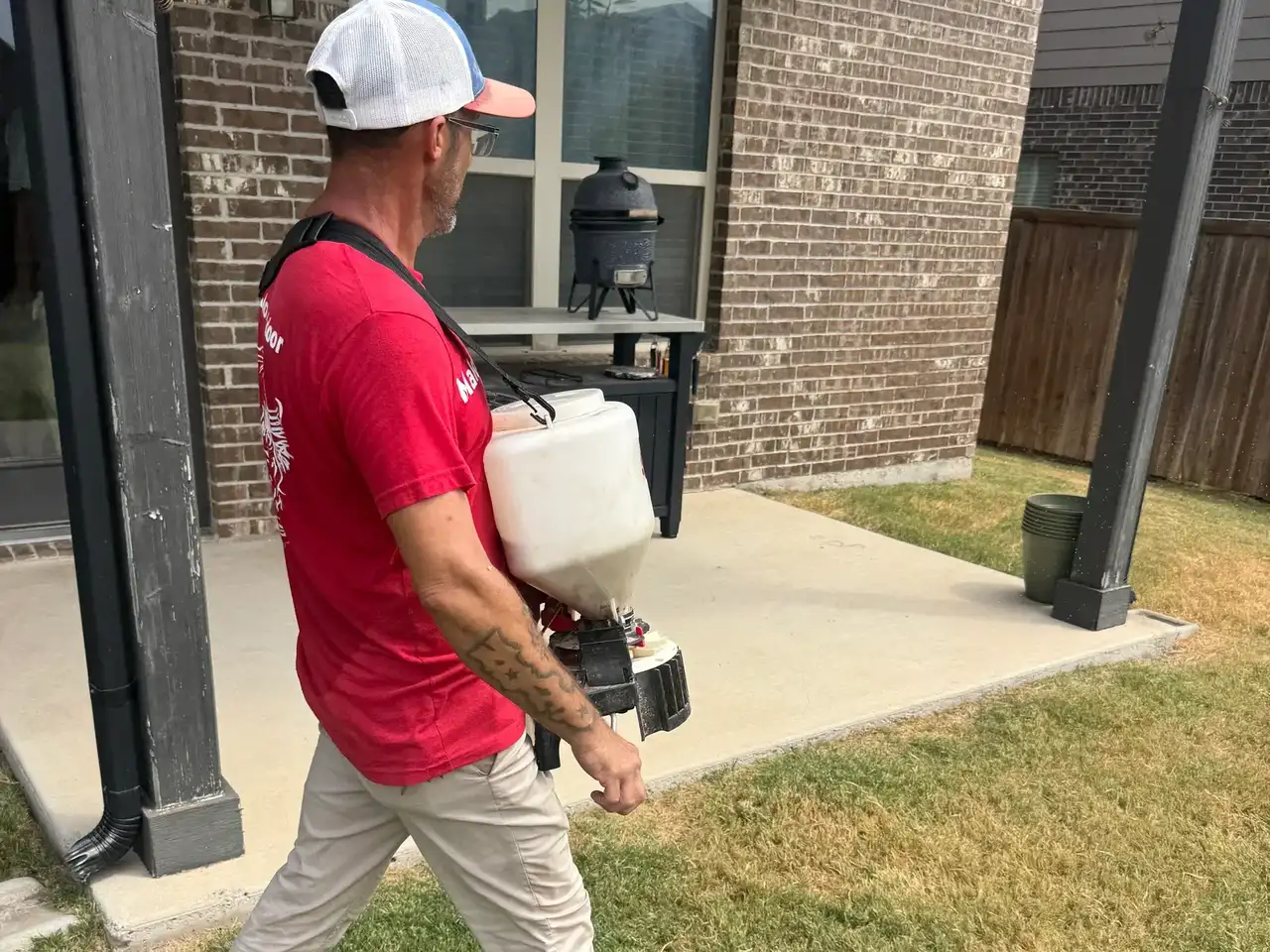
The rest of the lawn and the slab edge
Open turf gets covered too, then a band around the foundation so fleas and ticks do not track along the brick to the door. The surface dries in roughly two hours in summer, and the yard is back in use after that.
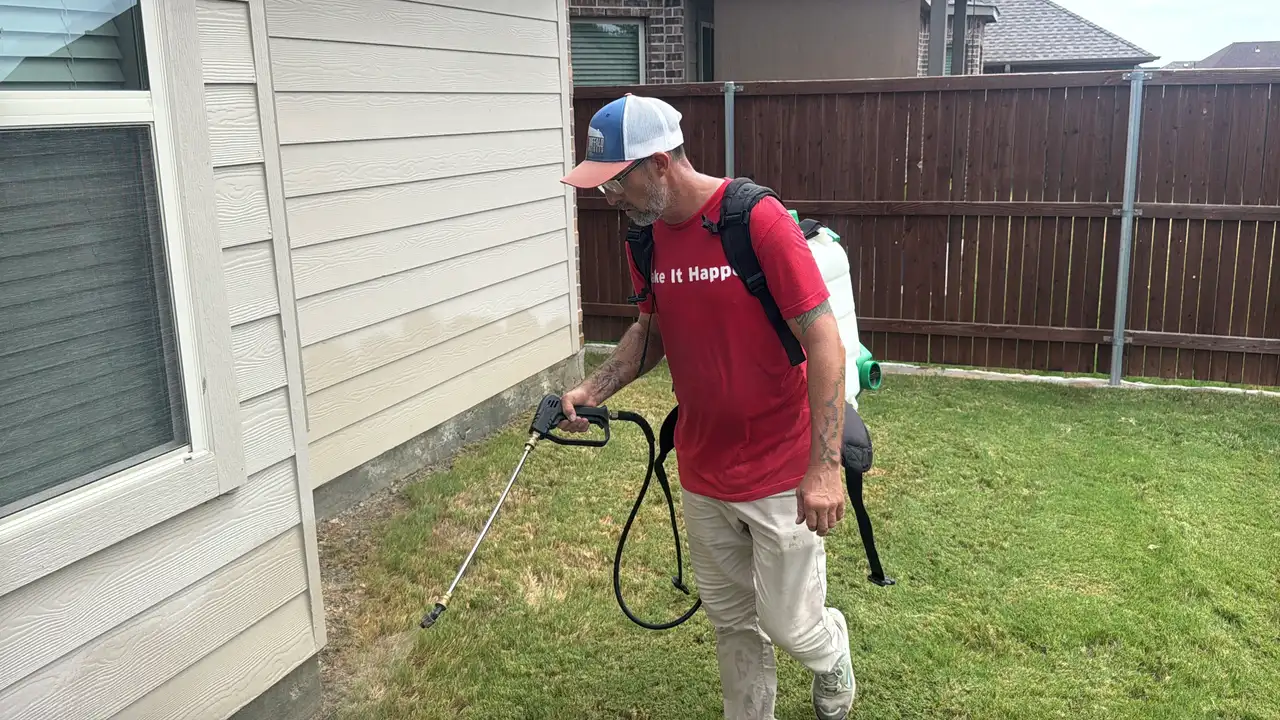
What the pets are on
We ask, every time, what the dog or cat is taking and when. If the honest answer is nothing, we tell you the yard treatment is going to underperform, because a pet with no prevention keeps ferrying fleas back into the house.