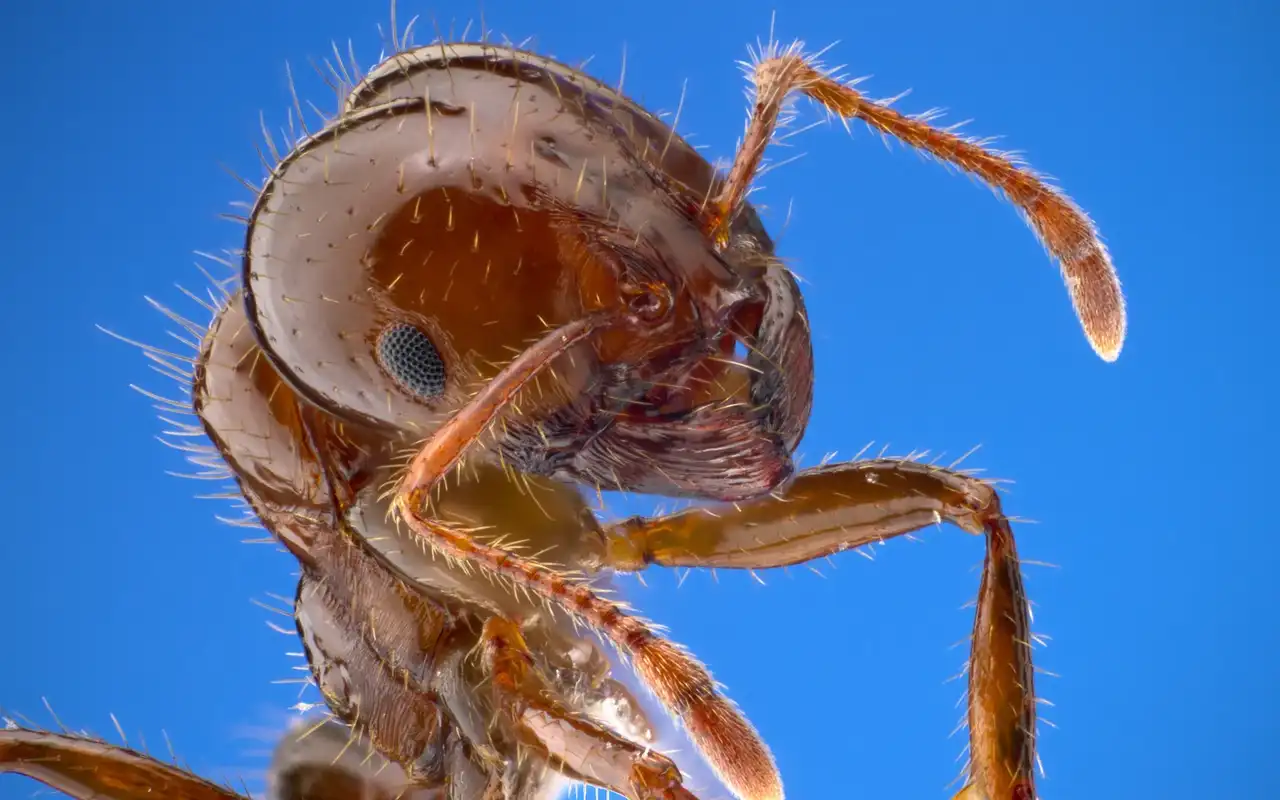
OLD GROUND, NEW MOUNDS
Do fire ants bother a built-out town like Blue Mound?
Less than they bother the new subdivisions north of here, and the reason is underfoot. Blue Mound filled in during the post-war decades, and soil that has sat undisturbed that long is already held by other ant species that got there first and defend their ground. A fire ant queen has to fight for a foothold here, which is why a typical lawn in 76131 shows a handful of mounds in a season rather than a field of them.
Where they do land is predictable. Sun is the first requirement, so the open front lawn and the strip between sidewalk and curb collect mounds while the shaded back yard under mature trees sits empty. Fresh disturbance is the second: a trench cut for a water line, a re-sodded patch, the dirt turned along a new fence. Those two clues tell us where to look on a lot before we have walked it.
WHAT IT COSTS HERE
You do not buy fire ant treatment on its own. You buy the plan.
There is no separate line for it. Broadcast bait is folded into Home Defender and into Complete Home & Lawn Defense at no added charge, and both of those are priced off the square footage of the house rather than the size of the lot. Houses in Blue Mound are modest by regional standards, so most of them land in the bottom two rows of the table: $30 a month under 1,500 square feet, or $33 to $38 between 1,500 and 3,000.
If you want the turf handled as well as the perimeter, Complete Home & Lawn Defense sits at $40 a month for the smallest homes and $40 to $51.50 in the band above. Either way you hear the number before you agree to anything, and there is no startup charge, no contract and nothing owed if you stop.
Under 1,500 sq ft
$30/mo
Plenty of the original houses here
1,500 to 3,000 sq ft
$33–$38/mo
The usual band on these streets
Same homes, whole-yard plan
$40–$51.50/mo
Complete Home & Lawn Defense
Every number on this page comes from our published price list. Blue Mound homes get the same table as everyone else; the instant quote reads your square footage and lot size and hands you your own line.
WHERE BAIT FALLS SHORT
Three things broadcast bait will not do for you
It is slow on purpose. The granules are food rather than something the ant dies from on contact, so foragers have to find them, haul them underground and pass them to the queen before a colony fails. Expect two to three weeks of mounds that still look busy, and judge the result at the end of that window rather than the morning after.
It does nothing about the ants on your kitchen counter. Those are almost always a different species entirely, coming in through the worn thresholds and open weep holes that decades-old brick develops, and the answer there is the exclusion and perimeter half of the plan rather than anything spread on the lawn.
It cannot fence off the yard next door. On lots packed this closely a young queen can fly in from an untreated property after a storm and start over. Because your service is warrantied between treatments, a mound that turns up before the next scheduled visit gets dealt with at no charge.
BAIT VERSUS THE HOSE
Is the drench you bought at the hardware store worth finishing?
Finish the bag of broadcast bait; leave the drench in the garage. A drench kills the workers standing on top and in most cases the queen survives well below, shifts the colony a short distance and rebuilds, which is how people arrive at the belief that fire ants cannot be killed. The same homeowner then counts three mounds where there was one and blames the product.
Store-bought broadcast bait is genuinely the same idea as ours, and spread over the entire yard in early spring on a day with roughly 24 dry hours behind it, it works. Most people meet none of those three conditions and pour something on single mounds after a rain instead. If tracking the forecast is not how you want to spend March, that is a fair reason to let us do it.
THE FIRST STOP
How the first Blue Mound visit runs
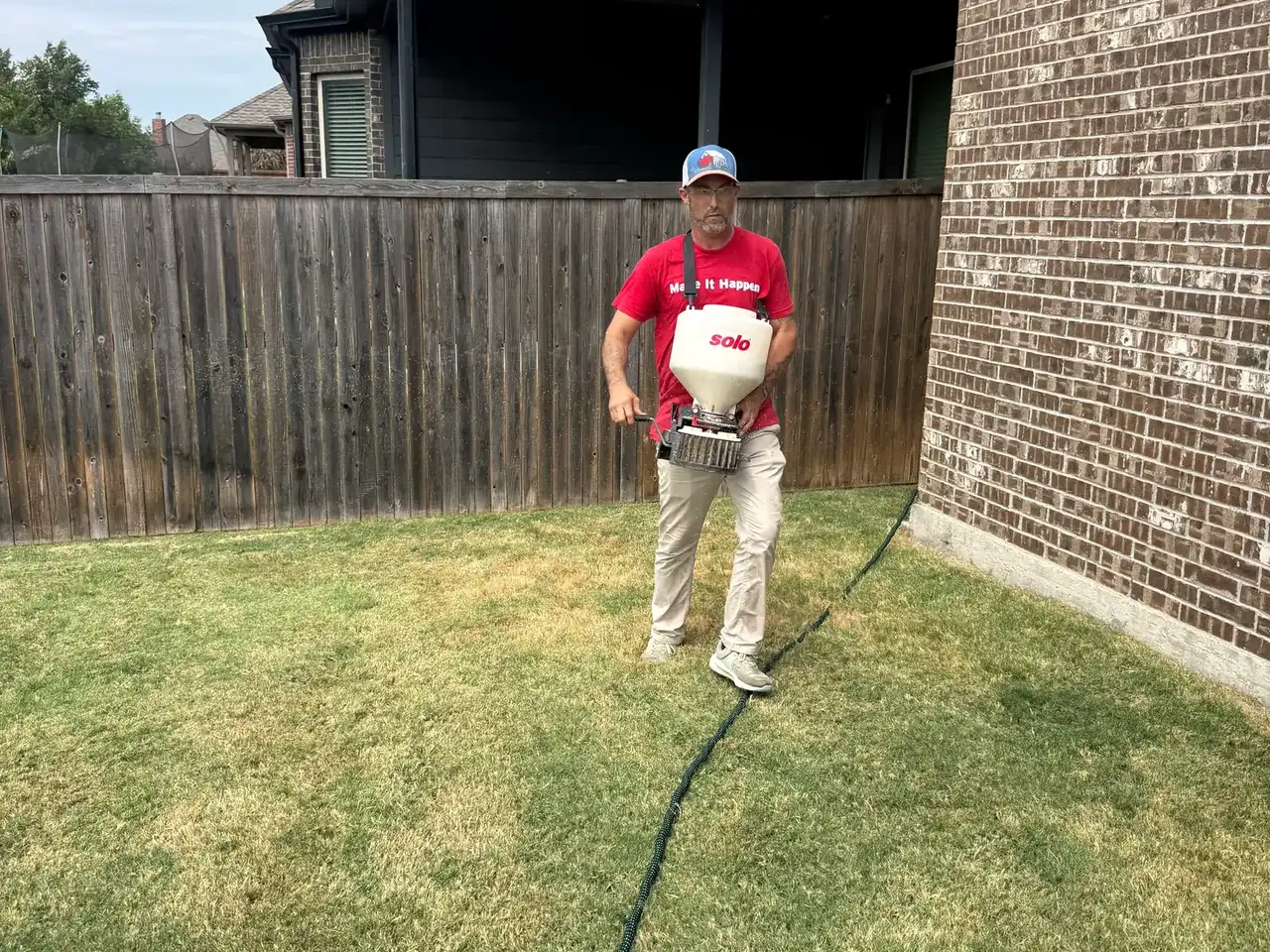
Read the sun map
We start by working out which parts of the lot actually take full sun, because that is the only ground fire ants can really use, and the deep shade under older trees is not worth much of our attention. Active mounds get flagged, and so does anything that has been dug up or re-sodded lately.
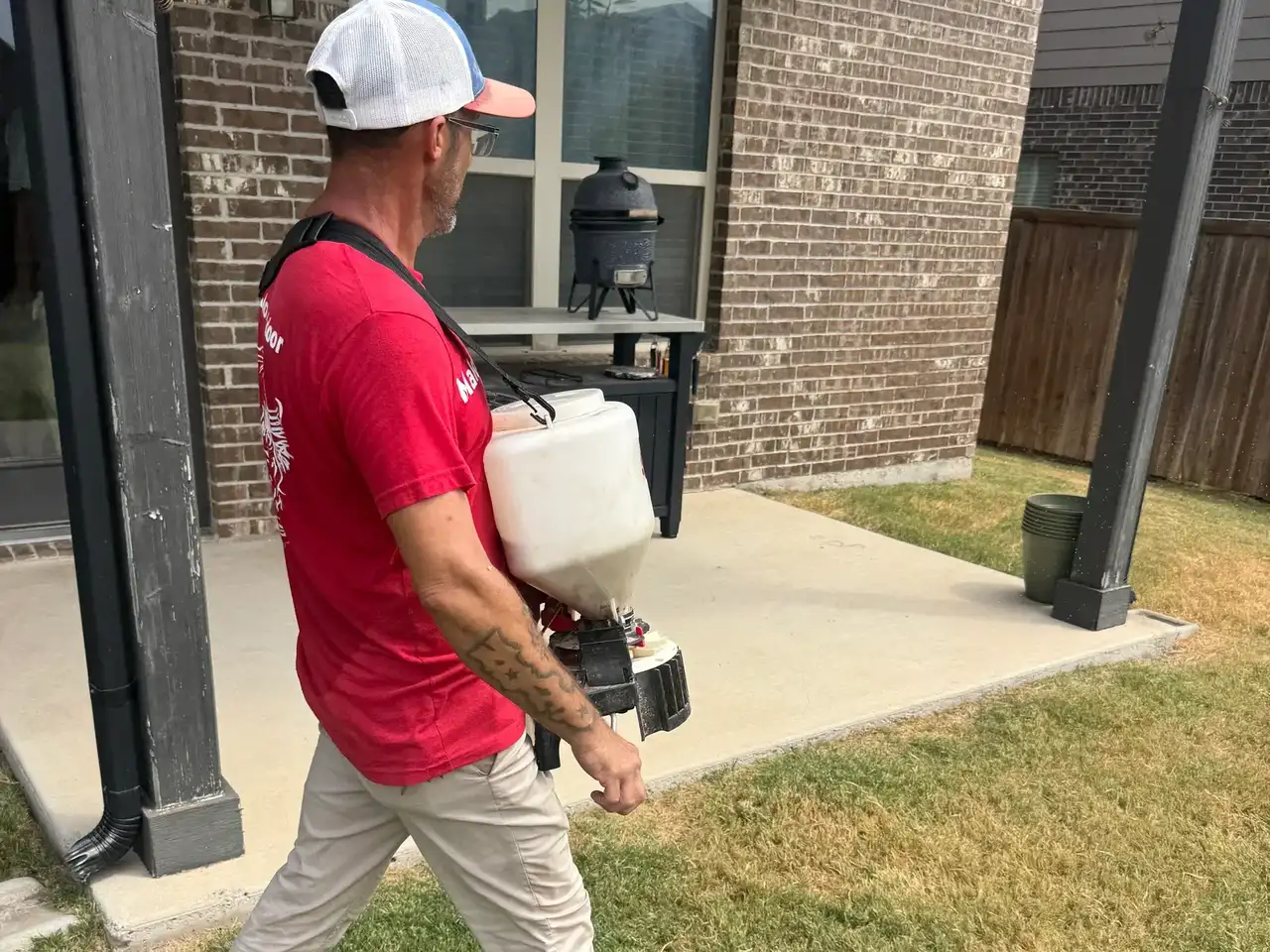
Spread, do not spot-treat
Bait goes out across the entire lawn with a broadcast spreader, at a rate light enough that you will not find granules in the grass afterwards. The date comes off the forecast, because a soaking a few hours later wastes the whole application.
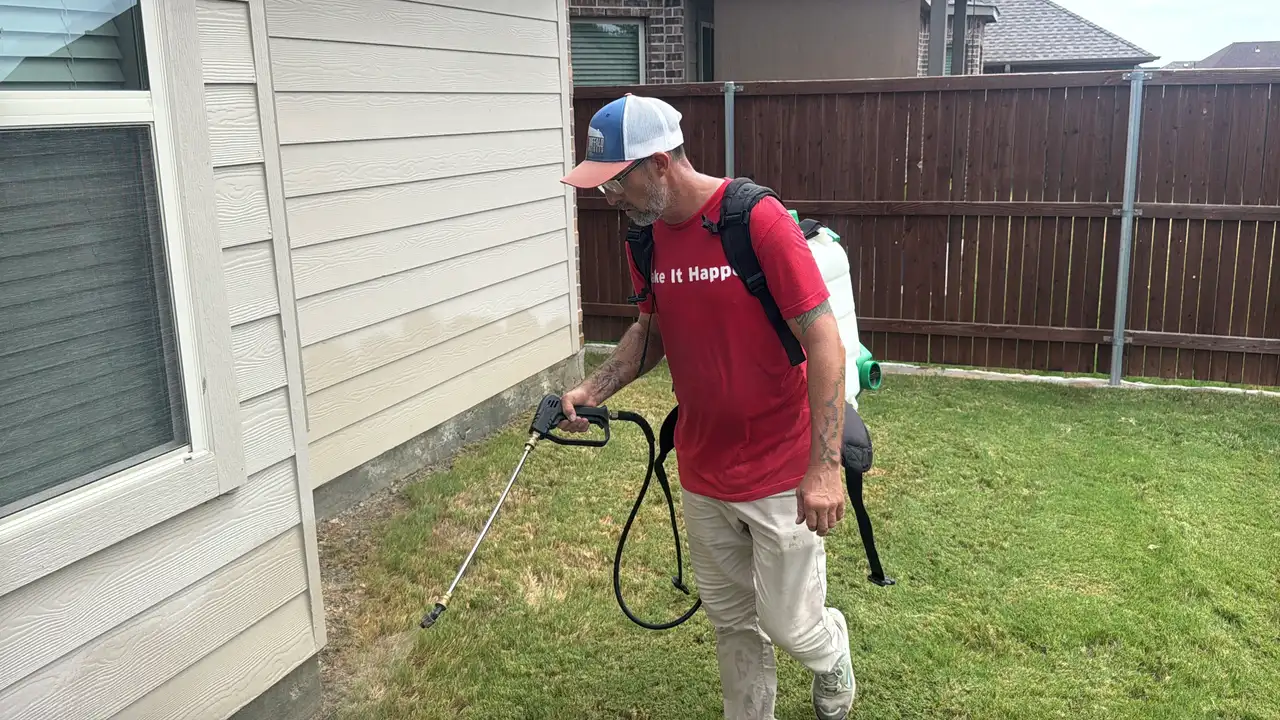
Close the brick while we are here
The same stop treats the foundation band and the eaves and puts Delta Dust through the weep holes, which on brick this old are often standing wide open. Those holes also get packed with copper mesh so they stay shut for good, which is part of the plan here rather than something extra to buy.