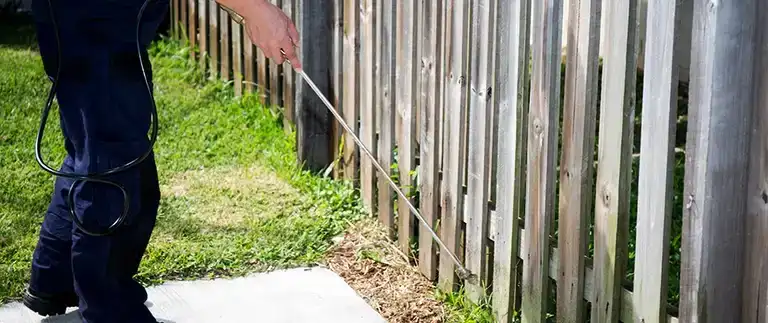
POST-WAR BRICK, 76131
What a perimeter plan is actually protecting in Blue Mound
Start with the wall, not the yard. Blue Mound is compact and built out, made mostly of houses that went up in the post-war decades, so the brick has had sixty-odd years to loosen at the thresholds, at the weep holes, and where a pipe or a cable was pushed through. Ants, crickets, silverfish and the occasional scorpion use exactly those openings, and the Home Defender Plan is aimed squarely at them.
The soil under the town settled long ago, which cuts both ways. Fire ants are less of a story here than in freshly graded subdivisions, but everything that shelters in mature landscaping has had decades to dig in too: spiders under the eaves, pillbugs in the mulch, roaches in damp leaf litter. Four treatments a year keep that population on the outside of the wall instead of behind it.
THE MONTHLY NUMBER
What a Blue Mound house pays for Home Defender
Square footage of the house sets the price and nothing about the lot changes it. Homes here run small by Tarrant County standards, so plenty of them land on the $30 floor or just above it, and the $33 to $38 band covers most of the rest.
That figure buys four scheduled visits, any return trip in between at no charge, and one interior treatment if something already got past the brick. Nothing is signed, there is no startup charge, and walking away later costs nothing either.
Under 1,500 sq ft
$30 a month
Common on the older streets
1,500–3,000 sq ft
$33–$38 a month
The larger post-war floor plans
3,000–4,500 sq ft
$38–$46 a month
Uncommon here; over 6,000 is quoted
Whole-yard upgrade
$40–$73.50 a month
Complete Home & Lawn Defense, same bands
Every number on this page comes from our published price list. Blue Mound homes get the same table as everyone else; the instant quote reads your square footage and lot size and hands you your own line.
BEFORE YOU SIGN UP
Three Blue Mound problems this plan leaves alone
Mosquitoes are not on the list. The mature canopy over Blue Mound keeps yards shaded and the air still, which is where mosquitoes spend the daylight hours, and a band of product around a foundation does nothing to them. That work belongs to the separate 21-day program that runs April through September.
Dusting a weep hole is not closing it. Delta Dust goes into every opening along the bottom course on every visit and it kills what tries to walk through, but the hole is still a hole. Shutting it for good takes copper mesh, which we price as an add-on, and on brick this old it tends to be worth having.
Mice are their own job. Older houses here have precisely the gaps rodents want, and no amount of exterior spraying changes that. Rodent work is $25 a month on top of a year-round plan, and it begins by sealing the routes they are actually using rather than by applying anything.
WHICH PLAN FITS HERE
Home Defender or the Complete upgrade on a small lot?
On a compact Blue Mound lot the 25-foot ring already reaches a good share of the yard, and that is the honest argument for staying on the base plan. It covers the foundation and three feet up the wall, the eave and soffit line, the weep holes, and a granular band out into the turf and beds, which on a small property is most of the ground a crawling insect has to cross.
Complete Home & Lawn Defense runs $40 to $73.50 a month and carries the treatment across the entire yard. It earns its money where the lot is big, or where fleas, ticks, chinch bugs or armyworms are already established in the turf. If your back fence sits thirty feet off the slab, the upgrade buys you less than it would on a half-acre, and you should hear that before you pay for it.
VISIT ONE IN BLUE MOUND
The order the work happens in the first time out
Counting the openings
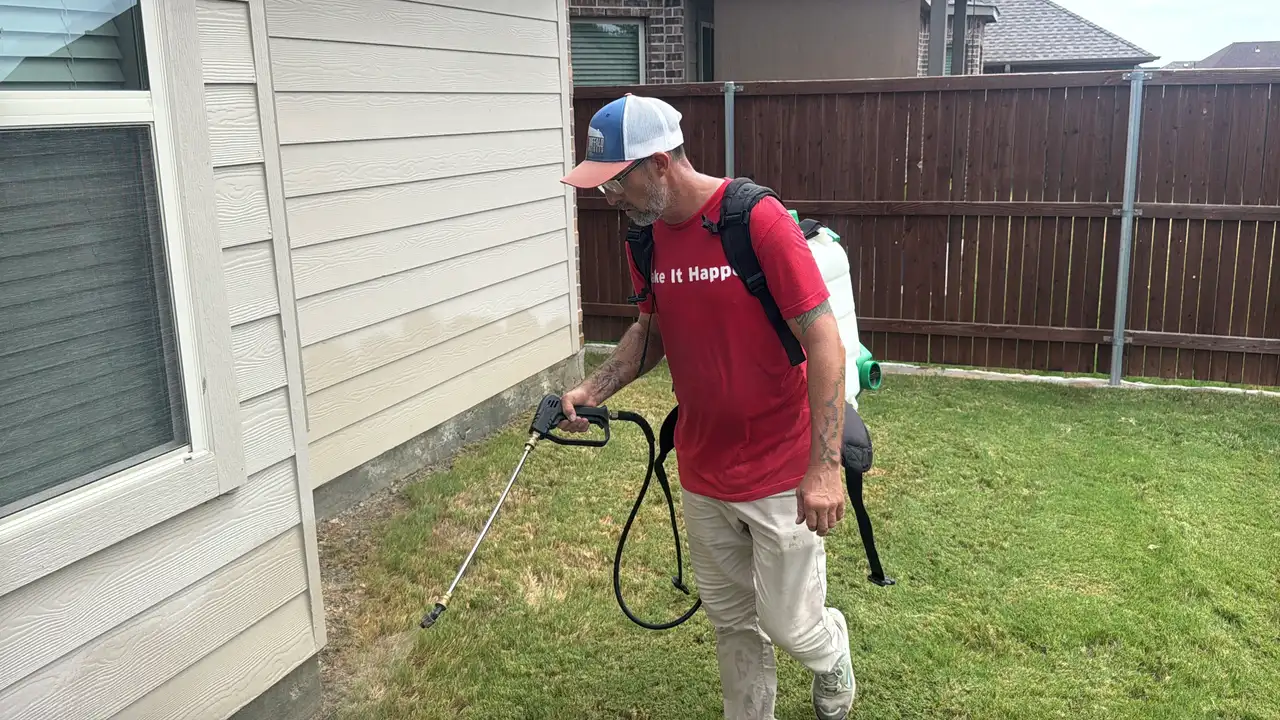
Nothing is applied until the technician has walked the bottom course of brick and the door frames, because on a house this age the number of open weep holes and worn thresholds is the real measure of the job. Gaps get noted, and the ones you can fix yourself get pointed out.

Liquid low, web pole high
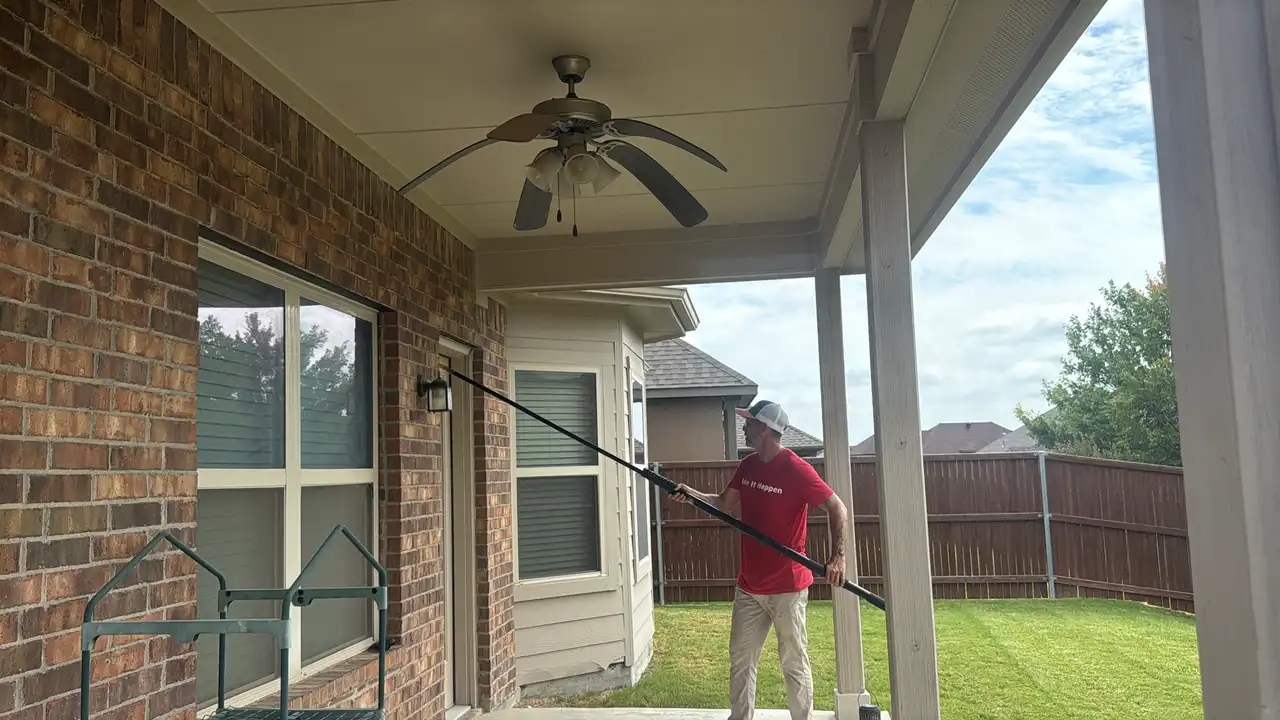
A liquid barrier goes around the whole slab and about three feet up the wall, then the eaves, soffits and door frames get swept with a web pole. That overhead sweep is what keeps spiders and wasps from rebuilding in the same shaded corner a month later.
Dust, granular, bait
Every weep hole gets Delta Dust, a granular barrier is broadcast roughly 25 feet out into the turf and beds, and fire ant bait goes down in the same trip rather than as an extra charge. Gate access is all we need, and you do not have to be home.