
BIG LOTS ON THE I-20 SIDE
Do Hudson Oaks yards really have a chigger problem?
The ones with rough ground behind them do, and in Hudson Oaks that is most of them. This is a small Parker County city of larger lots and fairly new houses strung along the I-20 corridor, with pasture and undeveloped acreage close at hand, so a mown lawn usually ends at grass nobody manages. Chigger larvae want exactly that: stems to climb, shade at the base, litter to overwinter in.
What gives them away is a band of welts rather than scattered ones. The larva climbs until clothing stops it and feeds through the skin where fabric is tight, so the sock line, the waistband and the backs of the knees light up three to six hours after you were in the grass. Nothing burrows in, whatever you were told growing up.
NEWER HOMES, HIGHER BANDS
The monthly number on a Hudson Oaks house
Larger, newer houses put most of Hudson Oaks in the upper half of the price table, since both year-round plans are priced on the square footage of the home. Complete Home & Lawn Defense is the one that treats the whole lawn: $51.50 to $62 a month between 3,000 and 4,500 square feet, $62 to $73.50 between 4,500 and 6,000, quoted above that. Chiggers are never sold on their own, so this is the route to a treated yard.
The cheaper plan, Home Defender, is $38 to $46 a month for a 3,000 to 4,500 square foot house and treats a 25-foot ring around the structure. If the bites happen as you cross toward the back of the lot, that ring does not get there. Both plans carry fire ant treatment, neither has a contract or a cancellation fee, and returns between visits are covered.
3,000 to 4,500 sq ft
$51.50 to $62 a month
Whole yard, the plan chiggers need
4,500 to 6,000 sq ft
$62 to $73.50 a month
Larger newer builds
Home Defender, 3,000 to 4,500
$38 to $46 a month
Ring around the house only
Over 6,000 sq ft
Quoted
Enough of these here to matter
Every number on this page comes from our published price list. Hudson Oaks homes get the same table as everyone else; the instant quote reads your square footage and lot size and hands you your own line.
THE PART NOBODY SELLS
Where a Hudson Oaks chigger treatment falls short
It stops at your property line, which out here can mean a long boundary against ground we have no business spraying. Pasture and undeveloped acreage keep producing larvae from May into August and a few always walk across into treated grass. What the treatment removes is the population living in the yard you use, and that population is the bulk of what is biting.
It also cannot get beneath litter. Leaves banked against a fence line or piled under trees shelter larvae below the surface, and product applied over the top of that layer is money spent on the wrong inch of ground. Clearing it ahead of the visit is the single homeowner job that changes the result most.
And this is the wrong purchase when the welts are scattered instead of banded. Mosquitoes working the shade, fleas off a dog, even bird mites out of the eaves get blamed on chiggers every summer. Tell us the pattern and where you were standing and you will get a plain answer about whether this program is the one you want.
SPRAY YOURSELF OR THE YARD
Repellent, store-bought dust and a treated lawn compared
Repellent on your ankles covers the walk you are about to take and does nothing about the yard, which is the usual mistake. The population out at the boundary keeps building all summer, so every trip to the back of a Hudson Oaks lot is another round of bites unless something changes on the ground itself. Mowing tight and clearing litter changes it for nothing.
The treated version puts product across the whole lawn with the weight of it at the edges and the shaded spots, then a three-foot band at each door so nobody carries larvae inside. On a lot this size that is the only practical way to cover ground you could never rake by hand. Neither approach cancels the other out, and the yards that stay comfortable tend to get both.
STARTING ON A 76087 LOT
How the first chigger appointment goes in Hudson Oaks
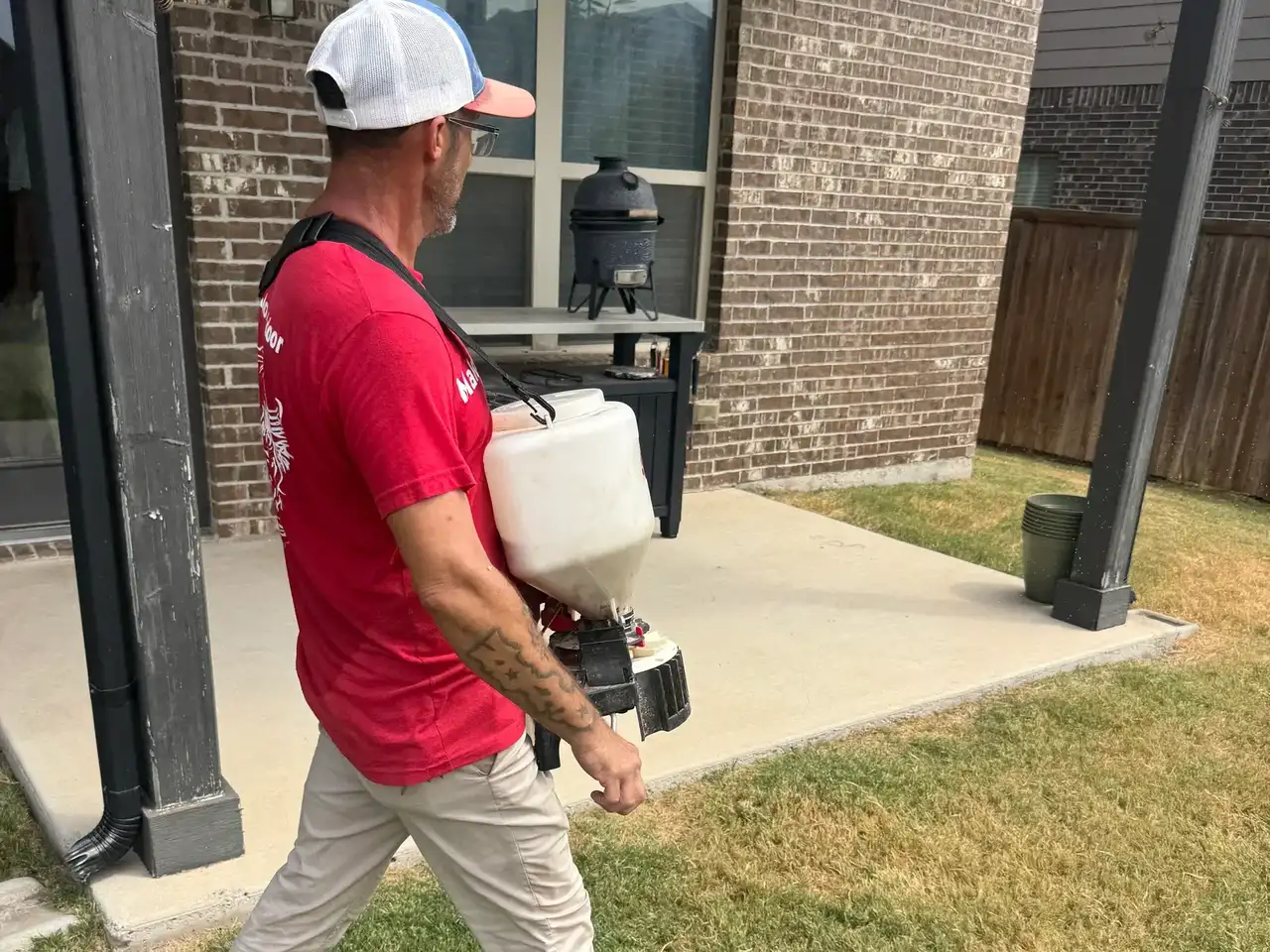
Reading the lot before treating
The technician looks at where maintained grass gives way to rougher ground, where the shade sits and which corners hold damp, because those are the chigger zones on a property like this. The sunny middle of the lawn gets a lighter pass than the boundary does.
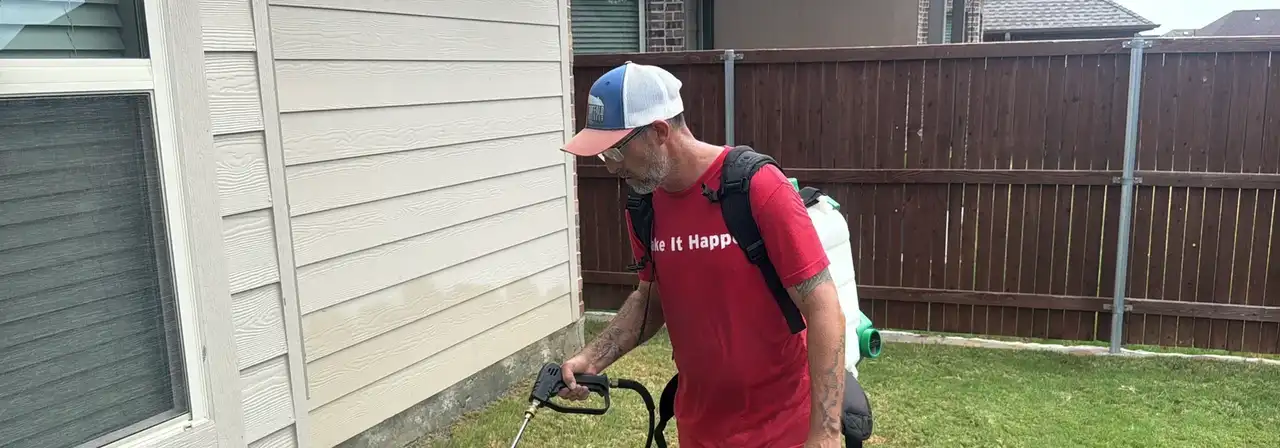
The jobs that are yours
Anything needing to be mowed, raked or moved before product goes down is said out loud on that first visit. Treating over tall grass or a leaf bed looks like service without being any, so asking first is better.
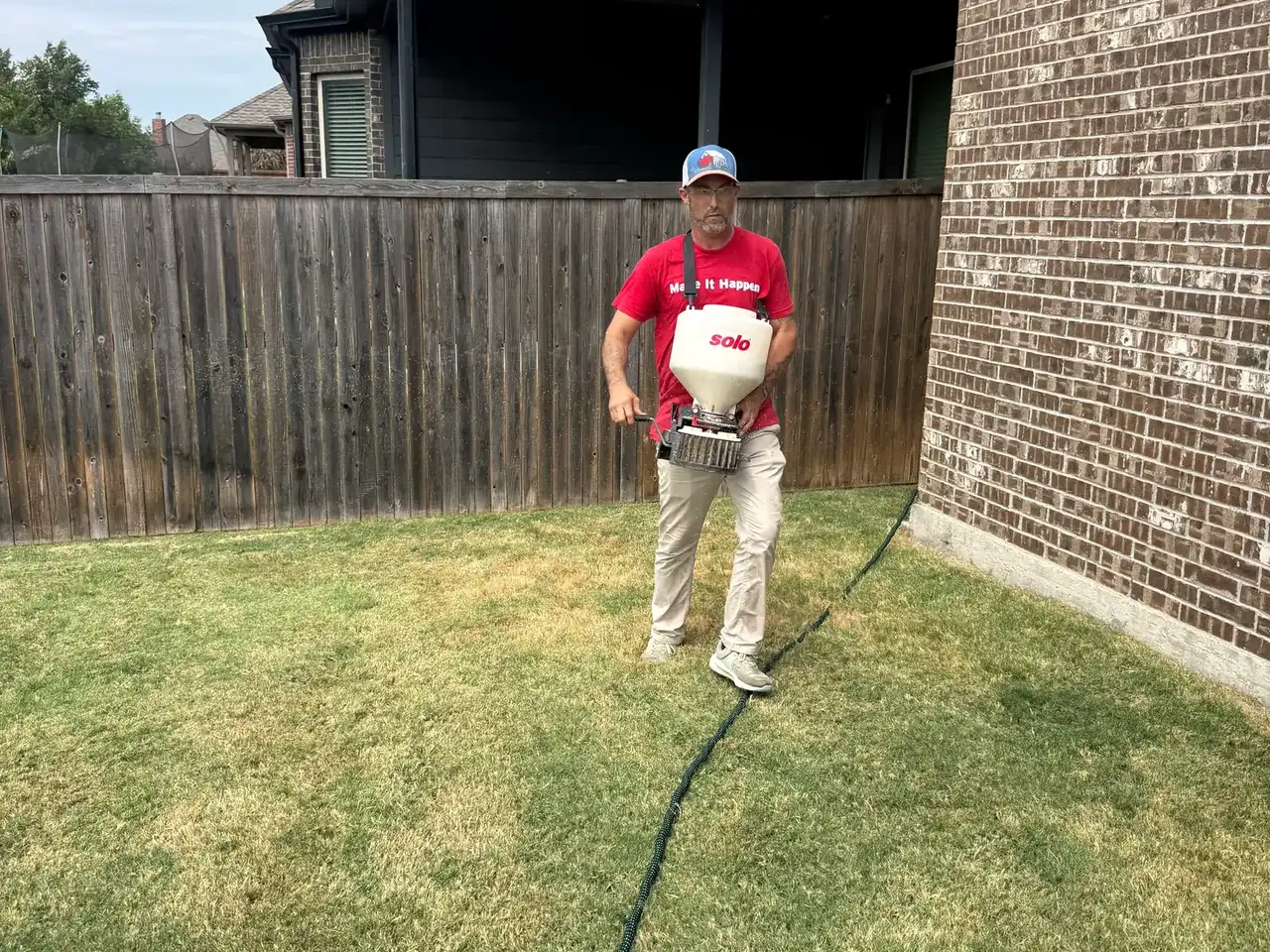
Doors, eaves and the brick
Each entry point gets a treated band, and while the technician is at the foundation the weep holes are dusted and sealed with copper mesh, included on both plans. Most companies around here bill for that separately, which is worth knowing when you compare quotes.