PASTURE ON THREE SIDES
What a mosquito problem looks like on a Hudson Oaks lot
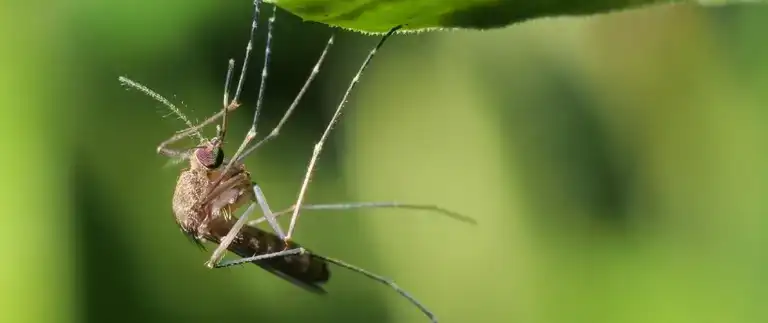
Most of the biting on a Hudson Oaks property starts past the mown grass. This is a small Parker County city on I-20 where the homes are newer and the lots run large, and pasture sits within sight of nearly every back porch. The adults spend the heat of the day in whatever stays cool and damp: brush along the fence, a shop's shaded north wall, the trees left standing when the house went in.
So a program here is less about the patio and more about the perimeter. The technician fogs the resting cover every 21 days from April through September, and on a lot this size the boundary and the outbuildings take a bigger share of each visit than the beds beside the house. Fleas and ticks get the turf and bed edges on the same stop.
PARKER COUNTY LOT PRICES
How much a visit costs in Hudson Oaks
The number is set by the square footage of your lot, and Hudson Oaks lots tend to land between $79.95 and $129.95 a visit, with true acreage quoted individually because the published bands end at about an acre. A newer home on a graded half-acre would sit near $89.95. Nothing about the house itself changes the figure.
You pay one visit at a time, as each treatment happens, with no signup fee to start and no fee to leave. Should the mosquitoes return before the next scheduled visit, the re-treat is covered under the warranty rather than billed. The exact band for your address comes back from /instant-quote, and the Weatherford mailing address does not affect it.
Lots from 17,001 to 22,000 sq ft
$79.95 a visit
The smaller subdivision lots off I-20
Lots from 22,001 to 27,000 sq ft
$89.95 a visit
About half an acre
Lots from 42,001 to 47,000 sq ft
$129.95 a visit
Just under an acre, the top published band
Over 47,000 sq ft
Quoted for the property
Acreage with barns and pasture edge
Every number on this page comes from our published price list. Hudson Oaks homes get the same table as everyone else; the instant quote reads your square footage and lot size and hands you your own line.
WHAT THE FOG LEAVES ALONE
The limits of mosquito treatment on acreage in Hudson Oaks
The pasture next door keeps producing mosquitoes no matter what we do on your side. A barrier kills the adults resting on your property and stops them breeding there, but it cannot stop new ones drifting in off open ground, so a Hudson Oaks lot with pasture behind it will still see some activity at dusk. Fewer, not zero.
Standing water you have not found will undercut every visit. A stock tank, a wheelbarrow behind the shop, a tarp over the trailer or a clogged gutter on the barn breeds more mosquitoes in a week than the fog kills in a day. We point them out and larvicide what cannot be emptied, but the weekly tip-out is your half of the job.
And a treatment has a shelf life. In Parker County heat the product holds about three weeks, which is the entire reason the schedule is 21 days, and a downpour the same night can shorten that.
MOW IT OR TREAT IT
Cutting the edge back versus paying for the program
If your Hudson Oaks lot has a wide band of tall grass between the lawn and the fence, mowing it is the cheapest mosquito control you will ever do. Tall grass and brush hold humidity at ground level, which is exactly what adults want during the day, and cutting it removes the shelter outright while stripping out chigger and tick habitat at the same time.
What the mower cannot do is treat the tree canopy, the shrub beds or the shaded side of the shop, and it cannot reach into the neighbour's brush. The fog handles that layer. The properties that see the biggest drop in biting do both, and if you can only afford one, start with the mower; we will say so on the phone.
THE FIRST HUDSON OAKS STOP
How the opening appointment runs on a bigger lot
Boundary first
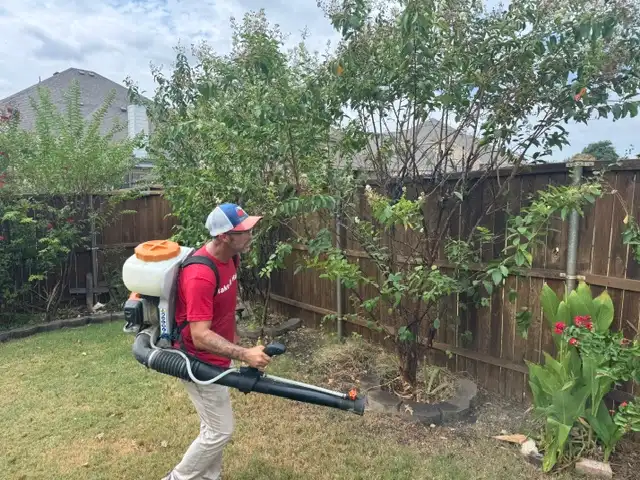
On a larger Hudson Oaks property the technician walks the fence before touching the beds, because the line where the lawn meets pasture or brush is where most of the adults shelter. We note how far the mowing extends, where the woodpile and outbuildings sit, and which stretches of shade are worth treating.
Cover gets fogged, lawn mostly does not
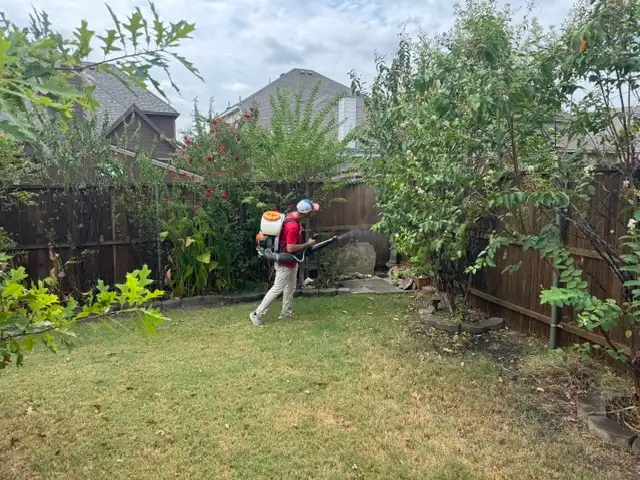
The backpack fogger goes through the trees, hedges, deck skirting and the cool wall of the barn or shop, and the turf and bed edges are treated for fleas and ticks. Open Bermuda in full sun gets very little product because nothing is resting in it.

Water gets named
Every container, low spot and drain holding rain is pointed out, and what cannot be drained gets a larvicide. Most first appointments happen inside a week because the team is large and new-customer slots are kept open on purpose.