
BIG LOTS, YOUNG TREES
Where fleas and ticks live on a newer Hudson Oaks lot
A newer home on a large Hudson Oaks lot has a flea and tick map that is easy to read. The trees are too young to shade much, so the open lawn bakes and fleas cannot develop in it. Instead they concentrate in the few spots that stay cool: under the deck, along the shaded side of a shop building, in the woodpile and at the base of the north wall.
Ticks have a different map. They are a boundary pest, living in the taller grass past the mow line where the lot meets pasture or open ground along the I-20 corridor, and a larger lot has more of that boundary than a subdivision one. A dog that patrols the fence brings them back to the house.
Our program covers the lawn, the band around the house and a buffer at that boundary, with a visit every 21 days from April through September. Pets are the other half of it: if the vet's prevention is not in place, the dog restocks the house with fleas faster than we can clear the yard.
HUDSON OAKS, PER VISIT
Larger lots push Hudson Oaks toward the upper bands
Hudson Oaks homes tend to sit on a half acre to an acre, which lands most visits between $79.95 and $129.95. The figure is set entirely by lot square footage; a brand-new house and a fifteen-year-old one on the same size lot pay the same, and a heavy first-year infestation does not add a surcharge.
Properties past about an acre are quoted on the ground we will actually treat, which excludes pasture and paddocks. There is no term to sign and no penalty for stopping, and if fleas or ticks reappear before the next scheduled visit the return trip is covered. The band for your address is at /instant-quote.
17,001 to 22,000 sq ft
$79.95 a visit
Smaller Hudson Oaks homesites around half an acre
27,001 to 32,000 sq ft
$99.95 a visit
Three-quarter-acre lots
42,001 to 47,000 sq ft
$129.95 a visit
Lots right at an acre
Over 47,000 sq ft
Quoted
Acreage along the corridor, priced on the treated envelope
Every number on this page comes from our published price list. Hudson Oaks homes get the same table as everyone else; the instant quote reads your square footage and lot size and hands you your own line.
READ BEFORE YOU BUY
Three things a Hudson Oaks yard treatment will not do
It will not fix fleas that are established inside the house. Indoor fleas breed in carpet, upholstery and pet bedding on a cycle that has nothing to do with the lawn, so a treated yard alone leaves that population untouched. Clearing it takes the vet's product on the animals, hot-washing what they sleep on and vacuuming daily for a couple of weeks; we include one interior treatment if it is needed, but the habits are what hold.
It will not clear ticks from the pasture or open ground next door. We treat a buffer along your side of the fence, and the tall grass beyond it goes on producing ticks regardless. A Hudson Oaks lot backing open land will see far fewer ticks in the yard, not none.
It is not the right purchase for a petless house with a sunny new lawn and no bites. Fleas need a host to build numbers, and on that kind of lot the money is better spent on the year-round plan, which already includes the fire ant treatment a new lawn actually needs.
SPOT-TREAT VERSUS WHOLE LOT
Could you just treat the deck and the woodpile yourself?
You could, and on a Hudson Oaks lot with young trees those spots really are where most of the flea larvae are. A hardware-store product applied carefully under the deck, along the shaded wall and around the woodpile every three weeks through the summer will knock the population down, and if you have the discipline for that schedule it is a legitimate choice.
What it misses is the boundary and the mobility of the pest. Ticks at the fence line are not under the deck, and a dog carries fleas from the one spot you skipped to every spot you treated. Our visit does the whole lawn, the house band and the buffer in one pass on a 21-day cycle, so nothing depends on remembering.
VISIT ONE, HUDSON OAKS
The first treatment on a Hudson Oaks lot
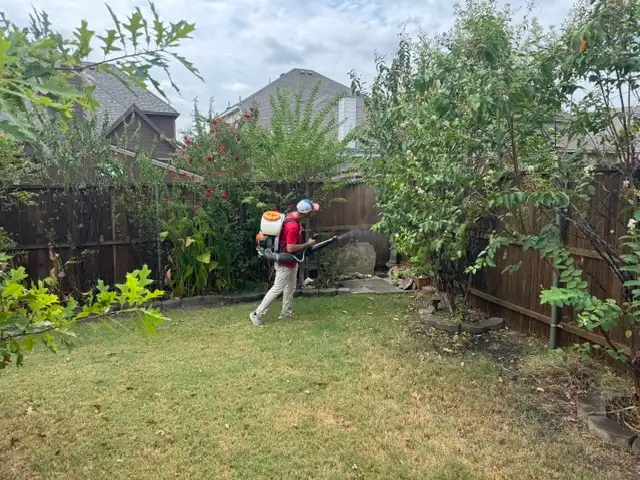
Finding the few cool spots
On a lot with little canopy we look for the handful of places that stay shaded and damp: under decks and porches, the north side of the house and any shop or barn, the woodpile. Those are where the fleas are developing.
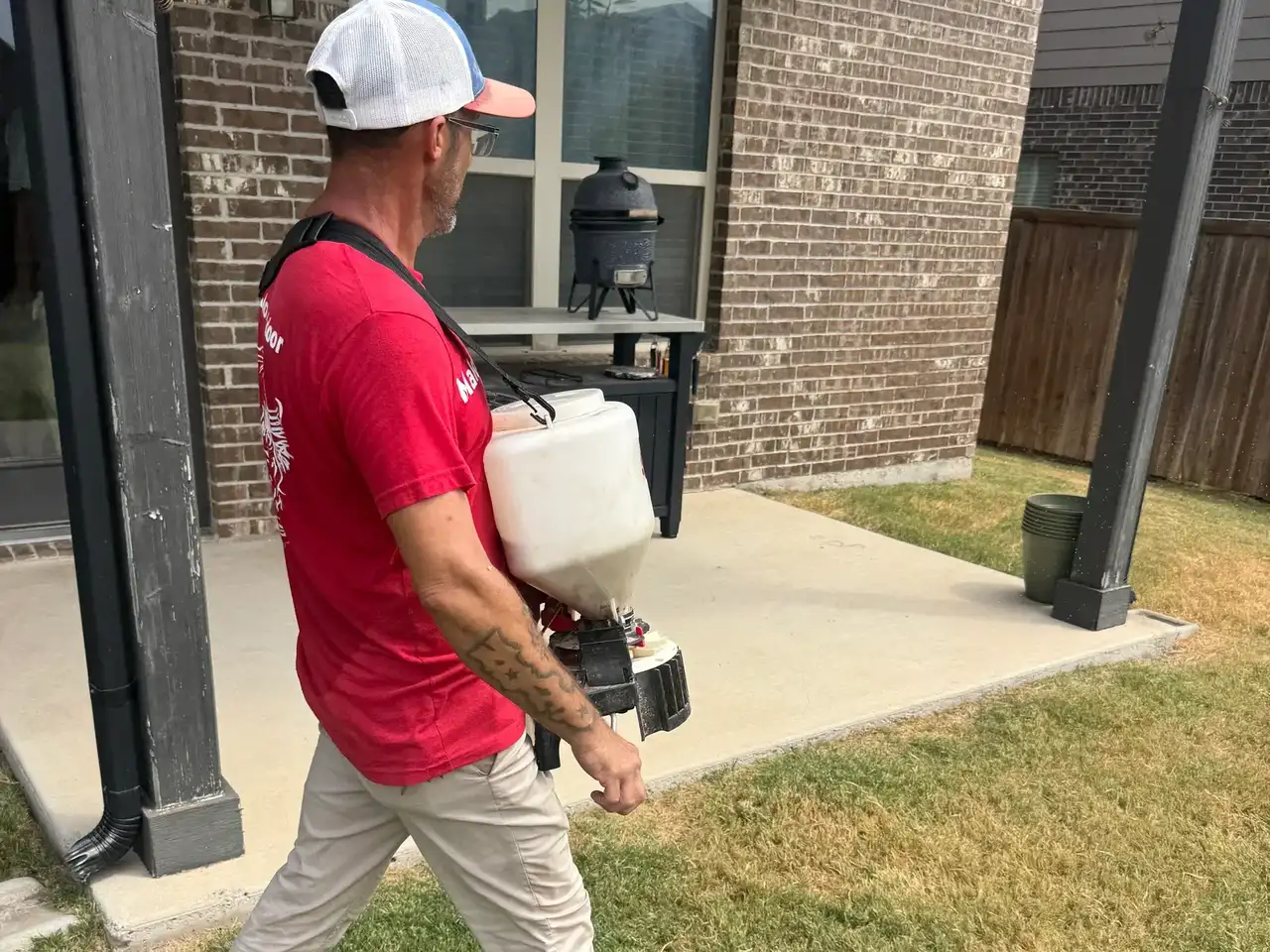
Walking the fence line
The boundary with pasture or open ground gets walked before treatment so we know how wide the buffer needs to be and whether the mowing stops short of the fence. That strip is where the ticks come from.
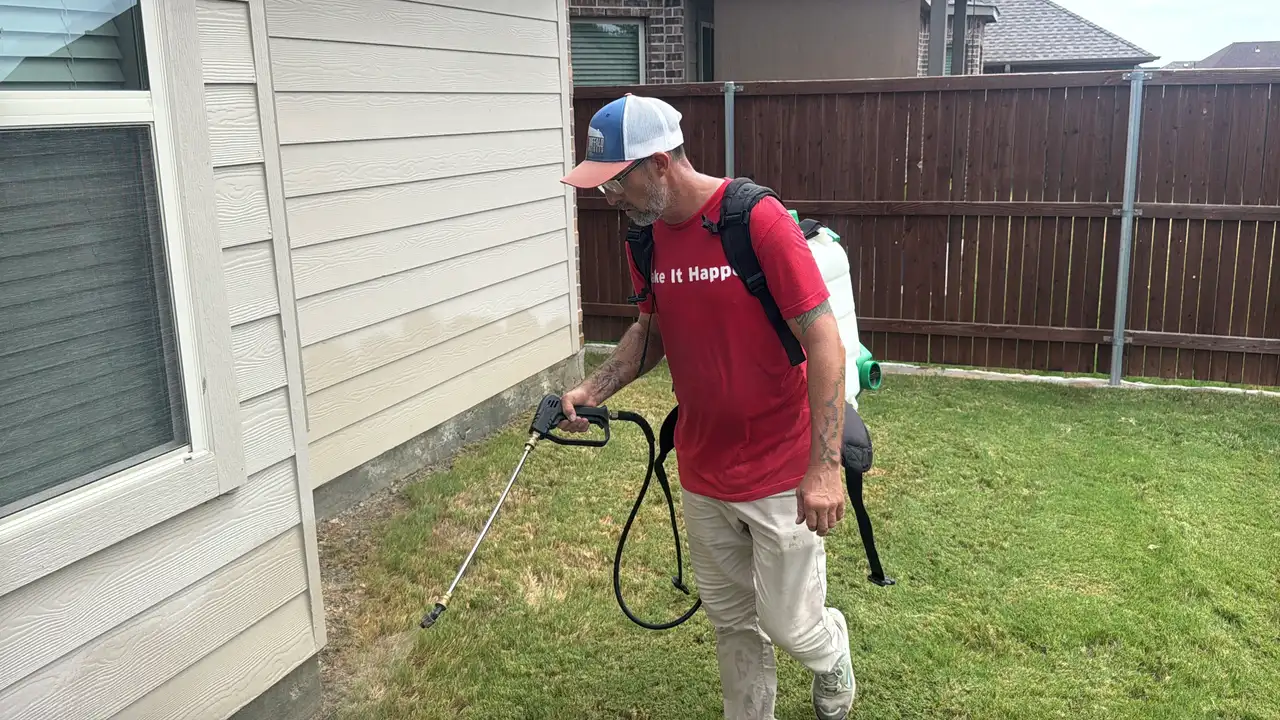
Outbuildings and no-spray zones
Shops, barns and woodpiles get treated around their perimeter; livestock pens, troughs and feed get mapped out entirely. Once the application dries, about two hours in summer, the yard is back in use.