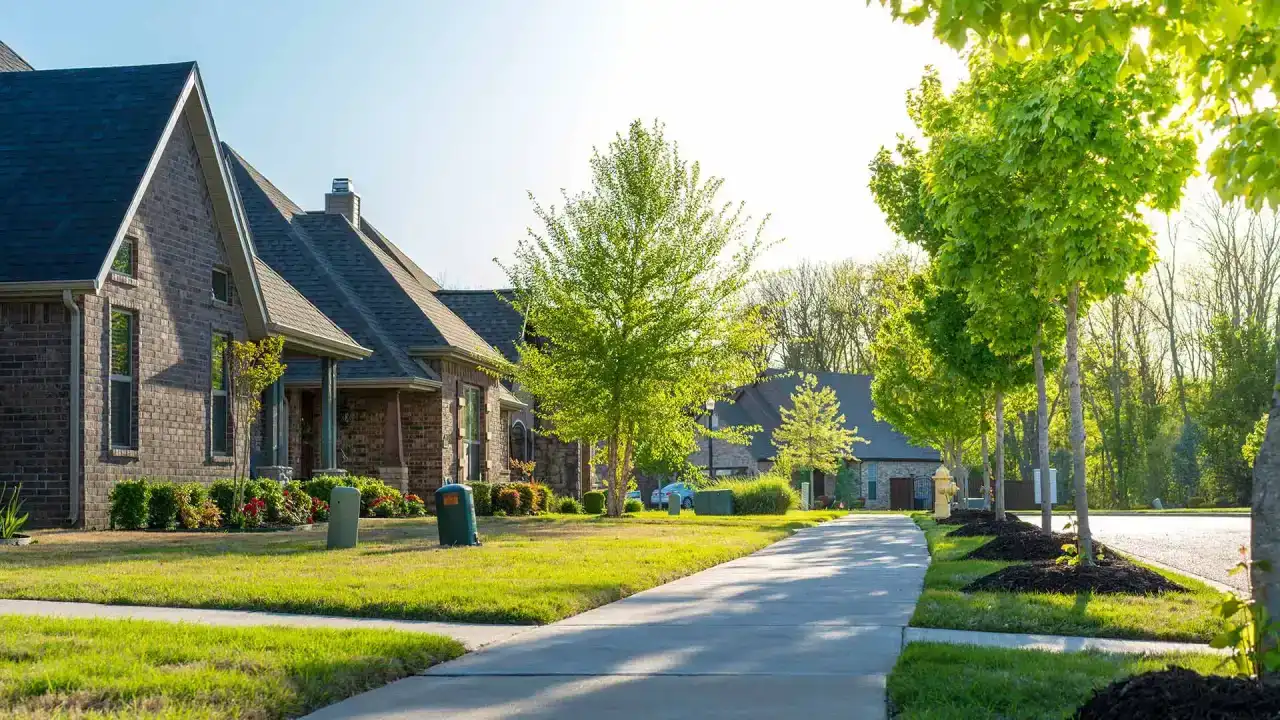
I-20 LOTS AND OUTBUILDINGS
Why Hudson Oaks rodent problems begin in the outbuildings
Because the outbuildings are the easy target. A Hudson Oaks property tends to come with a shop, a barn or a big detached garage, and none of them are built to the standard of the house. Roll-up doors leave a gap at each corner, metal panels do not always meet the slab, and stacked timber or feed sacks inside give a rodent food and cover in the same place.
Open ground finishes the picture. Pasture is never far away on this stretch of the I-20 corridor, and when it is cut or dries out the field mice living in it move toward whatever structures are nearby. That is a seasonal wave rather than a permanent invasion, and it is why autumn is the busy end of the year for this work.
The house is usually the last thing they reach, which is fortunate, because a house is the one structure on the property we can close properly.
PARKER COUNTY PRICING
What rodent work adds to a Hudson Oaks plan
The rodent line is $25 a month and it sits on top of a year-round plan, either Home Defender or Complete Home & Lawn Defense. There is no standalone rodent service to buy, because the exclusion has to be re-checked on a schedule and the plan visits are that schedule.
Hudson Oaks homes run larger than the Tarrant County average, which pushes the base plan up rather than the rodent line. A house between 3,000 and 4,500 square feet carries Home Defender at $38 to $46, so the total is $63 to $71 a month; from 4,500 to 6,000 it is $46 to $54, making $71 to $79. Over 6,000 square feet we look at the house and quote it. Call or text (817) 984-8611 and you will have the number before anything is agreed.
Rodent inspection, sealing and traps
$25 a month
On top of a year-round plan only
Home Defender, 3,000 to 4,500 sq ft
$38–$46 a month
The typical newer build here
Home Defender, 4,500 to 6,000 sq ft
$46–$54 a month
Larger houses on the bigger lots
Complete Home & Lawn Defense, 3,000 to 4,500 sq ft
$51.50–$62 a month
Yard included at the same rodent price
Every number on this page comes from our published price list. Hudson Oaks homes get the same table as everyone else; the instant quote reads your square footage and lot size and hands you your own line.
WHAT IT WILL NOT COVER
Where this service stops on a Hudson Oaks property
A metal shop building cannot be made airtight, and anyone who says they will seal one is describing a job they are not going to do. Ribbed panels, roll-up tracks and a slab that has moved leave openings you could not close without rebuilding. We seal the ones that have sound material either side, then trap and station the rest, and we tell you which is which.
Stored feed is not something we can work around. Sacks of seed, dog food or livestock feed sitting on the floor of a barn will hold a population no matter what is done to the walls. Metal bins with lids fix it; nothing else does, and it is your purchase rather than ours.
And the pasture stays as it is. Field mice live in open ground across the whole corridor, and no treatment reduces that. What changes is whether the structures on your property are worth moving into.
A RING OF BAIT STATIONS
Feeding a perimeter of stations, or closing the buildings
Plenty of rural properties end up with a ring of bait stations around the buildings and nothing else, refilled indefinitely. It does kill rodents and it is easy to sell, but it works by putting food out at the property line, so there is always something arriving to eat it, and the monthly cost never ends because the job never finishes.
Exclusion is the opposite bargain: more work at the start, less afterwards. Once the entries are packed with copper mesh and hardware cloth, the animals outside stay outside whether or not anything is baited, and the stations become a backstop instead of the whole plan. On a Hudson Oaks place with several structures we usually end up doing both, but in that order and for that reason.
THE ORDER WE WORK
How a first Hudson Oaks visit goes
The shop and the barn
We start with the detached structures, because that is normally where the population lives. Droppings along a wall plate, nests in stored cushions or insulation, chewed wiring in a mower or a tractor, gnawed feed sacks — all of it tells us the size of the problem before we get near the house.

The newer brick and the garage
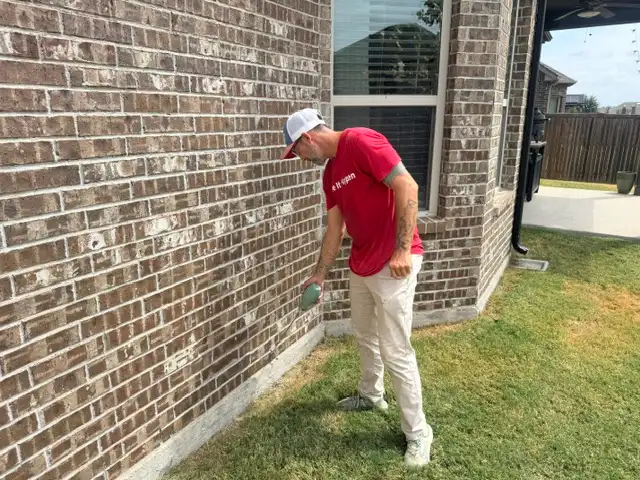
On the house we work low: the garage door corners and side jamb, the thresholds, the hose bib and gas penetrations, the air conditioning line set where it enters the wall. Weep holes come sealed with copper mesh and dusted as part of both year-round plans, so the hunt is for the openings around them.
Inside, the attic and the trap plan
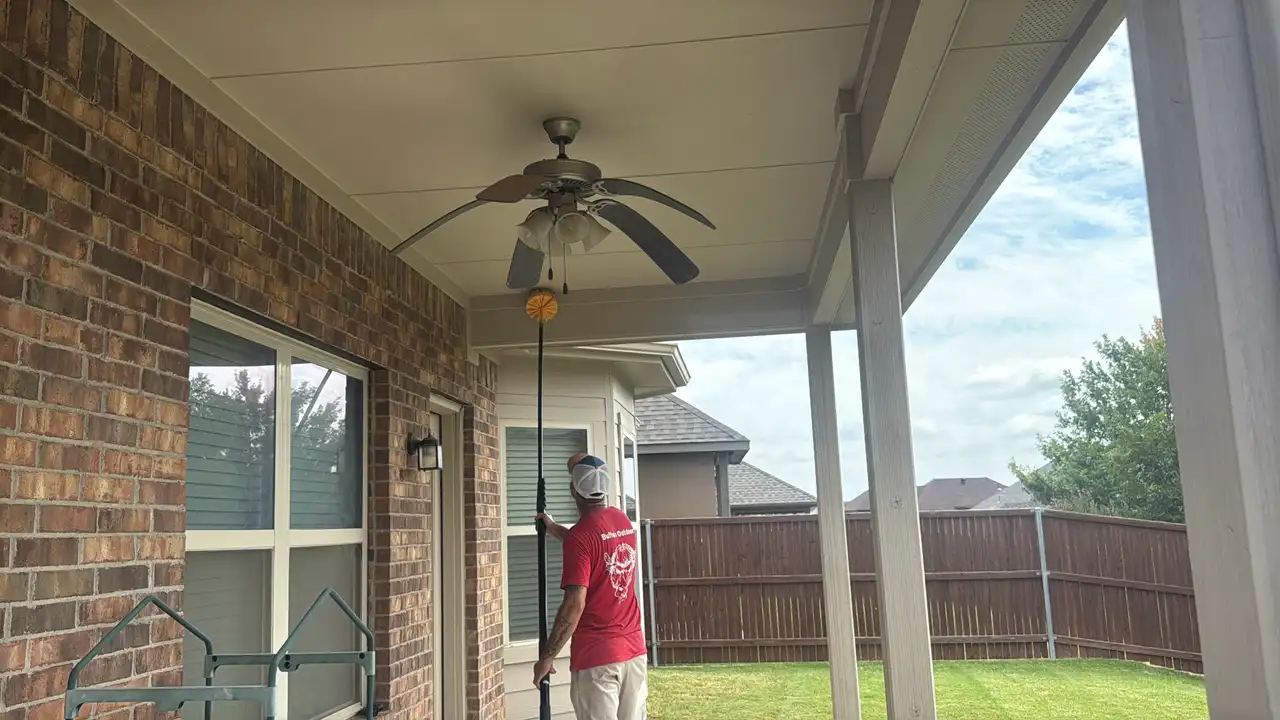
Then the accessible interior and the attic, reading runways and droppings to place traps where the animals actually travel. Bait goes only in locked, tamper-resistant stations out of reach of children and pets, and a follow-up date is set before we leave the property.