NEWER HOUSE, BIGGER LOT
Why a Hudson Oaks lawn faces both kinds of insect
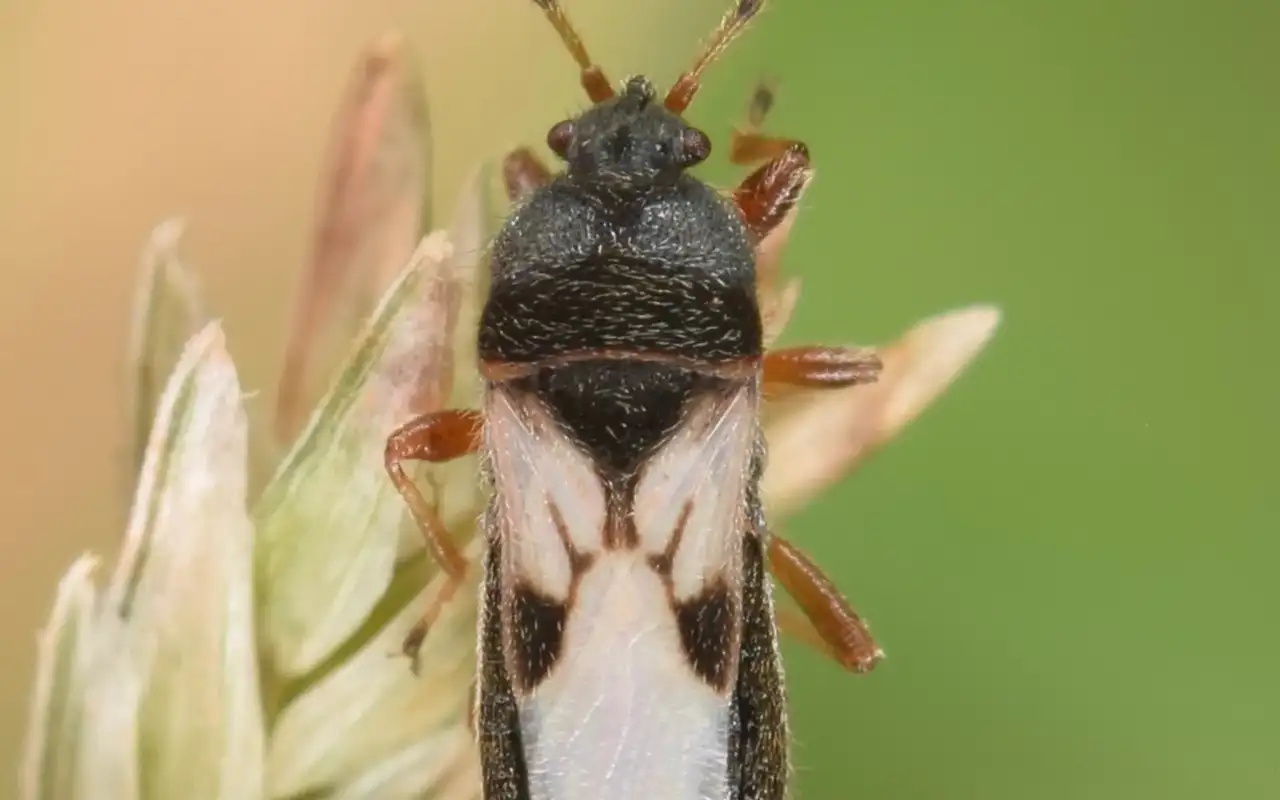
Most of Hudson Oaks is newer housing on larger lots along the I-20 corridor, and that combination hands a lawn both problems at once. The builder sod near the house is young St. Augustine or Bermuda on graded ground, thin enough for chinch bugs to work the hot driveway strip in its first summers. The back of the lot runs toward pasture and open ground, which is where the armyworm fronts come from in a wet fall.
The two look nothing alike once you know what to check. Chinch damage creeps out from the concrete edges as drought-coloured turf that water does not revive, because the insect has blocked the plant from moving it. Armyworm damage is sudden and wide: a swath of Bermuda chewed to the stems between one evening and the next morning, with the caterpillars still on the blades at dusk.
HUDSON OAKS PRICING
What the size of a Hudson Oaks lot does and does not cost you
Nothing, on the year-round plans, because both are priced on the square footage of the house. A 3,000-to-4,500-square-foot Hudson Oaks home is $51.50 to $62 a month on Complete Home & Lawn Defense, which treats the full mowed lawn, or $38 to $46 on Home Defender, which treats the applicable lawn about 25 feet out from the foundation. Larger homes step up to $62 to $73.50, and over 6,000 square feet is quoted.
The same figure applies whether the envelope says Hudson Oaks or Weatherford 76087, which it usually does. There is no contract and no startup fee, and one interior treatment is included if you ever need it. Insects that appear between the quarterly visits get a return trip at no charge, which is the clause that matters for armyworms.
1,500 to 3,000 sq ft
$40–$51.50/mo
Whole yard, smaller Hudson Oaks homes
3,000 to 4,500 sq ft
$51.50–$62/mo
Most of the newer builds along I-20
4,500 to 6,000 sq ft
$62–$73.50/mo
The larger acreage houses
Home Defender, 3,000 to 4,500 sq ft
$38–$46/mo
Lawn band reaching roughly 25 feet out
Every number on this page comes from our published price list. Hudson Oaks homes get the same table as everyone else; the instant quote reads your square footage and lot size and hands you your own line.
WHAT TO EXPECT, HONESTLY
Four limits of lawn insect treatment on a Hudson Oaks lot
One: the treatment stops the feeding and nothing else. A strip of new St. Augustine that chinch bugs have already finished is dead and will be replaced, not revived. Bermuda that armyworms stripped usually regrows from the roots on its own, but a lawn that was already struggling may come back patchy.
Two: it cannot reach the pasture, so it cannot stop armyworms arriving. It kills them when they hit the lawn. Three: it cannot fix water. A good share of brown new lawns in Hudson Oaks are irrigation systems still set for the sod's first fortnight, and some are fungus, and we will say which rather than treat for an insect that is not there.
Four: depth and month decide whether it works. Chinch bug product has to reach the thatch and should not go on soaked turf; grub product has to be watered down two to four inches, and works far better on small August grubs than on large October ones. The wrong one at the wrong depth is a wasted application, however good the chemistry.
DIY BAG VS THE PLAN
Can a Hudson Oaks homeowner just buy the bag?
You can, and if you already know which insect you have, will apply it at the right depth and will water it in or not as the label says, it is a reasonable choice. The chemistry in the hardware-store bag is not the weak point. The weak point is that most people buying it are guessing at the insect from the colour of the grass, and four of the seven common causes of a brown July lawn are not insects at all.
What the plan adds is the reading of the lawn before anything goes down, the return trip when armyworms arrive on a Tuesday between visits, and the rest of the coverage the year-round plan carries: foundation band, eaves, weep holes and fire ant bait across the whole yard. On a larger Hudson Oaks lot the bait alone covers a lot of ground you would otherwise be spreading yourself.
THE FIRST LOOK
Walking a Hudson Oaks lot for the first time
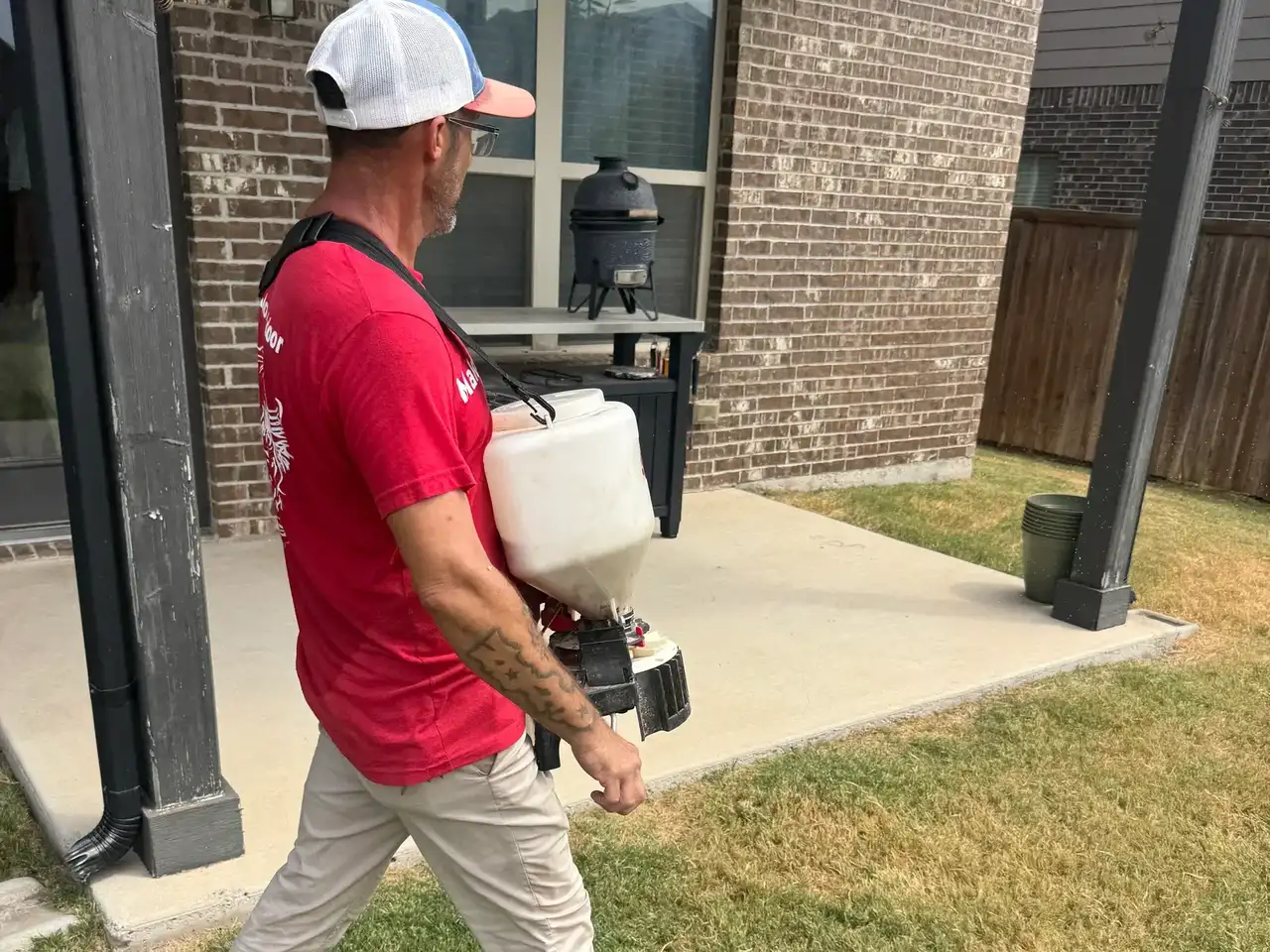
Concrete edges
We start at the driveway and the sidewalk, where the sod is hottest and driest, and float a bottomless can of water at the first green-to-brown edge we find. Chinch bugs rise within ten minutes if they are there.
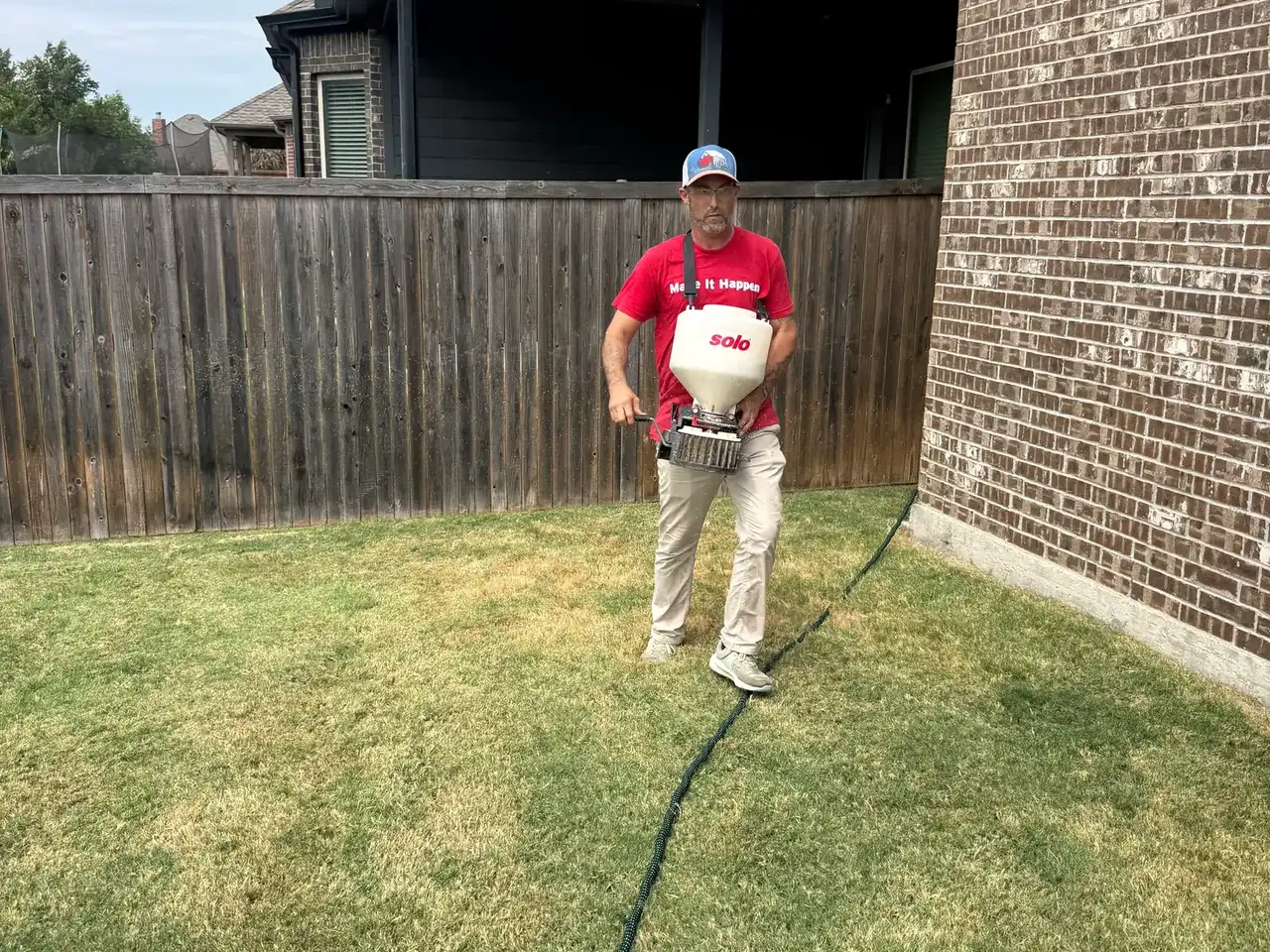
The back boundary
Then we walk to where the mowing ends and the open ground begins, because that is the direction armyworms come from and where a short-mowed edge earns its keep. We note what the lot backs onto so we know how closely to watch in a wet September.
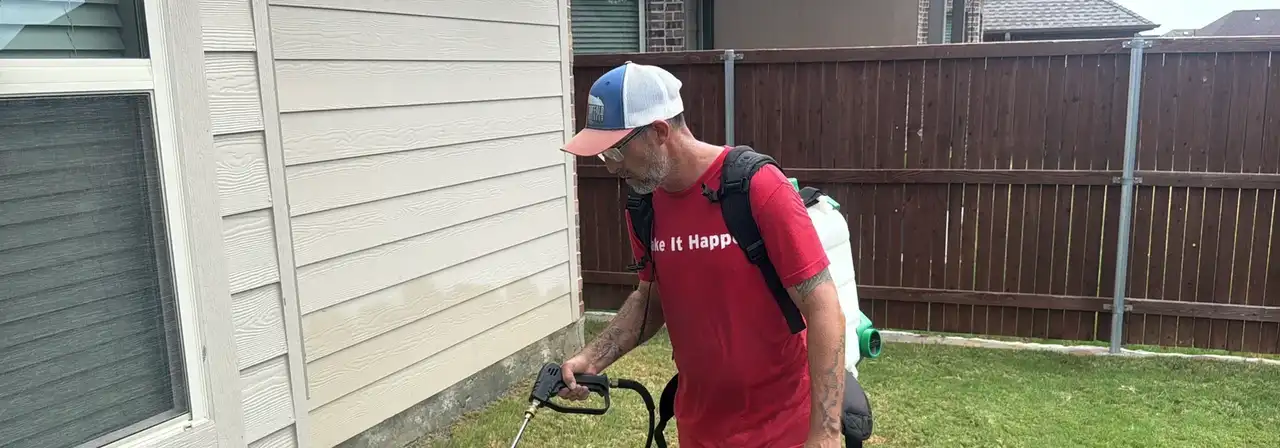
A spade in the Bermuda
On the established turf we press for softness and lift the edge of any weak area to count larvae. Under five in a square foot is normal for any lawn and gets no treatment; over five is a grub problem and gets watered-in product.