TWO SOURCES AT ONCE
Why Hudson Oaks yards carry more mounds than the old suburbs
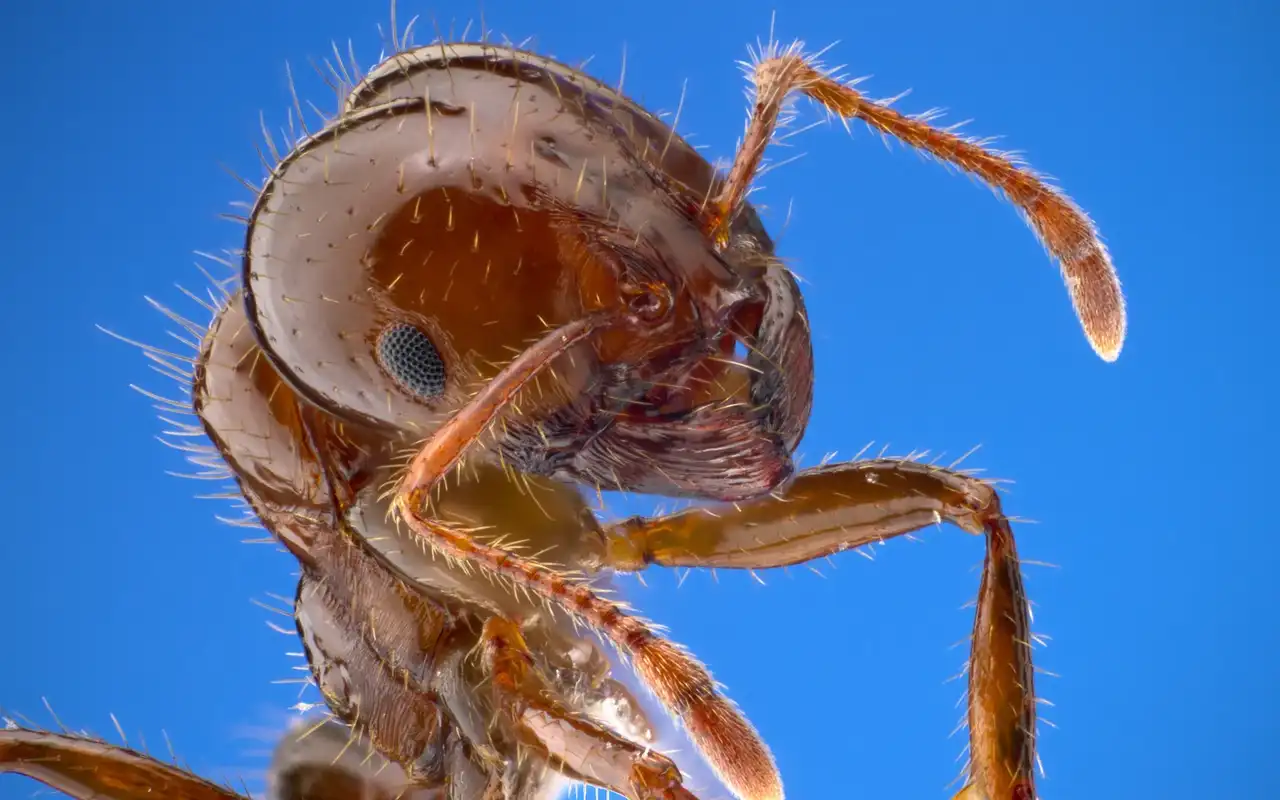
Two things stack up here. Most of Hudson Oaks went in along the I-20 corridor recently enough that the soil under the lawns was graded rather than inherited, and grading removes the ant species that had been holding the ground. Fire ants are first into the gap, which is how a five-year-old house ends up with more mounds than a fifty-year-old one closer to Fort Worth.
The second source is the pasture. Larger Parker County lots put unmowed ground a short walk from the back door, and nobody treats that ground, so it keeps producing queens that fly into your lawn. Between the graded soil and the open country, a yard out here is working against the odds, and dealing with mounds one at a time will never get in front of it.
PARKER COUNTY NUMBERS
What a Hudson Oaks household pays for this
Nothing on its own, and that is not a sales line: fire ant treatment is not offered separately at all. It sits inside Home Defender at $30 to $54 a month and inside Complete Home & Lawn Defense at $40 to $73.50, both priced from the square footage of the house. Houses out here tend to run large, so the middle and upper rows apply far more often than the bottom one.
For a 3,000 to 4,500 square foot home that means $38 to $46 a month on Home Defender, or $51.50 to $62 on the whole-yard plan, and above 4,500 square feet it becomes $46 to $54 and $62 to $73.50. Past 6,000 square feet we quote the house individually rather than guess at a band.
3,000 to 4,500 sq ft
$38–$46/mo
Home Defender, a common size out here
4,500 to 6,000 sq ft
$46–$54/mo
The larger corridor builds
Same sizes, whole yard
$51.50–$73.50/mo
Complete Home & Lawn Defense
Over 6,000 sq ft
Quoted
Priced after we look
Every number on this page comes from our published price list. Hudson Oaks homes get the same table as everyone else; the instant quote reads your square footage and lot size and hands you your own line.
WHERE WE DRAW LINES
What we will not do on acreage, and why
We do not bait pasture. The plans cover the residential yard and a treated buffer at the boundary, and if you own several acres of genuine grazing ground we will tell you a lawn price does not stretch that far rather than underquote the job and disappoint you later.
We also cannot make bait fast. Foragers have to carry granules down to the queen and that takes two to three weeks whatever anybody promises. If there is an event coming up, the honest move is to get the first application in well ahead rather than expect a treatment the week before to clear the yard.
And bait does nothing for the barn. Rodents, spiders and scorpions live in shops, tack rooms and stacked wood, and those come under perimeter treatment, exclusion, or the rodent add-on at $25 a month on top of a year-round plan.
BAIT OR MOUND DRENCH
The shovel-and-drench routine, and why it keeps failing
Nearly every acreage owner has tried it: find the mound, open it up, pour something in, watch the ants boil out. It feels decisive. What normally happens is that the queen, sitting far below the disturbance, gets carried off by workers and the colony sets up again nearby, which is why a yard treated that way seems to grow more mounds than it started with.
Broadcast bait asks less of you and more of the ants. They collect the granules as food, take them underground and feed the queen, and the colony fails from the center outward. Spread across a whole lawn it also reaches the nests in the corners nobody has walked, which on a property this size is most of them.
ON A LARGER LOT
The first Hudson Oaks visit, step by step
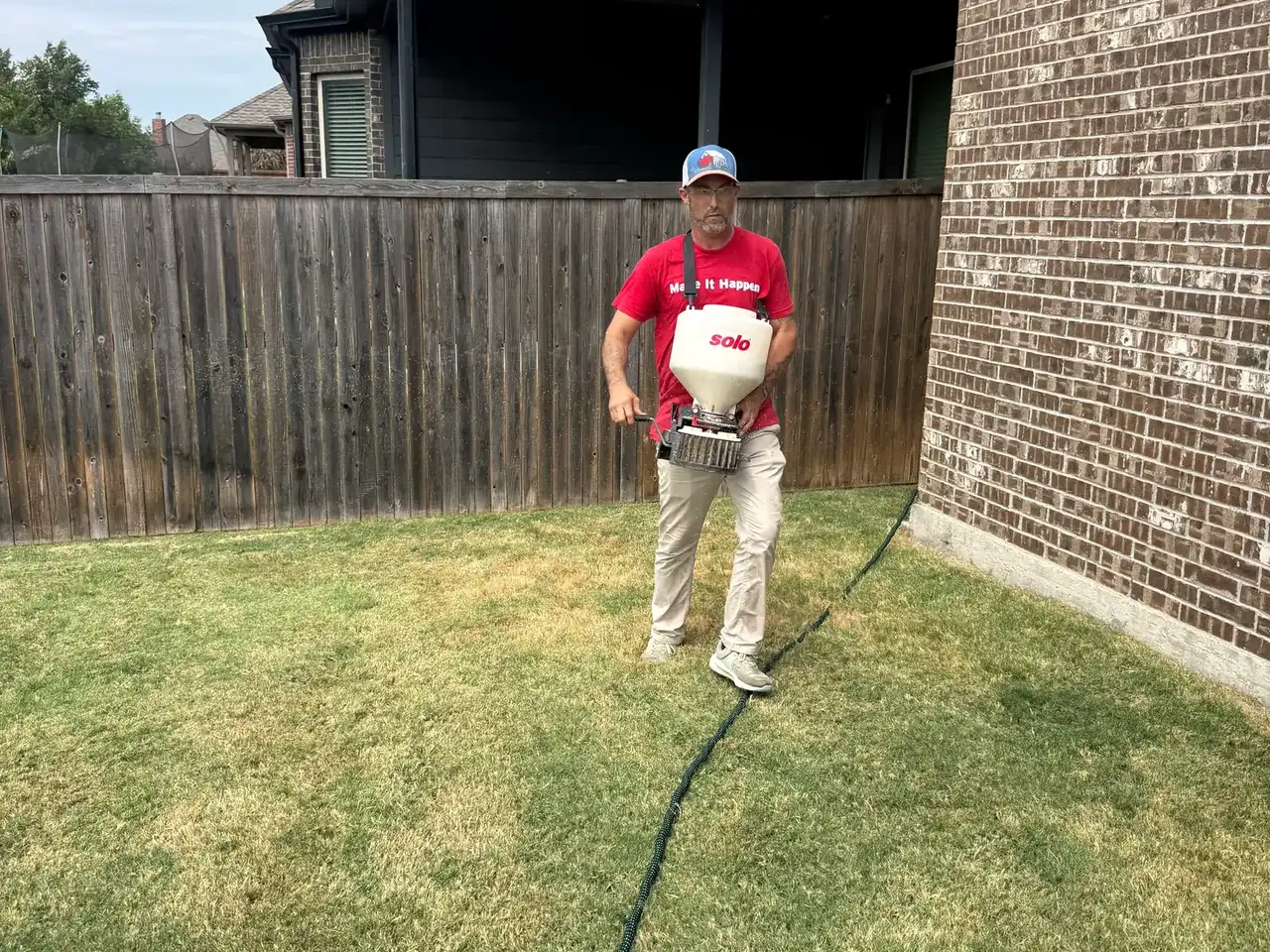
The fence line and the buffer
We walk the boundary with the pasture or brush first and agree where the treated buffer goes, because that is the line the ants, chiggers and ticks are crossing. On a large lot that conversation decides more about the outcome than anything else in the visit.
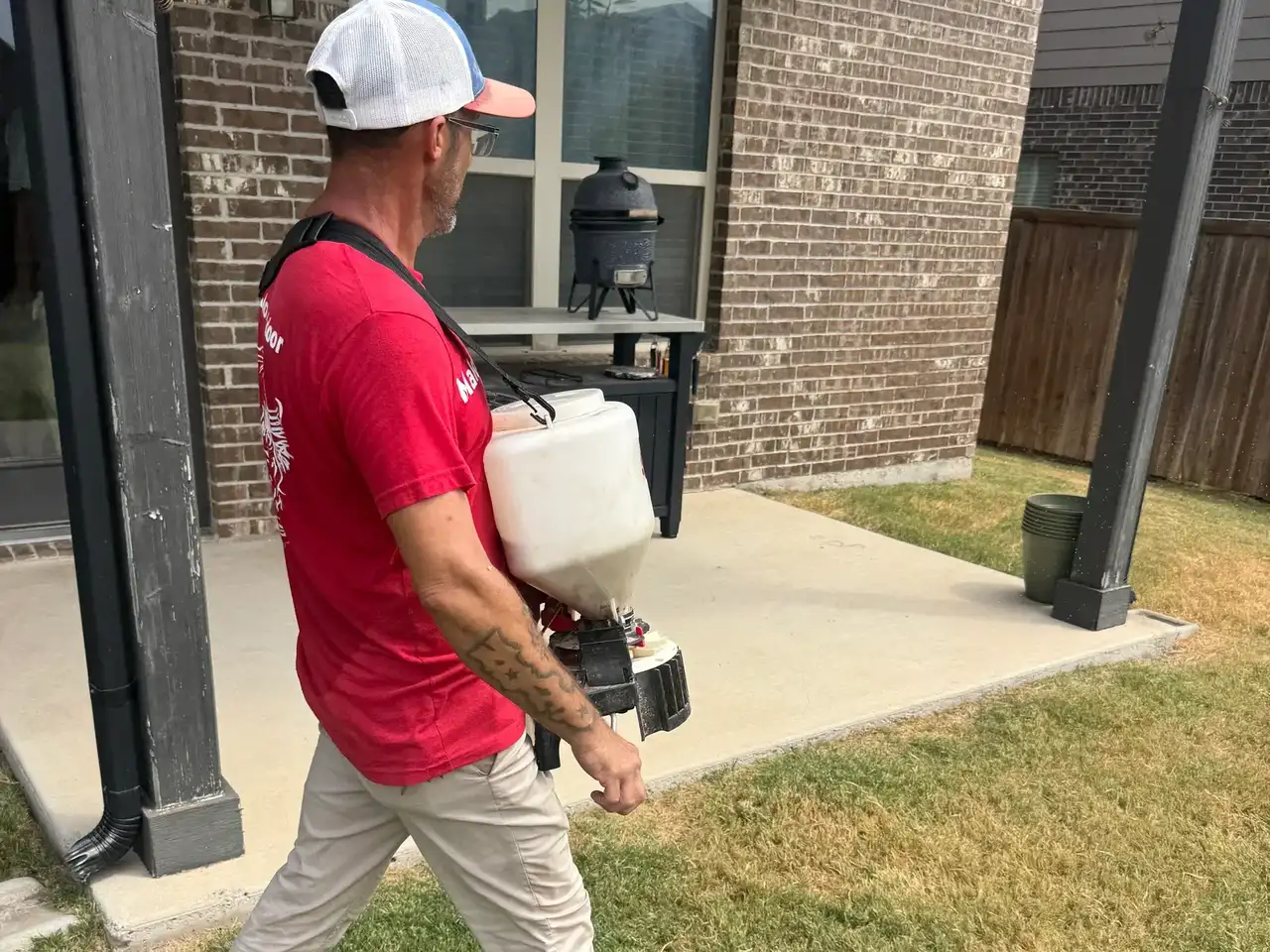
Bait across the mowed ground
The spreader covers all of the lawn at a light rate, not the mounds you have flagged. We want roughly 24 dry hours after the application, so the date is set by the forecast and we will move it rather than waste a bag of product.
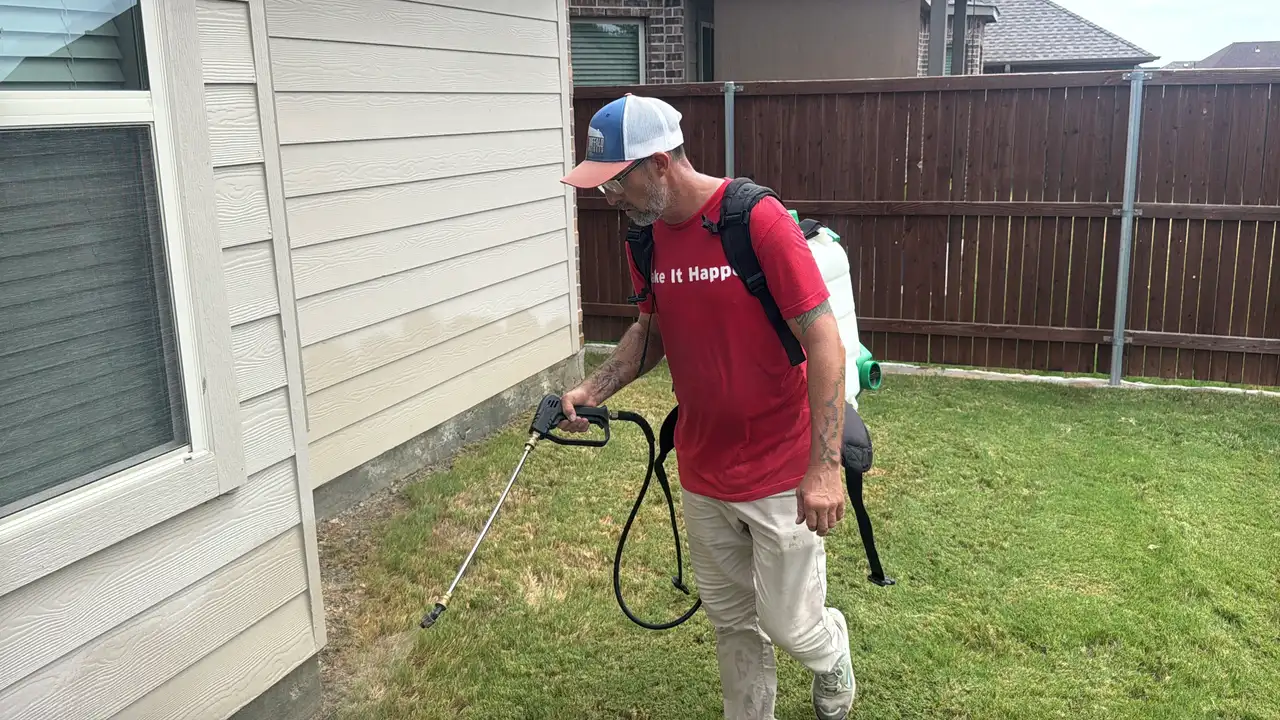
House, barn and woodpile
Then the plan's other half: foundation band, eaves, Delta Dust through the weep holes, and a look at the outbuildings and stacked wood that shelter everything else. We will tell you which of them are actually feeding activity at the house.