
WOODED GROUND, TWO ZIPS
What makes Lakeside such good chigger country
Cover, slope and water in the same place. Lakeside sits at the south end of Eagle Mountain Lake with lots running downhill through trees and brush toward the shoreline, and the shaded lower ground stays damp long after an open lawn dries. Larvae spend the winter in leaf litter on exactly that kind of ground, then climb whatever is standing once the weather turns in May.
The result is that the chiggers and the mowed lawn are often two different parts of one property. People are bitten walking down to the water, clearing brush or working near a shed, then find the welts hours later in a band wherever clothing was tight. Bites that follow the elastic instead of scattering over bare skin are this pest and not the lake's mosquitoes.
THE MONTHLY FIGURE
What chigger coverage costs on a Lakeside property
It follows the house rather than the acreage, which suits Lakeside, where modest homes sit on generous wooded lots. A home under 1,500 square feet is $40 a month on Complete Home & Lawn Defense, 1,500 to 3,000 square feet runs $40 to $51.50, and 3,000 to 4,500 runs $51.50 to $62. That plan treats the full lawn at every visit, the only version of this that reaches a brushy lower boundary.
Home Defender covers twenty-five feet out from the walls for $30 to $46 a month across those same sizes, and it carries the fire ant bait and the copper mesh in the weep holes just as the larger plan does. On a wooded Lakeside lot it is a sound perimeter program and a poor chigger program, since the habitat sits well outside that ring. Neither plan involves a contract, and the price is settled before anything is booked.
Under 1,500 sq ft
$40 a month
Full lawn on Complete Home & Lawn Defense
1,500 to 3,000 sq ft
$40 to $51.50 a month
The common band in Lakeside
3,000 to 4,500 sq ft
$51.50 to $62 a month
Bigger houses on the wooded lots
Home Defender, under 4,500 sq ft
$30 to $46 a month
Perimeter ring; usually misses the brush
Every number on this page comes from our published price list. Lakeside homes get the same table as everyone else; the instant quote reads your square footage and lot size and hands you your own line.
WHAT IT CANNOT DO
Three ways chigger treatment falls short on a Lakeside lot
It cannot treat the wooded strip you do not own. Undeveloped ground, an uncleared acre next door and the land between the last mowed line and the water keep making larvae into August, and nothing on your side alters that. Treatment removes the resident population in your grass, where nearly all the biting starts.
It cannot get through litter, and a wooded lot builds litter faster than anywhere else in this corner of the county. Leaves several inches deep hold the larvae at the soil while the application rests on the surface. Clearing what you reasonably can beforehand decides whether the treatment holds into July.
And it will not turn a wooded Lakeside property into an open one. If you want the shade and the trees, a degree of chigger pressure comes attached; what a plan and a short-cut edge buy is the gap between the odd bite and a ring of them every time someone walks to the dock. A wooded lakefront lot with no chiggers at all is not a thing anyone can sell you.
REPELLENT OR HABITAT
Treating yourself against treating the ground you walk on
Personal protection genuinely works for a single afternoon. Trousers tucked into socks, permethrin on the clothes you clear brush in and a shower straight after will get you to the water and back without a ring of welts, for almost nothing. For a visitor, or one Saturday in the brush, it is the right answer.
What it never does is change the yard. The population in the litter keeps growing through the summer, so every unprotected trip outside, a child heading to the dock or a dog coming back up the slope, produces a fresh set of bites. Treating the lawn and the edges, and laying three feet of treated ground at each door so nothing is walked indoors, is what lowers the number of larvae instead of dodging them. On a Lakeside lot the sensible answer is both: dress for the brush, and have the ground you use daily treated.
DOWN THE SLOPE
How the first chigger visit runs on a Lakeside property
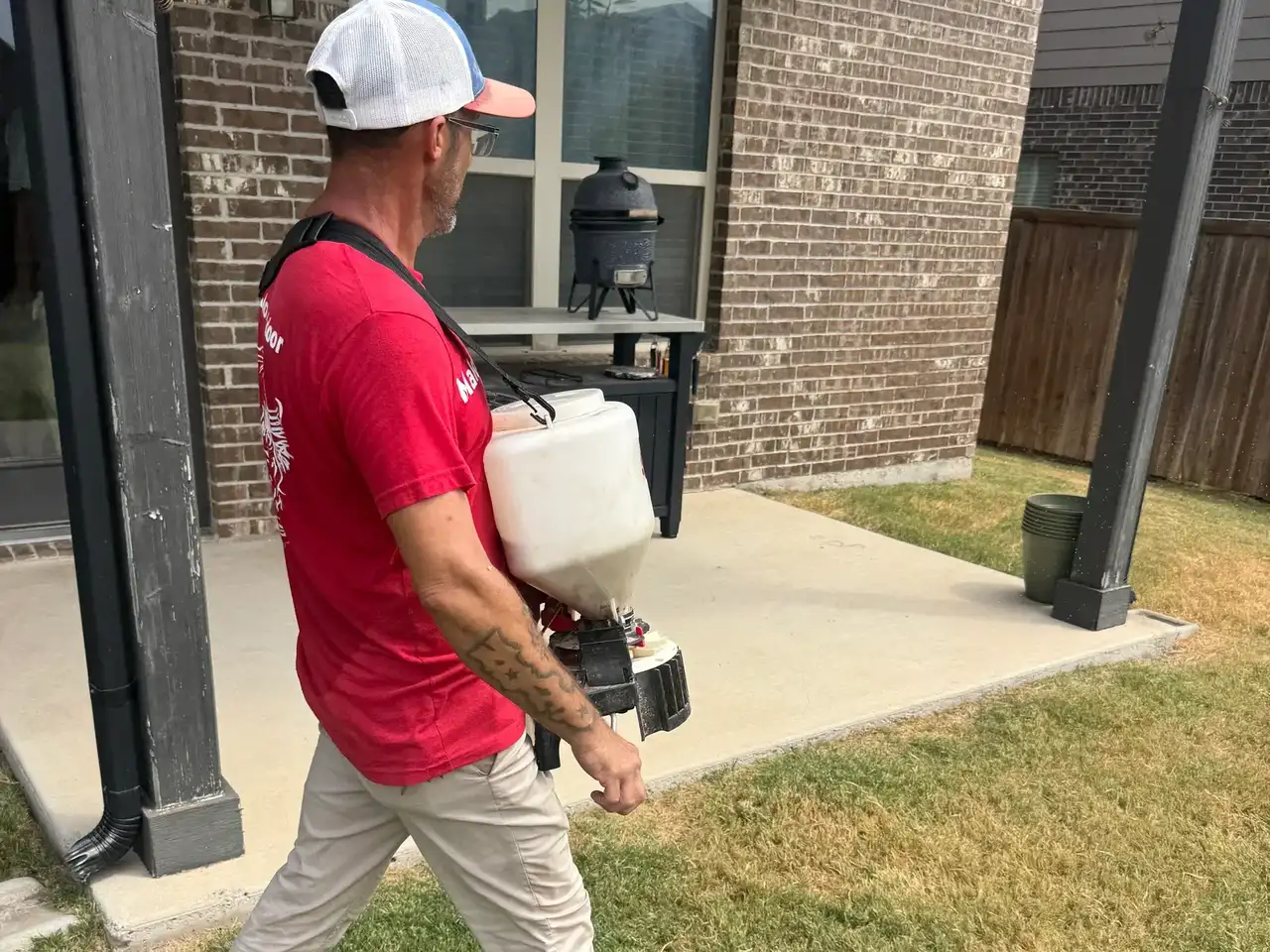
Walking to the lowest ground
The technician works downhill first, to where cut grass gives out into brush or trees, since that transition is the source and the top of the lot rarely is. Product goes heaviest along it before the open lawn is covered.
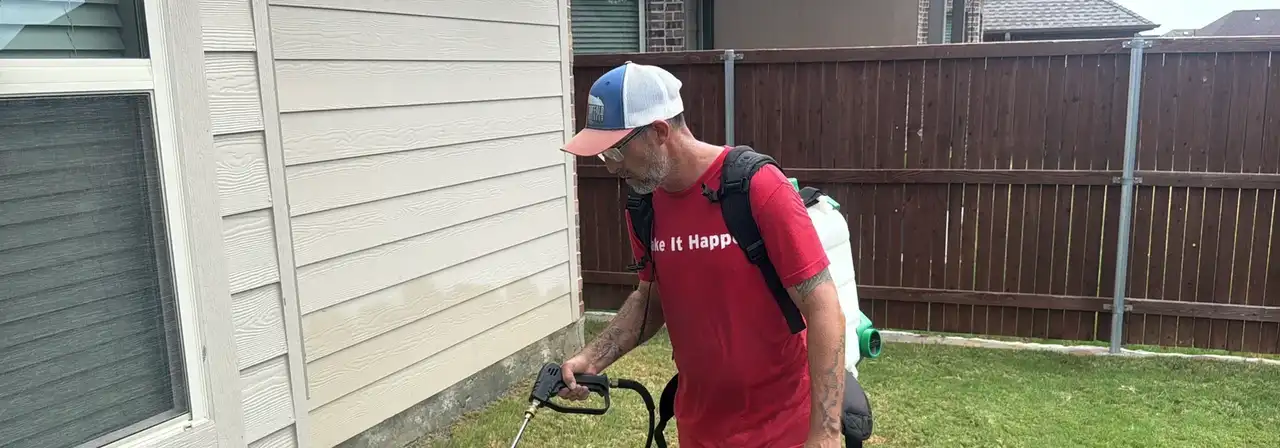
Outbuildings and the woodpile
Sheds, boat storage and stacked wood sit on ground that never dries and never gets mowed, so they are checked and treated as part of the yard. Where brush has grown tight against them, cutting it back is asked for rather than sprayed over.
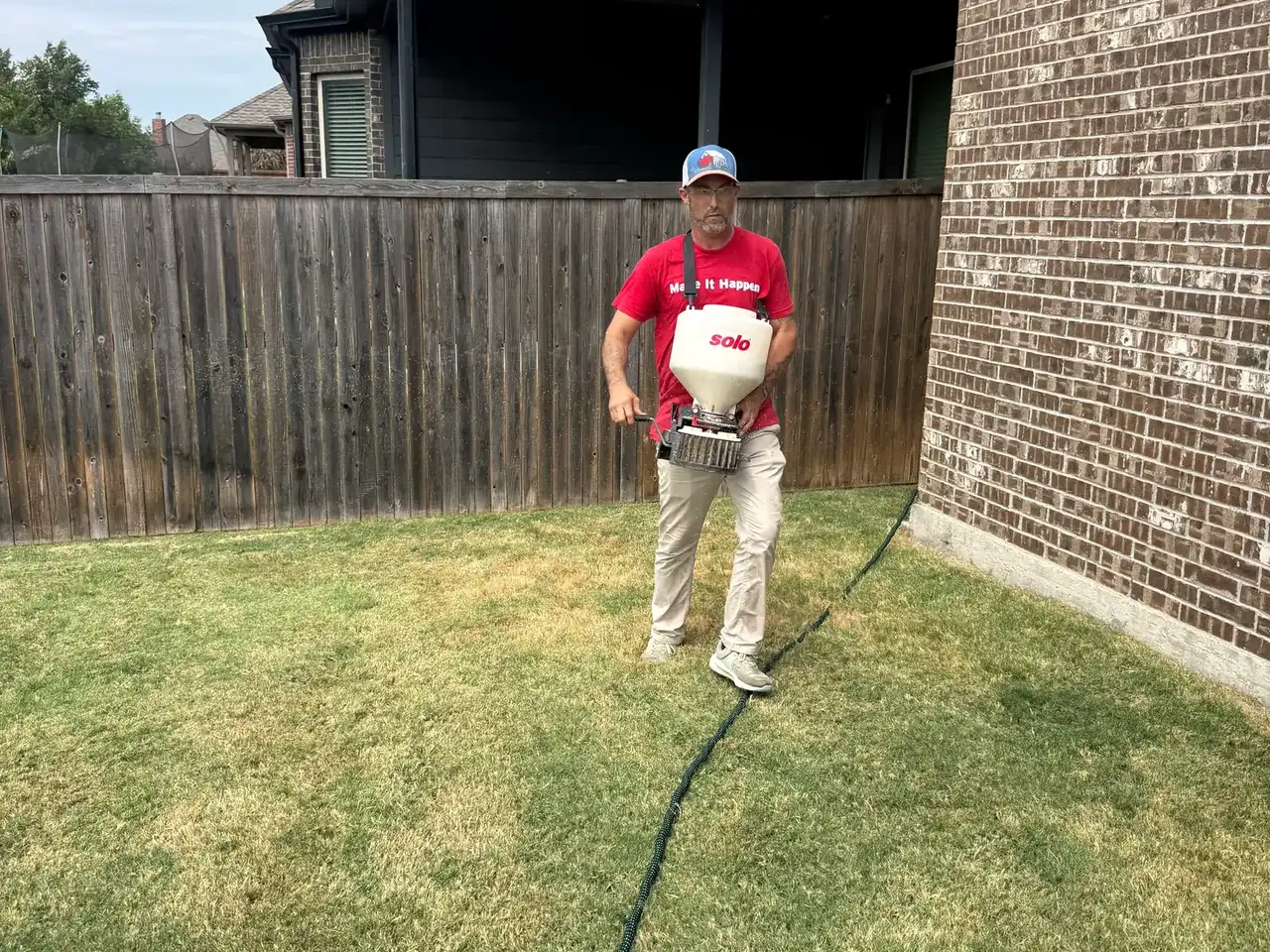
Doors, and either post office
Each entry to the house takes a three-foot treated band so larvae stop at the threshold instead of riding inside. Lakeside splits between 76135 on the Lake Worth side and 76108 on the White Settlement side, and the visit and the price are identical on both.