
LAKE HUMIDITY, WOODED EDGES
Why Lakeside yards reload faster than the pet product can keep up
Roughly nineteen out of twenty fleas on your property are not on the dog at all. They are eggs, larvae and pupae sitting in the top inch of shaded soil, and Lakeside hands them ideal conditions: ground sloping down toward Eagle Mountain Lake holds moisture, and the timber behind the houses keeps the sun off it well into the afternoon.
Ticks want something slightly different, and this town supplies that too. They climb the tall grass and brush where the mowed yard quits, then wait at ankle height for a dog, a deer or a child to brush past, which on a lot backing onto woods is a few steps from the back door.
Both pests are handled on the same visit. The Mosquito, Flea & Tick program covers the entire lawn plus a band around the house on a 21-day rhythm from April into September, billed per visit, with nothing to sign.
PRICED BY THE LOT, NOT THE HOUSE
What a Lakeside yard actually costs to treat
Your lot decides the number, which in Lakeside means a wider spread than in most towns on our map. A tight parcel near the water runs $49.95 or $59.95 a visit, the bigger wooded lots climb through the $79.95 and $89.95 bands, and anything past about an acre gets measured and quoted rather than guessed.
Nothing is added for tree cover, a brush line, or the fact that you sit near open water. You hear the figure before you commit to anything, there is no startup charge on a standard plan, and no cancellation fee waits for you if you stop in August.
7,000 sq ft or less
$49.95 a visit
The tighter lots close to the shoreline
12,001 to 17,000 sq ft
$69.95 a visit
Typical wooded lots set back from the water
22,001 to 27,000 sq ft
$89.95 a visit
Bigger parcels running back into the trees
Over 47,000 sq ft
Quoted
About an acre and up, measured before we price it
Every number on this page comes from our published price list. Lakeside homes get the same table as everyone else; the instant quote reads your square footage and lot size and hands you your own line.
WHAT THIS WILL NOT FIX
Three things a treated lawn out here cannot do
It cannot clear fleas that have already set up indoors. Once eggs are dropping off the animal onto rugs and bedding, that generation feeds on dust and dried blood in the carpet and stops needing your yard entirely. Hot laundry, thorough vacuuming and a product from your veterinarian are what end it, and one interior treatment comes with the program if you need it.
It cannot cover ground we do not treat. Brush, timber and shoreline vegetation past the property line keep producing ticks, so a Lakeside lot that touches wild ground gets a treated buffer at the boundary plus the habit of checking the dog, not a guarantee of zero.
And it will do little for a shed you keep full. Outbuildings that stay dark and cluttered shelter the animals carrying fleas in the first place, and clearing the floor and lifting stored items off the ground accomplishes more there than any application.
YARD SPRAY VERSUS THE MOWER
Could you just cut the edges and skip the program?
Partly, and we would rather you knew it. Dropping the mower height along the fence line, raking leaf litter out of the beds and cutting back whatever keeps soil permanently damp costs nothing and genuinely thins the flea and tick population. On a small, sunny lot that alone may be enough.
Where it runs out is the acreage-style property with real brush behind it. Nobody mows timber, and the reservoir out there refills the treated part of the yard within days. That is the Lakeside home where the 21-day visits earn their keep, and where mowing alone leaves you pulling ticks off a dog all summer.
THE FIRST LAKESIDE VISIT
What happens the first time we treat
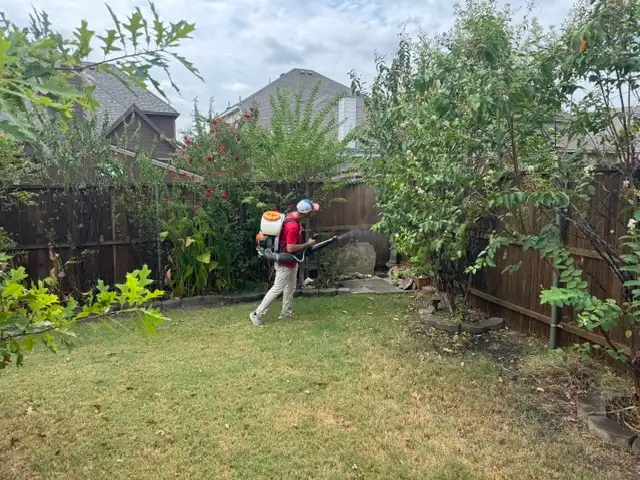
Walking the boundary first
Before anything is applied we follow the property line, because on a lot like this that is where ticks are staged and where the damp shade begins. That walk decides how wide the treated buffer needs to be.
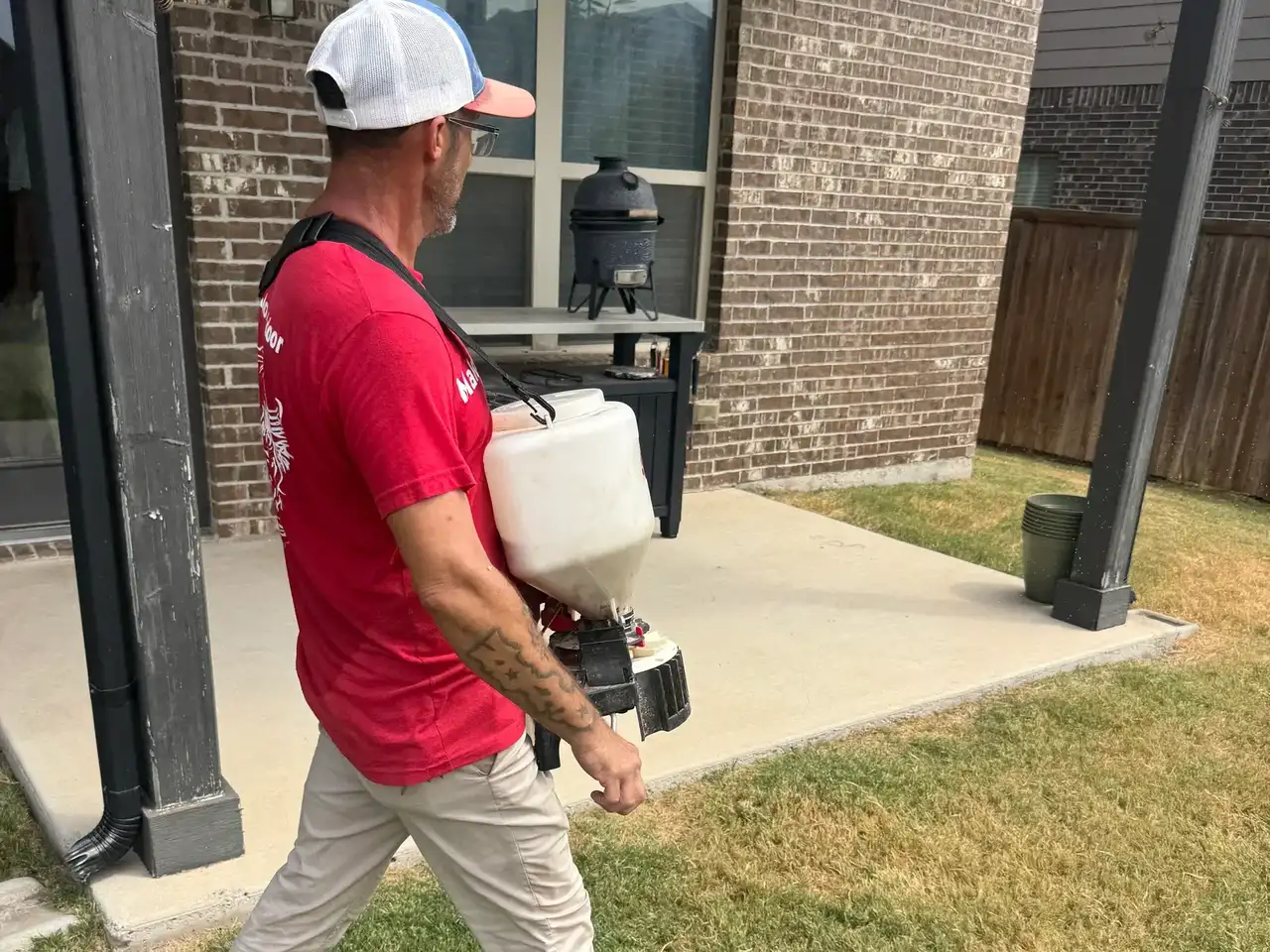
Turf, then the perimeter band
The whole lawn gets treated, then a band around the foundation where fleas ride in on animals and ticks work their way up the brick. Shaded strips, deck undersides and the north wall get the closest attention.
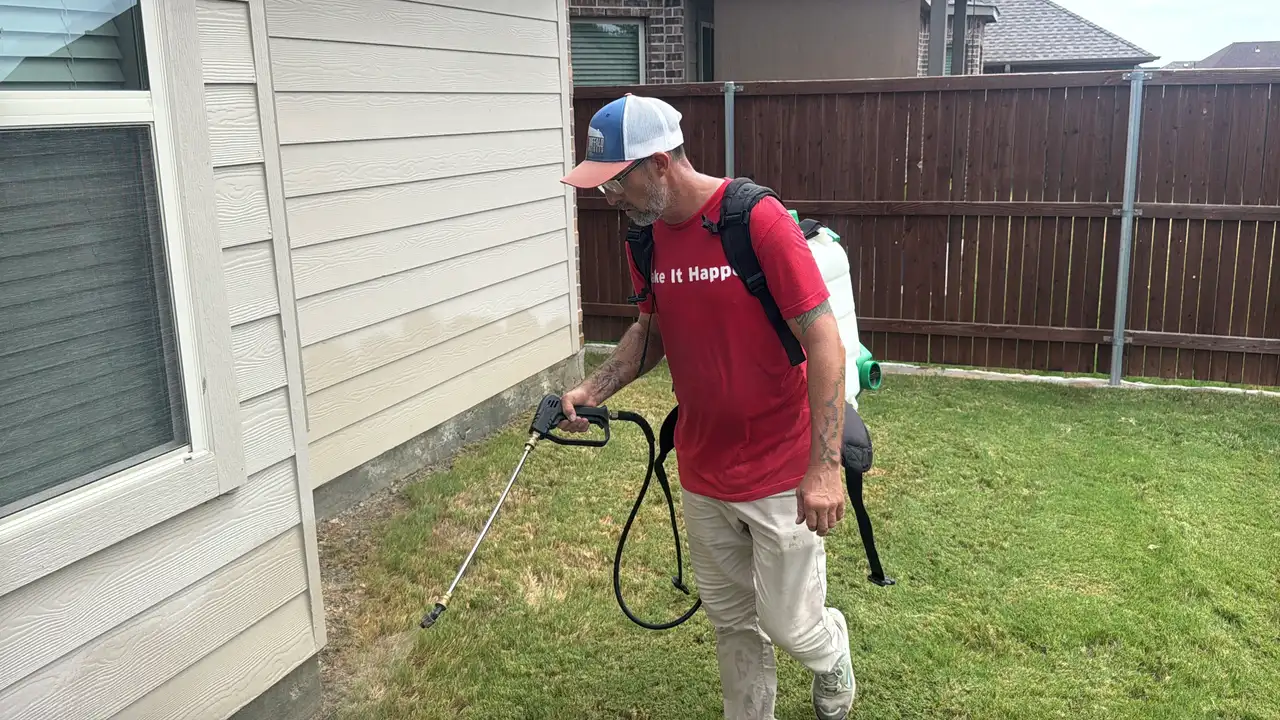
Back outside in about two hours
Kids and pets stay off the grass until it dries, which in summer heat is roughly two hours. Nothing goes on the animal itself, so there is no residue on your dog to think about.