SHADE, SUN AND ROOTS
Which turf insect belongs in a Lakeside yard
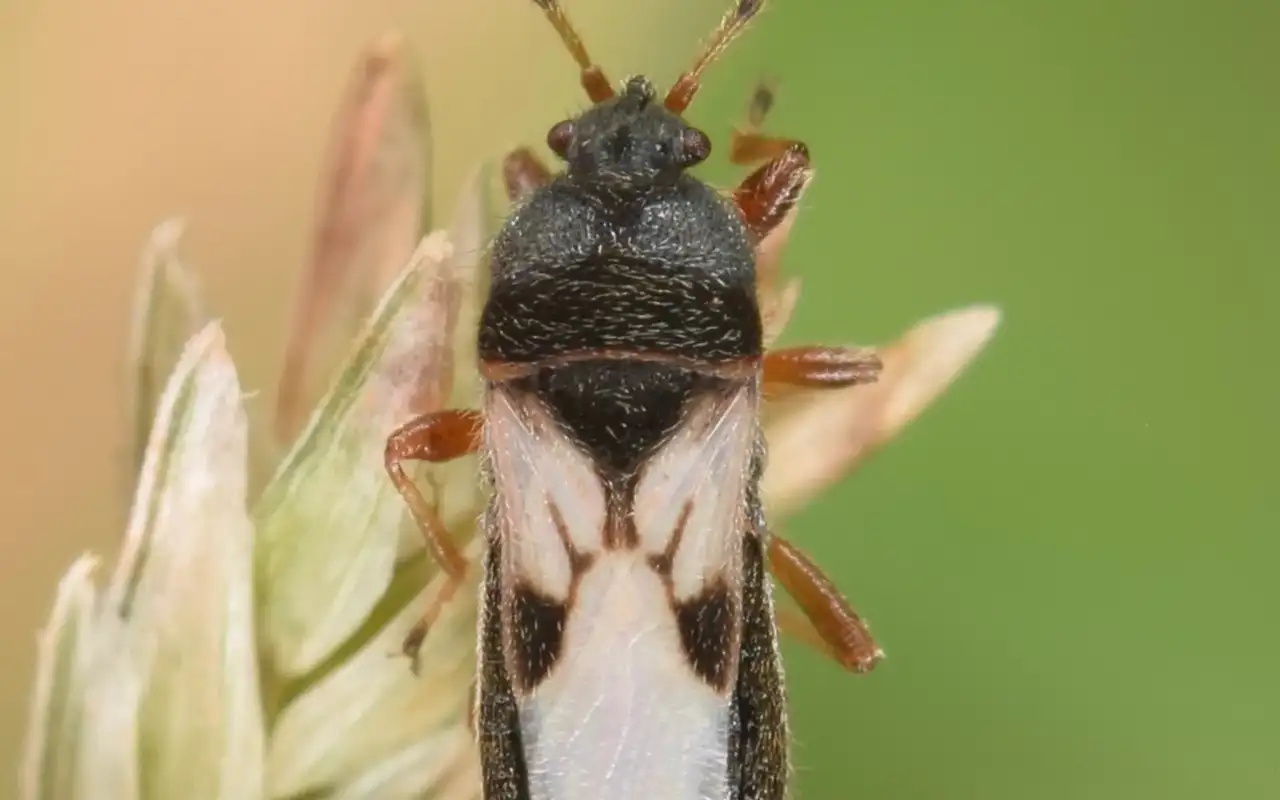
Lakeside lots run from the water up onto wooded ground, and the tree cover decides much of the diagnosis. Chinch bugs need hot, bright, shallow turf, so a shaded lawn is close to the last place they set up. Grubs do not care about light at all, because they live below the surface eating roots, and armyworms will march into shade and sun alike.
That leaves two realistic culprits on most of these properties plus one common imposter. The imposter is plain shade stress: grass thinning under a canopy because it is short of light, which no insecticide has ever fixed. Where a mowed Lakeside lawn meets brush at the lot line, armyworm fronts build up in the taller growth first and arrive already large.
THE NUMBERS
What Lakeside homeowners pay for turf coverage
Lawn insects are covered inside the two year-round plans rather than sold as a job of their own. Complete Home & Lawn Defense treats the whole yard for $40 to $73.50 a month; Home Defender is $30 to $54 a month and takes the applicable lawn treatment out roughly 25 feet from the wall. The square footage of the house decides which row of the table you read.
Because plenty of Lakeside properties are generous with land and modest with house, the cheaper plan looks tempting and often is not enough, since 25 feet does not travel far across a wooded acre. There is nothing to sign either way, no cancellation fee, and the instant quote returns your exact figure.
1,500 sq ft or less
$30/mo
Home Defender, the entry price
1,500 to 3,000 sq ft
$40–$51.50/mo
Whole-yard plan, typical Lakeside home
3,000 to 4,500 sq ft
$51.50–$62/mo
Larger builds up on the wooded ground
Over 6,000 sq ft
Quoted
We work the number out and tell you first
Every number on this page comes from our published price list. Lakeside homes get the same table as everyone else; the instant quote reads your square footage and lot size and hands you your own line.
BE HONEST ABOUT IT
When we tell a Lakeside customer not to buy this
If the thin grass is under trees, do not buy an insect treatment. We see it every year: a lawn struggling in deep shade gets diagnosed as bugs by somebody who wants to sell a product, and the money does nothing at all. Mow higher, water less often but deeper, or accept that a shady patch will never be a lawn.
Do not buy it for turf you are about to replace either. If more than half the grass is gone, an application protects what remains but you are still resodding, and the sensible order is to fix the lawn first and defend it afterwards.
And understand where the boundary sits. We treat the residential envelope, the yard you actually use, not brush or unmaintained ground at the back of a Lakeside lot. Armyworms building up out there will keep walking in, which is why the edge is something we watch rather than somewhere we can clear.
TIMING VS PRODUCT
Late summer against the autumn panic
The month matters more than the material. Grubs hatched in summer are small, shallow and easy to kill; the same larvae in October are large, deep in the root zone and largely past the point where an application earns its keep. A spade check in August is worth more than an emergency call in November.
The other half is depth. Chinch bugs sit in the thatch at the soil surface, so their treatment stays shallow and works best on turf that is not soaked. Grub product has to be irrigated two to four inches down to reach anything. Right product, wrong depth or wrong month, and you have bought nothing, which is the most common way a lawn treatment fails.
WHAT WE CHECK
The first pass over a Lakeside lawn
Sun map before soil test
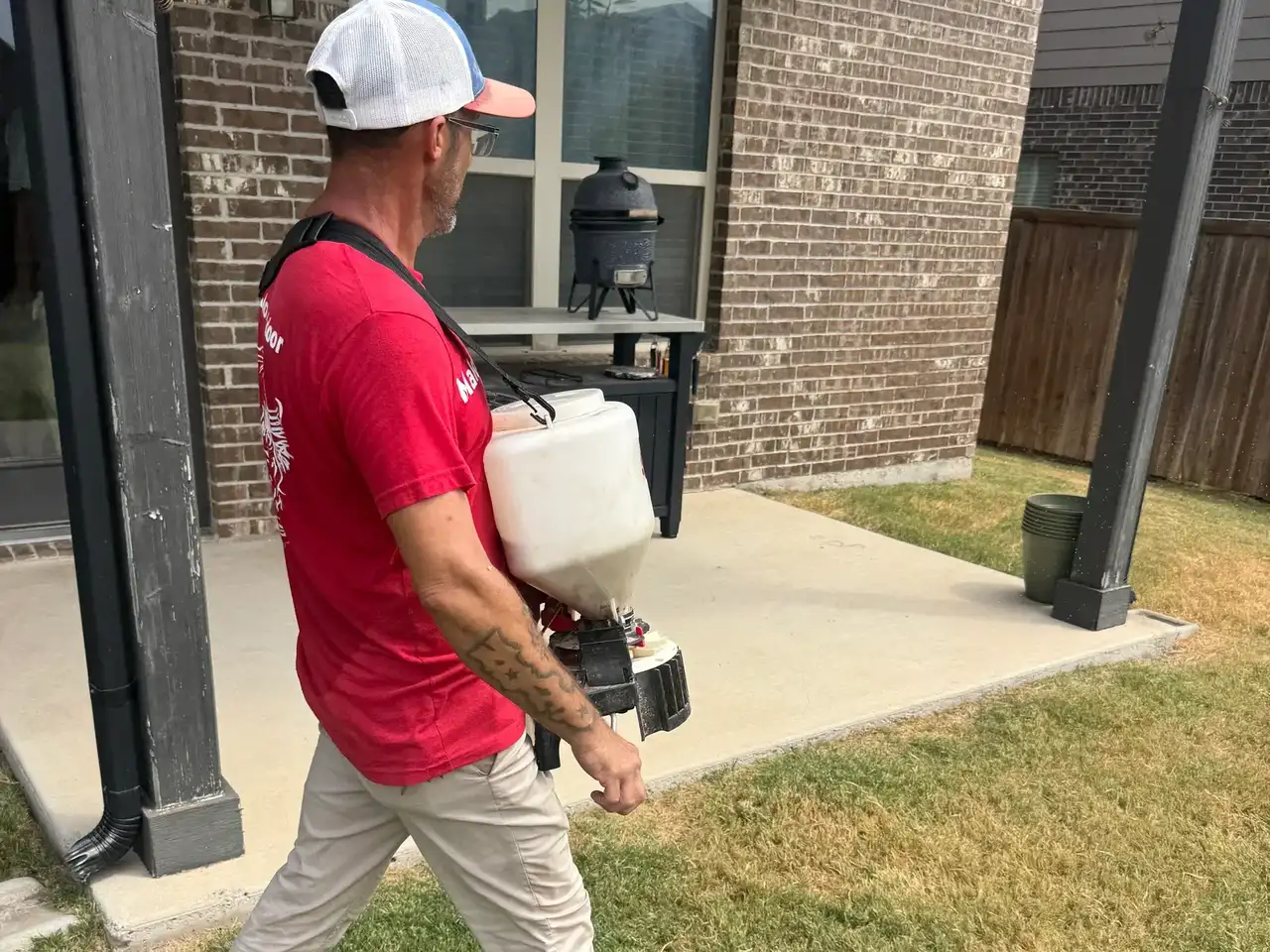
We note which parts of the yard genuinely get full sun, because those are the only parts where chinch bugs are plausible. On a heavily wooded lot that can be a single strip along the drive, which narrows the search considerably.
Pull a square foot
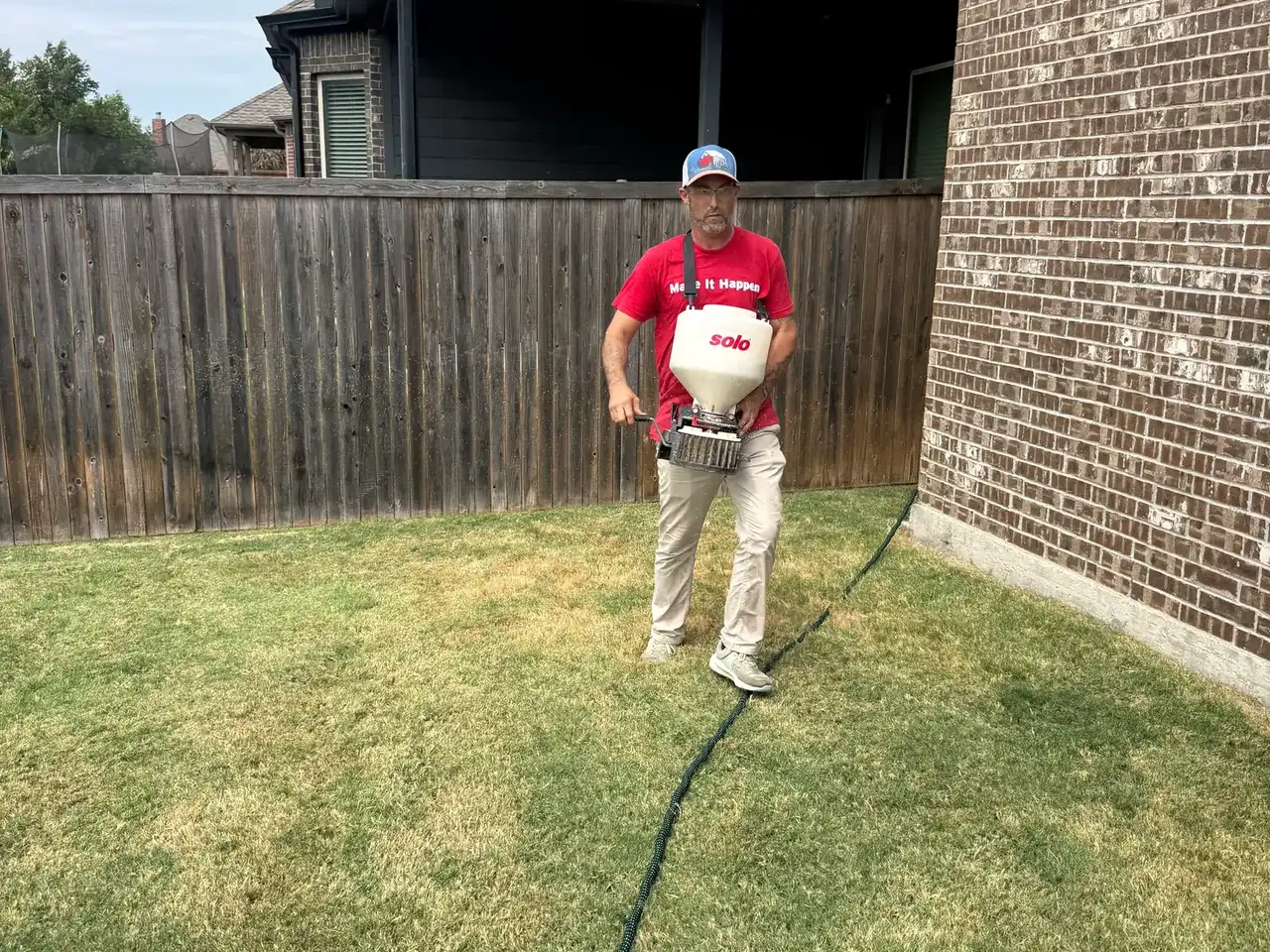
At the edge of any spongy or loose area we cut and fold back about a square foot of turf and count the white C-shaped larvae underneath. More than five in that square is a treatable grub population; two or three is background and we will say so.
The lot line
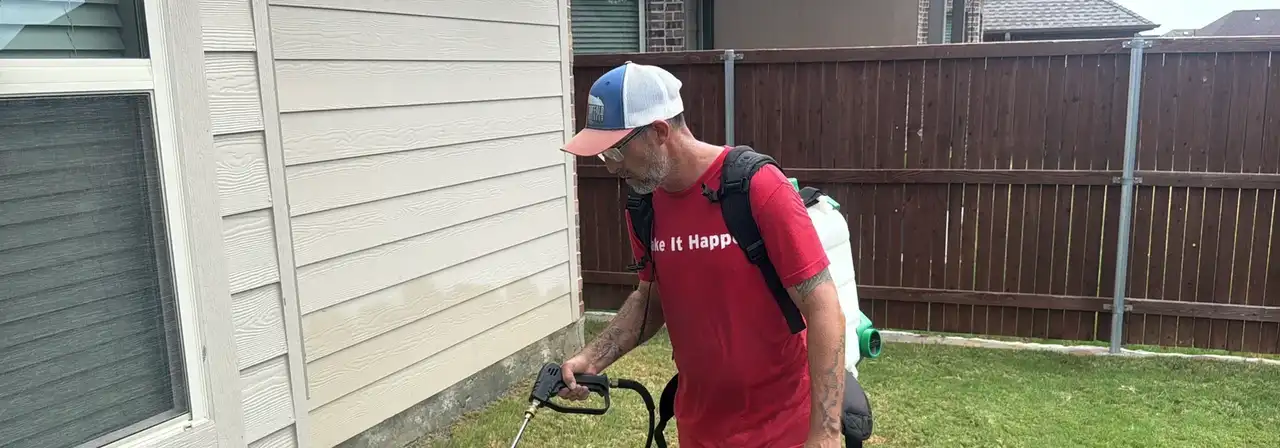
Where the mowing stops and brush begins gets a look of its own, because that taller growth is where armyworms stage before they move. It is also the reason the outer edge of a Lakeside lawn is usually the first part to get hit.