WOODED LOTS, OPEN WATER
Why Lakeside gets roof rats rather than just mice
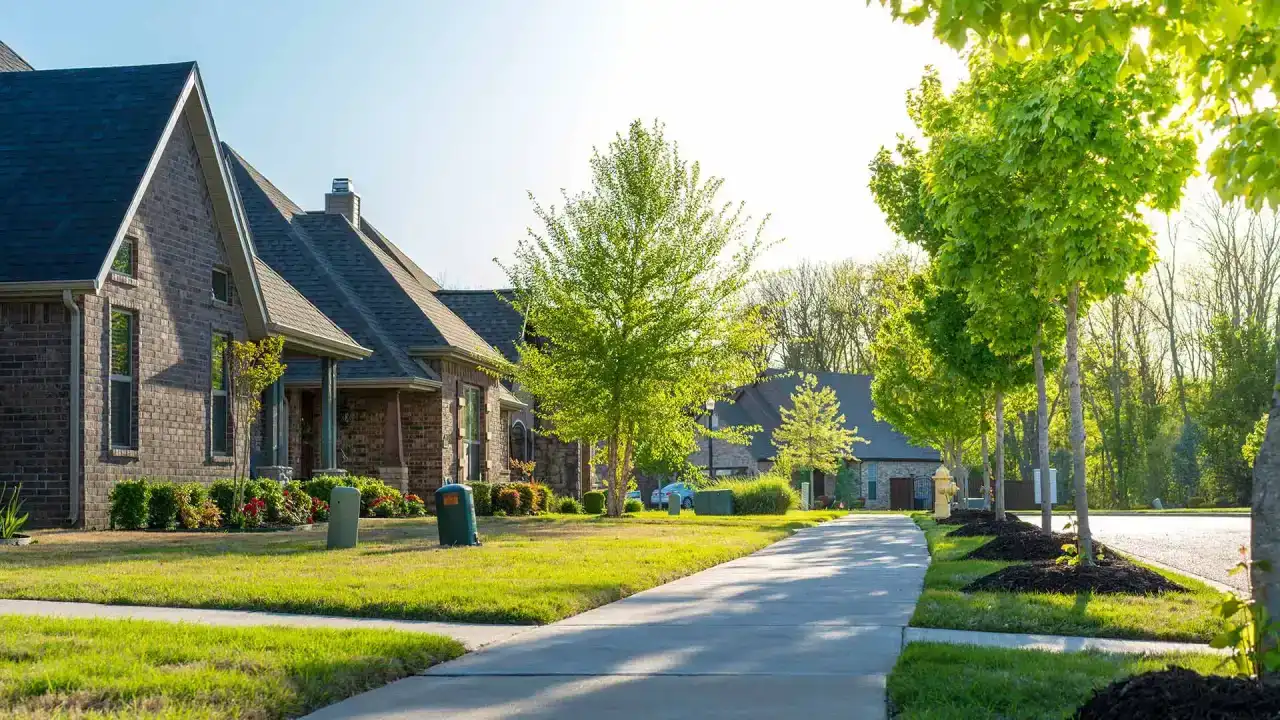
Because of the trees. A wooded lot gives a roof rat a route that never touches the ground: branch to branch, onto the shingles, along the fascia and in at the first soffit screen that has torn. Lakeside sits on the south end of Eagle Mountain Lake with tree cover and brush right up to most lot lines, which is closer to ideal habitat than anything a subdivision offers.
Mice are here too, and they come in low, at the bottom course of brick and under doors. The two need the same work but in different places, so an inspection on a Lakeside house means looking at the roof edge and the slab line with equal attention rather than picking one.
What decides the outcome is not how many animals are outside. It is whether there is a quarter-inch opening left after we have been round the building, which is a question that has an answer.
THE LAKESIDE FIGURE
Twenty-five dollars on top of whichever plan fits the house
The rodent work is a flat $25 a month and it attaches to Home Defender or Complete Home & Lawn Defense. We have no standalone rodent price, here or anywhere else, because the seals need checking on a schedule and the plan visits are that schedule.
Underneath, the price follows the square footage of the house. Lakeside runs from small older places under 1,500 square feet, where Home Defender is $30 and the combined bill is $55, up through the 1,500 to 3,000 band at $33 to $38 and the 3,000 to 4,500 band at $38 to $46. Complete Home & Lawn Defense is the same house sizes with the yard added, from $40. Nothing here carries a contract or a cancellation fee.
Rodent inspection, exclusion, trapping
$25 a month
Only alongside a year-round plan
Home Defender, under 1,500 sq ft
$30 a month
Older lake places
Home Defender, 1,500 to 3,000 sq ft
$33–$38 a month
The bulk of the town
Home Defender, 3,000 to 4,500 sq ft
$38–$46 a month
Larger builds on the wooded lots
Every number on this page comes from our published price list. Lakeside homes get the same table as everyone else; the instant quote reads your square footage and lot size and hands you your own line.
THINGS WE WILL NOT CLAIM
What rodent work on a wooded Lakeside lot cannot deliver
We are not trimming your trees. A limb lying on the roof is the single most useful thing to fix on a wooded Lakeside property, and it is tree work, not pest work. We will stand under it and show you which branch is the bridge, and until it comes off, the roof line keeps needing more attention than it should.
We are not clearing brush at the lot line either. Where the mown yard meets undergrowth is harborage for rodents the same way it is for chiggers, and that boundary belongs to the mower. Cutting it back lowers the pressure on the house; it does not replace sealing the house.
And there is nothing to spray for this. A perimeter treatment does not deter a rat by any amount worth measuring, so if rodents are the reason you are calling, it is the $25 line and the exclusion work that earn their keep.
CLEAN-OUT OR EXCLUSION
Replacing attic insulation before the holes are closed
Attic clean-outs get sold hard, and the sequence is usually backwards. Stripping contaminated insulation and re-blowing a Lakeside attic is real work and sometimes genuinely needed, but done before exclusion it is money spent on a space that is still open, and the new insulation gets used the same way the old lot did.
Our order is the other way round: find and close the entries, trap out what is inside, verify on the follow-up, and only then have a conversation about whether the insulation needs replacing. Plenty of attics do not, once the traffic stops. That sequence costs less overall and it is also the only one where you can tell whether the fix worked.
FIRST TIME OUT
What we look at on a Lakeside property
Where the canopy touches the roof
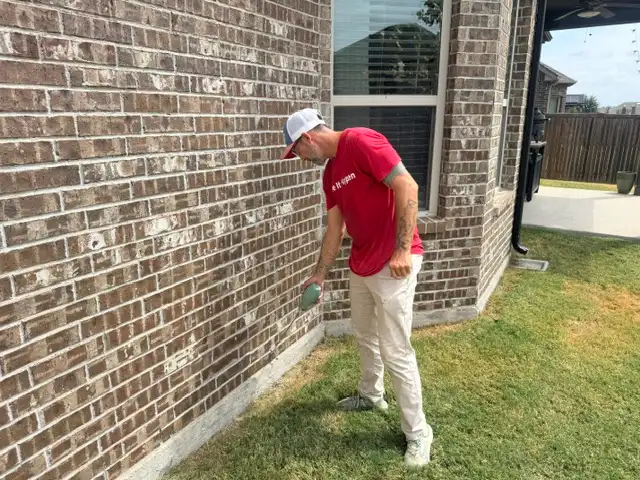
We walk the outside looking up first, at branches resting on shingles, gutter lines packed with leaves, lifted flashing and soffit screens that have rusted or torn. On a treed lot those are the live entries, and each one gets closed with hardware cloth or sheet metal rather than anything chewable.

Sheds, woodpiles and stored things
Outbuildings and stacked timber are where a Lakeside population usually lives before it reaches the house, so they get inspected properly: nesting material, droppings, gnawed wiring. We trap there as well as at the house, because clearing the staging area is what makes the sealing hold.
The brick line and the attic
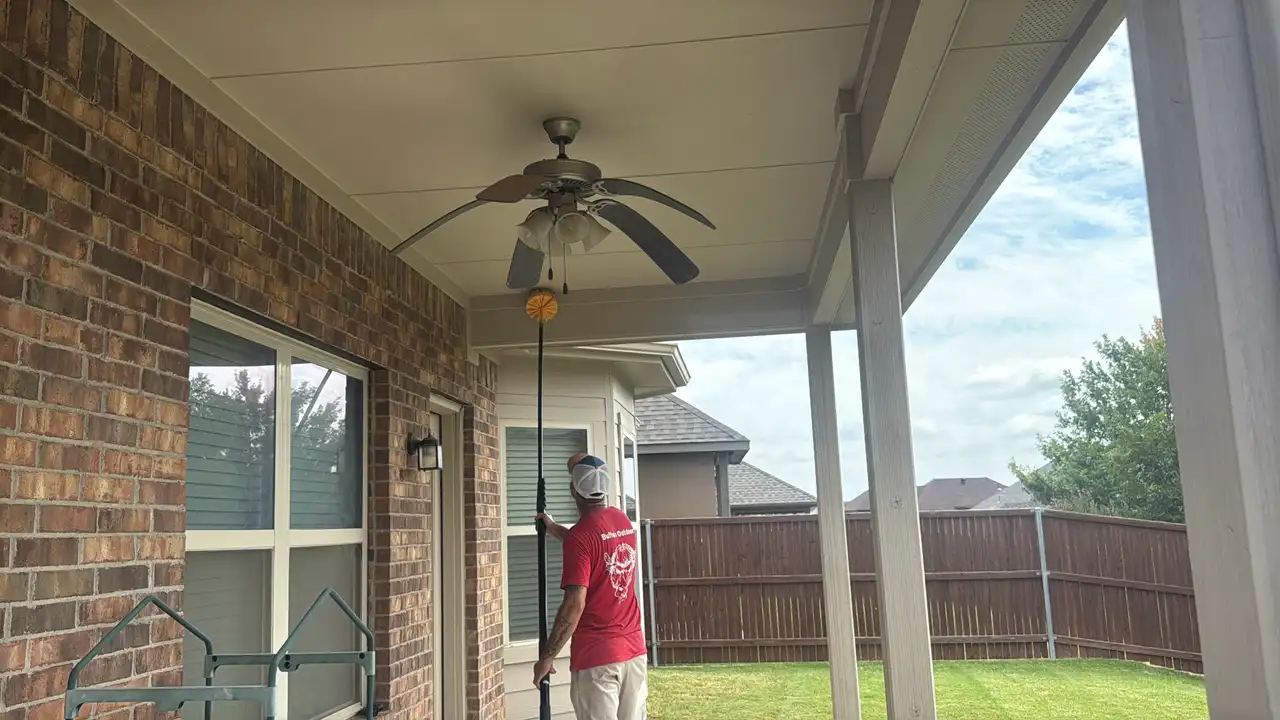
Low down, the weep holes already come packed with copper mesh and dusted on both year-round plans, so we work through thresholds, crawl vents, dryer and utility penetrations. Then the attic gets read for runways and droppings so traps and locked stations go on the routes in use.