
PROVE IT FIRST
How to know chiggers are what is biting in your Richland Hills yard
Look at the arrangement of the welts. Larvae travel upward and stop where clothing grips, so the bites come in a close row at the sock top, the belt line or the edge of a sleeve, and they surface three to six hours after you were out in grass. Anything scattered at random across exposed skin is a different animal.
Then look at where you were standing. Richland Hills is compact, built out in the 1950s and 60s, and most of its lots are mowed turf ringed by more of the same, which chiggers tolerate badly. The ones that hold a population back onto a creek, an easement or a neglected parcel, or carry a bed of leaf litter under sixty-year-old trees where the mites get through the winter.
POST-WAR PRICING
If it is chiggers, what does treatment cost here?
Between $40 and $51.50 a month for most of Richland Hills, the Complete Home & Lawn Defense band for a house of 1,500 to 3,000 square feet. That plan is priced on the home rather than the lot, treats the entire lawn at every visit, and carries the chigger work inside it rather than as a separate purchase. Smaller houses, of which there are plenty here, pay a flat $40.
Home Defender covers twenty-five feet out from the walls at $30 to $38 a month for the same sizes. On a compact Richland Hills lot that ring reaches most of the grass, so when the biting happens near the patio it is the sensible buy, and at a back fence on an easement it is not. Copper mesh in the weep holes and fire ant bait come with either plan, the arrangement is month to month, and the number is settled before a visit is scheduled.
1,500 to 3,000 sq ft
$40 to $51.50 a month
The standard 1950s and 60s house here
Under 1,500 sq ft
$40 a month
Flat rate, whole lawn included
Home Defender, same sizes
$30 to $38 a month
Ring reaches the patio, not the easement
3,000 to 4,500 sq ft
$51.50 to $62 a month
Additions and rebuilt houses
Every number on this page comes from our published price list. Richland Hills homes get the same table as everyone else; the instant quote reads your square footage and lot size and hands you your own line.
WHEN NOT TO BUY IT
Who in Richland Hills should skip chigger treatment
Anyone on a sunny interior lot with short turf and no litter, which describes a great many houses in town. Chiggers need cover and damp ground, and mowed Bermuda hemmed in by more mowed Bermuda supplies neither, so bites collected there are usually fleas from a pet or mosquitoes resting in the shade.
It is also the wrong buy while the leaf litter stays where it is. Under mature trees the larvae live at the soil beneath the leaves and the application lands above them, so a Richland Hills yard treated over a thick litter bed produces the same result in the same corner next June. Clear it first, then treat, and the visit is worth what it costs.
And treatment cannot cross the fence. Storm drainage, an easement strip and an unmown lot next door keep making larvae into August, so a lot on one of those boundaries should expect a large reduction rather than an end to the matter. The population in your own grass does nearly all the biting, and that is the part we reach.
AVOID IT OR TREAT IT
Staying out of the yard in July against treating the yard
Avoidance is a legitimate strategy and some households should use it. The season here runs about May through August, and if the back corner of your lot is somewhere nobody goes, you can stay out of it, mow in long trousers, shower afterwards and pay nothing. That is the honest answer for a home with no children and no dog.
It stops being sensible the moment the yard gets used. Kids on the grass, a dog patrolling the back fence and an evening of gardening all put someone into the habitat repeatedly, and care alone does not prevent every ring of welts. Treating the lawn and the shaded edges, with three feet of treated ground at each door so nothing rides in on a sock, is what makes a Richland Hills back yard usable in July instead of something to be negotiated.
WHAT THE FIRST VISIT DOES
How a first chigger appointment goes in Richland Hills
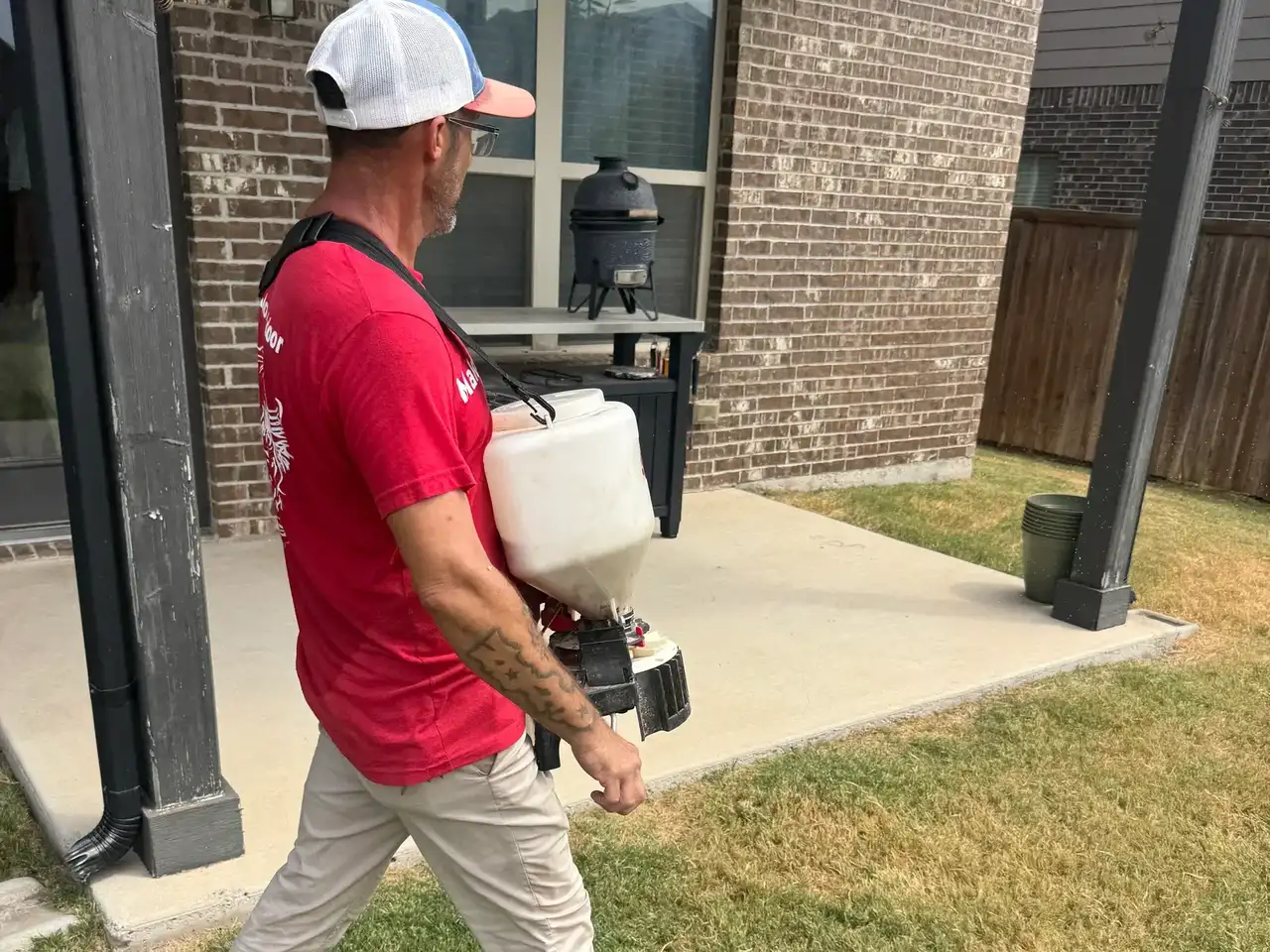
Confirming the diagnosis
Before anything is applied the technician looks for the three things chiggers require: standing vegetation, shade and ground that holds moisture. If a Richland Hills lot has none of them you are told chiggers are unlikely, and the conversation turns to what is actually biting.
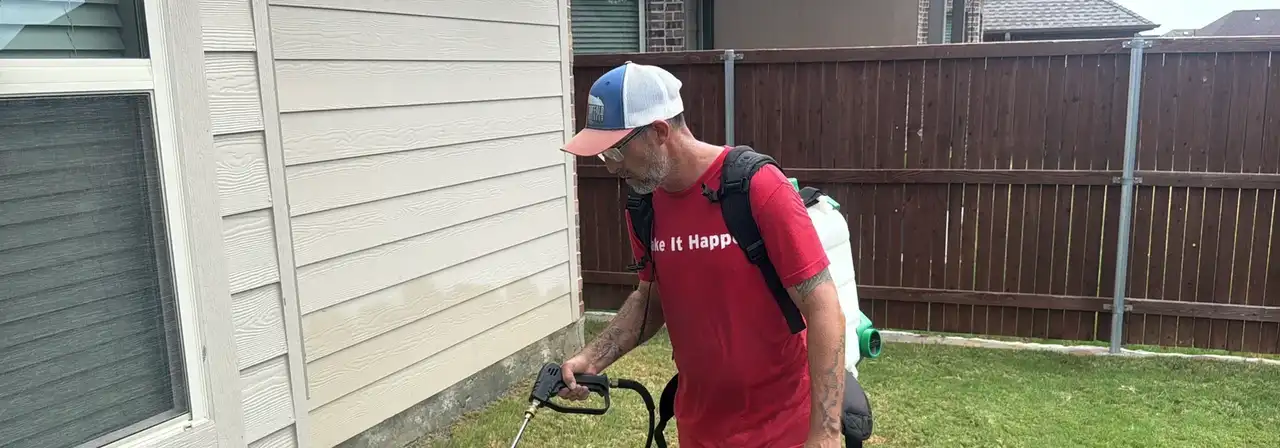
Working the shaded ground
Where the habitat does exist it takes the bulk of the application, meaning the litter under the canopy, the strip along an easement or creek, and the corner behind a shed. Open sunny turf is covered as well, but it is not where the problem lives.
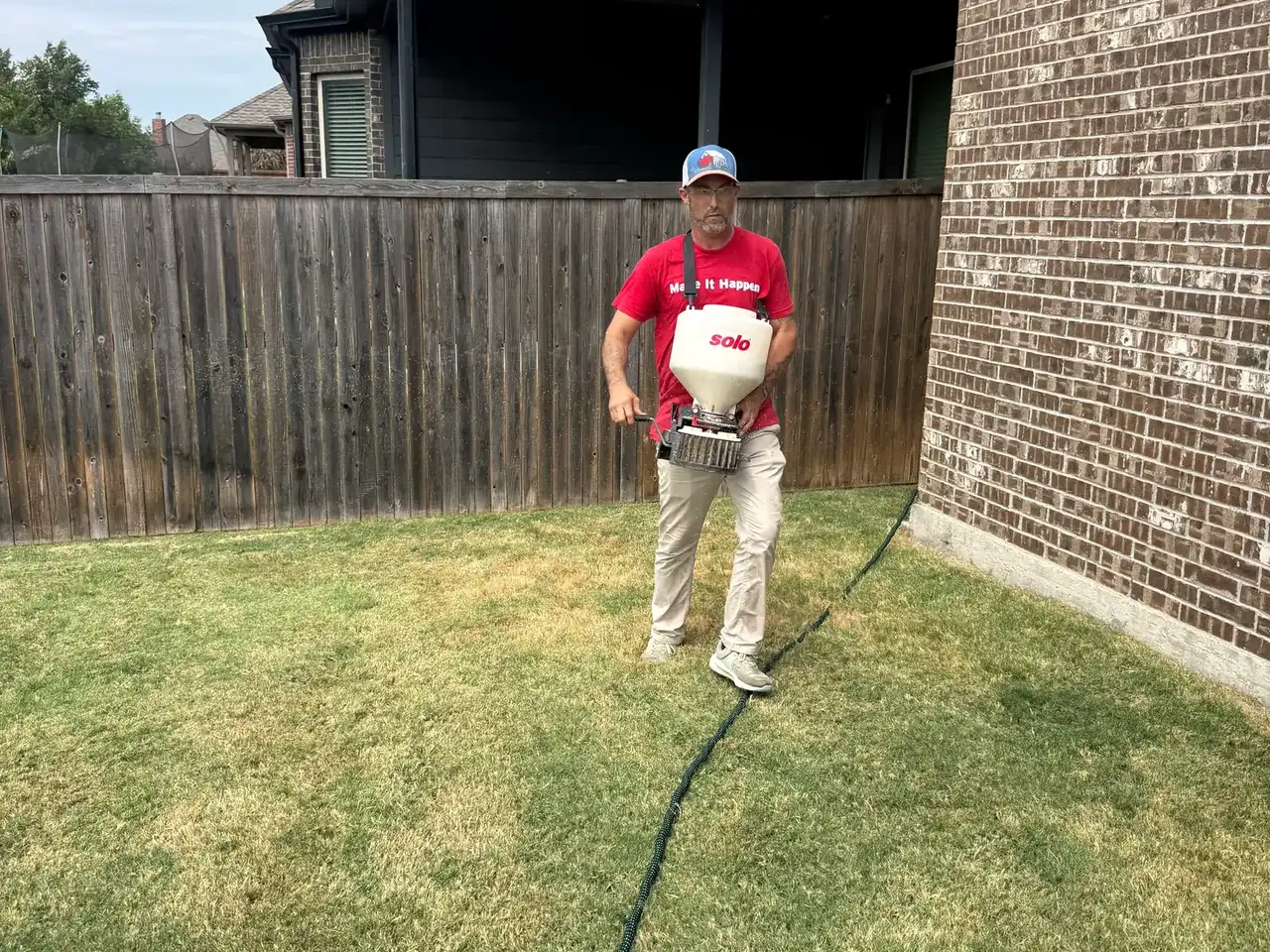
Entry points and one ZIP
Every door, the garage and any patio slider each get three feet of treated ground so larvae are stopped outside. The whole city runs on 76118, so there is nothing about the address to work out before you can be given a price.