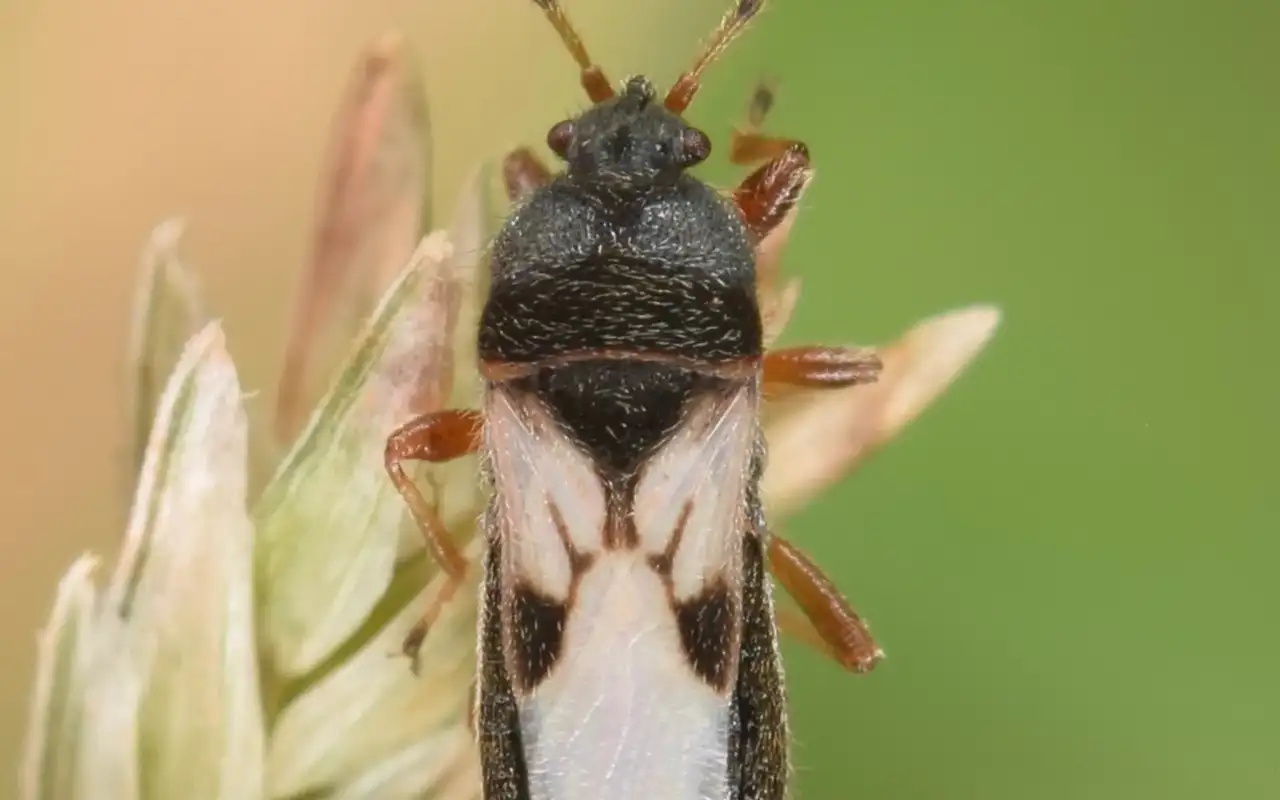
THREE SUSPECTS
Sorting insect damage from everything else
Three insects genuinely kill lawns in Richland Hills, and the rest of the brown you see in July belongs to heat, drought, fungus or a sprinkler zone that quietly stopped working. Chinch bugs feed at the blade and block water movement, grubs eat roots two to four inches down, and fall armyworms strip the surface in a night. Everything else is a turf problem in an insect costume.
Which of the three you get depends on the grass. Lawns here are old, mostly Bermuda and St. Augustine put in with the houses in the 1950s and 60s, and under big canopy they favour grubs. The chinch bug calls come from the handful of sunny Richland Hills yards where sod was replaced recently and is still shallow-rooted.
WHAT YOU WOULD PAY
Lawn insect pricing on a Richland Hills home
It rides on a year-round plan, priced by the square footage of the house. Complete Home & Lawn Defense treats the full lawn at $40 to $73.50 a month, and Home Defender at $30 to $54 a month takes the applicable turf treatment out about 25 feet. Neither is a contract, and you can stop either one without paying to leave.
This is a compact town of compact houses, so the first two bands cover most of it. If you want the number without talking to anybody, the instant quote at /instant-quote works off your address, and the bands we publish are the same ones we quote from.
Under 1,500 sq ft
$40/mo
Full-lawn plan, common on these streets
1,500 to 3,000 sq ft
$40–$51.50/mo
Most Richland Hills houses
3,000 to 4,500 sq ft
$51.50–$62/mo
The larger remodels and additions
The Home Defender alternative
$30–$46/mo
Same sizes, turf treated 25 feet out
Every number on this page comes from our published price list. Richland Hills homes get the same table as everyone else; the instant quote reads your square footage and lot size and hands you your own line.
NOT A CURE-ALL
What this does not do for an old lawn
The biggest limitation is that it treats insects and your lawn may not have any. Several of the usual causes of a brown lawn are not insect problems at all, and the right outcome of our visit is sometimes that we do not treat and do not write anything up.
It also will not carry turf through a bad summer. If the irrigation is uneven, the mowing is too short or the soil is compacted from sixty years of foot traffic, killing an insect leaves you a lawn that is still going to struggle. We tell Richland Hills customers what the grass needs even when it is not something we sell.
And recovery is not instant. Once the feeding stops, regrowth depends on roots, water and season, and the worst areas may never return without sod. Anyone promising a green lawn a fortnight after an application is selling a timeline that turf does not follow.
DIAGNOSIS VS PRODUCT
The testing is the part you are actually buying
The product is not the hard bit. Any company can push granular insecticide across a lawn, and the material we use is no secret. The failure mode is applying it to a lawn that has a disease, or applying a surface treatment when the insect is three inches down, and that is a reading problem rather than a chemistry problem.
Set against a do-it-yourself bag, the plan buys the diagnosis, the timing and the return trip. If you would rather check your own lawn first, the two field tests below cost nothing and we are glad for you to run them before calling. This business grew out of lawn care, so turf is the part of it we argue about least.
THE FIRST APPOINTMENT
What the opening Richland Hills visit involves
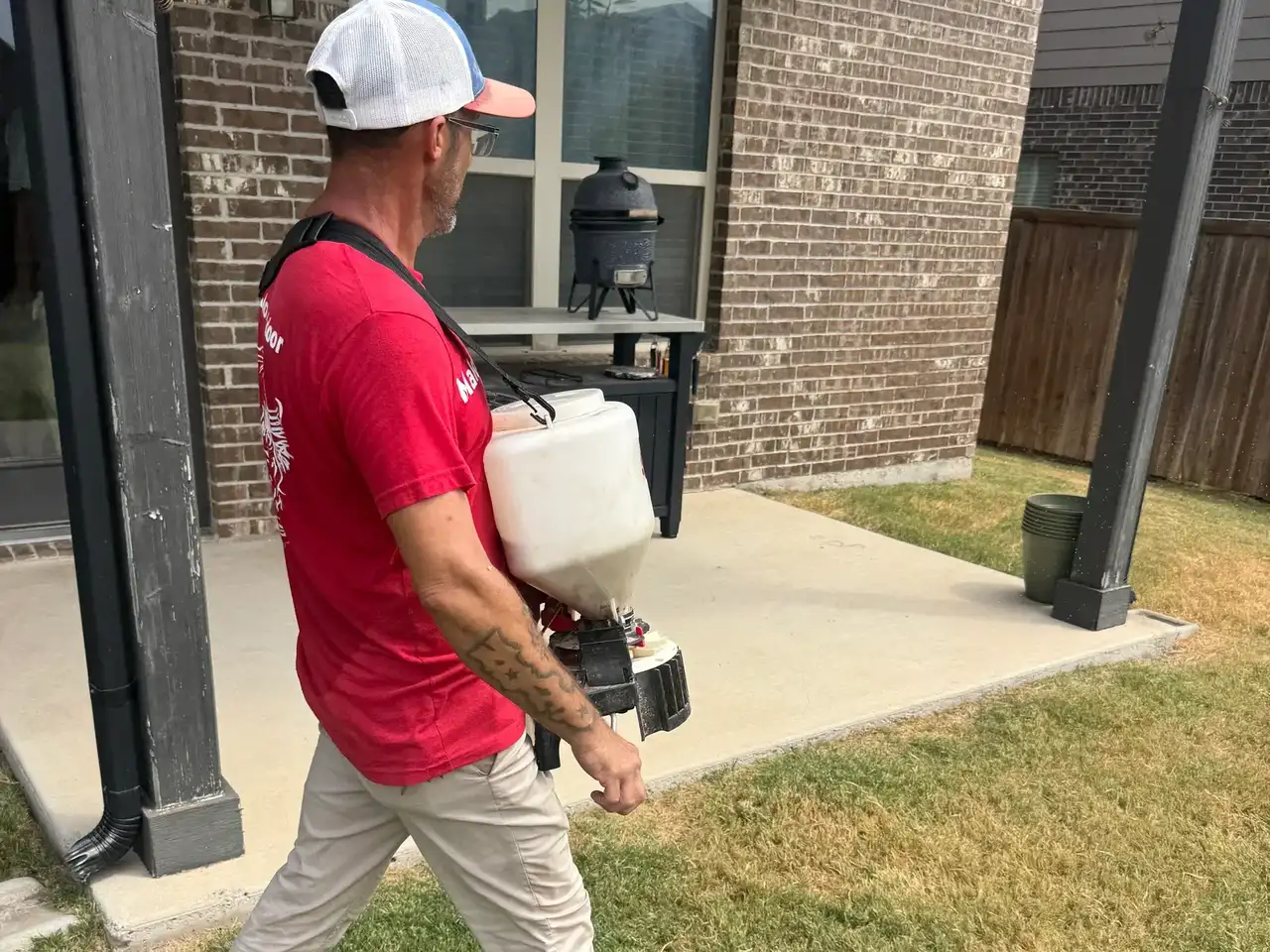
Two free tests
Before anything goes on the grass we run the tug test and, if a sunny edge is in play, the float test. One tells us whether roots have been eaten, the other floats chinch bugs out of the thatch. Both take minutes, and both can end with us saying the lawn is fine.
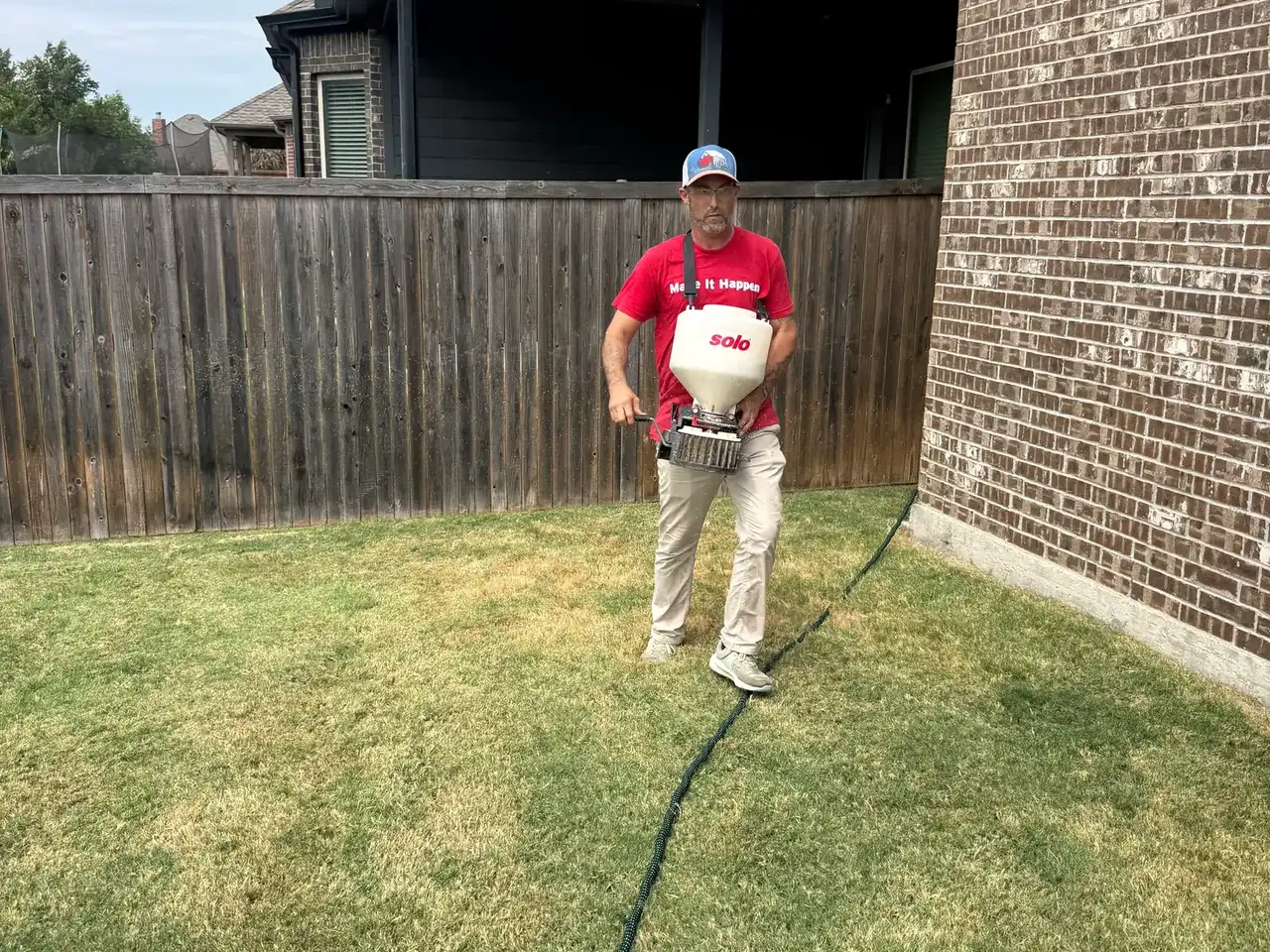
Reading the pattern
Where damage starts matters as much as what it looks like. Hot edges point at chinch bugs, loose spongy areas point at grubs, and a sharp line that appeared overnight points at armyworms. A lawn browning evenly all over is usually pointing at the weather.
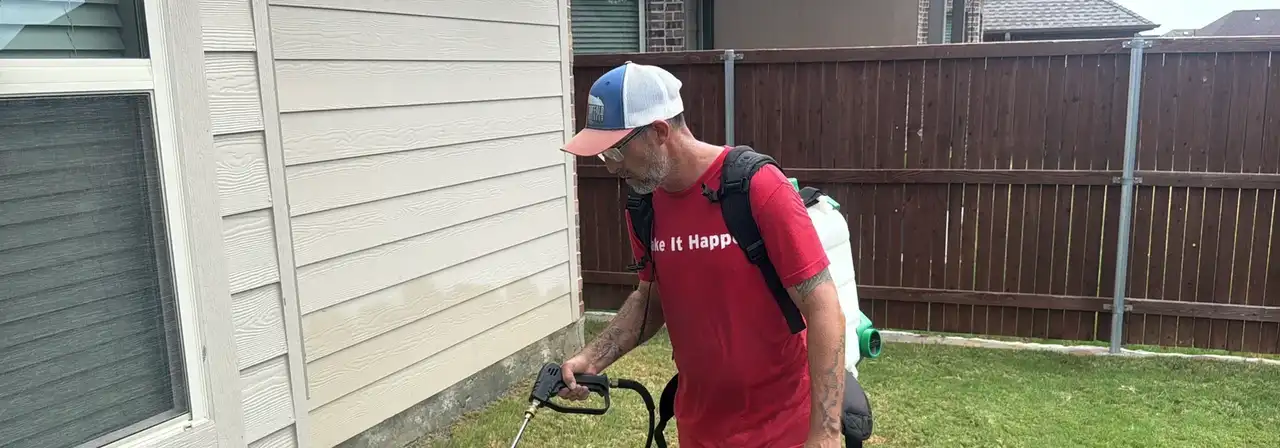
The structure side
Turf work is one half of a year-round plan, so the visit also bands the foundation, treats the eaves, dusts weep holes with Delta Dust and baits fire ants. On Richland Hills brick from the post-war decades, those weep holes and thresholds are where most indoor problems begin.