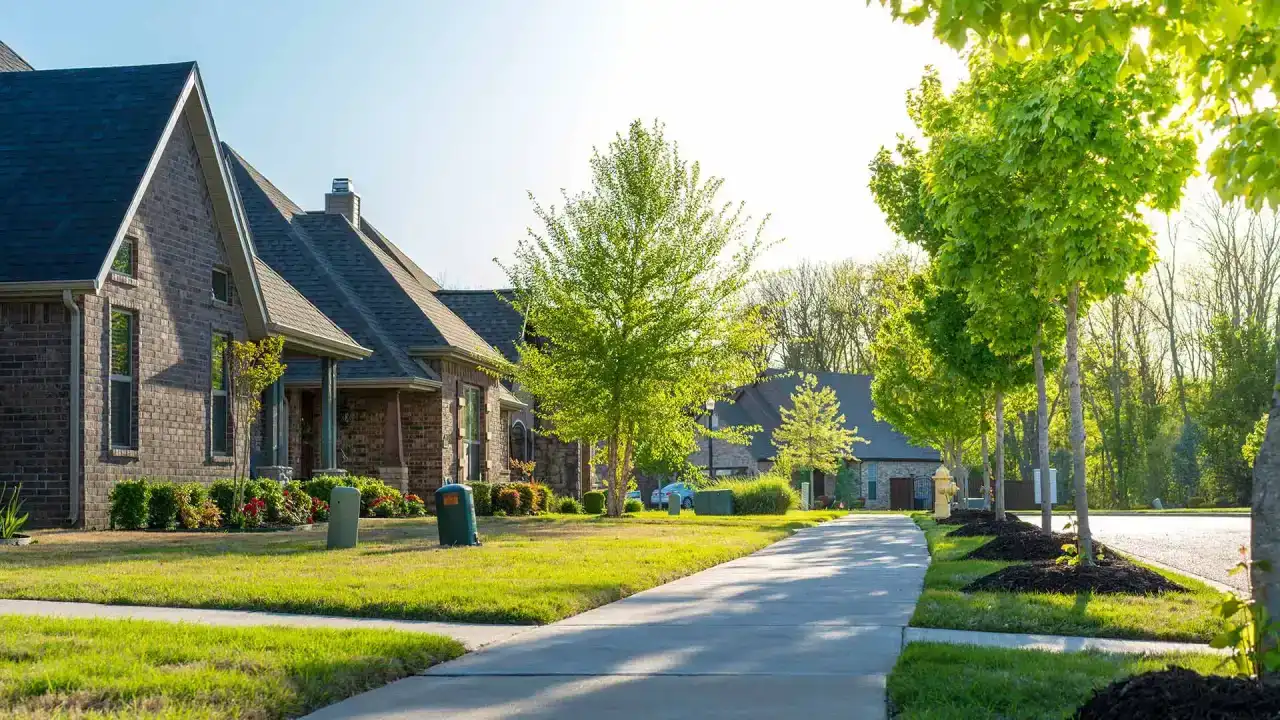
FIFTIES AND SIXTIES BRICK
What is getting into Richland Hills houses, and how?
Mostly mice, and mostly at ground level. Richland Hills is compact and largely built out, with housing from the 1950s and 60s standing on soil that finished settling a long time ago. Sixty years of that movement leaves hairline gaps at the bottom course, thresholds ground down by use and utility penetrations that were patched once with something soft.
Rats turn up too, usually where the older drainage runs. Storm drains and the ditches feeding them give a rat covered travel between blocks and a place to sit out the day, and on a street plan as tight as this one the distance from that cover to a back wall is nothing at all.
The mature canopy adds the high route. Where limbs reach the roof, a soffit screen or a lifted roof return becomes the entry instead, which is why we look up as carefully as down on a Richland Hills inspection.
PRICE, WITHOUT THE DANCE
What the rodent add-on costs on a Richland Hills plan
It is $25 a month, added to Home Defender or Complete Home & Lawn Defense, and there is no standalone version. The reason is that exclusion needs re-checking, and the plan visits are what does the re-checking four times a year.
The plan itself is priced by the size of the house. The original Richland Hills ranches under 1,500 square feet carry Home Defender at $30, so the full monthly figure is $55; the 1,500 to 3,000 band is $33 to $38, making $58 to $63. Larger remodels and two-storey builds in the 3,000 to 4,500 range run $38 to $46. Everything is month to month, with no startup fee and nothing to pay to leave.
Rodent line on either plan
$25 a month
Flat regardless of house size
Home Defender, original ranches
$30 a month
Under 1,500 sq ft
Home Defender, 1,500 to 3,000 sq ft
$33–$38 a month
Most of the post-war stock
Complete Home & Lawn Defense, 1,500 to 3,000 sq ft
$40–$51.50 a month
Where the yard is treated as well
Every number on this page comes from our published price list. Richland Hills homes get the same table as everyone else; the instant quote reads your square footage and lot size and hands you your own line.
STRAIGHT ABOUT LIMITS
Three Richland Hills rodent problems this does not solve
City drainage is not ours to treat. If rats are living in a storm drain at the curb, that belongs to the city and nothing we do reaches into it. What we can do is make sure the animals coming out of it have nowhere to go on your property, which in practice is the part that changes your evenings.
A detached garage on a Richland Hills lot is frequently the weak point and frequently the hardest to close. Old slabs crack, side doors sag and there is often a gap the full width of a wall plate. We seal what has sound material to seal to and tell you plainly where it does not.
And it will not do anything about a neighbour's habits. Feeders, open bins and stored feed a fence away keep a population local. Your house can still be closed to them, but expect to keep seeing them in the yard.
ONE HOUSE OR THE BLOCK
What sealing a single house on a tight street achieves
On a street this compact the honest answer is that one sealed house solves that house and displaces the rest. Exclusion does not reduce the number of rodents on the block; it removes one option from their list, and they take another. If that sounds like a small claim, it is the accurate one, and it is also exactly what you are paying for.
Where several neighbours seal, the effect compounds — fewer places to nest means a population that cannot hold at the same level. We are not going to organise your street for you, and we are certainly not going to price the work as though we had. What we will say is that if a neighbour asks what we were doing, telling them is in your interest.
HOW THE VISIT RUNS
What gets checked on a post-war Richland Hills house
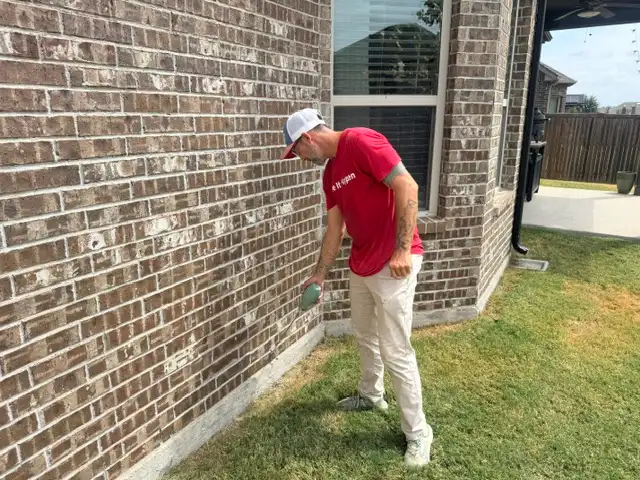
The slab line, all the way round
We work the bottom course looking for grease rub, droppings and gnaw marks, and probe the mortar where it has cracked. Both year-round plans already seal the weep holes with copper mesh and dust them, so what we are hunting here is everything else: settled gaps, failed patches, rusted foundation vents.

Doors, the garage and utility runs
Worn thresholds, a garage door with daylight at the corners, the gas meter penetration and the hole cut for a cable line are the routine ground entries on a house of this age. Anything with sign on it gets packed and closed with material a rodent cannot work through.
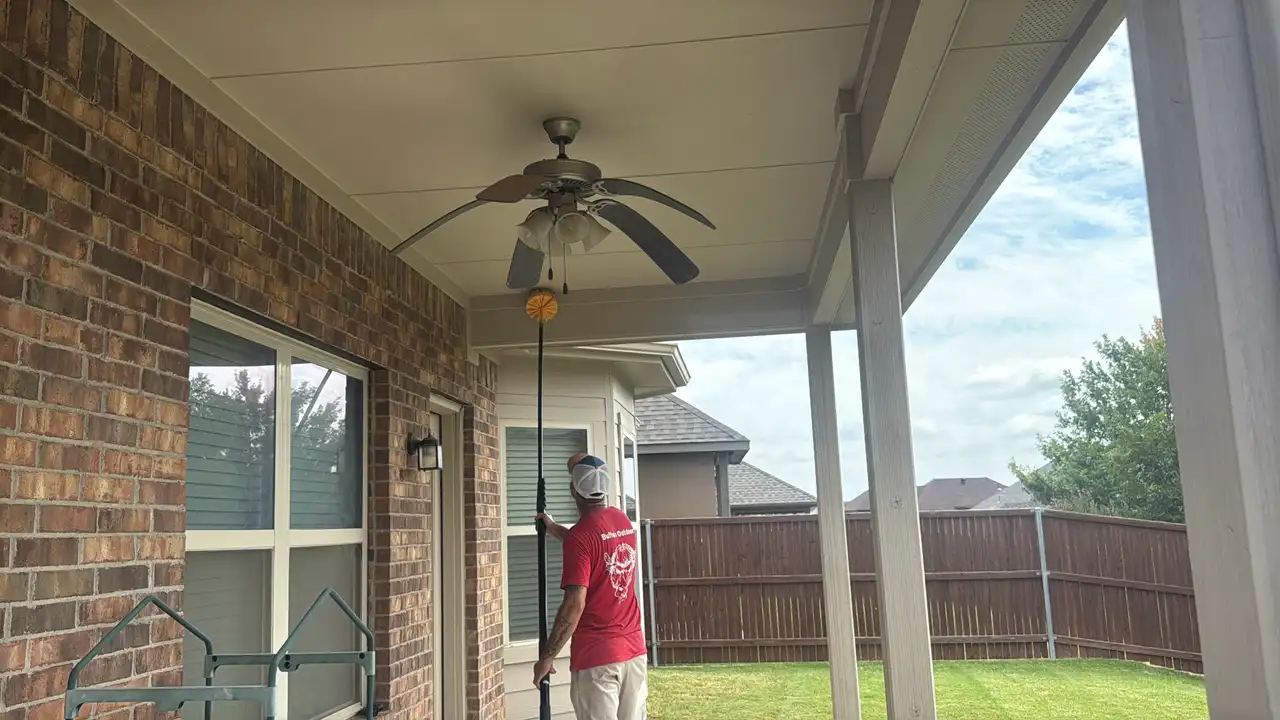
Roof edge, attic and the trap plan
Where the canopy touches the roof we check the soffit screens, roof returns and flashing. Inside, the attic is read for runways so traps and locked stations sit on real routes rather than convenient spots, and we leave with a return visit booked.