
CREEK LINE AND OAK STREET
Which Roanoke lots have a chigger problem
The ones with a creek, a greenbelt or a corner that never dries. Chigger larvae want cover and moisture ahead of anything else, so a lot whose back boundary drops into a creek corridor holds them year after year while a sunny, well-drained lot two streets over never notices them. The historic core around Oak Street supplies the other version, with settled ground under old trees that stays shaded and littered.
The subdivisions along TX-114 and I-35W are the least affected, at least while the landscaping is young. Graded soil and thin builder turf make poor habitat, so what bites out there is generally fire ants working the disturbed ground. Chigger bites are unmistakable once you know them, coming as a band wherever a sock, waistband or strap held fabric tight to skin.
WHAT THE HOUSE SIZE BUYS
Roanoke prices for a treated yard
The house sets the number, not the bug. Complete Home & Lawn Defense treats the entire lawn and runs $40 to $51.50 a month between 1,500 and 3,000 square feet, then $51.50 to $62 from 3,000 to 4,500, where a good many of the newer Roanoke homes fall. Older, smaller places in the core can land on the $40 floor.
Where the biting happens close to the house rather than down at the creek line, Home Defender at $33 to $46 a month for those same sizes may cover it, treating a 25-foot ring out from the walls. Past that ring it is not built to reach, and on a greenbelt lot the source normally sits further out than that. Both plans run month to month with the price settled beforehand, and a return between treatments costs nothing.
1,500 to 3,000 sq ft
$40 to $51.50 a month
Whole lawn including the back boundary
3,000 to 4,500 sq ft
$51.50 to $62 a month
Newer homes off TX-114
4,500 to 6,000 sq ft
$62 to $73.50 a month
The largest floor plans in town
Home Defender, 1,500 to 4,500
$33 to $46 a month
Reaches 25 feet, no further
Every number on this page comes from our published price list. Roanoke homes get the same table as everyone else; the instant quote reads your square footage and lot size and hands you your own line.
THE PARTS THAT DISAPPOINT
Three honest limits on a Roanoke chigger treatment
A greenbelt is not ours to treat and it will not stop producing. Those corridors run behind whole streets and carry the damp shaded ground chiggers depend on, so pressure off them continues through August whatever happens inside your fence. Treating your side clears the population that has settled into the grass you use, which is where nearly every bite originates.
Irrigation works against the treatment. Beds and turf kept wet on a sprinkler schedule stay habitable for larvae through the middle of a hot Roanoke summer, when dry ground would have thinned them out by itself. Dialing back the heads nearest the shaded boundary accomplishes more than another application would.
Deep mulch is the same story at smaller scale. Beds banked against the house hold moisture and litter and let larvae sit within a few feet of the door, so the technician will ask you to pull it back rather than quietly spray over the top. On a well-kept property that request is the least popular part of the visit.
IRRIGATION OR APPLICATION
Changing the yard versus treating the yard
Nearly everything making a Roanoke yard attractive to chiggers is adjustable. Sprinkler run times, mulch depth against the slab, how far back the mowing goes and whether last autumn's leaves ever left the beds are all choices, and reversing them costs a weekend. Dry, sunny, closely cut ground is hostile to larvae with no product involved at all.
Product earns its place on ground you cannot dry out, such as the shaded strip along a creek or the north side of a house that never takes sun. Those get the heaviest pass, the rest of the lawn gets covered, and every door gets a three-foot band so nobody walks larvae onto the floor. Yards that stop having summers like this generally change the watering and treat the shade.
WALKING A 76262 YARD
What the first chigger visit covers here
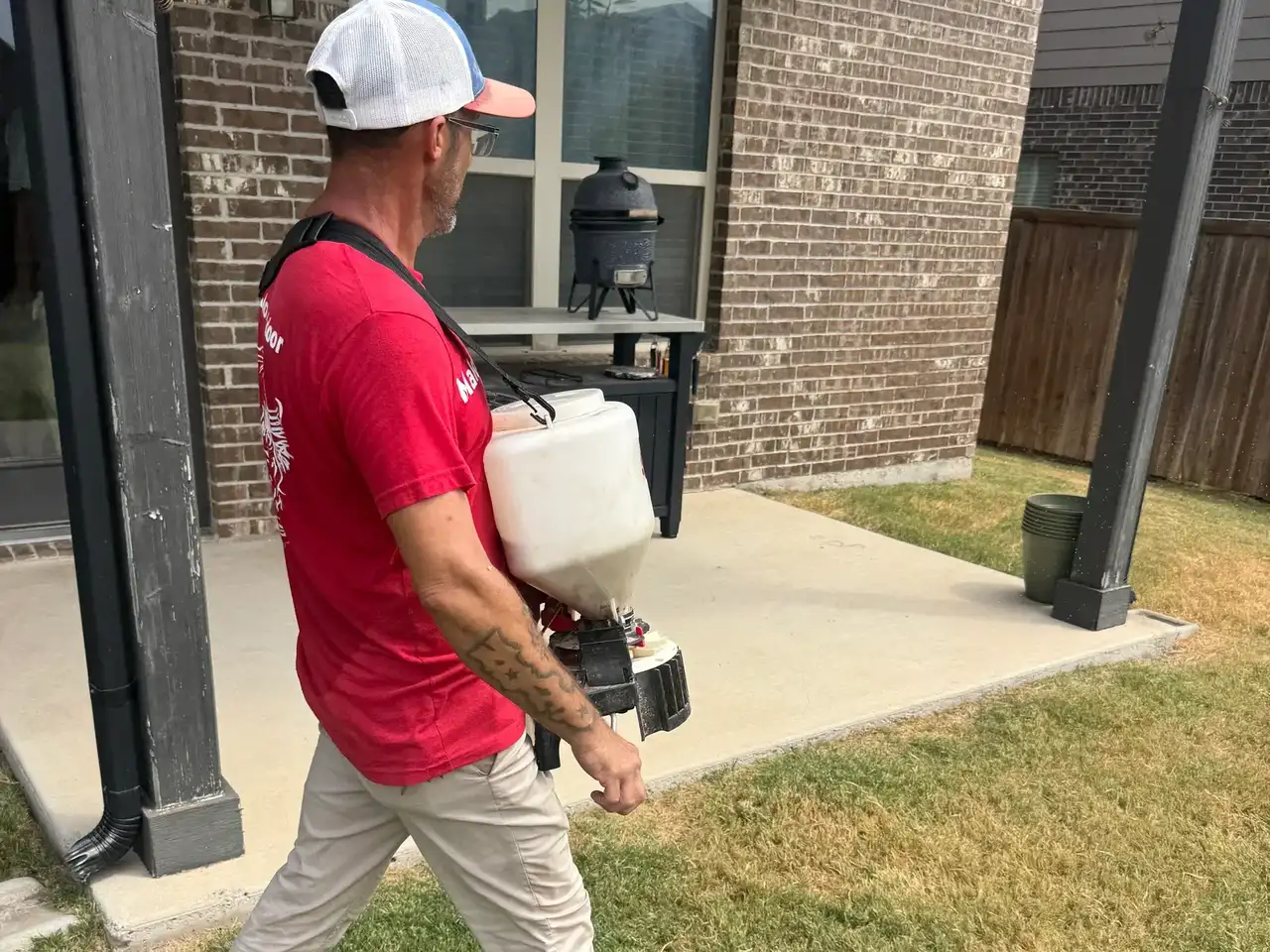
The back boundary first
Where the lot meets a greenbelt, a creek corridor or unmown ground gets looked at before anything else, because that is the supply and the rest of the lawn sits downstream of it. How wide and how shaded that strip is decides how much of the application it takes.
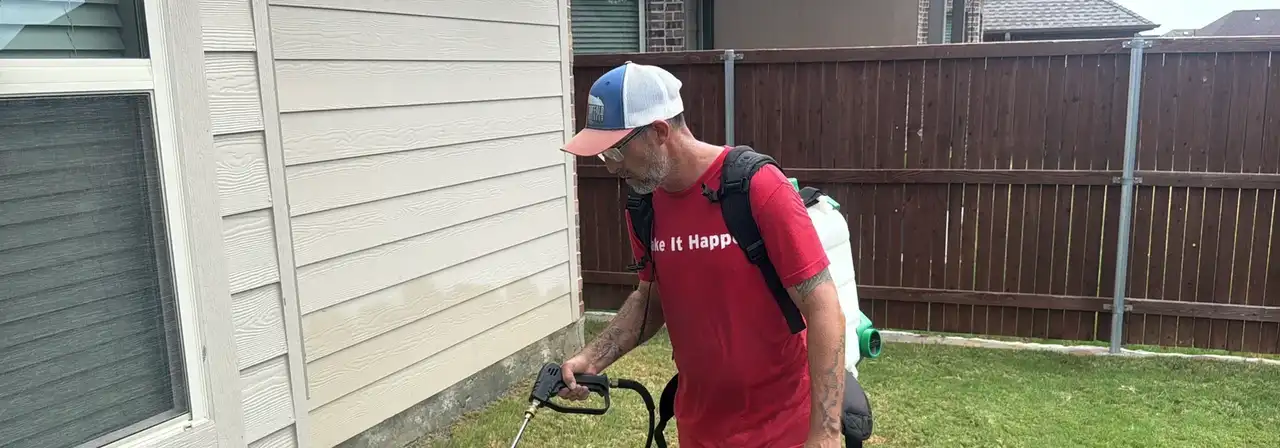
Sprinklers, mulch and shade
The technician notes where ground stays wet, how deep the mulch runs against the brick and which corners never see sun, then says which of them to change. Those conditions are what hold a population in place, and no product outlasts them on its own.
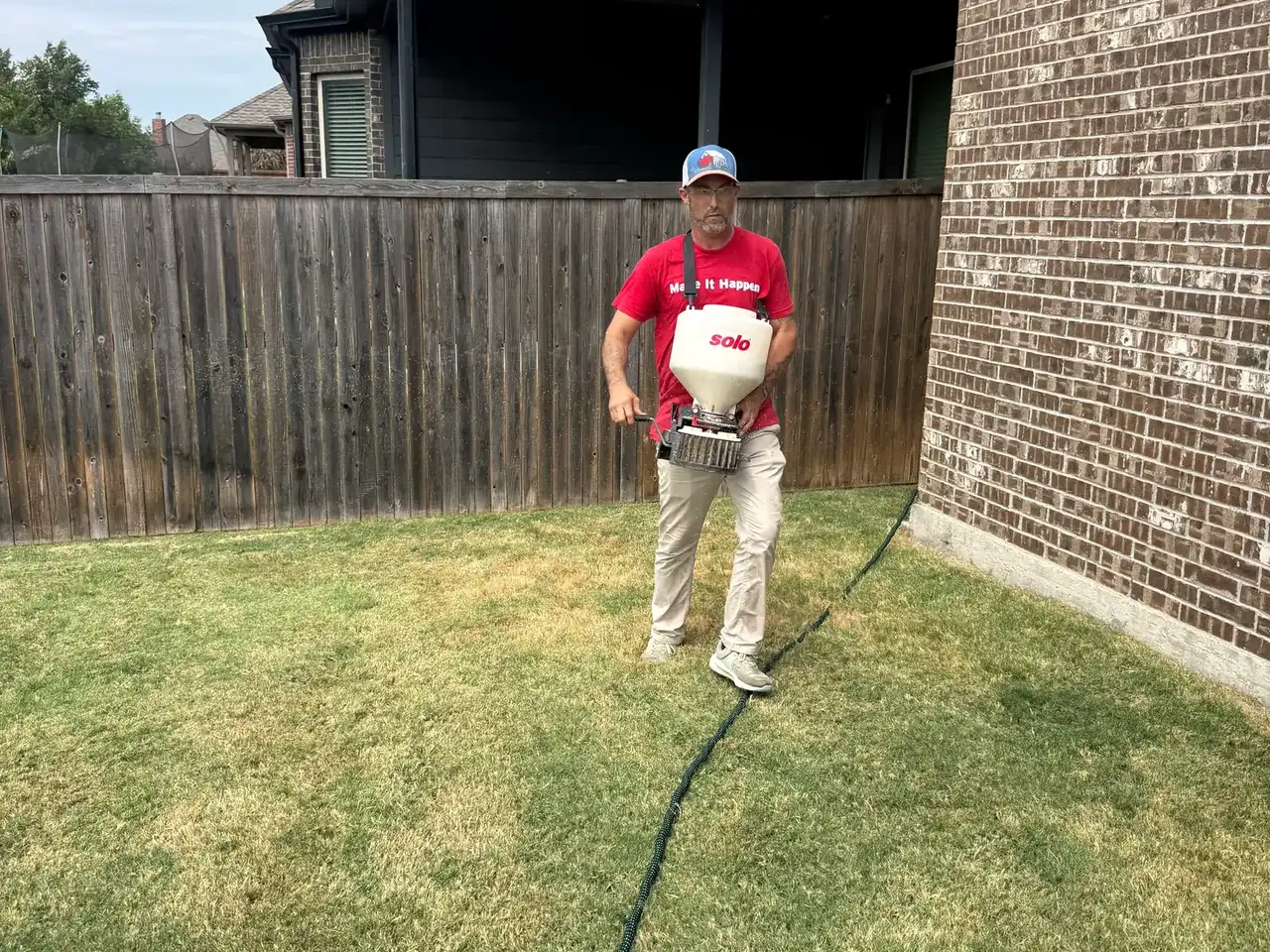
The house itself
Doors take their treated band, and the weep holes along the bottom course get Delta Dust and copper mesh sealing. That permanent seal is standard on both plans instead of an upsell, and it counts as much on an old Oak Street building as on new brick.