
SPRINKLERS AND CREEKS
Why watering the lawn also feeds the flea population
A North Texas August kills flea larvae by drying them out, which is about the only free help the climate hands a homeowner. An irrigation system running on a timer removes that help, keeping the top of the soil damp in exactly the shaded places where the eggs and larvae already sit.
That applies right across Roanoke, in the historic core under old trees and in the newer subdivisions along TX-114 and 35W where irrigated beds ring every house. The sunlit middle of a watered lawn is still far too hot for them; the shaded bed edges stay hospitable straight through summer.
Creeks and greenbelts supply the ticks. They travel on wildlife using those corridors and then wait in the taller grass wherever the mowing stops, which is why a lot backing a greenbelt has a genuinely different problem from one in the middle of a block.
76262 PRICE BANDS
What a Roanoke lot costs each visit
Everything is priced on lot square footage and billed by the visit, so a modest lot near the historic core is $49.95 or $59.95 while the larger subdivision lots run $69.95 to $89.95. An old house is neither cheaper nor dearer to serve, because the structure plays no part in this number.
No contract is involved, so the commitment is one visit at a time from April to September. You are told the figure before anything is booked, there is no startup fee, and stopping costs nothing.
7,000 sq ft or less
$49.95 a visit
Older lots near the historic core
12,001 to 17,000 sq ft
$69.95 a visit
Typical of the newer subdivisions
22,001 to 27,000 sq ft
$89.95 a visit
The larger lots along the corridors
Interior treatment if required
Included once
For fleas that have already got indoors
Every number on this page comes from our published price list. Roanoke homes get the same table as everyone else; the instant quote reads your square footage and lot size and hands you your own line.
HONEST DRAWBACKS
Three reasons this might disappoint you
The first is the greenbelt. We treat your side of the fence and a buffer along it, and the corridor behind keeps producing ticks regardless, so what you buy is a large reduction rather than an absence. Anyone promising otherwise about a creek-side lot is selling you something.
The second is the sprinkler controller. Heavy, frequent watering shortens how long a treatment stays effective and rebuilds the damp habitat behind us. Shifting to deeper, less frequent cycles helps the turf and the flea pressure at the same time, and it costs nothing to try.
The third is the indoor half. Fleas established in carpet and pet bedding do not care what happens outdoors, and clearing them takes hot washing, thorough vacuuming and a preventive from your veterinarian. We include one interior treatment when it is needed, but those habits are what finish it.
COMMON AREAS OR YOUR LOT
Your yard, the shared ground, and where the line falls
Plenty of Roanoke neighbourhoods maintain shared greenbelt, and it is fair to ask whether treating your own lot achieves much when the space behind it is untreated. For fleas it achieves a great deal, because they stay where the host traffic and the damp soil are instead of ranging around.
For ticks the honest answer is that shared ground does affect you, since they arrive on whatever walks through it. We treat residential properties and HOA common areas, so an association that wants the shared spaces quoted can contact us directly, and a treated buffer on your own boundary is the useful step meanwhile.
FIRST VISIT IN ROANOKE
How the opening appointment runs
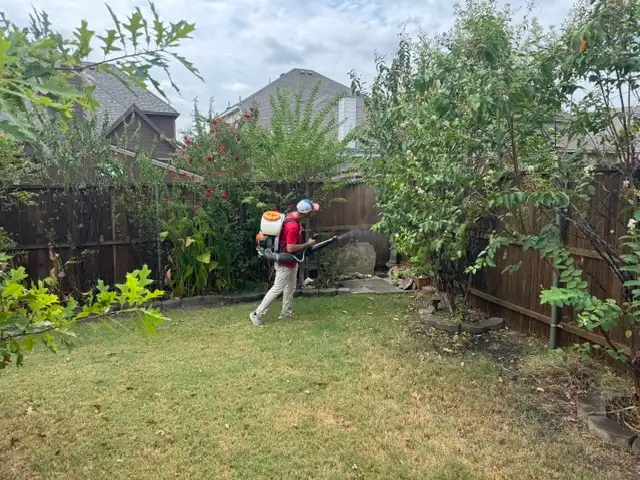
The irrigated bed edges
We start where the sprinkler heads throw and the shade sits, because that overlap is the productive flea ground on a well-maintained lot. Mulch depth against the slab gets a look too, since deep wet mulch is nursery and tick cover at once.
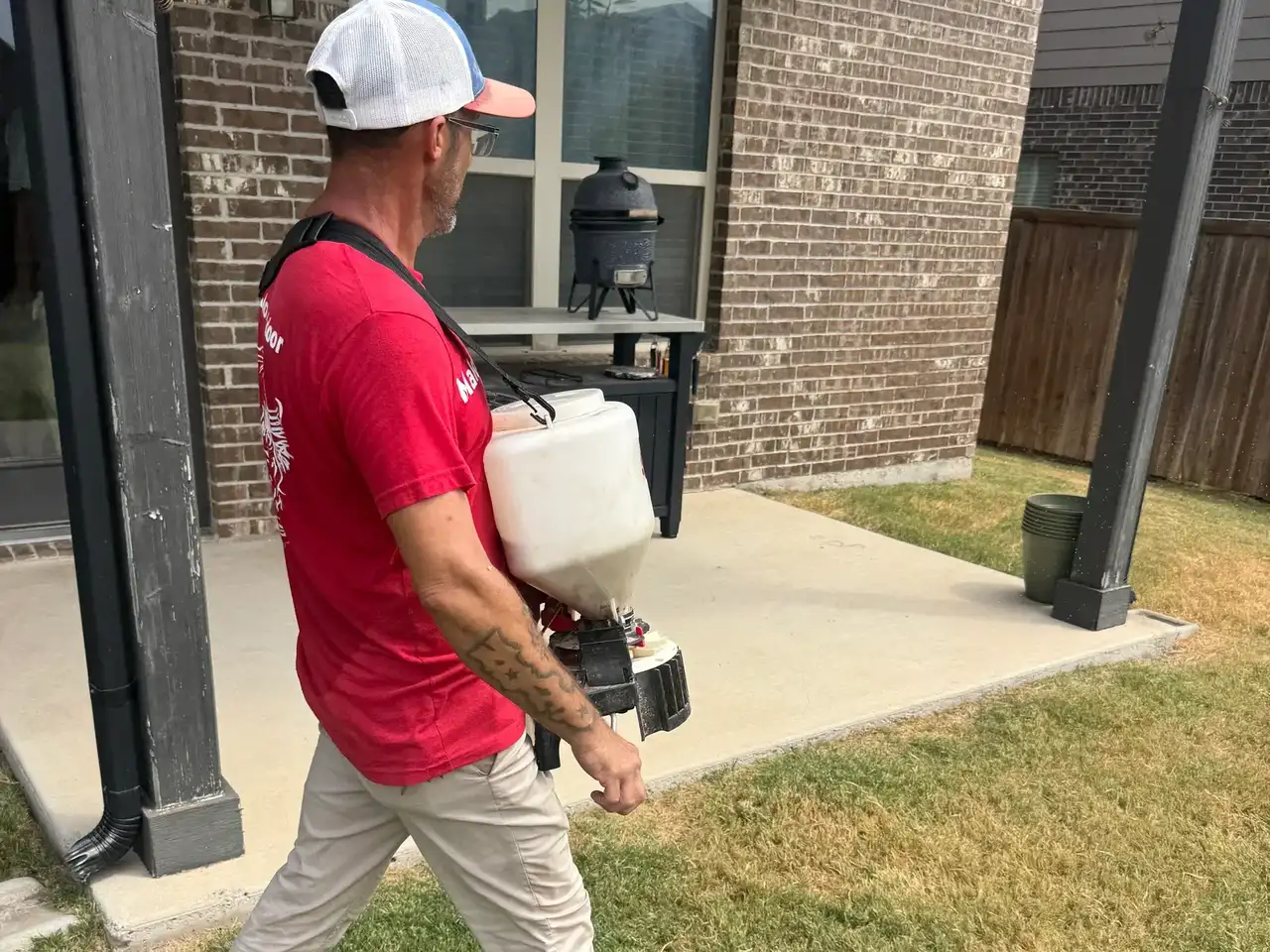
The back boundary
Where the lot meets a greenbelt, a creek corridor or unmown ground, that edge is treated as a priority rather than a finishing pass. It is where ticks are staged and where most of what crosses your fence begins.
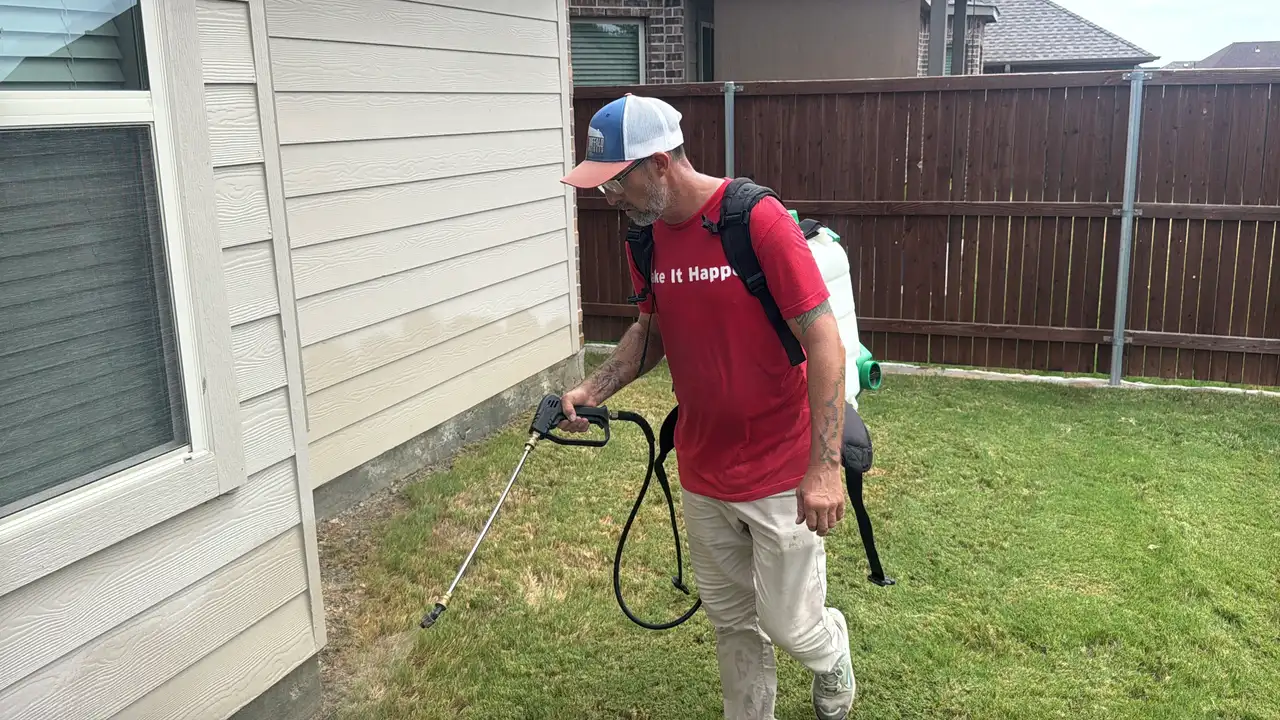
Timing and what follows
The lawn and the foundation band are treated, it dries in roughly two hours in summer, and the next appointment falls 21 days later. The interval is deliberate, because it arrives before the next batch of adults can lay.